
Boise Deck Permit Guide 2026: Fees, Codes & How to Apply
Everything you need for a Boise deck permit in 2026 — application steps, fees ($50–$300), setback rules, height limits, and building code requirements from Development Services.
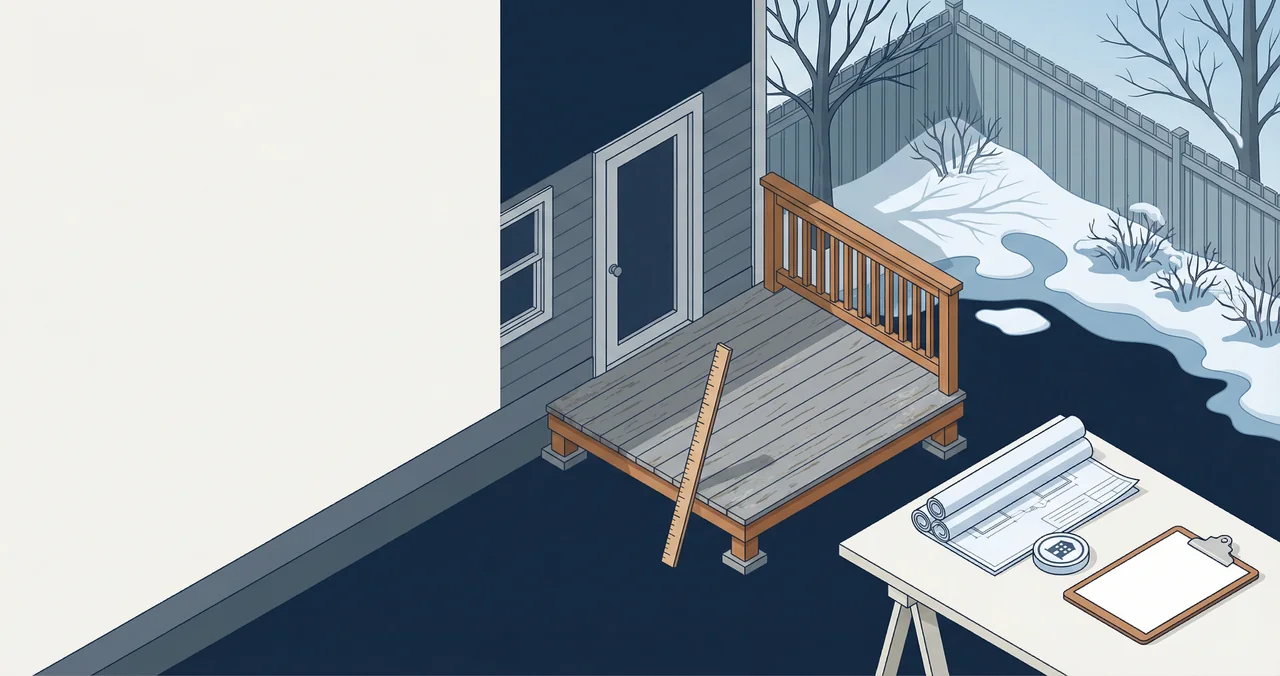
Deck Permits in Boise: Requirements, Costs & How to Apply in 2026
If you're planning a new deck in Boise, the permit question is probably near the top of your list. Do you actually need one? How much will it cost? And how long will the process take — especially when you're trying to lock in a contractor before the short Idaho building season fills up?
🏗️ Planning a deck project?
Get a free manual project review, or visualize your dream deck with AI before requesting quotes.
📋 Tool Alert: Permit Checker
Do you really need a permit? Check the exact rules for your city or township.
Check Permits →Looking for more regional information? Check out our Idaho State Decking Hub.
Here's what Boise homeowners need to know about deck permits in 2026, including specific fees, code requirements, and the step-by-step application process through Boise's Development Services department.
<!-- slot:after-intro -->
Do You Need a Deck Permit in Boise?
Yes, in most cases. Boise requires a building permit for any deck that meets either of these thresholds:
- Over 200 square feet in area
- More than 30 inches above grade at any point
That second rule catches a lot of homeowners off guard. Even a modest deck built on a sloped yard in the North End or the Boise Bench can easily exceed 30 inches on the downhill side.
You generally don't need a permit for:
- Ground-level platforms under 200 square feet that sit less than 30 inches above grade
- Simple paver patios at grade
- Replacing deck boards on an existing permitted structure (no structural changes)
A quick call to Boise's Development Services department at (208) 384-3700 can confirm whether your specific project needs a permit. It takes five minutes and can save you thousands in fines down the road.
When a Permit Is Required
Beyond the 200 sq ft / 30-inch thresholds, you'll also need a permit in Boise if your deck project involves:
- Attaching the deck to your house — ledger board connections require inspection to prevent water intrusion and structural failure
- Adding a roof or pergola cover over the deck
- Electrical work for deck lighting, outlets, or hot tub wiring (separate electrical permit required)
- Plumbing for an outdoor kitchen or gas line
- Significant structural modifications to an existing deck, such as adding stairs, changing the footprint, or reinforcing the frame
Attached vs. Freestanding Decks
Attached decks almost always require a permit in Boise because the ledger board connection to your home is a critical structural point. Freestanding decks under 200 square feet and under 30 inches above grade are the main exception — but even then, setback rules still apply. For a deeper comparison, see our guide on attached vs. freestanding deck permits.
Permit Fees & Processing Time
What You'll Pay
Boise's deck permit fees are based on project valuation. Here's what to expect in 2026:
| Project Type | Typical Valuation | Estimated Permit Fee |
|---|---|---|
| Small deck (under 200 sq ft) | $5,000–$9,000 | $75–$150 |
| Mid-size deck (200–400 sq ft) | $10,000–$25,000 | $150–$350 |
| Large deck (400+ sq ft) | $25,000–$50,000+ | $350–$600+ |
Fees typically include a plan review fee and a building permit fee. If your project requires electrical or plumbing work, those permits are additional — usually $50–$150 each.
For reference, here's what full deck installations typically cost in the Boise market:
| Material | Installed Cost (per sq ft) |
|---|---|
| Pressure-treated wood | $25–$45 |
| Cedar | $35–$55 |
| Composite | $45–$75 |
| Trex (brand-name composite) | $50–$80 |
| Ipe (hardwood) | $60–$100 |
Given Boise's harsh winters and freeze-thaw cycles, composite and PVC decking tend to hold up best long-term. Wood decks need annual sealing to resist moisture damage and salt exposure. That ongoing maintenance cost adds up — something to factor into your material decision. Use PaperPlan to visualize different decking materials on your own home before committing at paperplan.app.
How Long Does It Take?
For a straightforward residential deck, expect:
- Plan review: 5–10 business days for standard submissions
- Expedited review: Available for an additional fee, typically cutting the timeline to 3–5 business days
- Total timeline from application to permit in hand: 1–3 weeks
During peak season (April through June), review times stretch. Boise's building department sees a rush of applications as homeowners try to get projects started before summer. Submit your application by March if you want to break ground in May.
This timing matters more in Boise than in milder climates. The realistic building window runs May through October, and local contractors' schedules fill fast. Waiting until April to pull a permit can push your project into late summer — or worse, next year.
<!-- slot:mid-content -->
Building Codes & Setback Rules
Boise follows the International Residential Code (IRC) as adopted by the State of Idaho, with local amendments. Here are the specific requirements that affect deck construction:
Structural Requirements
- Footing depth: Footings must extend below the frost line. In the Boise area, that means 36 inches minimum, though some areas in the foothills may require depths up to 48–60 inches depending on soil conditions and elevation. This is non-negotiable — shallow footings will heave during freeze-thaw cycles and compromise the entire structure.
- Post size: Minimum 4x4 for decks under 8 feet in height; 6x6 posts required for taller structures or longer spans
- Beam and joist sizing: Must meet IRC span tables based on species, grade, and spacing
- Ledger board attachment: Must use ½-inch lag screws or through-bolts with proper flashing to prevent water intrusion behind the ledger
Railing Requirements
- Height: Minimum 36 inches for residential decks (42 inches if the deck is used as a guard for areas more than 30 inches above grade in some jurisdictions — confirm with your inspector)
- Baluster spacing: Maximum 4 inches between balusters (the sphere rule — a 4-inch sphere cannot pass through)
- Graspability: Top rail must be graspable if it serves as a handrail for stairs
For a rundown of railing options that meet code, check out the best deck railing systems.
Setback Rules
Boise's setback requirements depend on your zoning district. For most residential zones (R-1A, R-1B, R-1C):
- Front setback: 20–25 feet from the property line (decks rarely go in front, but it matters for corner lots)
- Side setback: 5–10 feet from the side property line
- Rear setback: 15–20 feet from the rear property line
Important: Decks and other structures that encroach into setback areas will not be approved. Before you design anything, check your specific zoning designation and property survey for exact setback lines. The Boise Planning & Zoning division can help you determine your setbacks — or you can look up your parcel on Boise's online zoning map.
If your property borders an easement, the rules get more complex. Our guide on building near an easement covers the common pitfalls.
Snow Load Requirements
This is where Boise's climate directly affects your deck design. The ground snow load for the Boise area is approximately 25–30 pounds per square foot (psf), though areas at higher elevations in the foothills face higher requirements.
If you're adding a roof or pergola cover to your deck, snow load calculations become critical. Even an uncovered deck must be designed to handle accumulated snow weight on the structure. Your contractor should account for this in the engineering.
How to Apply for a Deck Permit in Boise
Step 1: Prepare Your Plans
You'll need to submit:
- Site plan showing your property boundaries, existing structures, and the proposed deck location with dimensions and setback distances
- Construction drawings including a plan view, elevation view, and cross-section details
- Footing details showing depth below frost line, diameter, and reinforcement
- Structural details for beams, joists, posts, ledger board connection (if attached), and railing
- Material specifications — what species or product you're using for framing and decking
For most standard residential decks, you don't need a licensed architect or engineer. Clear, dimensioned drawings are sufficient. Many Boise contractors include permit drawings as part of their service.
Step 2: Submit Your Application
Boise's Development Services accepts applications:
- Online through the city's eTRAKiT portal
- In person at the Boise City Hall, 150 N Capitol Blvd
Include your completed application form, construction drawings, and the permit fee. Online submissions are faster and let you track status.
Step 3: Plan Review
A plans examiner reviews your submission for code compliance. If there are issues, you'll get correction comments — address them and resubmit. Most residential decks pass review without major revisions if the drawings are thorough.
Step 4: Schedule Inspections
Once your permit is approved, construction can begin. You'll need to schedule inspections at key milestones:
1. Footing inspection — before pouring concrete, the inspector verifies hole depth and reinforcement
2. Framing inspection — after the frame is complete but before decking is installed
3. Final inspection — completed deck, including railings, stairs, and any electrical work
Don't cover up work before it's inspected. Pouring concrete before the footing inspection or installing deck boards before the framing inspection means you may have to tear it out for the inspector to verify compliance.
Step 5: Get Your Certificate of Completion
After passing the final inspection, your permit is closed out. This documentation matters when you sell your home — buyers and their inspectors will look for it.
What Happens If You Build Without a Permit
Skipping the permit might seem tempting. The process takes time, costs money, and the deck is on your own property, right?
Here's what's actually at stake:
- Fines and penalties: Boise can issue fines for unpermitted construction. If you're caught, you'll likely pay double the original permit fee plus additional penalties
- Stop-work orders: If a building inspector spots unpermitted work in progress, construction stops immediately until you obtain a permit
- Retroactive permits: You can apply for an after-the-fact permit, but expect additional fees and possibly invasive inspections (opening up finished work to verify structural elements)
- Complications when selling: Title companies and home inspectors flag unpermitted structures. Buyers may demand you obtain a retroactive permit — or reduce the sale price. In some cases, you'll be required to remove the unpermitted deck entirely
- Insurance issues: Your homeowner's insurance may deny claims related to an unpermitted structure. If someone is injured on your unpermitted deck, your liability exposure increases significantly
- Neighbor complaints: Boise enforces code violations reported by neighbors. An unpermitted deck that blocks a neighbor's view or violates setbacks can trigger an investigation
For a detailed look at the real risks, read what happens when you build a deck without a permit.
The permit exists primarily to ensure your deck is structurally safe — especially critical in Boise where deep frost lines, freeze-thaw cycles, and snow loads create real engineering challenges. A deck built with inadequate footings in Boise won't just fail an inspection. It'll fail physically, potentially within a few winters.
<!-- slot:before-faq -->
🎨 Not sure which material to pick?
Upload a photo of your backyard and see exactly how Trex, TimberTech, or cedar would look — free and instant.
Frequently Asked Questions
How much does a deck permit cost in Boise?
Most residential deck permits in Boise run between $150 and $600, depending on the project's valuation. Small, simple decks may be as low as $75–$150. Electrical and plumbing sub-permits add $50–$150 each. Contact Boise Development Services at (208) 384-3700 for an exact fee based on your project scope.
How long does it take to get a deck permit in Boise?
Standard plan review takes 5–10 business days. With submission preparation and potential corrections, plan for 1–3 weeks total from application to permit issuance. During peak spring season, timelines stretch — apply by March if you want to start building in May.
Can I build a small deck without a permit in Boise?
Potentially. In Boise, decks under 200 square feet and less than 30 inches above grade at any point may be exempt from permitting. However, setback rules and zoning requirements still apply regardless of size. Confirm with Boise's Development Services before starting — the five-minute phone call is worth it.
Do I need a permit to replace deck boards in Boise?
Generally, no. Replacing decking surface material on an existing permitted structure — without changing the footprint, structure, or height — is considered maintenance and typically doesn't require a permit. If you're replacing structural components like joists, beams, or posts, that's a different situation and likely requires a permit.
What is the frost line depth in Boise for deck footings?
Deck footings in the Boise area must extend to at least 36 inches below grade to get below the frost line. In higher-elevation areas and the foothills, depths of 48–60 inches may be required. Your permit application should specify footing depth, and the inspector will verify it during the footing inspection. Inadequate footing depth is the number one cause of deck failure in Idaho's climate. If you're comparing decking materials that perform best in freeze-thaw conditions, footing depth matters just as much as what goes on top.
When is the best time to build a deck in Boise?
The ideal building window in Boise runs May through October. Contractor schedules fill quickly due to the shorter season, so book your contractor by March and submit your permit application around the same time. For more on seasonal timing, see our guide on best time to build a deck.
<!-- slot:end -->
📋 Planning a deck project?
Get a free manual project review from our team — no obligation, no spam.
Get Free Project Review →Upload a backyard photo and preview real decking materials with AI — free, instant, no sign-up.
Permits, costs, material comparisons, and questions to ask before requesting quotes — delivered to your inbox.