
Deck Permits in Huntsville (2026)
Need a deck permit in Huntsville? Learn requirements, fees, setback rules, and how to apply through Huntsville Building Services in 2026.
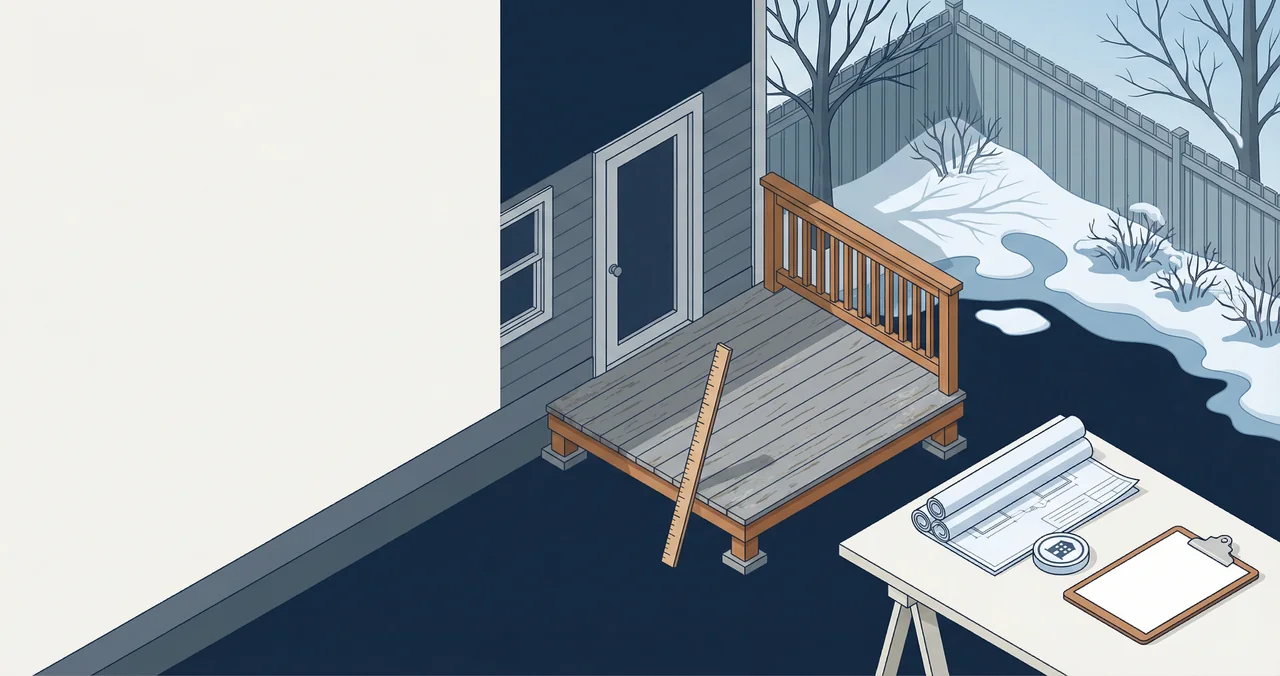
Deck Permits in Huntsville: Requirements, Costs & How to Apply in 2026
If you're planning to build a deck in Huntsville, your first question is probably: *do I actually need a permit?* The short answer — most likely yes. Huntsville's Building and Development Services department requires permits for most residential deck projects, and skipping this step can cost you far more than the permit itself.
🏗️ Planning a deck project?
Get a free manual project review, or visualize your dream deck with AI before requesting quotes.
📋 Tool Alert: Permit Checker
Do you really need a permit? Check the exact rules for your city or township.
Check Permits →Here's everything you need to know about Huntsville deck permits in 2026, including current fees, code requirements, and exactly how to apply.
<!-- slot:after-intro -->
Do You Need a Deck Permit in Huntsville?
In Huntsville, Alabama, you need a building permit for any deck that meets either of these thresholds:
- Over 200 square feet in total area
- More than 30 inches above grade at any point
That means most backyard decks — especially attached decks off a back door — will require a permit. A standard 12×16 deck is 192 square feet, technically under the limit, but add even a small bump-out or staircase landing and you're over.
Small ground-level decks under 200 square feet and less than 30 inches off the ground are generally exempt from permitting. However, even exempt decks still need to comply with Huntsville's building codes and zoning setbacks. "Exempt from a permit" doesn't mean "exempt from the rules."
When You're Definitely Exempt
- Freestanding platform decks under 200 sq ft, sitting less than 30 inches above grade
- Replacing deck boards on an existing permitted structure (no structural changes)
When You Definitely Need a Permit
- Any deck attached to your house (ledger board connection)
- Decks over 30 inches above grade (which includes most raised decks in Huntsville's hilly neighborhoods like Monte Sano and Jones Valley)
- Decks with stairs, railings required by code, or built-in features
- Any deck over 200 square feet regardless of height
- Screened-in or covered deck structures (may also require separate permits)
If your property sits on sloped terrain — common in areas around Huntsville Mountain, Hampton Cove, and parts of southeast Huntsville — your deck height can vary significantly from one side to the other. The 30-inch measurement applies to the highest point, so even a deck that feels close to ground level on one side may need a permit.
When a Permit Is Required
Beyond the size and height triggers, several situations specifically require a Huntsville deck permit:
Structural modifications. Adding support posts, changing the footprint of an existing deck, or reinforcing the substructure all require permits. Even if your original deck was permitted, modifying its structure means a new permit.
Electrical or plumbing work. Planning deck lighting, an outdoor kitchen with gas, or a hot tub with dedicated electrical? You'll need separate electrical and/or plumbing permits in addition to the building permit. Huntsville issues these through the same department.
Attached decks. Any deck physically connected to your home with a ledger board is treated more seriously than a freestanding structure. The connection point is a common failure area, and inspectors will check it closely. This is one of the biggest differences in how Huntsville handles freestanding versus attached deck permits.
Historic districts. If your property is in Huntsville's Twickenham Historic District or Old Town Historic District, you may also need approval from the Historic Preservation Commission before starting any exterior work, including decks.
Permit Fees & Processing Time
Huntsville's building permit fees are based on project valuation. For a typical residential deck, expect the following:
| Project Size | Estimated Cost | Permit Fee Range |
|---|---|---|
| Small deck (under 200 sq ft) | $5,000–$9,000 | $75–$150 |
| Mid-size deck (200–400 sq ft) | $10,000–$25,000 | $150–$350 |
| Large deck (400+ sq ft) | $25,000–$50,000+ | $350–$600+ |
Plan review fees are typically included in the permit cost but may be billed separately for complex projects. Budget an additional $50–$100 for plan review on straightforward deck builds.
Processing Timeline
- Standard review: 5–10 business days for residential deck permits
- Expedited review: Available for an additional fee; typically 2–3 business days
- Peak season (March–June): Allow extra time. Huntsville's building department sees a surge of applications in spring, and turnaround can stretch to 2–3 weeks
Pro tip: Submit your permit application in January or February. You'll beat the spring rush, get faster approval, and be ready to break ground as soon as the weather cooperates in March. Huntsville's building season runs March through November, but contractors are busiest in spring. Fall builds (September–November) often mean better contractor availability and potentially better pricing.
<!-- slot:mid-content -->
Building Codes & Setback Rules
Huntsville follows the International Residential Code (IRC) with local amendments. Here are the key requirements for residential decks:
Structural Requirements
- Footings must extend below the frost line. In Huntsville, the frost line depth is 18 to 36 inches. Most contractors dig to at least 24 inches to be safe. Shallow footings risk frost heave, which can shift your entire deck over time.
- Minimum post size: 6×6 for most residential decks; 4×4 posts are generally not accepted for structural support in new construction.
- Beam and joist sizing must match span tables in the IRC. Your permit application will need to show these calculations.
- Ledger board connections must use lag screws or through-bolts (not nails) with proper flashing to prevent water infiltration.
Railing and Safety Codes
- Guardrails required on any deck surface 30 inches or more above grade
- Minimum railing height: 36 inches for residential decks
- Baluster spacing: No more than 4 inches between balusters (the "4-inch sphere rule" — a 4-inch sphere shouldn't pass through)
- Stair railings required on any staircase with 4 or more risers, with a graspable handrail between 34 and 38 inches high
Setback Rules
Huntsville's zoning code sets minimum distances from property lines. These vary by zoning district, but typical residential setbacks are:
- Rear setback: 20–25 feet from the rear property line
- Side setback: 5–8 feet from side property lines
- Front setback: Varies significantly by district (decks are rarely built in front yards, but if yours is, check carefully)
Important: Setbacks are measured from the outermost edge of the deck structure, including stairs and overhangs — not from the posts or the house wall. A deck with stairs extending 4 feet beyond the platform eats into your setback.
If your lot is in a planned development or subdivision with an HOA, you may face additional restrictions beyond city code. Some Huntsville HOAs in communities like Cummings Research Park neighborhoods, Providence, and Hampton Cove have specific rules about deck materials, colors, and placement.
Climate Considerations for Huntsville Decks
Huntsville's moderate four-season climate means your deck needs to handle:
- Summer heat and humidity (average highs in the 90s°F) — composite and PVC decking can get hot underfoot; lighter colors help
- Winter frost cycles — not extreme, but enough to require proper footing depth and moisture management
- Occasional severe weather — strong thunderstorms and the rare tornado event; proper structural connections matter
All decking materials work in Huntsville's climate. Pressure-treated lumber ($25–$45/sq ft installed) is the most affordable and handles the conditions well with regular sealing. Composite decking ($45–$75/sq ft installed) eliminates most maintenance concerns. Cedar ($35–$55/sq ft installed) offers a natural look but needs more upkeep than composite. For a more detailed comparison of what different deck sizes cost, see our guide to deck costs.
Use PaperPlan to visualize different decking materials on your own home before committing — it's easier to justify the cost difference when you can actually see how composite versus pressure-treated looks on your specific house.
How to Apply for a Deck Permit in Huntsville
Here's the step-by-step process for getting your deck permit through Huntsville's Building and Development Services:
Step 1: Gather Your Documents
You'll need:
- Site plan showing your property boundaries, the house footprint, and the proposed deck location with dimensions and setback measurements
- Construction drawings including a plan view (top-down), elevation view (side), and structural details (footing depth, joist spacing, beam sizes, ledger connection)
- Property survey (if you don't have one, the city may accept a plat from when you purchased the home)
- HOA approval letter if applicable
For a straightforward rectangular deck, many Huntsville contractors provide permit-ready drawings as part of their bid. For complex builds — multi-level decks, rooftop decks, or decks with significant structural requirements — you may need a structural engineer's stamp.
Step 2: Submit Your Application
Huntsville accepts permit applications through:
- Online portal: Huntsville uses an electronic permitting system. Visit the City of Huntsville's Development Services page to access the online application.
- In person: Huntsville Development Services, 120 E. Holmes Ave NW, Huntsville, AL 35801
Online submissions are faster and let you track your application status in real time.
Step 3: Plan Review
Once submitted, a plans examiner reviews your application for code compliance. During the 5–10 business day review period, the examiner may:
- Approve your plans as submitted
- Request revisions or additional information (this resets the review clock)
- Schedule a pre-construction meeting for complex projects
Step 4: Receive Your Permit and Schedule Inspections
After approval, you'll receive your building permit. Post it visibly at the job site — this is required by Huntsville code.
Typical inspection points for a deck project:
1. Footing inspection — before pouring concrete (inspectors verify hole depth and diameter)
2. Framing inspection — after structural framing is complete but before decking is installed
3. Final inspection — after the deck is fully complete, including railings, stairs, and any electrical
Don't cover up work before it's inspected. If you pour footings before the footing inspection, you may be asked to dig them up. Huntsville inspectors are generally reasonable, but they can't approve what they can't see.
Step 5: Final Approval
After passing the final inspection, you'll receive a Certificate of Completion. Keep this document — you'll need it if you ever sell your home or refinance.
What Happens If You Build Without a Permit
Building a deck without the required permit in Huntsville is risky. Here's what you're facing:
Stop-work orders. If a code enforcement officer or building inspector discovers unpermitted construction, they can issue an immediate stop-work order. All construction halts until you resolve the situation.
Fines and penalties. Huntsville can impose fines for unpermitted construction. The permit fee itself may be doubled or tripled as a penalty for building without one.
Forced removal. In the worst case, the city can require you to tear down the unpermitted structure. This isn't common for decks that meet code, but it's within their authority — especially if the deck violates setbacks or creates safety issues.
Insurance problems. Your homeowner's insurance may deny claims related to an unpermitted deck. If someone is injured on your deck and it wasn't built to code or permitted, your liability exposure increases significantly.
Sale complications. When you sell your home, the buyer's inspector or lender may flag the unpermitted deck. This can delay closing, reduce your sale price, or require you to retroactively permit the work (which means inspections and potentially bringing the deck up to current code). Read more about the risks of building without a permit — the consequences are similar regardless of location.
Retroactive permits. If you've already built without a permit, Huntsville does allow you to apply for an after-the-fact permit. You'll pay the standard fee plus penalties, and the deck must pass inspection as-is or be brought into compliance. It's cheaper than tearing it down, but significantly more expensive and stressful than doing it right the first time.
<!-- slot:before-faq -->
🎨 Not sure which material to pick?
Upload a photo of your backyard and see exactly how Trex, TimberTech, or cedar would look — free and instant.
Frequently Asked Questions
How much does a deck permit cost in Huntsville?
Most residential deck permits in Huntsville cost between $75 and $600, depending on the project's total valuation. A typical mid-size deck (300 sq ft, pressure-treated) usually falls in the $150–$350 range. Fees are set by the city's fee schedule and based on total construction cost. If you're building without a contractor, the city will estimate the project value based on standard construction costs.
How long does it take to get a deck permit in Huntsville?
Standard plan review takes 5–10 business days during normal periods. During peak building season (March–June), expect closer to 2–3 weeks. Expedited review is available for an additional fee. If the plans examiner requests revisions, add another review cycle to your timeline. Most straightforward deck projects are approved on the first submission.
Can I build a small deck without a permit in Huntsville?
Yes — if your deck is under 200 square feet and less than 30 inches above grade at all points, you generally don't need a building permit in Huntsville. But you still must follow all building codes and zoning setback requirements. And if you're attaching the deck to your house, check with Building Services first — attached structures may have different requirements. When in doubt, call Huntsville Development Services at (256) 427-5750 to confirm.
Do I need a permit for a ground-level patio deck in Huntsville?
A true ground-level deck (sitting directly on or within a few inches of the ground) that's under 200 square feet typically doesn't need a permit. However, if it exceeds 200 square feet or involves any structural attachment to your home, a permit is required. Floating deck blocks and ground-level platforms are common for pool deck projects and smaller entertaining areas. If you're comparing a deck to a concrete patio, consider the pros and cons of each approach.
What inspections are required for a Huntsville deck permit?
Huntsville typically requires three inspections for a permitted deck: a footing inspection (before concrete is poured), a framing inspection (structural work complete, before decking goes on), and a final inspection (everything complete). Each inspection must be scheduled in advance — your contractor should handle this, but confirm that they do. Failed inspections require corrections and re-inspection, which can add days to your project timeline.
Should I hire a contractor or build my own deck in Huntsville?
Both options are viable. Homeowners can pull their own permits in Huntsville as an owner-builder. However, you take on full responsibility for code compliance, inspection scheduling, and construction quality. If you're considering the DIY route, understand what's involved in building your own deck before committing. For most homeowners, hiring an experienced local contractor who handles permitting as part of their service is worth the cost — especially for larger or more complex builds.
<!-- slot:end -->
📋 Planning a deck project?
Get a free manual project review from our team — no obligation, no spam.
Get Free Project Review →Upload a backyard photo and preview real decking materials with AI — free, instant, no sign-up.
Permits, costs, material comparisons, and questions to ask before requesting quotes — delivered to your inbox.