
Deck Permits in New Orleans (2026)
Need a deck permit in New Orleans? Learn requirements, fees, building codes, setback rules, and how to apply for your 2026 deck project in NOLA.
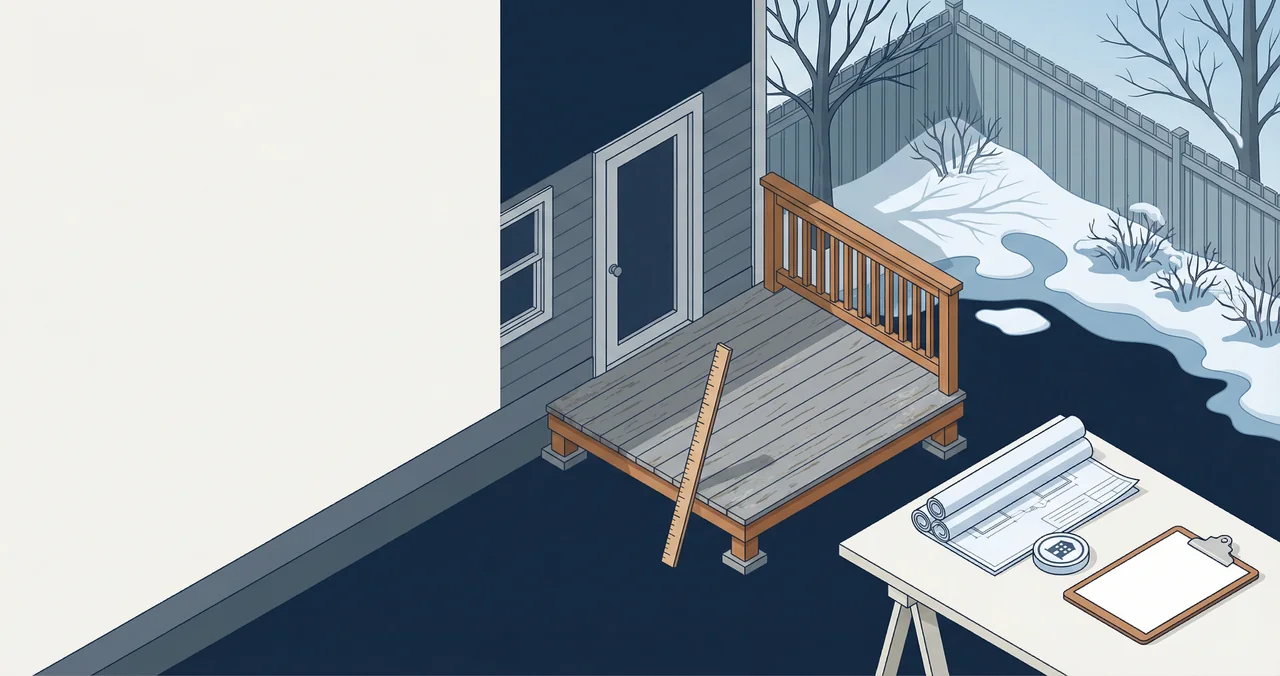
Deck Permits in New Orleans: Requirements, Costs & How to Apply in 2026
Planning a new deck in New Orleans? Before you pick out materials or call a contractor, there's one step you can't skip: figuring out whether you need a building permit. Get it wrong and you're looking at fines, forced removal, or a nightmare when you try to sell your home.
🏗️ Planning a deck project?
Get a free manual project review, or visualize your dream deck with AI before requesting quotes.
📋 Tool Alert: Permit Checker
Do you really need a permit? Check the exact rules for your city or township.
Check Permits →Here's exactly what New Orleans homeowners need to know about deck permits in 2026 — the rules, the costs, and how to get through the process without headaches.
<!-- slot:after-intro -->
Do You Need a Deck Permit in New Orleans?
Yes, most deck projects in New Orleans require a building permit. The City of New Orleans Department of Safety and Permits oversees residential construction, and their rules are straightforward:
- Decks over 200 square feet require a permit
- Decks more than 30 inches above grade require a permit
- Any deck attached to your home typically requires a permit, regardless of size
Even a modest 12×16 deck (192 sq ft) can trigger the permit requirement if it's elevated more than 30 inches. And in New Orleans — where many homes sit on raised foundations, especially in neighborhoods like the Marigny, Bywater, and parts of Uptown — that 30-inch threshold comes up fast.
When You Might Not Need a Permit
A few scenarios where you may be exempt:
- Ground-level platforms under 200 sq ft that sit less than 30 inches above grade
- Freestanding decks under 200 sq ft not attached to the primary structure
- Basic repairs that replace existing materials without changing the footprint or structure
Don't assume you're in the clear. Call the Department of Safety and Permits at (504) 658-7100 or visit their office at City Hall before starting work. A quick phone call can save you thousands.
When a Permit Is Required
Here's a breakdown of common deck projects and whether they trigger the permit requirement in New Orleans:
| Project Type | Permit Required? |
|---|---|
| Ground-level deck under 200 sq ft, under 30" high | Usually no |
| Deck over 200 sq ft at any height | Yes |
| Deck over 30" above grade at any size | Yes |
| Attached deck (any size) | Yes |
| Adding stairs or railings to existing deck | Depends on scope |
| Roofed deck or screened porch | Yes (may need additional permits) |
| Deck in a historic district | Yes (plus Historic District Landmarks Commission review) |
| Pool deck | Yes (plus pool barrier requirements) |
Historic District Rules — A Big Deal in New Orleans
This is where New Orleans gets tricky. If your home sits in a local historic district — and there are many, including the French Quarter, Garden District, Tremé, Esplanade Ridge, and parts of Mid-City — you'll need approval from the Historic District Landmarks Commission (HDLC) in addition to a standard building permit.
The HDLC reviews:
- Materials and finishes
- Placement and visibility from the street
- Height and design compatibility with surrounding structures
This adds 4–8 weeks to your timeline. Plan accordingly.
Permit Fees & Processing Time
How Much Does a Deck Permit Cost in New Orleans?
Deck permit fees in New Orleans are based on the estimated project value. Here's what to expect in 2026:
| Project Value | Estimated Permit Fee |
|---|---|
| Under $5,000 | $75–$150 |
| $5,000–$15,000 | $150–$350 |
| $15,000–$30,000 | $350–$600 |
| Over $30,000 | $600+ |
Additional fees may apply for:
- Plan review: $50–$150
- Zoning review: $50–$100
- HDLC review (historic districts): $100–$250
- Re-inspection fees: $75+ per visit if you fail an inspection
For a typical 300 sq ft pressure-treated deck costing around $7,500–$13,500 installed, you're looking at total permit costs of roughly $200–$400. That's a small price compared to the fines for skipping the process.
To get a clearer picture of what your deck project might cost overall, check out our guide on deck and patio building costs in New Orleans.
How Long Does It Take?
- Standard residential permit: 2–4 weeks for review and approval
- Projects in historic districts: 6–12 weeks (HDLC review adds significant time)
- Simple permits (small, straightforward projects): Sometimes approved within 5–10 business days
Pro tip: Submit your application during fall or winter when permit volume tends to be lower. You'll often get faster turnaround — and you'll be ready to build during the best weather window.
<!-- slot:mid-content -->
Building Codes & Setback Rules
New Orleans follows the International Residential Code (IRC) with local amendments. Here are the specific requirements that matter for deck construction:
Structural Requirements
- Footing depth: Minimum 12 inches below grade (New Orleans has a shallow frost line of 6–12 inches, but soil conditions along the Mississippi River basin vary widely)
- Post spacing: Typically 6–8 feet on center, depending on beam size and load
- Joist spacing: 16 inches on center for most decking materials; 12 inches on center recommended for composite and diagonal installations
- Ledger board attachment: Must be bolted (not nailed) to the house rim joist with ½-inch lag bolts or through-bolts spaced per code
Railing Requirements
- Required when deck is 30 inches or more above grade
- Minimum height: 36 inches for residential decks
- Baluster spacing: No more than 4 inches between balusters (the "4-inch sphere rule")
- Must withstand 200 lbs of force applied at the top rail
Setback Rules
New Orleans setback requirements depend on your zoning district. Common residential zones include:
- Front setback: Typically 15–25 feet from the property line (varies by zone and block average)
- Side setback: 3–5 feet minimum
- Rear setback: 20 feet for primary structures; decks may have reduced requirements in some zones
In many New Orleans neighborhoods — especially shotgun-house neighborhoods in Bywater, the 7th Ward, and Mid-City — lots are narrow. Side setbacks can eat into your usable space quickly. Get a survey done before finalizing your deck design.
Hurricane and Moisture Considerations
This is New Orleans. Your deck needs to handle serious weather:
- Hurricane-rated fasteners and connectors are strongly recommended, especially for elevated decks. Simpson Strong-Tie connectors rated for high-wind zones are the standard
- Pressure-treated lumber must be rated for ground contact where posts meet footings
- Composite decking resists the mold, mildew, and termite damage that plagues wood decks in New Orleans' extreme humidity — a real advantage in this climate
- All hardware should be stainless steel or hot-dipped galvanized to resist corrosion from moisture and salt air
If you're weighing composite decking options against traditional wood, factor in how aggressively New Orleans' climate attacks untreated materials. Composite costs more upfront but holds up dramatically better in humid, termite-heavy environments.
Use PaperPlan (paperplan.app) to visualize different decking materials on your own home before committing — it's especially helpful for comparing how wood tones vs. composite colors look against your specific siding and trim.
How to Apply for a Deck Permit in New Orleans
Step 1: Gather Your Documents
Before visiting the Department of Safety and Permits, prepare:
- Site plan showing your property lines, existing structures, and proposed deck location with dimensions and setback distances
- Construction drawings including a plan view, elevation view, and structural details (framing, footings, railing)
- Material specifications for lumber, fasteners, and hardware
- Proof of property ownership or authorization from the owner
- Contractor license number (if using a licensed contractor)
For straightforward residential decks, hand-drawn plans are sometimes accepted — but scaled, detailed drawings move through review faster. Most experienced deck builders in Houston and across the Gulf Coast are familiar with the IRC requirements and can prepare permit-ready plans.
Step 2: Submit Your Application
You can apply:
- In person at the Department of Safety and Permits, 1300 Perdido Street (City Hall), Suite 7E01
- Online through the City of New Orleans' OneStop permitting portal
The online system has improved significantly — for most residential deck permits, you can upload documents, pay fees, and track status without visiting City Hall.
Step 3: Plan Review
A plans examiner will review your submission for:
- Compliance with IRC structural requirements
- Zoning setback compliance
- HDLC approval (if in a historic district)
- Floodplain compliance (critical in New Orleans — many areas require elevated construction)
If your property is in a FEMA flood zone, your deck design may need to account for Base Flood Elevation (BFE) requirements. This is common across much of New Orleans, from Lakeview to Gentilly to New Orleans East.
Step 4: Receive Your Permit and Build
Once approved:
- Post your permit visibly at the job site
- Schedule inspections at required stages: footing/foundation, framing, and final
- Don't cover or close up work until it passes inspection
Step 5: Final Inspection
The final inspection confirms your deck matches the approved plans and meets code. Once passed, you'll receive a Certificate of Completion. Keep this document — you'll need it when selling your home.
What Happens If You Build Without a Permit
Skipping the permit might seem tempting, especially for a "simple" deck. Here's why that's a bad idea in New Orleans:
- Fines: The city can impose penalties of $100–$500 per day for unpermitted construction
- Stop-work orders: Inspectors can halt your project mid-build
- Forced removal: In worst cases, you may be ordered to tear down the unpermitted structure
- Insurance problems: Your homeowner's insurance may deny claims for damage to or caused by an unpermitted deck
- Sale complications: Title searches reveal unpermitted work. Buyers walk away, or you're forced to retroactively permit and potentially rebuild to code
The risks multiply in historic districts, where the HDLC takes violations seriously and remediation can be expensive.
For a deeper look at the consequences, our article on building a deck without a permit covers the financial and legal risks in detail.
Can You Get a Retroactive Permit?
Sometimes. New Orleans does allow after-the-fact permits, but they come with:
- Double the standard permit fees in most cases
- A full inspection that may require opening up finished work
- Possible requirement to bring non-compliant elements up to current code
It's always cheaper and easier to permit first.
What Your Deck Will Cost in New Orleans (2026 Pricing)
Since you're already thinking about permits, here's a quick look at installed deck costs in New Orleans for 2026:
| Material | Installed Cost per Sq Ft |
|---|---|
| Pressure-treated wood | $25–$45 |
| Cedar | $35–$55 |
| Composite | $45–$75 |
| Trex (brand-name composite) | $50–$80 |
| Ipe (hardwood) | $60–$100 |
For a 300 sq ft deck, that's roughly:
- Pressure-treated: $7,500–$13,500
- Composite: $13,500–$22,500
- Ipe: $18,000–$30,000
New Orleans has strong contractor availability year-round, which means more room to negotiate pricing — especially if you're building during the October through April sweet spot when humidity drops and working conditions improve.
Looking at pool deck options? Material choice matters even more around water, where slip resistance and moisture resistance are critical.
<!-- slot:before-faq -->
🎨 Not sure which material to pick?
Upload a photo of your backyard and see exactly how Trex, TimberTech, or cedar would look — free and instant.
Frequently Asked Questions
How much does a deck permit cost in New Orleans?
Most residential deck permits in New Orleans cost between $150 and $600, depending on your project's estimated value. Budget an additional $100–$250 if you're in a historic district and need HDLC review. Plan review and zoning fees can add another $50–$150.
Do I need a permit for a small deck in New Orleans?
If your deck is under 200 square feet, less than 30 inches above grade, and freestanding (not attached to your house), you likely don't need a permit. However, if it's attached to your home or in a historic district, a permit is almost certainly required regardless of size. Always verify with the Department of Safety and Permits before starting.
How long does it take to get a deck permit approved in New Orleans?
Standard residential deck permits typically take 2–4 weeks. Projects in historic districts that require HDLC review can take 6–12 weeks. Submitting complete, detailed plans helps avoid delays from revision requests.
What building code does New Orleans follow for decks?
New Orleans follows the International Residential Code (IRC) with local amendments. Key requirements include 36-inch minimum railing height, 4-inch maximum baluster spacing, and 12-inch minimum footing depth. Properties in FEMA flood zones must also comply with Base Flood Elevation requirements, which can affect deck height and design.
Can I build a deck myself in New Orleans, or do I need a licensed contractor?
Homeowners in New Orleans can pull their own permits and build their own decks. You don't need to hire a licensed contractor for owner-occupied residential projects. That said, you're still responsible for meeting all code requirements and passing inspections. For elevated decks, complex designs, or properties in historic districts, hiring an experienced deck contractor familiar with New Orleans' unique requirements is worth the investment.
<!-- slot:end -->
📋 Planning a deck project?
Get a free manual project review from our team — no obligation, no spam.
Get Free Project Review →Upload a backyard photo and preview real decking materials with AI — free, instant, no sign-up.
Permits, costs, material comparisons, and questions to ask before requesting quotes — delivered to your inbox.