
Deck Permits in Riverside (2026)
Need a deck permit in Riverside? Learn requirements, fees, setback rules, and how to apply through Riverside's Building & Safety Division in 2026.
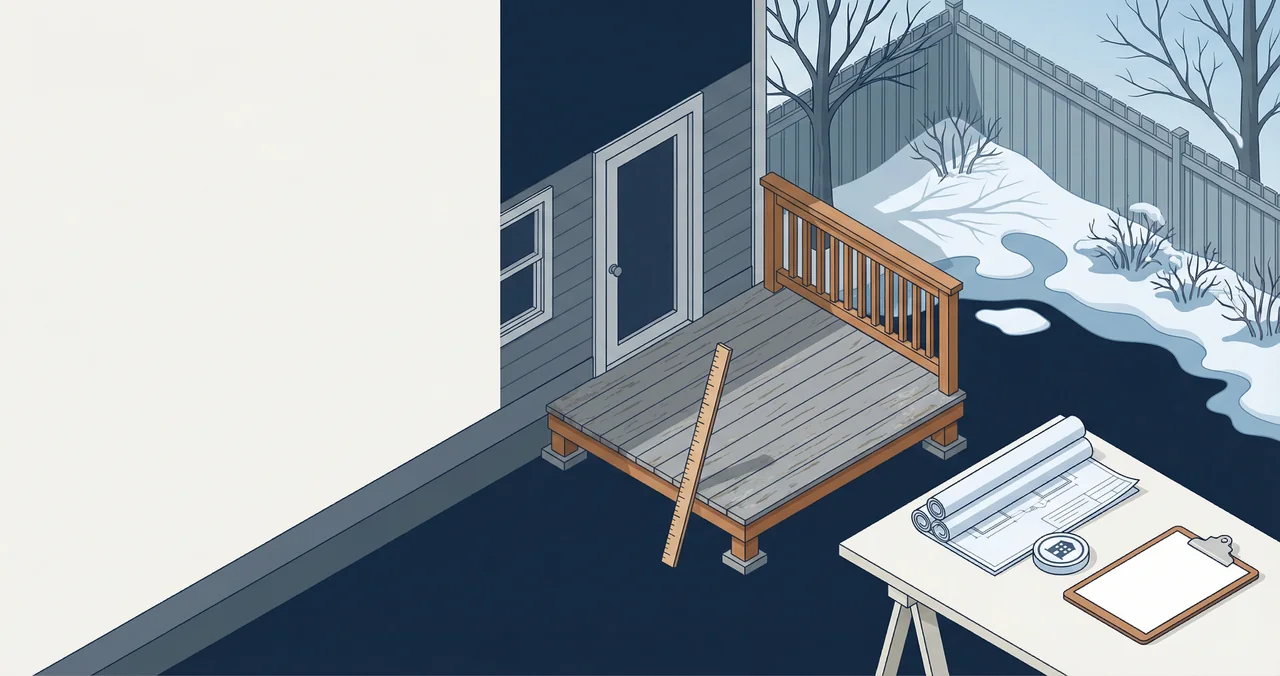
Do You Need a Deck Permit in Riverside?
If you're planning to build a deck in Riverside, the short answer is: probably yes. The City of Riverside requires a building permit for most deck projects, and skipping it can cost you far more than the permit itself.
🏗️ Planning a deck project?
Get a free manual project review, or visualize your dream deck with AI before requesting quotes.
📋 Tool Alert: Permit Checker
Do you really need a permit? Check the exact rules for your city or township.
Check Permits →Looking for more regional information? Check out our California State Decking Hub.
Riverside's Building & Safety Division follows the California Building Code (CBC), which is based on the International Residential Code with state-specific amendments. Under these codes, any deck over 200 square feet or more than 30 inches above finished grade requires a permit. That 30-inch threshold catches most homeowners off guard — it's lower than you'd think, especially on sloped lots common in neighborhoods like Canyon Crest, Hawarden Hills, and the Victoria Avenue corridor.
Even a modest backyard deck often triggers the permit requirement. A ground-level platform under 200 square feet sitting directly on grade? You're likely exempt. Anything else? File the paperwork.
<!-- slot:after-intro -->
When a Permit Is Required
Here's exactly when you need a deck permit in Riverside:
- Deck height exceeds 30 inches above finished grade at any point
- Deck area exceeds 200 square feet, regardless of height
- Attached decks — any deck structurally connected to your house requires a permit (this affects your home's lateral load path)
- Electrical work — adding outlets, lighting circuits, or fans requires a separate electrical permit
- Plumbing — outdoor kitchens or sinks need plumbing permits
- Roofed or covered structures — pergolas or patio covers over your deck trigger additional requirements
When You Might Be Exempt
You generally don't need a permit for:
- A ground-level deck or platform under 200 square feet that sits no more than 30 inches above grade
- Freestanding decks not attached to the dwelling (though size and height limits still apply)
- Replacing deck boards on an existing permitted structure without altering the framing
- Minor cosmetic repairs like staining or sealing
Important caveat: If your property sits in a hillside overlay zone — common in Riverside's northern and western areas near the Box Springs Mountains — additional grading and geotechnical requirements may apply even for smaller projects. Always verify with the Building & Safety Division before assuming you're exempt.
Permit Fees & Processing Time
Riverside's permit fees are based on the project valuation — the estimated total cost of construction including labor and materials. Here's what to expect in 2026:
Typical Fee Breakdown
| Fee Type | Estimated Cost |
|---|---|
| Building permit (based on valuation) | $150–$600+ |
| Plan check fee (65% of permit fee) | $100–$390 |
| Technology/records surcharge | $25–$50 |
| SMIP (seismic) fee | $5–$15 |
| School fee (if applicable) | Varies |
| Total for a typical deck project | $300–$1,000+ |
For a standard 300–400 sq ft residential deck, most homeowners pay between $400 and $800 in total permit costs. Larger or more complex projects — multi-level decks, covered structures, or decks requiring engineered plans — will run higher.
Processing Times
- Over-the-counter (OTC) permits: Simple, code-compliant deck plans can sometimes be approved same-day or within 1–3 business days at the Riverside permit counter (3900 Main Street, 3rd Floor)
- Plan check submittals: More complex projects go through formal plan review, taking 2–4 weeks for first review
- Corrections and resubmittal: If your plans need revisions, add another 1–2 weeks per cycle
Pro tip: Submit your application early. Riverside's building department sees heavier volume in spring as homeowners rush to build before summer heat arrives. Filing in late fall or winter often means faster turnaround — and your contractor can start work during the best time to build a deck, which run from October through May.
Building Codes & Setback Rules
Riverside enforces the 2022 California Building Code (Title 24), with local amendments. Here are the key code requirements that affect residential deck construction:
Structural Requirements
- Footing depth: Minimum 12 inches below grade for frost protection (Riverside's frost line is shallow at 6–12 inches, but footings must reach undisturbed soil)
- Post sizing: Minimum 4x4 posts for decks under 8 feet in height; 6x6 posts recommended for taller structures
- Ledger board attachment: Must use ½-inch lag screws or through-bolts at specific spacing per the CBC, with flashing to prevent moisture intrusion
- Beam and joist spans: Follow CBC span tables — your plans must include lumber species, grades, and spacing
- Lateral bracing: Required for elevated decks, especially important given Riverside's Seismic Design Category D classification
Setback Requirements
Standard residential setbacks in Riverside (verify with your specific zoning district):
- Front yard: Typically 15–25 feet from the property line, depending on zone
- Side yard: 5 feet minimum for interior lots; 10–15 feet on street-side yards
- Rear yard: Usually 10–20 feet, though many residential zones allow 5 feet for accessory structures
- Easement setbacks: You cannot build within a utility easement — check your property's title report
Riverside has multiple zoning designations (R-1, R-2, R-3, RC, RE, etc.), each with different setback requirements. Your specific lot's setbacks are available through the Riverside Planning Division or by requesting a zoning verification letter.
Riverside-Specific Climate Considerations in Code
Riverside's extreme heat creates real engineering concerns your plans should address:
- Deck surface temperatures: Dark composite decking can exceed 150°F on summer days when ambient temperatures hit 110°F+. Riverside inspectors are increasingly aware of this, and choosing light-colored composite or capped PVC is strongly recommended.
- UV degradation: Riverside receives intense UV year-round. Materials without UV-stabilized caps will fade and deteriorate faster here than in coastal cities. Capped composite brands like Trex Transcend, TimberTech Advanced PVC, and Fiberon Paramount are built for this.
- Wood drying and cracking: Pressure-treated lumber dries aggressively in Riverside's low humidity. Cedar holds up better but still requires regular sealing. Budget for annual UV-protective stain if going with natural wood.
- Thermal expansion: PVC and composite materials expand more in extreme heat. Your plans should account for proper gapping — typically 3/16" to ¼" between boards — to prevent buckling.
Use PaperPlan to visualize different decking materials on your own home before committing — seeing how light-colored versus dark composite looks against your house can save you from a costly mistake in Riverside's climate.
<!-- slot:mid-content -->
How to Apply for a Deck Permit in Riverside
Here's the step-by-step process for getting your deck permit through Riverside's Building & Safety Division:
Step 1: Prepare Your Plans
You'll need to submit:
- Site plan showing your property boundaries, existing structures, the proposed deck location, and all setback dimensions
- Floor plan of the deck with dimensions, railings, stairs, and access points
- Cross-section/elevation drawings showing footings, posts, beams, joists, decking, and railings with all structural members labeled
- Details for ledger board connections, post-to-beam connections, and railing attachments
- Materials list specifying lumber species/grade or composite product specifications
For straightforward decks under 500 square feet, many Riverside contractors prepare plans that meet code. For complex or elevated decks, you may need a licensed engineer or architect to stamp the drawings — expect $500–$1,500 for engineered plans.
Step 2: Submit Your Application
You have two options:
1. In-person at the Building & Safety Division, 3900 Main Street, 3rd Floor, Riverside, CA 92522. Hours are typically Monday–Friday, 8:00 AM–5:00 PM.
2. Online through Riverside's eTRAKiT portal — the city has been expanding digital permitting, and many residential projects can now be submitted electronically.
Bring or upload:
- Completed permit application form
- Two sets of plans (or digital PDF files)
- Property owner authorization (if you're not the owner)
- Contractor's license number and insurance info (if using a contractor)
Step 3: Plan Review
Simple deck projects may qualify for over-the-counter approval — meaning the plan checker reviews your drawings while you wait. More involved projects enter the standard plan review queue.
During review, the examiner checks:
- Structural adequacy per CBC
- Setback compliance with your zoning district
- Proper connection details
- Compliance with any overlay zone requirements (hillside, floodplain, etc.)
Step 4: Pay Fees and Get Your Permit
Once approved, pay the assessed fees and receive your building permit. Post the permit card visibly at your job site — inspectors need to see it.
Step 5: Schedule Inspections
Riverside typically requires these inspections for deck construction:
1. Footing inspection — before pouring concrete (verify hole depth, rebar placement, soil conditions)
2. Framing inspection — after posts, beams, joists, and ledger board are installed but before decking goes on
3. Final inspection — completed deck with railings, stairs, and all hardware in place
Schedule inspections through Riverside's automated inspection request line or the eTRAKiT system. Give at least 24–48 hours notice.
Step 6: Get Your Final Sign-Off
Once you pass the final inspection, you'll receive a Certificate of Completion. Keep this with your property records — you'll need it when you sell your home.
What Happens If You Build Without a Permit
Building a deck without a permit in Riverside is risky, and the consequences are real:
- Stop-work orders: If a code enforcement officer or neighbor reports unpermitted construction, the city will shut down your project immediately
- Double fees: Riverside can charge double the standard permit fee for work done without a permit — that's an expensive lesson
- Forced removal: If your deck doesn't meet code and can't be brought into compliance, the city can order you to tear it down at your own expense
- Insurance problems: Homeowner's insurance may deny claims for injuries or damage related to unpermitted structures
- Sale complications: Title searches and home inspections flag unpermitted work. Buyers walk away, or lenders refuse to finance. You'll either need to retroactively permit the deck (which requires full inspection and possible modifications) or remove it before closing.
- Liability exposure: If someone is injured on your unpermitted deck, you're personally exposed. No permit means no code verification, which means no defense that the structure was built safely.
It's not worth it. The permit process in Riverside is straightforward, and the fees are modest compared to a $15,000–$40,000 deck project. For more on the risks, see our guide on building a deck without a permit and what it can cost you.
Retroactive Permits
If you've already built without a permit, contact Riverside's Building & Safety Division proactively. You'll need to:
1. Submit plans as if the deck were new construction
2. Pay the permit fee (potentially doubled)
3. Allow inspections — which may require opening up framing so the inspector can verify connections and footings
4. Make any required corrections to bring the structure up to code
The sooner you address it, the less painful the process.
Deck Costs in Riverside: What to Budget
Since you're already navigating permits, here's what the actual deck construction costs in Riverside for 2026:
| Material | Installed Cost (per sq ft) | Best For |
|---|---|---|
| Pressure-treated wood | $25–$45 | Budget-friendly, but needs annual maintenance in Riverside's UV |
| Cedar | $35–$55 | Natural look, better heat tolerance than PT, still needs sealing |
| Composite (mid-range) | $45–$75 | Low maintenance, best value for Riverside's climate |
| Trex (premium lines) | $50–$80 | Proven UV performance, warranty-backed |
| Ipe (hardwood) | $60–$100 | Extremely durable, naturally UV-resistant, premium price |
For a typical 300 sq ft deck in Riverside, expect to pay:
- Pressure-treated: $7,500–$13,500
- Composite: $13,500–$22,500
- Trex premium: $15,000–$24,000
These prices include materials, labor, footings, railings, and stairs. Permits and engineered plans are additional.
Our recommendation for Riverside: Light-colored capped composite. It handles the UV, stays cooler underfoot than dark alternatives, and eliminates the annual staining cycle that wood demands in this climate. Compare the best composite decking brands to narrow down your options.
If you're weighing attached versus freestanding designs — which also affects your permit requirements — check out our breakdown of attached vs. freestanding deck permits.
<!-- slot:before-faq -->
🎨 Not sure which material to pick?
Upload a photo of your backyard and see exactly how Trex, TimberTech, or cedar would look — free and instant.
Frequently Asked Questions
How much does a deck permit cost in Riverside?
Most Riverside homeowners pay $400–$800 in total permit-related fees for a standard residential deck. This includes the building permit, plan check fee, and various surcharges. The exact amount depends on your project's total valuation. Larger or more complex decks with engineered plans can exceed $1,000.
Can I build a small deck without a permit in Riverside?
Yes, if the deck is under 200 square feet and no more than 30 inches above finished grade. It also must not be attached to your house in a way that affects the structure. However, if your property is in a hillside overlay zone or special planning area, additional rules may apply. Always confirm with Riverside's Building & Safety Division before starting work.
How long does it take to get a deck permit approved in Riverside?
Simple deck plans may be approved same-day or within 1–3 business days through the over-the-counter process. Standard plan review takes 2–4 weeks. If corrections are needed, add another 1–2 weeks per cycle. Filing during the slower fall/winter months often speeds things up.
What inspections are required for a deck in Riverside?
Riverside typically requires three inspections: footing (before concrete pour), framing (after structural members are installed but before decking), and final (completed deck with railings and stairs). Schedule each through the eTRAKiT system or the automated phone line with at least 24–48 hours notice.
Do I need a permit to replace deck boards in Riverside?
If you're replacing decking boards only on an existing permitted structure — without modifying the framing, footings, or structural connections — you generally do not need a permit. However, if you're changing the deck's footprint, height, or structural components, a new permit is required. When in doubt, a quick call to Riverside's Building & Safety Division at (951) 826-5697 can save you headaches. For neighbor-related concerns during your project, our article on whether a neighbor can complain about your deck covers your rights and responsibilities.
<!-- slot:end -->
📋 Planning a deck project?
Get a free manual project review from our team — no obligation, no spam.
Get Free Project Review →Upload a backyard photo and preview real decking materials with AI — free, instant, no sign-up.
Permits, costs, material comparisons, and questions to ask before requesting quotes — delivered to your inbox.