
Deck Permits in San Diego (2026)
Need a deck permit in San Diego? Learn requirements, fees, building codes, setback rules, and how to apply through the Development Services Department in 2026.
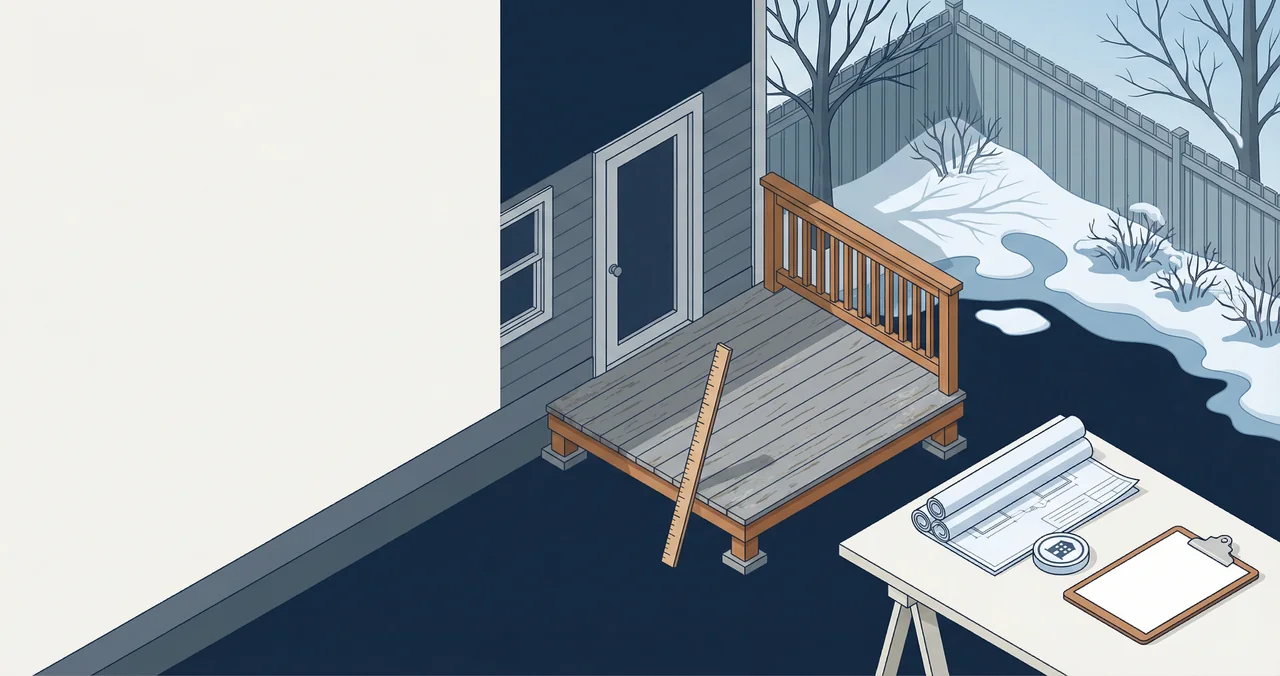
Do You Need a Deck Permit in San Diego?
If you're planning to build a deck in San Diego, the short answer is: probably yes. The City of San Diego's Development Services Department (DSD) requires a building permit for most deck projects, and skipping it can lead to fines, forced removal, or serious problems when you sell your home.
🏗️ Planning a deck project?
Get a free manual project review, or visualize your dream deck with AI before requesting quotes.
📋 Tool Alert: Permit Checker
Do you really need a permit? Check the exact rules for your city or township.
Check Permits →Looking for more regional information? Check out our California State Decking Hub.
Here's the quick rule of thumb. You need a permit if your deck is:
- More than 30 inches above grade at any point
- Larger than 200 square feet
- Attached to your house (which affects the building's structural envelope)
- Covering or enclosing space below (like a walkout basement)
A small, ground-level platform under 200 square feet that sits less than 30 inches off the ground? You might not need a permit. But even then, you still need to comply with setback requirements and zoning rules — and it's worth a quick call to DSD at (619) 446-5000 to confirm.
<!-- slot:after-intro -->
When a Permit Is Required
San Diego follows the 2022 California Building Code (CBC), which is based on the International Residential Code with state amendments. The city also layers its own municipal code requirements on top.
Projects That Require a Permit
- Elevated decks over 30 inches above finished grade
- Attached decks of any size that connect to your home's structure
- Decks over 200 square feet, regardless of height
- Any deck with a roof or pergola cover (triggers additional structural review)
- Decks near slopes or canyons — San Diego has specific Environmentally Sensitive Lands (ESL) regulations
- Decks in the Coastal Overlay Zone — requires additional review and possibly a Coastal Development Permit
Projects That Typically Don't Need a Permit
- Freestanding platforms under 200 square feet and under 30 inches above grade
- Replacing deck boards on an existing permitted structure (resurfacing only, no structural changes)
- Minor repairs that don't alter the structure
San Diego's canyon-adjacent and hillside neighborhoods — La Jolla, Point Loma, Mission Hills, Tierrasanta, Scripps Ranch — often trigger additional geotechnical review or hillside development permits. If your property backs up to a canyon or sits on a slope, budget extra time for the permitting process.
Permit Fees & Processing Time
San Diego's permit fees are calculated based on project valuation. Here's what to expect in 2026:
Typical Fee Breakdown
| Fee Type | Estimated Cost |
|----------|---------------|
| Building permit (based on valuation) | $300–$900 |
| Plan check fee | $200–$600 |
| Technology/surcharge fees | $50–$150 |
| School development fee (if applicable) | Varies |
| Total for a typical deck | $550–$1,650 |
For a standard 300–400 square foot attached deck, most homeowners pay between $700 and $1,200 in total permit fees. Larger, more complex projects — especially those requiring engineering or environmental review — run higher.
Processing Times
- Simple Deck Permit (Express/Over-the-Counter): Some straightforward deck projects qualify for same-day or next-day approval through DSD's express permit process. Bring complete plans and you could walk out with a permit.
- Standard Plan Review: 2–4 weeks for typical residential decks
- Projects in Overlay Zones: 4–8 weeks or longer if coastal, hillside, or environmental review is required
- Corrections/Resubmittal: Add 1–2 weeks per round of corrections
Pro tip: San Diego's DSD offers an online permitting portal where you can submit applications, check status, and schedule inspections electronically. Using it saves trips downtown.
Building Codes & Setback Rules
Structural Requirements
San Diego follows California Building Code standards for residential decks:
- Footings: Minimum 12 inches deep — San Diego's mild climate means no deep frost line concerns, but footings still need to reach stable, undisturbed soil. In hillside areas, deeper footings or engineered piers may be required.
- Ledger board attachment: Must be properly flashed and bolted to the house framing per CBC Table R507.2. This is the #1 inspection failure point.
- Beam and joist sizing: Must meet span tables in CBC Section R507
- Railing: Required on any deck surface 30 inches or more above grade. Minimum height is 42 inches (California requirement — stricter than the IRC's 36-inch minimum). Balusters must be spaced so a 4-inch sphere cannot pass through.
- Stairs: Must be at least 36 inches wide, with consistent riser height between 4 and 7¾ inches
- Live load: 40 psf minimum for residential decks
Setback Requirements
Setback rules in San Diego depend on your zone. Common residential zones:
- RS-1-7 (standard single-family): Rear yard setback of 13 feet minimum; side yard setback of 4 feet minimum
- RM zones (multi-family): Varies — check your specific zone
- Decks may encroach into rear setbacks by up to 6 feet if they are unenclosed and uncovered, but this depends on your zone and any community plan overlays
To find your property's exact zoning, use the city's zoning map tool or visit DSD's public counter.
Coastal and Environmental Considerations
San Diego's coastal location creates unique requirements:
- Coastal Overlay Zone: Properties within this zone may need a Coastal Development Permit in addition to your building permit. This adds time and cost.
- Environmentally Sensitive Lands (ESL): If your lot contains or is adjacent to wetlands, steep slopes, or sensitive habitats, additional review applies.
- Salt air corrosion: While not a code requirement, San Diego builders strongly recommend stainless steel or hot-dipped galvanized fasteners for homes within a few miles of the coast. Standard zinc-plated hardware corrodes quickly in salt air. This is especially critical in Ocean Beach, Pacific Beach, La Jolla, Coronado, and Imperial Beach.
For material selection that holds up in San Diego's coastal environment, check out our guide on finding the best deck builders in San Diego who understand these local conditions.
<!-- slot:mid-content -->
How to Apply for a Deck Permit in San Diego
Step 1: Determine Your Project Scope
Before anything else, figure out exactly what you're building. Measure your proposed deck, determine its height above grade, and note how it will attach (or not) to your home. Sketch it out with rough dimensions.
Step 2: Check Your Zoning
Look up your property's zone designation and any overlay zones. San Diego has dozens of community plan areas, each with potential additional requirements. You can check online or call DSD.
Step 3: Prepare Your Plans
For most residential decks, you'll need:
- Site plan showing the deck's location on your property, with distances to property lines, the house, and any other structures
- Construction drawings showing framing, footings, connections, railings, and stairs
- Details for ledger board connections, post-to-beam connections, and railing attachments
- Material specifications including lumber species/grade and fastener types
Many San Diego contractors include permit-ready plans in their project quotes. If you're DIYing, consider hiring a drafter — $300–$800 for a standard deck plan set.
Use PaperPlan to visualize different decking materials on your own home before committing — it helps you lock down design choices before spending money on plan revisions.
Step 4: Submit Your Application
You have two options:
1. Online: Submit through the DSD online portal. Upload your plans as PDFs, fill out the application, and pay fees electronically.
2. In person: Visit the Development Services Department at 1222 First Avenue, San Diego, CA 92101. For simple projects, you may get same-day express approval.
Step 5: Plan Review
DSD reviews your plans for code compliance. If corrections are needed, you'll receive comments through the portal or by mail. Respond promptly — each round of corrections adds 1–2 weeks.
Step 6: Receive Your Permit and Build
Once approved, your permit is valid for 180 days from issuance (with options to extend). Post your permit card visibly at the job site during construction.
Step 7: Schedule Inspections
San Diego typically requires these inspections for deck projects:
1. Footing inspection — before pouring concrete
2. Framing inspection — after structural framing is complete but before decking is installed
3. Final inspection — completed deck, railings, stairs, and all connections
Schedule inspections through the DSD portal or by calling (619) 446-5000. Inspectors need at least 24 hours' notice.
What Happens If You Build Without a Permit
Building a deck without a required permit in San Diego is risky. Here's what you're facing:
Immediate Consequences
- Stop-work order: If a building inspector spots unpermitted construction, they'll shut it down immediately
- Double fees: San Diego charges penalty fees up to double the normal permit cost for work done without permits
- Forced removal: In worst cases, you may be ordered to demolish the unpermitted structure
Long-Term Problems
- Home sale complications: Title companies and buyers' inspectors flag unpermitted structures. You'll either need to retroactively permit the deck (expensive) or remove it before closing.
- Insurance gaps: Your homeowner's insurance may deny claims for injuries or damage related to an unpermitted deck
- Neighbor complaints: San Diego actively investigates code complaints. One call from a neighbor triggers an inspection.
- Property tax issues: Unpermitted improvements can create assessment problems with the County Assessor
Retroactive Permitting
If you already have an unpermitted deck, San Diego does allow you to apply for a retroactive permit. The process involves:
- Filing a standard permit application with "as-built" plans
- Paying the permit fee plus penalty surcharges
- Passing all required inspections — which may require opening up portions of the structure for inspection
- Making any corrections needed to bring the deck up to current code
This often costs two to three times what permitting would have cost upfront. Learn more about the risks of building without a permit — while that guide covers Ontario specifically, the financial and legal consequences are similar.
What Your Deck Will Cost in San Diego
Permit fees are just one piece of the budget. Here's what San Diego homeowners are paying for deck construction in 2026:
| Material | Installed Cost (per sq ft) |
|----------|---------------------------|
| Pressure-treated wood | $25–$45 |
| Cedar | $35–$55 |
| Composite | $45–$75 |
| Trex (brand-name composite) | $50–$80 |
| Ipe (hardwood) | $60–$100 |
For a standard 12×16 deck (192 sq ft), you're looking at:
- Pressure-treated: $4,800–$8,640
- Cedar: $6,720–$10,560
- Composite: $8,640–$14,400
- Trex: $9,600–$15,360
San Diego's year-round building season keeps contractor availability relatively steady and prices competitive compared to markets with short building windows. Cedar and redwood are locally popular and perform beautifully in the mild, dry climate — though composite decking remains the go-to for homeowners who want zero maintenance.
If your project involves a pool area, our guide on the best pool deck materials breaks down slip resistance and heat retention — both important factors in San Diego's sunny climate.
For tips on choosing the right deck builder, make sure any contractor you hire pulls permits in their own name and has a valid California C-13 (Fencing) or B (General Building) contractor's license.
<!-- slot:before-faq -->
🎨 Not sure which material to pick?
Upload a photo of your backyard and see exactly how Trex, TimberTech, or cedar would look — free and instant.
Frequently Asked Questions
Do I need a permit for a ground-level deck in San Diego?
It depends on size. A freestanding, ground-level deck under 200 square feet and under 30 inches above grade generally doesn't require a building permit. But you still need to meet setback requirements and zoning rules. If your deck is attached to the house or exceeds either threshold, a permit is required. When in doubt, call DSD at (619) 446-5000 — a five-minute call can save you thousands in penalties.
How long does it take to get a deck permit in San Diego?
Simple residential decks can sometimes get same-day approval through DSD's express permit process if your plans are complete and straightforward. Standard plan review takes 2–4 weeks. Projects in the Coastal Overlay Zone, on hillsides, or near environmentally sensitive lands can take 4–8 weeks or longer. Plan corrections add 1–2 weeks per round.
How much does a deck permit cost in San Diego?
Total fees for a typical residential deck range from $550 to $1,650, depending on project valuation and complexity. This includes the building permit, plan check fees, and technology surcharges. Projects requiring Coastal Development Permits or environmental review will cost more. Budget $700–$1,200 for an average 300–400 square foot attached deck.
Can I build a deck myself in San Diego, or do I need a licensed contractor?
California law allows homeowners to act as their own contractor (owner-builder) for work on their primary residence. You'll sign an Owner-Builder Declaration acknowledging you understand the responsibilities. You still need to pull the permit, meet all code requirements, and pass inspections. For DIY deck building, structural connections and proper flashing are the most critical details to get right.
What inspections are required for a deck in San Diego?
San Diego typically requires three inspections: footing (before pouring concrete), framing (after structural work but before decking), and final (completed project). Each inspection must be scheduled at least 24 hours in advance through the DSD portal or by phone. Failed inspections require corrections and re-inspection — your contractor should handle this, but as the homeowner, you're ultimately responsible for ensuring the work passes.
<!-- slot:end -->
📋 Planning a deck project?
Get a free manual project review from our team — no obligation, no spam.
Get Free Project Review →Upload a backyard photo and preview real decking materials with AI — free, instant, no sign-up.
Permits, costs, material comparisons, and questions to ask before requesting quotes — delivered to your inbox.