
Deck Permits in Thornton (2026)
Need a deck permit in Thornton, CO? Learn requirements, fees, setback rules, and how to apply through Thornton's Building Division in 2026.
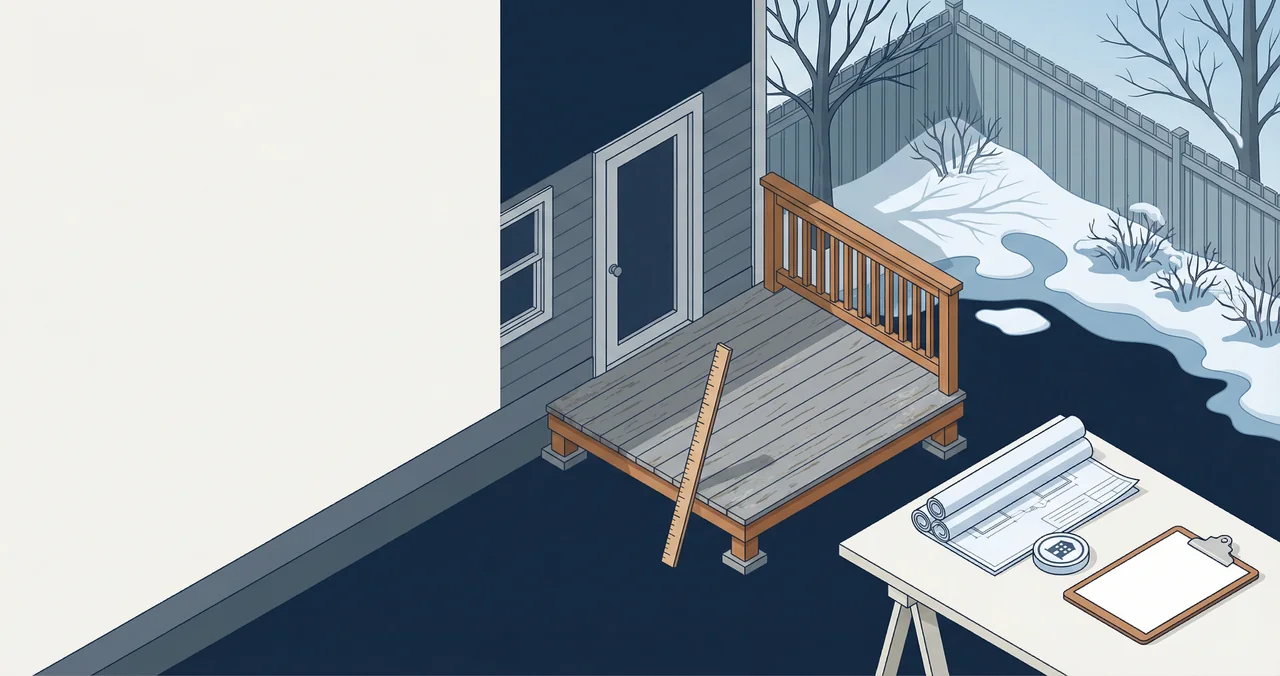
Deck Permits in Thornton: Requirements, Costs & How to Apply in 2026
Planning a new deck in Thornton? Before you pick out materials or call a contractor, you need to figure out whether your project requires a building permit. Skip this step and you could face fines, forced removal, or serious headaches when you sell your home.
🏗️ Planning a deck project?
Get a free manual project review, or visualize your dream deck with AI before requesting quotes.
📋 Tool Alert: Permit Checker
Do you really need a permit? Check the exact rules for your city or township.
Check Permits →Looking for more regional information? Check out our Colorado State Decking Hub.
Here's exactly what Thornton homeowners need to know about deck permits in 2026 — the rules, the costs, and how to get through the process without delays.
<!-- slot:after-intro -->
Do You Need a Deck Permit in Thornton?
Yes, most deck projects in Thornton require a building permit. The City of Thornton's Building Division follows the International Residential Code (IRC) as adopted by Colorado, and the general threshold works like this:
- Decks over 200 square feet require a permit
- Decks more than 30 inches above grade require a permit
- Any deck attached to your house typically requires a permit, regardless of size
A small ground-level platform under 200 square feet that sits close to the ground? You might be exempt. But "might" isn't good enough when thousands of dollars are on the line. Always confirm with Thornton's Development Services department before starting work. A quick phone call can save you from a costly mistake.
What About Replacing an Existing Deck?
If you're tearing down an old deck and rebuilding in the same footprint, you still need a permit in most cases. The city wants to verify that the new structure meets current building codes — and codes have changed significantly over the years, especially around footing depth and snow load requirements.
Even a simple deck resurfacing (replacing boards on an existing frame) may not require a permit, but adding structural changes like new stairs, railings, or expanding the footprint absolutely will.
When a Permit Is Required
Here's a quick breakdown of common Thornton deck projects and whether they trigger the permit requirement:
| Project Type | Permit Required? |
|---|---|
| New deck over 200 sq ft | Yes |
| New deck over 30" above grade | Yes |
| Deck attached to house (any size) | Yes |
| Ground-level freestanding deck under 200 sq ft | Likely no — verify with the city |
| Replacing deck boards only (no structural changes) | Typically no |
| Adding stairs or railings to existing deck | Yes |
| Screened-in porch or covered deck | Yes — may require additional permits |
| Hot tub on existing deck | Yes — structural review needed |
One important note: if your property falls within an HOA, you'll likely need architectural approval *in addition to* the city permit. Many Thornton neighborhoods — particularly in areas like Hunters Glen, Trail Creek, and North Creek — have HOA covenants that regulate deck size, materials, and even color.
Permit Fees & Processing Time
How Much Does a Deck Permit Cost in Thornton?
Permit fees in Thornton are based on the estimated project valuation. For a typical residential deck, expect to pay:
- Basic deck permit fee: $150–$400 depending on project scope
- Plan review fee: Often included or an additional $75–$150
- Inspection fees: Usually bundled into the permit cost
For a standard 300–400 square foot composite deck (valued around $15,000–$25,000 installed), your total permit fees will typically land in the $200–$350 range. Larger or more complex projects — multi-level decks, covered structures, or decks requiring electrical work — will cost more.
For reference, installed deck costs in the Thornton area run roughly:
| Material | Installed Cost per Sq Ft |
|---|---|
| Pressure-treated wood | $25–$45 |
| Cedar | $35–$55 |
| Composite | $45–$75 |
| Trex (premium composite) | $50–$80 |
| Ipe (hardwood) | $60–$100 |
Given Thornton's harsh winters and freeze-thaw cycles, composite and PVC decking tend to hold up best without the annual sealing that wood demands. The upfront cost is higher, but you avoid the maintenance treadmill.
How Long Does Permit Approval Take?
Plan on 5–15 business days for standard residential deck permits in Thornton. During peak building season (May through August), review times can stretch longer as the Building Division handles increased volume.
Want to avoid delays? Submit your application early. The best move is to apply in March or April so your permit is approved and ready before prime building season kicks off. Thornton's building window is short — roughly May through October — and contractor schedules fill up fast. Builders who are booked by March aren't exaggerating.
If your application is incomplete or your plans don't meet code, the city will send it back for revisions, adding another round of review time. Getting it right the first time matters.
<!-- slot:mid-content -->
Building Codes & Setback Rules
Thornton follows the International Residential Code (IRC) as adopted and amended by the State of Colorado and the city itself. Here are the key code requirements that affect deck construction:
Footing and Foundation Requirements
This is where Thornton's climate makes a real difference. The frost line in the Front Range area sits at approximately 36 inches, though some areas may require deeper footings depending on soil conditions. Every deck footing must extend below the frost line to prevent frost heave — a common problem in Thornton where freeze-thaw cycles are relentless from November through March.
- Minimum footing depth: 36 inches below grade (verify with your specific lot)
- Footing diameter: Typically 12–16 inches for residential decks, depending on load
- Concrete footings are standard; helical piers are also accepted with engineering documentation
Frost heave can literally push your deck out of the ground if footings are too shallow. This isn't theoretical — it happens regularly in Colorado when builders cut corners.
Setback Requirements
Thornton's zoning code establishes setback distances that your deck must respect:
- Front yard setback: Decks typically cannot encroach into the front setback (usually 25 feet from the property line, but varies by zoning district)
- Side yard setback: Usually 5 feet minimum from the side property line
- Rear yard setback: Typically 15 feet from the rear property line for principal structures; decks may be allowed closer — check your specific zoning
These setbacks vary by zoning district. Your property's zoning designation (R-1, R-2, PUD, etc.) determines the exact requirements. You can look up your zoning at Thornton's Planning Division or through their online GIS mapping tools.
Structural and Safety Codes
- Railing height: Minimum 36 inches for residential decks (42 inches in some jurisdictions — confirm locally)
- Baluster spacing: Maximum 4 inches between balusters (the "4-inch sphere" rule)
- Stair requirements: Risers no more than 7¾ inches, treads at least 10 inches deep
- Ledger board attachment: Must be properly flashed and bolted (not just nailed) to the house structure
- Snow load: Thornton decks must be designed to handle Colorado's snow load requirements — typically 30–40 pounds per square foot ground snow load, though your specific location may vary
- Live load: Minimum 40 psf for deck surfaces
The ledger board connection is the number-one failure point for residential decks nationwide. In Thornton, where snow can pile up and ice dams form against the house, proper flashing and attachment is critical. Inspectors will scrutinize this closely.
Drainage and Grading
Your deck project can't negatively affect drainage on your property or your neighbor's property. If your deck design changes how water flows — especially snowmelt in spring — you may need to address grading as part of your permit application.
How to Apply for a Deck Permit in Thornton
Step 1: Gather Your Documentation
Before you contact the Building Division, prepare these items:
- Site plan showing your property boundaries, the house footprint, and the proposed deck location with dimensions and distances to property lines
- Construction drawings including a plan view, cross-section, and details of footings, framing, ledger attachment, and railings
- Material specifications — what lumber or composite brand you're using, fastener types, and joist spacing
- Proof of property ownership or contractor authorization
- HOA approval (if applicable)
Use PaperPlan to visualize different decking materials on your own home before committing — it helps you make material decisions before finalizing your permit drawings.
Step 2: Submit Your Application
You can submit your deck permit application through:
- Online portal: Thornton offers electronic plan submission through their building permit system — check their Development Services page for current submission options
- In person: Visit Thornton's City Hall or the Development Services office
Include all required documents and the permit fee. Incomplete applications are the most common reason for delays.
Step 3: Plan Review
The city reviews your plans for code compliance. For straightforward deck projects, this typically takes 5–15 business days. You may receive comments requesting changes or additional information.
Step 4: Permit Issuance and Construction
Once approved, you'll receive your building permit. Post it visibly at the job site — this is required. Now you can start building.
Step 5: Inspections
Thornton typically requires inspections at these stages:
1. Footing inspection — before pouring concrete, the inspector verifies hole depth and diameter
2. Framing inspection — after the frame is up but before decking is installed, confirming joist spacing, ledger attachment, and structural connections
3. Final inspection — completed deck with railings, stairs, and all safety features in place
Do not skip inspections. Each one must be passed before you proceed to the next phase. If an inspector finds an issue, you'll need to correct it and schedule a re-inspection.
What Happens If You Build Without a Permit
Building a deck without a permit in Thornton is a gamble with serious consequences:
- Stop-work orders: The city can halt your project mid-construction
- Fines and penalties: Thornton can issue fines for unpermitted work — and the penalty often doubles the original permit fee or more
- Forced removal: In worst-case scenarios, you may be required to tear down the unpermitted structure
- Insurance issues: Your homeowner's insurance may deny claims related to an unpermitted deck — including injury claims if someone gets hurt on it
- Problems selling your home: Title searches and home inspections routinely flag unpermitted structures. Buyers walk away, or you're stuck dealing with the consequences of unpermitted work at the worst possible time
Can You Get a Permit After the Fact?
Sometimes. Thornton may allow you to apply for an after-the-fact permit, but expect to pay higher fees and potentially open up walls or dig alongside footings so inspectors can verify the work meets code. There's no guarantee the structure will pass. If it doesn't, you're looking at costly modifications or demolition.
The permit costs a few hundred dollars. The risk of skipping it can cost thousands. It's not worth it.
<!-- slot:before-faq -->
🎨 Not sure which material to pick?
Upload a photo of your backyard and see exactly how Trex, TimberTech, or cedar would look — free and instant.
Frequently Asked Questions
How much does a deck permit cost in Thornton, CO?
Most residential deck permits in Thornton cost between $150 and $400, depending on the project's estimated value and complexity. This typically covers the permit fee, plan review, and inspections. For a standard 300–400 square foot deck, expect to pay around $200–$350 in total permit fees. Contact Thornton's Building Division for a precise quote based on your project specifications.
Do I need a permit for a ground-level deck in Thornton?
It depends on the size and whether it's attached to your house. Freestanding ground-level decks under 200 square feet and less than 30 inches above grade generally don't require a permit in Thornton. However, any deck attached to the house structure typically requires a permit regardless of size. Always verify with the Building Division before starting — the rules can have nuances that aren't immediately obvious, especially in attached vs. freestanding situations.
How deep do deck footings need to be in Thornton?
Deck footings in Thornton must extend below the frost line, which is at least 36 inches in the Front Range area. Some locations may require deeper footings depending on soil conditions and local amendments to the building code. This depth is non-negotiable — shallow footings in Thornton's freeze-thaw climate will heave and shift, potentially destabilizing your entire deck. Your footing depth will be verified during the footing inspection before concrete is poured.
How long does it take to get a deck permit approved in Thornton?
Standard residential deck permits typically take 5–15 business days for review and approval. During peak season (May through August), processing times may be longer. The best strategy is to plan your timeline and submit your application in March or April — well before you want construction to begin. Incomplete applications or plans that don't meet code will be sent back for revisions, adding additional review cycles.
Can I build my own deck in Thornton, or do I need a licensed contractor?
Thornton homeowners can pull their own building permits and build their own decks as owner-builders. You're still required to meet all building codes and pass all inspections — the standard doesn't change just because you're doing the work yourself. Keep in mind that Thornton's footing requirements (36+ inch depth), snow load engineering, and proper ledger board attachment are technically demanding. Many homeowners start as DIY projects and end up hiring a contractor when they realize the scope of the structural work involved, particularly getting footings right in Colorado's clay-heavy soils.
<!-- slot:end -->
📋 Planning a deck project?
Get a free manual project review from our team — no obligation, no spam.
Get Free Project Review →Upload a backyard photo and preview real decking materials with AI — free, instant, no sign-up.
Permits, costs, material comparisons, and questions to ask before requesting quotes — delivered to your inbox.