
Deck Cost in Aurora: What Homeowners Are…
What does a deck cost in Aurora, CO? Get 2026 pricing by material, labor rates, cost-saving tips, and climate-specific advice for Aurora homeowners.
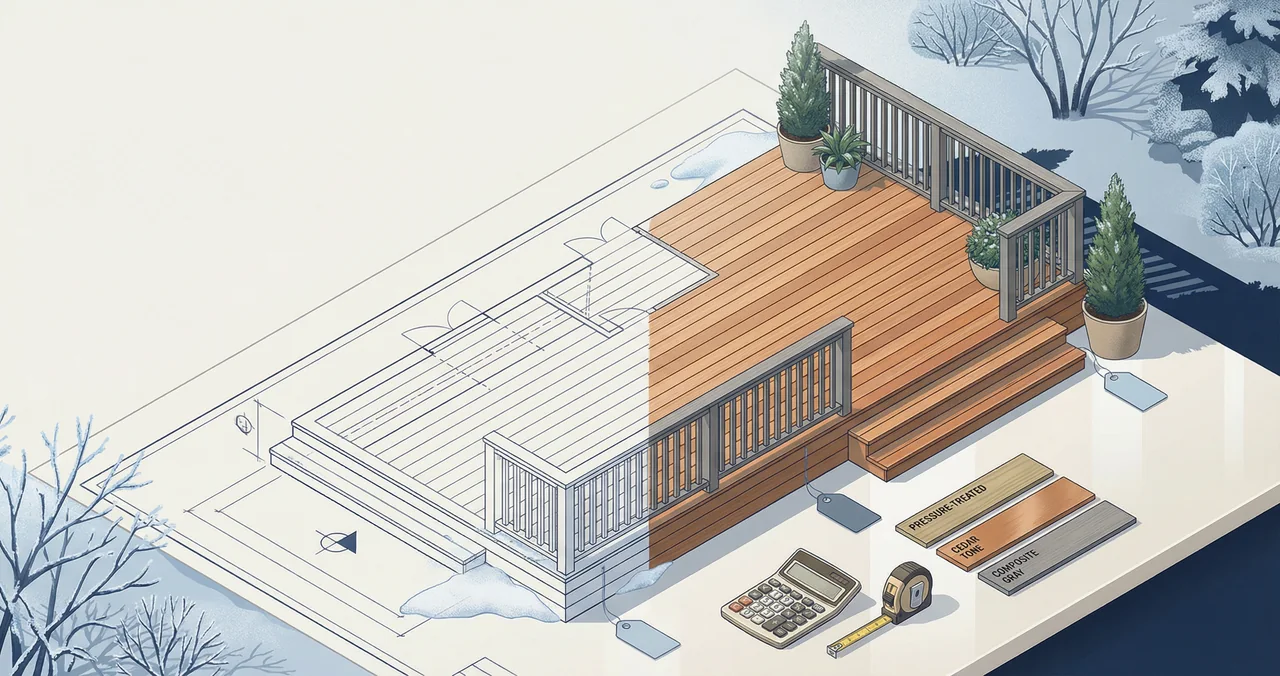
Deck Cost in Aurora: What Homeowners Are Paying in 2026
A new deck in Aurora typically runs $25 to $80 per square foot installed, depending on materials and complexity. For a standard 300-square-foot deck, that puts most homeowners in the $7,500 to $24,000 range — a wide spread that comes down to what you build with, who builds it, and how your site cooperates.
🏗️ Planning a deck project?
Get a free manual project review, or visualize your dream deck with AI before requesting quotes.
🧮 Tool Alert: Deck Cost Calculator
Estimate your project costs in seconds based on local pricing bands for your area.
Calculate My Cost →Looking for more regional information? Check out our Colorado State Decking Hub.
Aurora's climate doesn't go easy on outdoor structures. Freeze-thaw cycles, heavy snow loads, and intense summer sun at altitude all factor into what materials make sense and what your project will actually cost. This guide breaks down real 2026 pricing so you can budget with confidence.
<!-- slot:after-intro -->
For a broader look at deck pricing across different materials and regions, see our deck cost guide. Timing your build right can also save thousands — check our guide on the best time to build a deck.
Average Deck Cost in Aurora by Material
Material choice is the single biggest driver of your total deck cost. Here's what Aurora homeowners are paying in 2026, fully installed:
| Material | Cost Per Sq Ft (Installed) | 200 Sq Ft Deck | 300 Sq Ft Deck | 400 Sq Ft Deck |
|---|---|---|---|---|
| Pressure-Treated Wood | $25–$45 | $5,000–$9,000 | $7,500–$13,500 | $10,000–$18,000 |
| Cedar | $35–$55 | $7,000–$11,000 | $10,500–$16,500 | $14,000–$22,000 |
| Composite | $45–$75 | $9,000–$15,000 | $13,500–$22,500 | $18,000–$30,000 |
| Trex (brand-name composite) | $50–$80 | $10,000–$16,000 | $15,000–$24,000 | $20,000–$32,000 |
| Ipe (hardwood) | $60–$100 | $12,000–$20,000 | $18,000–$30,000 | $24,000–$40,000 |
These numbers include materials, labor, standard railings, and basic stairs. They don't account for permit fees, demolition of an old deck, or significant grading work.
A note on altitude: Aurora sits above 5,300 feet. UV exposure is more intense here than at sea level, which accelerates fading and surface degradation on wood decks. That's one reason composite and PVC materials have become increasingly popular across the Front Range — they hold up without the annual sealing ritual.
Cost Per Square Foot Breakdown
When contractors quote you a per-square-foot price, that number bundles several components. Here's roughly how the money breaks down for a mid-range composite deck in Aurora:
- Decking boards: $15–$30/sq ft
- Substructure (joists, beams, posts): $5–$10/sq ft
- Footings and foundation: $3–$8/sq ft
- Railings: $3–$7/sq ft
- Hardware and fasteners: $1–$3/sq ft
- Labor: $15–$25/sq ft
Footings deserve special attention in Aurora. Colorado's frost line ranges from 36 to 60 inches deep depending on your specific location, and Aurora's Building/Development Services typically requires footings to extend below the frost line. Shallow footings will heave — and that means cracked concrete, shifted posts, and a deck that no longer sits level. This is not the place to cut corners.
If your yard slopes significantly (common in neighborhoods like Saddle Rock, Tallyn's Reach, and parts of Southshore), expect footing costs to climb. A deck that's 6 feet off the ground on one side requires substantially more structural work than one that's 18 inches up.
Labor Costs in Aurora
Labor typically accounts for 40% to 60% of your total deck project in Aurora. Here's what drives that number:
- General deck labor: $15–$25 per square foot
- Skilled framing/structural work: $20–$30 per square foot
- Electrician (for built-in lighting): $75–$125 per hour
- Concrete work (footings): $8–$15 per linear foot of post
Aurora's building season runs roughly May through October. That compressed timeline means contractor schedules fill fast. Builders who are booked through June often charge premium rates for last-minute projects — sometimes 10% to 20% more than work booked in early spring.
Book by March. Seriously. The best Aurora deck builders start filling their summer schedules in February and March. If you wait until May to start getting quotes, you'll have fewer options and less negotiating room.
Labor rates also vary based on complexity:
- Simple rectangular deck, ground level: Lowest labor cost
- Multi-level deck with stairs: 20–30% more labor
- Wraparound or irregular shapes: 25–40% more labor
- Rooftop or elevated decks (4+ feet): 30–50% more labor due to scaffolding and structural requirements
What Affects Your Total Price
Beyond materials and labor, several factors can push your Aurora deck cost up or down significantly.
Deck Size and Layout
A basic 12×16 deck (192 sq ft) is the most common starter size and falls at the lower end of the price range. Bump up to a 16×20 (320 sq ft) or larger and you're not just paying for more boards — you're adding beams, footings, and structural complexity. For a deeper look at how sizing affects cost, check out how a 16×20 deck is priced.
Elevation and Slope
Flat lots in neighborhoods like Murphy Creek or Aurora Highlands keep costs down. But if your lot slopes — and many do, especially closer to the reservoir areas — you'll need taller posts, more concrete, and potentially engineered plans. A deck that's 4 feet or higher off the ground can add $3,000 to $8,000 to your project.
Permits and Inspections
In Aurora, deck permits are required for structures over 200 square feet or 30 inches above grade. Permit fees typically run $200 to $600 depending on project scope. You'll need to submit a site plan, structural drawings, and sometimes engineered plans for elevated decks.
Contact Aurora's Building/Development Services department before starting. Building without a permit carries real risks — failed inspections, forced demolition, and complications when you sell your home.
Railings and Stairs
Standard wood railings are included in most quotes, but upgrading to cable railing, glass panels, or aluminum systems can add $50 to $120 per linear foot. If you're considering cable railing for your deck, factor that into your budget early — it's one of the most common "surprise" cost increases.
Stairs add $1,000 to $3,000 per set depending on height and material. Wide stairs or curved designs cost more.
Snow Load and Structural Requirements
Aurora gets an average of 55 inches of snow annually, and heavy spring storms can dump a foot or more overnight. Your deck's substructure needs to handle that weight. Colorado building codes require decks to support a minimum 40 psf live load plus applicable snow load, which may mean heavier joists, closer spacing, or larger beams than you'd see in milder climates.
<!-- slot:mid-content -->
Composite vs Wood: Cost Comparison
This is the decision most Aurora homeowners wrestle with. Here's an honest comparison:
Upfront Cost
| | Pressure-Treated Wood | Cedar | Composite |
|---|---|---|---|
| Installed cost (300 sq ft) | $7,500–$13,500 | $10,500–$16,500 | $13,500–$22,500 |
| Railings included | Basic wood | Basic wood | Composite/aluminum |
| DIY-friendly | Yes | Yes | Moderate |
Wood wins on initial price. No getting around that.
Long-Term Cost (10-Year View)
Here's where the math shifts:
Pressure-treated wood over 10 years:
- Initial build: ~$10,000
- Annual staining/sealing: $300–$600/year × 10 = $3,000–$6,000
- Board replacements (warping, cracking): $500–$1,500
- 10-year total: $13,500–$17,500
Composite over 10 years:
- Initial build: ~$17,000
- Annual maintenance: Occasional cleaning (~$50/year)
- Board replacements: Rare (most carry 25-year warranties)
- 10-year total: ~$17,500
In Aurora's climate, the gap narrows fast. Freeze-thaw cycles are brutal on wood. Water seeps into grain, freezes, expands, and cracks the surface. Salt and sand from winter de-icing accelerate the damage. Wood decks in Aurora that aren't sealed annually can start showing serious wear within 3 to 4 years.
Composite and PVC boards handle freeze-thaw without flinching. No sealing, no staining, no sanding. For a rundown of top-performing composite brands, that guide covers what holds up in harsh winters.
The Verdict for Aurora
If you're planning to stay in your home for 5+ years, composite usually makes more financial sense in this climate. If budget is tight and you're handy enough to do annual maintenance, pressure-treated wood gets you a functional deck at roughly half the upfront cost.
Use PaperPlan to visualize different decking materials on your own home before committing — seeing composite versus cedar on your actual house makes the decision easier than staring at sample chips at a store.
How to Save Money on Your Aurora Deck
Smart savings come from timing, planning, and knowing where to flex — not from cutting structural corners.
1. Book in the Off-Season
September and October builds sometimes come at a discount. Contractors wrapping up the season may offer 5–15% off to keep crews busy. Late fall builds work fine in Aurora as long as temperatures stay above freezing for concrete curing. Early spring (March–April) is another window where some builders haven't fully booked yet.
2. Keep the Design Simple
Every angle, curve, and level change costs money. A simple rectangular deck with a single set of stairs is the most cost-effective layout. Going from a rectangle to an L-shape can add 15–20% to labor costs alone.
3. Choose Your Splurges Wisely
You don't need premium everything. A popular approach among Aurora homeowners:
- Composite decking boards (the surface you see and touch)
- Pressure-treated wood substructure (hidden underneath, structurally sound, significantly cheaper)
- Aluminum railings (low-maintenance, clean look, mid-range price)
This hybrid approach can save $3,000 to $5,000 on a 300-square-foot deck compared to going all-composite.
4. Get Multiple Quotes
Get at least three written quotes from licensed Aurora contractors. Prices for the same project can vary by 20–30% between builders. Make sure each quote includes the same scope — materials, permits, railings, stairs, and cleanup.
5. Handle Demolition Yourself
If you're replacing an old deck, tearing it out yourself saves $1,000 to $2,500 in demolition costs. It's hard work, but it's straightforward — pry boards, pull nails, haul debris. Rent a dumpster for $300 to $500 and a weekend of sweat equity pays off.
6. Phase Your Project
Build the deck now, add lighting and a pergola later. Just make sure your substructure is designed to support future additions — it's much cheaper to overbuild footings now than to retrofit them later.
7. Check for Material Sales
Lumber and composite prices fluctuate seasonally. January through March often brings the best prices on decking materials as suppliers clear inventory. If you're doing any of the work yourself, buying materials early can save 5–10%.
<!-- slot:before-faq -->
🎨 Not sure which material to pick?
Upload a photo of your backyard and see exactly how Trex, TimberTech, or cedar would look — free and instant.
Frequently Asked Questions
How much does a 12×12 deck cost in Aurora?
A 12×12 deck (144 sq ft) in Aurora typically costs $3,600 to $6,500 for pressure-treated wood and $6,500 to $10,800 for composite, fully installed. This assumes ground level with basic railings and one set of stairs. Add $1,000–$3,000 if the deck is elevated more than 3 feet.
Do I need a permit to build a deck in Aurora, Colorado?
Yes, in most cases. Aurora requires building permits for decks over 200 square feet or 30 inches above grade. Even smaller decks may need permits depending on your HOA or if the deck is attached to your home. Contact Aurora's Building/Development Services department at City Hall for your specific situation. Permit fees usually run $200 to $600. The permit process and risks of skipping it are worth understanding before you start.
What's the best decking material for Aurora's climate?
Composite and PVC decking perform best in Aurora's freeze-thaw climate. They resist moisture absorption, won't crack from ice expansion, and handle heavy UV at altitude without annual refinishing. Cedar is a solid natural option if you commit to yearly sealing. Pressure-treated wood works on a budget but demands consistent maintenance — skipping even one year of sealing in Aurora's climate leads to noticeable deterioration. For materials specifically tested against freeze-thaw conditions, that comparison is worth a read.
When is the best time to build a deck in Aurora?
The ideal building window is May through October, but the best time to *start planning* is January to March. Aurora's top contractors book up fast given the short building season. Getting quotes and signing a contract by March puts you at the front of the line for a spring or early summer build. Concrete footings need temperatures above freezing to cure properly, which limits very early spring and late fall starts.
Can I build my own deck in Aurora to save money?
You can, and you'll save roughly 40–50% on labor costs. However, Aurora still requires permits, inspections, and code compliance for DIY builds. You'll need to meet frost line depth requirements (36–60 inches for footings), proper snow load specifications, and current railing height codes. A simple ground-level deck is a reasonable DIY project. Elevated or multi-level decks involve structural engineering that's best left to professionals. If you're considering the DIY route, understand what the code requires before you start.
<!-- slot:end -->
📋 Planning a deck project?
Get a free manual project review from our team — no obligation, no spam.
Get Free Project Review →Upload a backyard photo and preview real decking materials with AI — free, instant, no sign-up.
Permits, costs, material comparisons, and questions to ask before requesting quotes — delivered to your inbox.