
Deck Cost in Denver: What Homeowners Are…
What does a deck cost in Denver in 2026? Get real pricing per square foot for composite, wood, and Trex decks — plus tips to save in Colorado's climate.
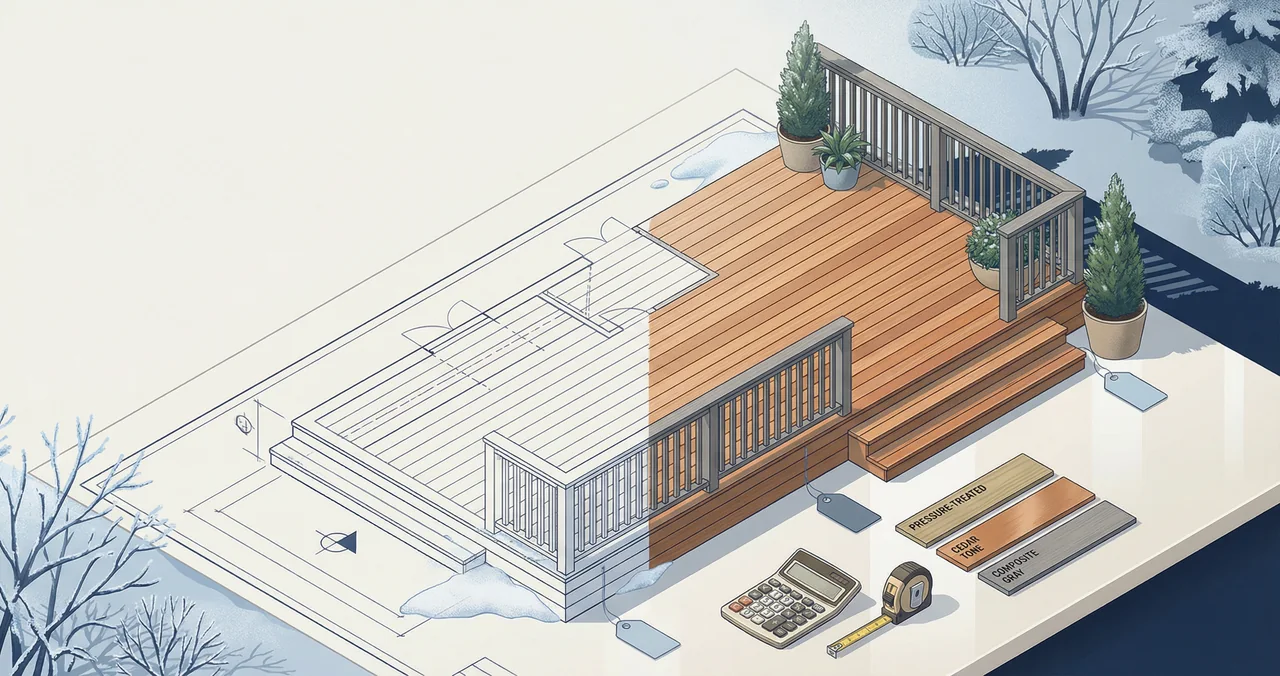
How Much Does a Deck Cost in Denver Right Now?
You're probably here because you got a quote that seemed high — or you haven't called anyone yet and want to know what to expect. Either way, Denver deck pricing in 2026 has shifted. Material costs have stabilized after years of volatility, but labor in the Front Range remains tight. A shorter building season (roughly May through October) means contractors book up fast, and that demand keeps prices firm.
🏗️ Planning a deck project?
Get a free manual project review, or visualize your dream deck with AI before requesting quotes.
🧮 Tool Alert: Deck Cost Calculator
Estimate your project costs in seconds based on local pricing bands for your area.
Calculate My Cost →Looking for more regional information? Check out our Colorado State Decking Hub.
Here's the short answer: most Denver homeowners pay between $15,000 and $45,000 for a new deck, depending on size, material, and complexity. A basic 12×16 pressure-treated deck lands around $7,500–$14,000 installed. A 400-square-foot composite deck with stairs and railing? You're looking at $25,000–$40,000+.
Those are wide ranges. The rest of this article breaks down exactly where your money goes.
<!-- slot:after-intro -->
For a broader look at deck pricing across different materials and regions, see our deck cost guide.
Average Deck Cost in Denver by Material
Material choice is the single biggest cost driver. Here's what Denver contractors are charging in 2026, fully installed (materials + labor + basic railing):
| Material | Installed Cost per Sq Ft | 300 Sq Ft Deck | 500 Sq Ft Deck |
|---|---|---|---|
| Pressure-Treated Wood | $25–$45 | $7,500–$13,500 | $12,500–$22,500 |
| Cedar | $35–$55 | $10,500–$16,500 | $17,500–$27,500 |
| Composite (mid-range) | $45–$75 | $13,500–$22,500 | $22,500–$37,500 |
| Trex (premium lines) | $50–$80 | $15,000–$24,000 | $25,000–$40,000 |
| Ipe (hardwood) | $60–$100 | $18,000–$30,000 | $30,000–$50,000 |
Where you fall in these ranges depends on your specific project — multi-level designs, wrap-around layouts, built-in benches, and premium railing systems all push toward the higher end. A simple rectangular deck at ground level sits at the low end.
One thing worth noting for Denver specifically: composite and PVC decking dominate new builds here. Colorado's freeze-thaw cycles are brutal on wood — daily temperature swings of 40°F or more are common in spring and fall. Wood expands, contracts, cracks. Composite handles that punishment without the annual maintenance.
Cost Per Square Foot Breakdown
When a contractor gives you a per-square-foot price, it typically includes:
- Decking boards (the surface you walk on)
- Substructure (joists, beams, ledger board, posts)
- Hardware (joist hangers, screws, bolts)
- Basic railing (code-compliant, standard style)
- Labor
It usually does not include:
- Permits and inspections
- Demolition of an existing deck
- Stairs (especially multi-flight)
- Upgraded railing (cable, glass, aluminum)
- Built-in features (benches, planters, lighting)
- Skirting or fascia finishing
Here's a rough breakdown of where your money goes on a typical composite deck:
| Component | % of Total Cost |
|---|---|
| Decking boards | 30–35% |
| Substructure & hardware | 15–20% |
| Railing system | 10–15% |
| Labor | 30–40% |
Labor is the biggest line item — and in Denver, it runs higher than the national average. More on that next.
Labor Costs in Denver
Denver deck builders typically charge $15–$35 per square foot for labor alone, depending on the complexity of the build. That's above the national average of $10–$25.
Why? A few reasons:
- Short building season. Denver's reliable outdoor construction window runs May through October. That compressed timeline means high demand for a limited number of crews.
- Cost of living. The Front Range has seen significant cost-of-living increases. Skilled tradespeople charge accordingly.
- Footing requirements. Denver's frost line sits at 36 to 60 inches deep depending on your exact location and elevation. Digging footings to code in Colorado takes more time and effort than in warmer climates. Some sites need engineered footings for expansive soils.
- Accessibility. Homes in areas like the foothills west of Denver, parts of Evergreen, or mountain-adjacent neighborhoods can have steep, difficult-to-access lots that add labor hours.
Pro tip: If you want the best pricing and the contractor of your choice, get quotes in January or February and book by March. By April, the best crews are scheduled through summer.
Some Denver homeowners consider DIY to save on labor. If you're handy and building a simple, low-to-grade deck, it's doable — but understand that building without a permit carries real risks, and Denver's footing depth requirements make the foundation work substantial. Most homeowners find the labor cost worthwhile.
<!-- slot:mid-content -->
What Affects Your Total Price
Beyond material and labor, several factors specific to Denver can swing your final number significantly:
Deck Size and Layout
Simple math: bigger costs more. But shape matters as much as size. A straightforward rectangle is the most efficient to build. Add angles, curves, or multiple levels and you're adding cutting waste and labor hours. Multi-level decks typically cost 20–30% more than single-level decks of the same total square footage.
Elevation and Stairs
A deck that's 30 inches or more above grade requires railing by code — and triggers a permit in Denver. High decks also need more substantial posts and potentially deeper footings. Every flight of stairs adds $1,500–$4,000 depending on width and material.
Footings and Foundation
This is where Denver gets expensive compared to southern cities. Your footings need to extend below the frost line — that's 36 to 60 inches of digging per footing. If your soil is expansive clay (common along the Front Range), you may need engineered piers or helical screws instead of standard concrete sono tubes. Budget an extra $500–$2,000 for challenging soil conditions.
Railing Systems
Standard pressure-treated wood railing is included in most base quotes. But upgrades change the math fast:
- Aluminum railing: +$30–$60/linear foot
- Cable railing: +$50–$80/linear foot
- Glass railing: +$70–$120/linear foot
- Composite railing: +$25–$50/linear foot
For a 300 sq ft deck with roughly 50 linear feet of railing, upgrading from wood to cable railing adds $2,500–$4,000. Check out how cable railing works with deck codes if you're considering that route.
Permits and Inspections
In Denver, deck permits are typically required for structures over 200 sq ft or 30 inches above grade. Contact Denver's Building/Development Services department for current requirements. Permit fees generally run $200–$800 depending on project value. Your contractor should handle the application, but verify this upfront — some include it in their quote, others don't.
Snow Load and Structural Requirements
Denver's building code accounts for snow loads. Your deck's substructure — joist spacing, beam sizing, post dimensions — may need to be beefier than what you'd see in a warmer climate. This adds material cost, but it's non-negotiable. A deck that can't handle a heavy March snowstorm isn't a deck you want.
Composite vs Wood: Cost Comparison for Denver
This is the decision most Denver homeowners wrestle with. Here's an honest comparison:
| Factor | Pressure-Treated Wood | Composite (Mid-Range) |
|---|---|---|
| Installed cost (per sq ft) | $25–$45 | $45–$75 |
| Annual maintenance | $200–$600 (stain/seal) | $0–$50 (occasional cleaning) |
| Lifespan in Denver | 10–15 years | 25–30+ years |
| 10-year total cost (300 sq ft) | $9,500–$19,500 | $13,500–$22,500 |
| Freeze-thaw performance | Poor without annual sealing | Excellent |
| Snow/ice shoveling | Prone to scratching and gouging | Resistant |
| Warranty | None (typically) | 25–50 years |
The math often favors composite in Denver. Yes, you pay more upfront. But Denver's climate is uniquely hard on wood. Freeze-thaw cycles cause cracking and splitting. Moisture from snow melt gets into the grain, freezes, and expands. Without annual sealing and staining, pressure-treated lumber can deteriorate noticeably in 5–7 years here. The best low-maintenance decking options almost always point toward composite or PVC in cold climates.
Cedar holds up better than pressure-treated but still demands regular maintenance. Ipe is incredibly durable but expensive and difficult to work with — most Denver contractors charge a premium for it because it requires specialized tools and carbide-tipped blades.
If budget is the primary concern and you're willing to commit to annual maintenance, pressure-treated wood still gets you a functional deck at roughly half the upfront cost. Just go in with realistic expectations about the upkeep. Choosing the right stain makes a significant difference in how long your wood deck lasts.
Use PaperPlan to visualize different decking materials on your own home before committing — it's especially helpful for comparing how wood tones and composite colors will look against your siding and landscape.
How to Save Money on Your Denver Deck
Smart budgeting doesn't mean cutting corners. Here's where Denver homeowners find real savings:
Book Off-Season
Contact contractors in late fall or winter for spring builds. Many offer 5–10% discounts for projects booked before March. You'll also get first pick of scheduling slots.
Keep the Design Simple
A rectangular, single-level deck is the most cost-efficient shape. Every angle, bump-out, and level change adds labor and material waste. If you want visual interest, invest in railing upgrades or lighting instead of complex geometry — you get more impact per dollar.
Compare At Least Three Quotes
Pricing varies significantly between Denver contractors. Get three to five written quotes for the same scope of work. Make sure each quote itemizes materials, labor, permits, and any exclusions. The lowest quote isn't always the best — check references, insurance, and licensing.
Consider a Smaller Footprint with Better Materials
A 250 sq ft composite deck often costs less than a 400 sq ft pressure-treated deck — and you'll spend nothing on annual maintenance. Think about how much space you actually *use* rather than defaulting to the biggest deck possible.
Phase the Project
Build the deck now, add the pergola or built-in seating next year. Splitting the project across two seasons lets you spread the cost without financing.
Skip the Premium Brands (Maybe)
Trex Transcend and TimberTech Advanced PVC are excellent products, but mid-range composite lines from the same manufacturers perform nearly as well in Denver's climate at $10–$15 less per square foot. That's $3,000–$4,500 saved on a 300 sq ft deck. Ask your contractor which mid-tier options they recommend.
Handle Demo Yourself
If you're replacing an existing deck, tearing out the old one yourself can save $1,000–$3,000 in labor. It's hard work but doesn't require specialized skills — just a pry bar, reciprocating saw, safety gear, and a dumpster rental.
<!-- slot:before-faq -->
🎨 Not sure which material to pick?
Upload a photo of your backyard and see exactly how Trex, TimberTech, or cedar would look — free and instant.
Frequently Asked Questions
How much does a 12×16 deck cost in Denver?
A 12×16 deck (192 sq ft) in Denver runs $4,800–$8,600 for pressure-treated wood and $8,600–$14,400 for composite, fully installed. Add $1,500–$4,000 for stairs and upgraded railing. These prices assume a straightforward, single-level build with standard footings. If you're curious about how size affects pricing, this breakdown of 12×16 deck costs covers the variables in detail.
Do I need a permit to build a deck in Denver?
Yes, in most cases. Denver requires permits for decks over 200 square feet or 30 inches above grade. Even smaller decks may need a permit depending on your lot and zoning. Contact Denver's Building/Development Services department before starting work. A reputable contractor will pull the permit as part of the project — if they suggest skipping it, that's a red flag.
What is the best decking material for Denver's climate?
Composite or PVC decking performs best in Denver. The combination of intense UV at altitude, freeze-thaw cycles, and heavy snow makes wood high-maintenance. Composite resists moisture, won't crack from freeze-thaw, and handles snow removal without damage. If you prefer the look and feel of real wood, cedar with annual sealing is the next best option. For more on materials that handle harsh winters, see the best decking materials for freeze-thaw climates.
When is the best time to build a deck in Denver?
The ideal window is May through October, with June through September being the sweet spot. However, the best time to *start the process* is January through March — that's when you should be getting quotes, selecting contractors, and finalizing designs. By April, the top-rated crews are booked out. Some contractors will start foundation work in late April if weather cooperates, but framing and decking installation is best done when temperatures are consistently above 40°F. Read more about best time to build a deck and how seasons affect your project.
Is building a deck yourself cheaper in Denver?
DIY can save you 30–40% on labor, but Denver's requirements make it harder than in many cities. Footings need to reach 36–60 inches deep — that's serious excavation work. You'll still need a permit and inspections, and you're responsible for meeting snow load requirements in the substructure. A ground-level, floating deck is the most realistic DIY project. Anything elevated or attached to your house is best left to a licensed contractor who knows Colorado building codes.
<!-- slot:end -->
📋 Planning a deck project?
Get a free manual project review from our team — no obligation, no spam.
Get Free Project Review →Upload a backyard photo and preview real decking materials with AI — free, instant, no sign-up.
Permits, costs, material comparisons, and questions to ask before requesting quotes — delivered to your inbox.