
Deck Cost in Burnaby (2026)
What does a deck cost in Burnaby in 2026? Get real CAD pricing per square foot for composite, cedar, Trex, and pressure-treated decks plus local tips to save.
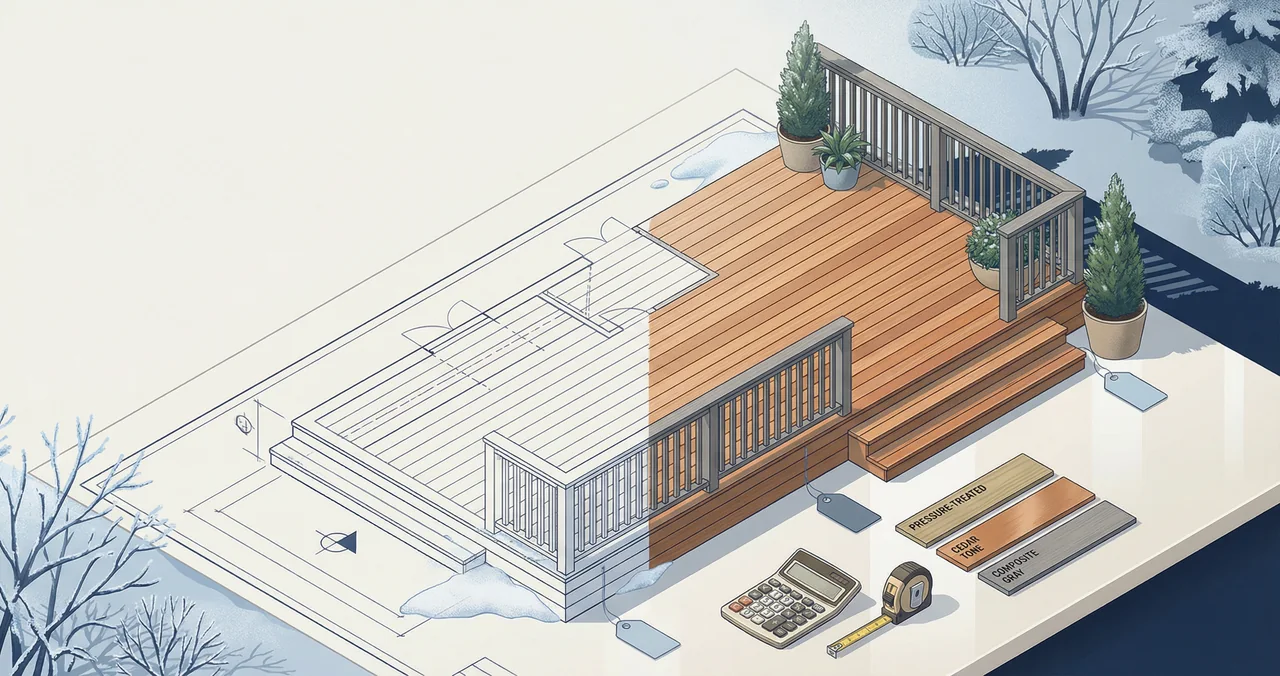
A new deck in Burnaby runs anywhere from $8,000 to $40,000+ depending on size, materials, and complexity. That's a wide range, and it's not particularly helpful on its own. So here's what actually matters: the material you choose and how your property sits determine roughly 70% of your final cost. The rest comes down to labour, permits, and timing.
Burnaby's rain-heavy climate adds a wrinkle that homeowners in drier regions don't face. The wrong material choice doesn't just cost you more upfront — it costs you every year in maintenance, cleaning, and premature replacement. This guide breaks down real 2026 pricing so you can budget accurately and avoid the most common expensive mistakes.
🧮 Tool Alert: Deck Cost Calculator
Estimate your project costs in seconds based on local pricing bands for your area.
Calculate My Cost →Average Deck Cost in Burnaby by Material
Here's what Burnaby homeowners are paying in 2026 CAD, fully installed — meaning materials, labour, hardware, and basic finishing:
🏗️ Planning a deck project?
Get a free manual project review, or visualize your dream deck with AI before requesting quotes.
| Material | Cost Per Sq Ft (Installed) | 12×16 Deck (192 sq ft) | 16×20 Deck (320 sq ft) |
|---|---|---|---|
| Pressure-Treated Wood | $30–$55 | $5,760–$10,560 | $9,600–$17,600 |
| Cedar | $40–$65 | $7,680–$12,480 | $12,800–$20,800 |
| Composite | $50–$85 | $9,600–$16,320 | $16,000–$27,200 |
| Trex (brand-name composite) | $55–$90 | $10,560–$17,280 | $17,600–$28,800 |
| Ipe (tropical hardwood) | $70–$120 | $13,440–$23,040 | $22,400–$38,400 |
The low end of each range assumes a simple, ground-level rectangular deck with standard railing. The high end reflects elevated builds, multi-level designs, built-in benches, or premium hardware.
Pressure-treated lumber remains the most popular budget choice across Burnaby, but it demands the most upkeep in our climate. Composite and Trex have overtaken cedar as the go-to mid-range option — largely because homeowners are tired of re-staining every 1–2 years in a city that gets over 1,200 mm of rain annually.
If you're comparing costs for a specific deck size, our breakdown of 12×16 deck costs covers how pricing scales with different dimensions.
Cost Per Square Foot Breakdown
Per-square-foot pricing is the easiest way to compare quotes, but make sure you're comparing the same scope. A legitimate quote should include:
- Decking boards (the surface material)
- Substructure (joists, beams, ledger board, posts)
- Footings (concrete piers or sono tubes — Burnaby's frost line sits at 12–24 inches, so footings need to reach that depth)
- Hardware (joist hangers, structural screws, post brackets)
- Railing (material and installation)
- Basic labour (demo of old deck if applicable, framing, installation, cleanup)
What's typically not included in per-square-foot quotes:
- Permit fees ($200–$500 in Burnaby)
- Stairs ($800–$2,500 depending on height and material)
- Electrical (outlets, lighting — $500–$2,000+)
- Site prep (grading, tree removal, old deck demolition)
- Design upgrades (curves, inlays, built-in planters, privacy walls)
When a quote comes in well below the ranges above, check what's been left out. A $35/sq ft composite quote that doesn't include railing or footings is really a $55–$65/sq ft project once everything's added.
Labour Costs in Burnaby
Labour typically accounts for 40–60% of your total deck cost in Burnaby. Here's how that breaks down:
- General deck labour rate: $25–$45 per square foot (included in the installed prices above)
- Experienced crew (2–3 people): $2,000–$4,500 per week
- Timeline for a standard 300 sq ft deck: 3–7 days depending on complexity
Burnaby's labour costs run slightly higher than surrounding suburbs like Abbotsford or the Fraser Valley — largely due to the cost of doing business in Metro Vancouver. Contractors in the Burnaby–Vancouver corridor face higher insurance, fuel, and overhead costs, and those get passed along.
Why Timing Affects Labour Cost
June through September is prime building season, and demand peaks hard. Many established Burnaby contractors are booked 6–10 weeks out by April. That means:
- Summer builds often carry a premium — some contractors charge 10–15% more during peak season
- Rain delays are less likely but still possible even in July and August
- Fall and winter bookings can save you money, but weather delays stretch timelines significantly
The smart move: book your contractor in January or February for a summer build. You'll lock in better pricing and secure your preferred crew before their schedule fills up.
What Affects Your Total Price
Beyond material and labour, several factors specific to Burnaby properties push costs up or down:
Deck Height and Elevation
A ground-level deck (under 24 inches) is straightforward. Once you go higher, costs escalate:
- Elevated decks (4–8 feet): Add $15–$30/sq ft for deeper footings, taller posts, bracing, and stair systems
- Walkout basement decks (common in Burnaby's hillside neighbourhoods like Capitol Hill, Burnaby Mountain, and Westridge): These often require engineered plans, adding $1,500–$3,000 in design and engineering fees alone
Lot Access and Slope
Burnaby has no shortage of sloped lots — especially around the Burnaby Mountain and Deer Lake areas. If a crew can't get materials to your backyard with a wheelbarrow, expect to pay more for:
- Crane delivery of lumber or beams: $500–$1,500
- Manual carrying for restricted-access properties: Added labour time
- Retaining or structural support on steep grades
Permits and Code Requirements
In Burnaby, deck permits are typically required for structures over 24 inches above grade or over 100 square feet. Contact Burnaby's Building Department for your specific situation — requirements can vary based on lot coverage, setbacks, and zoning.
Permit costs range from $200 to $500, and inspections are required at the footing and framing stages. Skipping the permit isn't worth it. Unpermitted decks create problems when you sell, refinance, or file an insurance claim.
Climate-Driven Costs
Burnaby's wet, mild climate affects both construction and long-term costs:
- Mold and algae growth is constant on wood surfaces — annual cleaning runs $200–$500, and staining/sealing every 1–2 years adds $500–$1,500 per treatment
- Moisture-related rot can set in within 5–8 years on poorly maintained pressure-treated decks
- Rain delays during shoulder-season builds (May, October) can add 1–2 weeks to your timeline
These ongoing costs are why so many Burnaby homeowners are switching to composite — the higher upfront price gets offset by near-zero maintenance over 15–25 years.
Composite vs Wood: Cost Comparison
This is the decision most Burnaby homeowners wrestle with. Here's a direct comparison over time:
| Factor | Pressure-Treated Wood | Composite/Trex |
|---|---|---|
| Installed cost (per sq ft) | $30–$55 | $50–$90 |
| Annual maintenance | $300–$1,000 (cleaning, staining, sealing) | $0–$100 (occasional wash) |
| Expected lifespan | 10–15 years (Burnaby climate) | 25–50 years |
| 10-year total cost (300 sq ft deck) | $12,000–$26,500 | $15,000–$28,000 |
| 20-year total cost (300 sq ft deck) | $21,000–$42,000 (includes one rebuild) | $15,500–$29,000 |
| Moisture resistance | Low — needs constant protection | High — won't rot, warp, or grow mold |
| Warranty | None (material only, limited) | 25–50 years (structural + fade/stain) |
The numbers tell the story. Wood is cheaper on day one but costs more over 15–20 years in Burnaby's climate. If you're planning to stay in your home for more than 7–8 years, composite pays for itself.
Cedar splits the difference — it's naturally rot-resistant and beautiful, but still needs regular maintenance. It's a good middle ground if you prefer the look of real wood and don't mind the upkeep commitment.
Use PaperPlan to visualize different decking materials on your own home before committing — seeing composite vs. cedar on your actual property makes the decision much easier than staring at small samples at the hardware store.
For homeowners who've already decided on composite, our guide to Trex deck builders in Burnaby covers what to look for when hiring an installer.
How to Save Money on Your Burnaby Deck
Real savings come from smart planning, not cutting corners. Here's what actually works:
1. Book Off-Season
Contact contractors in November through February to schedule summer construction. You'll often save 10–15% on labour, and you get first pick of schedules. Waiting until April means paying peak-season rates and potentially delaying your project.
2. Keep the Design Simple
Every angle, curve, and level change adds cost. A rectangular deck with a single set of stairs is the most cost-efficient design. Compare:
- Simple rectangular 16×20 deck: $16,000–$28,000
- Same square footage with L-shape and two stair runs: $22,000–$36,000
That's a 30–40% increase for added complexity.
3. Choose Your Material Strategically
If budget is tight, pressure-treated wood for the substructure with composite decking boards gives you the best of both worlds. The hidden framing doesn't need to look good — it just needs to be structural. This hybrid approach can save $5–$10 per square foot compared to an all-composite build.
4. Handle Demolition Yourself
If you're replacing an old deck, tearing it down yourself saves $500–$2,000. It's labour-intensive but straightforward with basic tools. Just make sure you dispose of materials properly — Burnaby's recycling depot accepts clean wood waste.
5. Get Three Quotes Minimum
Pricing varies significantly between contractors in Burnaby. Three quotes gives you a realistic market range and helps you spot outliers — both high and low. Be wary of quotes more than 25% below the average; that usually means something's being left out. Our roundup of affordable deck builders in Burnaby is a good starting point.
6. Phase Your Project
Build the deck this year, add the pergola or privacy screen next year. Phased construction lets you spread costs without financing charges, and you'll know exactly what you want after living with the deck for a season.
For more strategies on managing a larger build budget, our 16×20 deck cost breakdown walks through how sizing decisions affect pricing.
🎨 Not sure which material to pick?
Upload a photo of your backyard and see exactly how Trex, TimberTech, or cedar would look — free and instant.
Frequently Asked Questions
How much does a basic deck cost in Burnaby?
A basic 12×16 pressure-treated deck (192 sq ft) runs $5,760–$10,560 CAD installed in 2026. This includes standard railing, concrete footings, and basic stairs. Upgrading to composite bumps that to $9,600–$16,320. These ranges assume a ground-level build on a flat lot with straightforward access. Elevated decks, hillside properties, or restricted-access lots in areas like Capitol Hill or Burnaby Mountain will run higher.
Do I need a permit to build a deck in Burnaby?
Yes, in most cases. Burnaby requires building permits for decks over 24 inches above grade or exceeding 100 square feet. The permit process involves submitting plans, paying a fee ($200–$500), and passing inspections at the footing and framing stages. Contact Burnaby's Building Department directly for your specific situation — zoning, lot coverage, and setback requirements vary by neighbourhood. Never skip the permit. It protects your investment and avoids complications when selling.
What is the best decking material for Burnaby's rainy climate?
Composite or PVC decking is the top recommendation for Burnaby. With 1,200+ mm of annual rainfall, constant moisture exposure makes wood maintenance a never-ending chore. Composite won't rot, warp, or support mold growth. It holds up for 25–50 years with almost no upkeep. If you prefer natural wood, cedar is the best option — its natural oils resist moisture better than pressure-treated lumber — but plan on cleaning and sealing it every 1–2 years. Check our covered deck builders in Burnaby guide if you want to add a roof structure for extra rain protection.
When is the cheapest time to build a deck in Burnaby?
Late fall and winter (October–February) is when you'll find the best pricing and scheduling flexibility. Most homeowners wait until spring to call contractors, which means summer schedules fill fast and prices rise. By booking during the off-season for a summer build, you can save 10–15% on labour costs and lock in your preferred timeline. Just keep in mind that actual construction during winter months faces frequent rain delays — the ideal approach is to plan and book in winter, then build in the dry season (June–September).
How long does a deck last in Burnaby?
It depends entirely on the material and maintenance:
- Pressure-treated wood: 10–15 years with regular staining and sealing (shorter without maintenance)
- Cedar: 15–20 years with annual care
- Composite/Trex: 25–50 years with minimal maintenance
- Ipe: 40–75 years — nearly indestructible but expensive
Burnaby's constant moisture accelerates wear on wood decks compared to drier climates. If you're investing in a custom deck build, composite or Ipe will give you the longest return on that investment.
📋 Planning a deck project?
Get a free manual project review from our team — no obligation, no spam.
Get Free Project Review →Upload a backyard photo and preview real decking materials with AI — free, instant, no sign-up.
Permits, costs, material comparisons, and questions to ask before requesting quotes — delivered to your inbox.