
Deck Cost in Dayton: What Homeowners Are…
What does a deck cost in Dayton in 2026? Get real pricing per square foot by material, labor rates, and money-saving tips for Dayton homeowners.
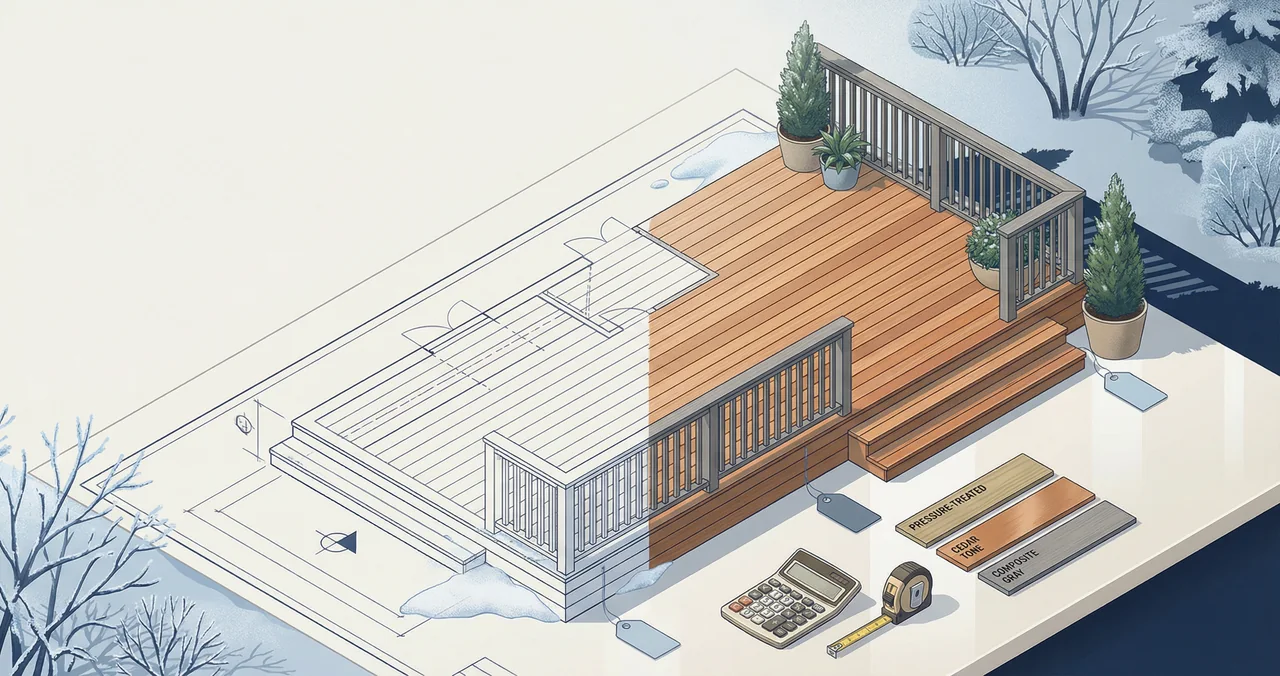
Deck Cost in Dayton: What Homeowners Are Paying in 2026
A new deck in Dayton runs most homeowners between $8,000 and $30,000 depending on size, materials, and how much your contractor has to fight the local frost line. That's a big range — and the gap comes down to choices you make before a single board gets installed.
🏗️ Planning a deck project?
Get a free manual project review, or visualize your dream deck with AI before requesting quotes.
🧮 Tool Alert: Deck Cost Calculator
Estimate your project costs in seconds based on local pricing bands for your area.
Calculate My Cost →Looking for more regional information? Check out our Ohio State Decking Hub.
Dayton's freeze-thaw cycles, heavy snow loads, and a building season that really only runs May through October mean your material and timing decisions matter more here than in milder climates. Get them wrong and you're looking at cracked footings, warped boards, or a six-month wait for your contractor to fit you in.
Here's what Dayton homeowners are actually paying in 2026 — material by material, line by line.
<!-- slot:after-intro -->
For a broader look at deck pricing across different materials and regions, see our complete deck cost guide for Ohio. Timing your build right can also save thousands — check our guide on the best time to build a deck.
Average Deck Cost in Dayton by Material
Every material has a different installed price, lifespan, and maintenance demand. In Dayton's climate, that last factor matters more than most homeowners expect. Salt, snow, and repeated freezing punish wood decks that aren't sealed annually.
| Material | Installed Cost (per sq ft) | Typical 300 sq ft Deck | Lifespan |
|---|---|---|---|
| Pressure-Treated Wood | $25–$45 | $7,500–$13,500 | 10–15 years |
| Cedar | $35–$55 | $10,500–$16,500 | 15–20 years |
| Composite | $45–$75 | $13,500–$22,500 | 25–30 years |
| Trex (brand composite) | $50–$80 | $15,000–$24,000 | 25–30+ years |
| Ipe (hardwood) | $60–$100 | $18,000–$30,000 | 30–40+ years |
Pressure-treated pine remains the budget pick across Dayton neighborhoods from Belmont to Kettering. It gets the job done, but you'll be out there with a pressure washer and sealer every spring — skip a year and Dayton winters will remind you.
Composite and Trex have become the most popular choice for Dayton builds in 2026. The upfront cost stings, but zero annual sealing and strong resistance to moisture and freeze-thaw damage make the math work over 10+ years.
Ipe is the premium tier. Incredibly dense, naturally rot-resistant, and it laughs at Ohio winters. But it's heavy, hard to work with (your contractor will charge more for labor), and the material cost alone puts it out of reach for many budgets.
Cost Per Square Foot Breakdown
The per-square-foot number your contractor quotes includes materials, labor, and basic structural work. But not all square footage is created equal.
Small Decks (100–200 sq ft)
Expect to pay on the higher end of the per-square-foot range. A 10x12 pressure-treated deck might run $35–$45/sq ft installed because the fixed costs — permits, footings, mobilization — get spread across fewer square feet.
Mid-Size Decks (200–400 sq ft)
This is the sweet spot for value. A 16x20 composite deck in Dayton typically lands between $50–$65/sq ft, putting total cost around $16,000–$20,800. Most Dayton contractors are set up to build this size efficiently. For detailed size-based pricing, check out our 16x20 deck cost breakdown.
Large Decks (400+ sq ft)
At 20x20 and beyond, per-square-foot costs drop slightly — maybe $40–$60/sq ft for composite — but total project cost climbs fast. A 20x20 composite deck runs $16,000–$24,000 before any extras. See what goes into a 20x20 deck build for a full picture.
What's Included in Per-Square-Foot Pricing
Most Dayton contractors include:
- Framing (pressure-treated joists and beams)
- Decking boards (your chosen material)
- Basic railing on open sides
- Footings dug to frost line (more on this below)
- Fasteners and hardware
What's usually not included:
- Stairs (add $1,500–$4,000 depending on height and material)
- Built-in benches or planters
- Electrical for lighting or outlets
- Demolition of an existing deck ($500–$2,000)
- Permit fees
Labor Costs in Dayton
Labor makes up 40–60% of your total deck cost in Dayton. For 2026, expect to pay:
- General deck labor: $15–$30 per square foot
- Skilled carpenter/lead installer: $45–$75 per hour
- Helpers/laborers: $20–$35 per hour
Dayton's labor rates sit slightly below Columbus and Cincinnati but above smaller Ohio markets. The bigger issue isn't the hourly rate — it's availability. Dayton's compressed building season (May through October) means contractors who are any good fill their schedules by late March.
Why Timing Affects Labor Cost
Book your project in January or February for a spring start and you'll have your pick of contractors competing for early-season work. Wait until May to start calling and you'll either pay a premium, get pushed to late summer, or end up with whoever still has openings — which isn't always who you want.
Some Dayton contractors offer 5–10% early-booking discounts for projects scheduled before April. Ask about it. The worst they can say is no.
What Affects Your Total Price
Eight factors drive the final number on a Dayton deck project. Some you control, some you don't.
1. Deck Size and Layout
Straightforward rectangles cost less than multi-level designs, wraparounds, or angled cuts. Every corner and level change adds framing complexity and labor hours.
2. Material Choice
Already covered above, but worth repeating: the gap between pressure-treated and Trex composite on a 300 sq ft deck is roughly $7,500–$10,500. That's real money.
3. Height Off the Ground
A ground-level deck on a flat Oakwood lot needs minimal footings and no stairs. A deck attached to a raised ranch in Riverside — four feet off the ground — needs deeper footings, taller posts, stairs, and more railing. Height adds $2,000–$6,000 to a typical project.
4. Frost Line and Footings
This is the Dayton-specific cost driver that catches people off guard. Ohio's frost line sits at 36 to 60 inches deep depending on your exact location. Every footing must be dug below that line or your deck will shift and heave.
Footing costs alone can run $200–$500 per footing, and a typical deck needs 6–12 of them. Difficult soil conditions — and parts of Dayton have heavy clay — push that higher.
5. Permits and Inspections
In Dayton, deck permits are typically required for structures over 200 sq ft or 30 inches above grade. Contact Dayton's Building/Development Services department before starting. Permit fees usually run $100–$400 depending on project scope.
Skipping the permit is a bad idea. It creates problems at resale and your homeowner's insurance may not cover an unpermitted structure. For more on what happens when you skip, read about the risks of building without a permit.
6. Railing Systems
Basic wood railings come included in most quotes. Upgrade to cable railing, glass panels, or aluminum systems and you're adding $30–$100+ per linear foot. A quality railing system transforms the look but budget accordingly.
7. Add-Ons
Common upgrades and their approximate costs:
- Built-in lighting: $500–$2,500
- Privacy screens/walls: $1,000–$4,000
- Built-in seating: $500–$2,000
- Pergola or shade structure: $3,000–$10,000
- Under-deck drainage system: $1,500–$3,500
8. Site Access and Prep
If your contractor has to haul materials through a narrow side yard, around a pool, or up a slope, labor costs increase. Trees, old concrete pads, or an existing deck that needs demolition all add to the bottom line.
<!-- slot:mid-content -->
Composite vs Wood: Cost Comparison
This is the decision most Dayton homeowners wrestle with. Here's how the numbers actually play out over time.
| Factor | Pressure-Treated Wood | Composite (Mid-Range) |
|---|---|---|
| Installed cost (300 sq ft) | $7,500–$13,500 | $13,500–$22,500 |
| Annual maintenance | $200–$500 (sealing, staining) | $0–$50 (occasional cleaning) |
| 10-year maintenance total | $2,000–$5,000 | $0–$500 |
| Realistic lifespan | 10–15 years in Dayton | 25–30 years |
| 10-year total cost | $9,500–$18,500 | $13,500–$23,000 |
Over a decade, the gap narrows dramatically. Over 20 years — assuming you'd rebuild the wood deck at least once — composite wins on total cost.
Dayton's Climate Tips the Scale
Dayton's freeze-thaw cycles are brutal on wood. Water seeps into grain, freezes, expands, and cracks the fibers. Multiply that by 30–50 freeze-thaw cycles per winter and unsealed wood deteriorates fast.
Composite boards don't absorb water the same way. They handle snow load, ice, road salt tracked onto the surface, and temperature swings from -10°F to 90°F without the cracking, splintering, and warping that wood suffers.
PVC decking takes this even further — completely non-porous, so moisture is a non-issue. It costs roughly the same as premium composite but feels different underfoot. Worth looking at samples in person.
If you do go with wood, cedar outperforms pressure-treated in Dayton's climate thanks to its natural oils. But it still needs annual sealing. Explore the best decking materials for freeze-thaw climates for a deeper comparison.
Use PaperPlan to visualize different decking materials on your own home before committing — it's easier to justify the composite upgrade when you can actually see it on your house.
How to Save Money on Your Dayton Deck
You don't have to gut your budget. These strategies work in the Dayton market specifically.
Book Early — Like, January Early
Dayton's short building season means contractor calendars fill by March. Early bookings often come with discounts, and you get first pick of crews. Waiting until spring costs you leverage.
Choose Your Size Strategically
Going from a 12x16 to a 14x16 deck adds 32 square feet — that's $1,400–$2,400 extra in composite. Ask yourself if you actually need every square foot. Sometimes a slightly smaller deck with better materials and a few smart add-ons beats a sprawling budget build.
Mix Materials
Use composite for the decking surface (where weather hits hardest) and pressure-treated wood for the substructure (which is protected and standard practice anyway). Some homeowners also use composite on the main deck and pressure-treated for a less-used lower level.
Skip the Contractor Markup on Simple Add-Ons
Things like post cap lights, deck furniture, and planters don't need professional installation. Buy them yourself and save the markup. Just don't DIY electrical — hire a licensed electrician.
Get Three Quotes Minimum
Pricing varies significantly between Dayton-area contractors. Get at least three detailed, written quotes for the same scope of work. Compare line by line, not just the bottom number. The cheapest quote might be missing items the others include.
Consider Phased Building
Build the main deck platform now. Add the pergola, lighting, and built-in seating next year. Spreading the project over two seasons makes it financially manageable and lets you live with the space before committing to extras.
Time Your Material Purchases
Lumber and composite prices fluctuate seasonally. Late fall and winter often bring lower material costs as suppliers clear inventory. If you're planning a spring build, buying materials in February can save 5–15% — just make sure you have dry storage.
For DIY-curious homeowners, here's a realistic look at whether building your own deck makes sense.
<!-- slot:before-faq -->
🎨 Not sure which material to pick?
Upload a photo of your backyard and see exactly how Trex, TimberTech, or cedar would look — free and instant.
Frequently Asked Questions
How much does a 12x16 deck cost in Dayton?
A 12x16 (192 sq ft) pressure-treated deck in Dayton typically costs $4,800–$8,640 installed. The same size in composite runs $8,640–$14,400. These ranges assume a straightforward, single-level design with basic railing. Stairs, height, and site conditions push costs higher. For a detailed breakdown of a similar size, see our 12x16 deck cost guide.
Do I need a permit to build a deck in Dayton?
Most likely, yes. Dayton requires permits for decks over 200 square feet or more than 30 inches above grade. Even if your deck falls under those thresholds, it's worth calling Dayton's Building/Development Services department to confirm. The permit process typically takes 1–3 weeks and costs $100–$400. Your contractor should handle this, but verify that it's included in their scope.
What is the best decking material for Dayton's climate?
Composite or PVC decking performs best in Dayton's freeze-thaw climate. These materials resist moisture absorption, so they don't crack and split the way wood does after dozens of freeze-thaw cycles each winter. If your budget requires wood, cedar with annual sealing holds up better than pressure-treated. Avoid untreated softwoods entirely — they won't last three Dayton winters.
When is the best time to build a deck in Dayton?
The ideal building window is May through October, but you need to plan well ahead of that. Contact contractors in January or February to get on the spring schedule. By March, the best crews are booked solid. Some contractors will start footings in late April if weather cooperates, and a few handle late-season builds into November — though frost risk makes that a gamble.
How long does it take to build a deck in Dayton?
A standard 200–400 sq ft deck takes 1–3 weeks from footing to finished, assuming no weather delays and the permit is already in hand. Larger or multi-level decks can stretch to 3–5 weeks. The biggest variable in Dayton isn't construction time — it's the wait to get on a contractor's schedule during the compressed building season.
<!-- slot:end -->
📋 Planning a deck project?
Get a free manual project review from our team — no obligation, no spam.
Get Free Project Review →Upload a backyard photo and preview real decking materials with AI — free, instant, no sign-up.
Permits, costs, material comparisons, and questions to ask before requesting quotes — delivered to your inbox.