
Deck Cost in Madison (2026)
What does a deck cost in Madison in 2026? Get real pricing per square foot for composite, wood, and Trex decks plus tips to save on your build.
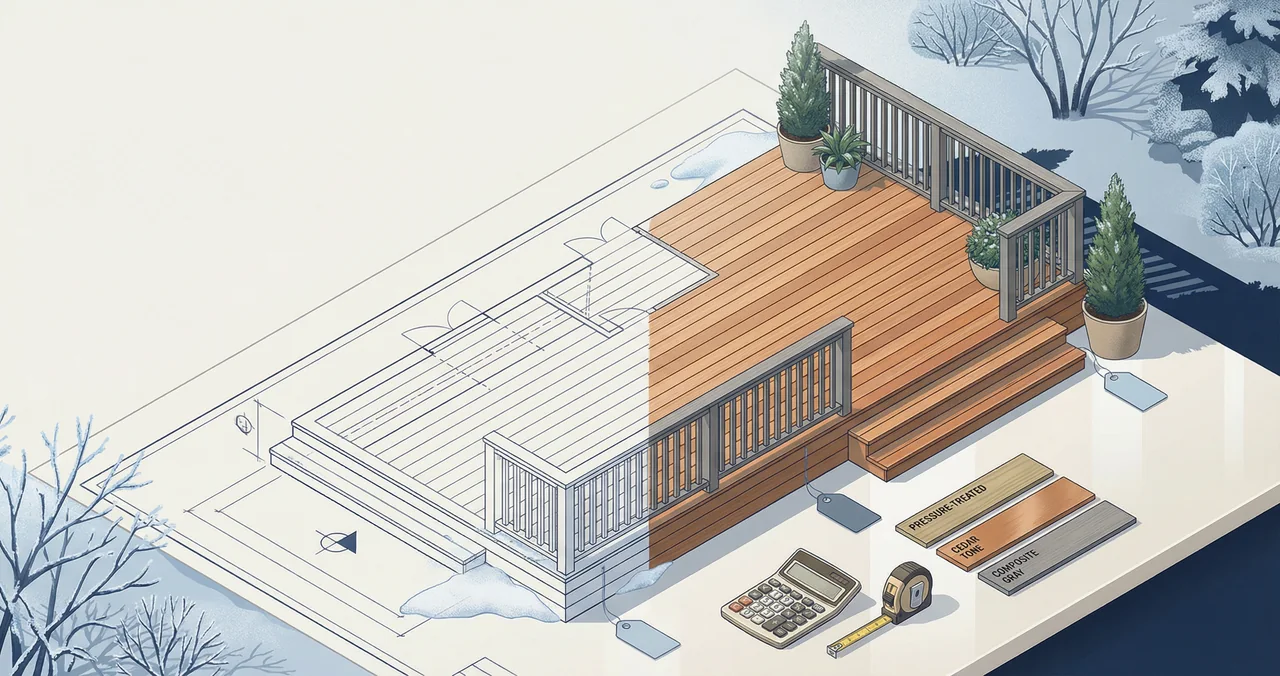
Deck Cost in Madison: What Homeowners Are Paying in 2026
You've been pricing out a new deck and the numbers are all over the place. One contractor quotes $8,000, another says $22,000 for what sounds like the same project. Madison's building season is short, material prices shift year to year, and every project has different variables.
🏗️ Planning a deck project?
Get a free manual project review, or visualize your dream deck with AI before requesting quotes.
🧮 Tool Alert: Deck Cost Calculator
Estimate your project costs in seconds based on local pricing bands for your area.
Calculate My Cost →Here's what Madison homeowners are actually paying in 2026 — broken down by material, size, and labor — so you can set a realistic budget before you start calling contractors.
<!-- slot:after-intro -->
For a broader look at deck pricing across different materials and regions, see our deck cost guide. Timing your build right can also save thousands — check our guide on the best time to build a deck.
Average Deck Cost in Madison by Material
The biggest factor in your total deck cost is the material you choose. Madison's harsh winters — with freeze-thaw cycles, heavy snow loads, and road salt tracked onto surfaces — make material selection more important here than in milder climates.
Here's what installed deck projects are running in the Madison area in 2026:
| Material | Cost Per Sq Ft (Installed) | 12x16 Deck (192 sq ft) | 16x20 Deck (320 sq ft) |
|---|---|---|---|
| Pressure-Treated Wood | $25–$45 | $4,800–$8,640 | $8,000–$14,400 |
| Cedar | $35–$55 | $6,720–$10,560 | $11,200–$17,600 |
| Composite (mid-range) | $45–$75 | $8,640–$14,400 | $14,400–$24,000 |
| Trex (Transcend/Enhance) | $50–$80 | $9,600–$15,360 | $16,000–$25,600 |
| Ipe (Hardwood) | $60–$100 | $11,520–$19,200 | $19,200–$32,000 |
These numbers include materials, labor, standard railing, and basic footings. They don't include permits, demolition of an old deck, or upgrades like built-in lighting or custom stairs.
The sweet spot for most Madison homeowners? A mid-range composite deck in the 300–400 square foot range, landing somewhere between $15,000 and $28,000 fully installed.
Cost Per Square Foot Breakdown
That per-square-foot number isn't all decking boards. Here's roughly where your money goes on a typical Madison composite deck project:
- Decking material: $15–$35/sq ft (the boards themselves)
- Substructure (joists, beams, ledger board): $8–$15/sq ft
- Footings: $5–$12/sq ft — and this is where Madison gets expensive. Frost line depth in Dane County runs 48 inches, meaning your footings need to go deep. Helical piers or sono tubes poured to that depth cost more than in regions with a 24-inch frost line.
- Railing: $3–$8/sq ft (averaged across the deck area)
- Fasteners, flashing, hardware: $2–$4/sq ft
- Labor: Typically 40–50% of total project cost
For a basic pressure-treated deck, you're looking at the lower end — around $25–$35/sq ft if the site is flat, accessible, and doesn't need complex stairs. Add elevation changes, angled cuts, or multi-level designs and that number climbs fast.
Trex and premium composite boards push into the $50–$80/sq ft range installed because the material itself costs more and requires specific fastening systems. But you're also buying decades of low maintenance — a real factor when Madison winters punish wood decks.
Labor Costs in Madison
Labor typically accounts for 40–50% of your total deck cost in the Madison area. Here's what that looks like in practice:
- General labor rate for deck building: $30–$55 per hour per crew member
- A two-person crew is standard for most residential decks
- Build time: 3–7 days for a standard 300 sq ft deck, weather permitting
Madison labor rates sit slightly above the national average. Several factors drive this:
The compressed building season. Most deck construction happens between May and October. That's roughly six months of buildable weather, compared to year-round construction in sunbelt states. Contractors pack their schedules tight. If you wait until May to start calling, you may not get on the calendar until July or August.
Footing complexity. Those 48-inch frost footings require either machine-augered sono tubes or helical piers. Either way, it's more labor and equipment than a deck project in North Carolina.
Demand in growing neighborhoods. Areas like Fitchburg, Middleton, Sun Prairie, and the newer developments on Madison's west side are seeing steady construction. Contractors working those areas stay booked.
Pro tip: Lock in your contractor by February or March for a spring/early summer build. Many Madison builders offer slight discounts for projects scheduled before their peak season hits.
What Affects Your Total Price
Two Madison homeowners building the same size deck can easily pay $10,000 apart. Here's why:
Deck Height and Access
A ground-level deck on a flat lot is the cheapest to build. Once you're more than 30 inches above grade — common with walkout basements in neighborhoods like Nakoma, Dudgeon-Monroe, or the hillier lots in Verona — you're adding:
- Taller posts and more concrete for footings
- Stairs (often $1,500–$4,000 depending on length and material)
- Additional railing runs
- Potentially a permit requirement (Madison requires permits for decks over 200 sq ft or 30 inches above grade)
Site Conditions
Rocky soil, steep grades, or limited equipment access all add cost. If a Bobcat can't reach your backyard, more work happens by hand. That means more hours and a higher bill.
Design Complexity
A simple rectangle is the most cost-effective shape. Every angle, curve, or multi-level transition adds labor:
- Multi-level decks: Add 20–40% to base cost
- Wraparound designs: More corners, more waste, more cutting
- Built-in benches or planters: $500–$2,000 each
- Pergola or shade structure: $3,000–$10,000+
Demolition of an Existing Deck
If you're replacing an old deck, budget $1,000–$3,000 for tear-out and disposal. Larger or elevated decks cost more to remove. Some contractors include demo in their quote; others list it separately. Always ask.
Permits and Inspections
In Madison, a deck permit through the Building Inspection Division typically runs $150–$500 depending on project scope. You'll need a site plan showing setbacks and a structural plan. Inspections happen at the footing stage and at completion. Factor in 1–3 weeks for permit approval during busy season.
<!-- slot:mid-content -->
Composite vs Wood: Cost Comparison for Madison
This is the decision most Madison homeowners wrestle with. Here's an honest breakdown:
Pressure-Treated Wood
- Installed cost: $25–$45/sq ft
- Lifespan in Madison: 10–15 years with consistent maintenance
- Maintenance: Needs staining or sealing every 1–2 years. Skip a year and Madison's freeze-thaw cycles will crack and warp the boards. Road salt and snowmelt accelerate rot.
- Best for: Budget-conscious builds where you're comfortable with annual upkeep
Cedar
- Installed cost: $35–$55/sq ft
- Lifespan in Madison: 15–20 years with maintenance
- Maintenance: Annual sealing recommended. Cedar resists rot naturally but still needs protection from Madison's moisture and temperature swings.
- Best for: Homeowners who want a natural wood look and don't mind the upkeep
Composite (Trex, TimberTech, Fiberon)
- Installed cost: $45–$80/sq ft depending on the line
- Lifespan in Madison: 25–50 years (warranty-backed)
- Maintenance: Occasional cleaning with soap and water. No staining, sealing, or sanding. Ever.
- Best for: Most Madison homeowners. The math works out over time, and your deck won't look beaten up after five Wisconsin winters.
The 10-Year Cost Comparison
| | Pressure-Treated (320 sq ft) | Composite (320 sq ft) |
|---|---|---|
| Initial cost | $11,200 | $20,800 |
| Annual maintenance | $300–$600/year (stain, seal, supplies, time) | $0–$50/year (soap, water) |
| 10-year maintenance total | $3,000–$6,000 | $0–$500 |
| 10-year total cost | $14,200–$17,200 | $20,800–$21,300 |
| Board replacement (estimated) | $1,000–$2,500 | $0 |
| Realistic 10-year total | $15,200–$19,700 | $20,800–$21,300 |
The gap narrows fast. By year 15, composite is often the cheaper option — and it still looks good. Pressure-treated wood at 15 years in Madison usually needs full replacement.
Use PaperPlan to visualize different decking materials on your own home before committing — it's a quick way to see how composite vs. wood will actually look against your siding and landscaping.
For a detailed look at how composite brands compare, check out our guide on the best composite decking brands in Canada — the product lines are largely the same on both sides of the border.
How to Save Money on Your Madison Deck
You don't have to gut your budget to get a solid deck. Here are strategies that actually work:
1. Choose a Simple Layout
A rectangular deck with a single level is the most affordable to build. Every angle and level change costs more. If your lot allows it, keep it simple and spend the savings on better materials.
2. Book Early
Madison contractors start filling spring calendars in January and February. Booking early can get you:
- Better scheduling flexibility
- Potentially lower rates before peak-season pricing kicks in
- First pick of material inventory at local suppliers
3. Go Mid-Range Composite
You don't need the top-tier Trex Transcend line. Trex Enhance or TimberTech PRO offer solid performance and fade/stain warranties at $5–$15 less per square foot than premium lines. That's a $1,600–$4,800 savings on a 320 sq ft deck.
4. Do Some Prep Work Yourself
Contractors charge for everything — including clearing your yard, removing old furniture, pulling up old deck boards, or grading the area. If you can handle demo or site prep yourself, you might shave $500–$2,000 off the project.
5. Skip the Extras (For Now)
Built-in lighting, cable railing, and underdeck drainage systems are nice but add up fast. Build the deck now, add features later as budget allows. Most add-ons can be retrofitted without rebuilding.
6. Get Multiple Quotes
Always get at least three quotes from licensed Madison-area contractors. Pricing varies significantly — we've seen 30–40% differences for nearly identical scopes of work. Make sure each quote breaks down materials, labor, permits, and any exclusions so you're comparing apples to apples.
If you're building in a nearby city, our affordable deck builders in Chicago and affordable deck builders in Indianapolis guides cover pricing in those markets for comparison.
7. Consider Size Carefully
Do you actually need 400 square feet? A well-designed 250–300 sq ft deck fits a dining table, grill area, and a couple of lounge chairs comfortably. Dropping from 400 to 300 sq ft saves $2,500–$7,500 depending on material. For ideas on sizing, our 12x16 deck cost guide breaks down what fits in that footprint.
<!-- slot:before-faq -->
🎨 Not sure which material to pick?
Upload a photo of your backyard and see exactly how Trex, TimberTech, or cedar would look — free and instant.
Frequently Asked Questions
How much does a 12x16 deck cost in Madison?
A 12x16 deck (192 sq ft) in Madison costs between $4,800 and $15,360 installed, depending on material. Pressure-treated wood comes in at the low end ($4,800–$8,640), while composite and Trex run $8,640–$15,360. Add $1,500–$4,000 for stairs if your deck is elevated, and $150–$500 for the permit.
Do I need a permit to build a deck in Madison, Wisconsin?
Yes, in most cases. Madison's Building Inspection Division requires a permit for decks over 200 square feet or more than 30 inches above grade. You'll need to submit a site plan and structural drawings. Permit fees range from $150–$500 and inspections are required at the footing stage and upon completion. Even if your deck falls under the threshold, it's worth calling the city to confirm — setback and zoning rules may still apply.
What is the best decking material for Madison's climate?
Composite and PVC decking handle Madison's climate best. The freeze-thaw cycles, heavy snowfall, and moisture that define Wisconsin winters are brutal on wood. Pressure-treated lumber needs sealing every year to survive, and many homeowners fall behind on that. Composite doesn't absorb moisture, won't crack from freezing, and resists the salt and ice melt that gets tracked from driveways. The higher upfront cost pays off in durability and zero maintenance. Check out our guide to choosing between composite brands for help narrowing down your options.
When is the best time to build a deck in Madison?
May through October is the building window, but the best time to start planning is January through March. Madison contractors fill their spring and summer schedules quickly because the building season is so short. If you want your deck ready for summer entertaining, sign a contract by March and aim for a May or June build start. Fall builds (September–October) can sometimes offer better availability and pricing.
Is it cheaper to build a deck yourself in Madison?
DIY can save you 40–50% on labor costs, but there are real trade-offs. Madison requires permits and inspections for most decks, and inspectors expect work to meet code — including those 48-inch frost footings. Digging and pouring footings to that depth is serious work. If you have construction experience, a ground-level pressure-treated deck is the most realistic DIY project. For anything elevated, multi-level, or composite, hiring a licensed contractor is worth it — mistakes on footings or structural framing in a freeze-thaw climate can lead to expensive failures within a few years.
<!-- slot:end -->
📋 Planning a deck project?
Get a free manual project review from our team — no obligation, no spam.
Get Free Project Review →Upload a backyard photo and preview real decking materials with AI — free, instant, no sign-up.
Permits, costs, material comparisons, and questions to ask before requesting quotes — delivered to your inbox.