
Deck Cost in Mesa: What Homeowners Are…
What does a deck cost in Mesa, AZ? See 2026 pricing by material, labor rates, and smart ways to save — plus tips for building in extreme desert heat.
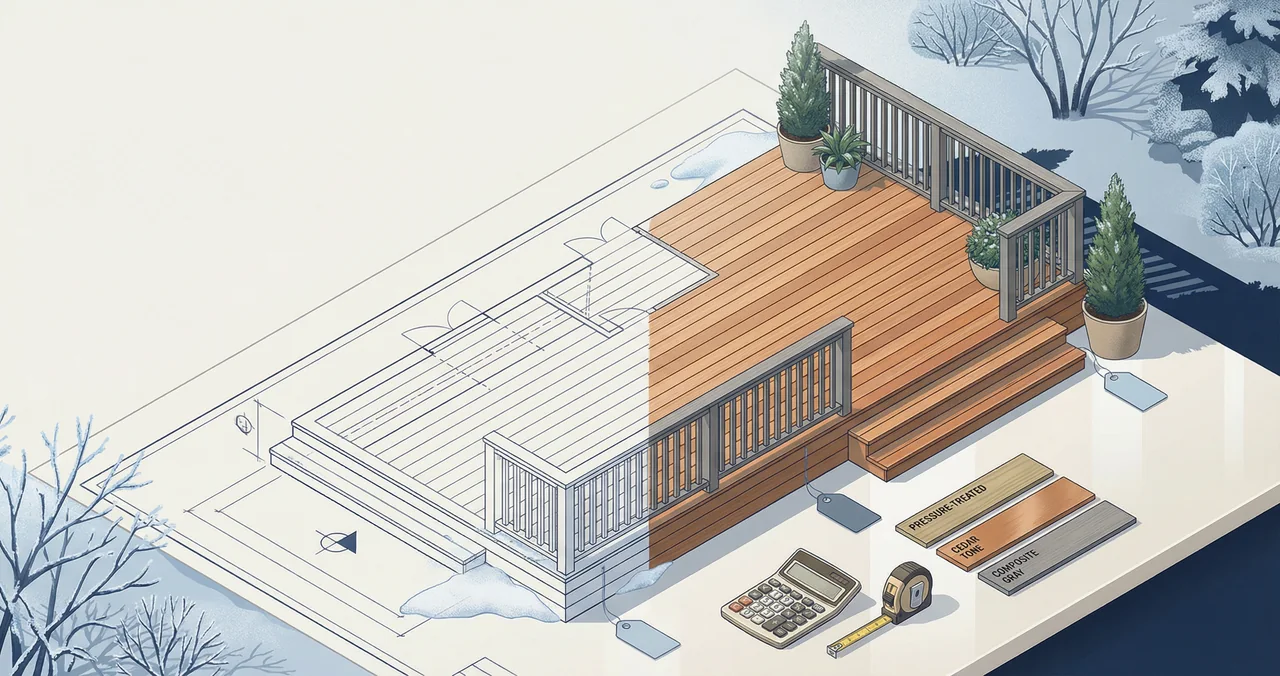
Deck Cost in Mesa: What Homeowners Are Paying in 2026
A new deck in Mesa runs anywhere from $6,000 to $30,000+ depending on size, material, and how much your design fights gravity. That's a wide range — and it's wide for a reason. A basic 12×12 pressure-treated platform on a flat lot in Superstition Springs costs a fraction of a multi-level composite build with built-in seating overlooking the Usery Mountains.
🏗️ Planning a deck project?
Get a free manual project review, or visualize your dream deck with AI before requesting quotes.
🧮 Tool Alert: Deck Cost Calculator
Estimate your project costs in seconds based on local pricing bands for your area.
Calculate My Cost →Looking for more regional information? Check out our Arizona State Decking Hub.
This guide breaks down what Mesa homeowners are actually paying in 2026, material by material, so you can budget with real numbers instead of guesses.
<!-- slot:after-intro -->
For a broader look at deck pricing across different materials and regions, see our deck cost guide.
Average Deck Cost in Mesa by Material
Material choice is the single biggest cost lever you control. Here's what installed deck projects are running in the Mesa area right now:
| Material | Installed Cost per Sq Ft | 12×16 Deck (192 sq ft) | 16×20 Deck (320 sq ft) |
|---|---|---|---|
| Pressure-Treated Wood | $25–$45 | $4,800–$8,640 | $8,000–$14,400 |
| Cedar | $35–$55 | $6,720–$10,560 | $11,200–$17,600 |
| Composite (mid-range) | $45–$75 | $8,640–$14,400 | $14,400–$24,000 |
| Trex (premium lines) | $50–$80 | $9,600–$15,360 | $16,000–$25,600 |
| Ipe (hardwood) | $60–$100 | $11,520–$19,200 | $19,200–$32,000 |
These prices include materials, labor, standard railing, and basic stairs. They don't include permits, demolition of an old structure, or extras like built-in benches or lighting.
A few Mesa-specific notes: pressure-treated wood is popular here because it's cheap upfront, but the Sonoran Desert sun will punish it. Expect to re-stain or seal every 1–2 years instead of the 2–3 year cycle you'd see in milder climates. That ongoing cost adds up fast.
Cost Per Square Foot Breakdown
The per-square-foot price you'll see quoted includes several components. Here's roughly how it splits:
- Materials (decking boards, framing, hardware): 40–50% of total cost
- Labor: 30–40%
- Permits and engineering (if needed): 2–5%
- Railing, stairs, and finishing: 10–20%
Why Smaller Decks Cost More Per Foot
A 10×10 deck might run $50–$60/sq ft installed, while a 20×20 deck could come in at $35–$50/sq ft for the same material. The reason: fixed costs. Permit fees, mobilization, equipment, and layout work don't scale linearly. A contractor spends nearly the same time setting up for a small deck as a large one.
If you're planning a modest deck, consider whether bumping up the size by even 20–30 square feet makes sense. The marginal cost per additional foot drops significantly once the crew is already on-site.
Labor Costs in Mesa
Mesa deck builders typically charge between $15–$30 per square foot for labor alone, depending on complexity. Here's what pushes labor costs up or down:
Standard build (ground-level, rectangular): $15–$20/sq ft labor
Moderate complexity (one level change, angled cuts, stairs): $20–$25/sq ft
High complexity (multi-level, curves, rooftop, structural engineering): $25–$35/sq ft
Mesa sits in a competitive market alongside Tempe, Gilbert, Chandler, and the broader Phoenix metro. That competition generally works in your favor — you'll find more contractors bidding for work than in smaller Arizona markets like Flagstaff or Prescott.
Summer Scheduling and Pricing
Here's something Mesa-specific that affects your wallet: contractor availability swings dramatically by season. From June through September, outdoor construction slows to a crawl. Temperatures regularly exceed 110°F, and most crews either shift to indoor work or cut hours drastically.
The sweet spot for deck building in Mesa is October through May. Book your project for late fall or early spring and you'll likely get better pricing and faster turnaround. Contractors who are hungry for work in November may offer 10–15% lower bids than the same crew in March when their schedule fills up.
<!-- slot:mid-content -->
What Affects Your Total Price
Beyond material and labor, several factors will swing your Mesa deck cost by thousands:
Lot Conditions and Access
Homes in neighborhoods like Las Sendas, Mountain Bridge, or parts of East Mesa often sit on sloped desert lots with caliche soil — thatite calcium carbonate layer that's basically natural concrete. If your footings need to punch through caliche, expect $500–$2,000 extra in excavation costs. Contractors may need a jackhammer or auger with a rock bit instead of a standard post-hole digger.
Flat lots in areas like Dobson Ranch, Superstition Springs, or Alta Mesa are cheaper and faster to build on.
Height and Structural Requirements
In Mesa, deck permits are typically required for structures over 200 sq ft or 30 inches above grade. Check with Mesa's Building/Development Services department before you start — building without a permit can result in fines, forced removal, or complications when you sell your home.
Elevated decks require more robust framing, deeper footings, and often engineered plans. A deck that's 4+ feet off the ground can cost 30–50% more than an identical ground-level build. If you're curious about the risks of skipping permits, this breakdown of permit requirements covers the common pitfalls — the consequences are similar regardless of where you live.
Railings and Stairs
Standard pressure-treated wood railing runs $20–$35 per linear foot installed. Composite railing jumps to $40–$60/ft, and cable or glass railing systems can hit $80–$150/ft. For a 16×20 deck with railing on three sides, that's roughly 52 linear feet — so railing alone could range from $1,000 to $7,800.
Stairs add $500–$2,000 depending on length and material. Wider stairs (48" vs. standard 36") cost more but dramatically improve the look and flow.
Shade Structures and Extras
In Mesa, a deck without shade is a deck you won't use for five months of the year. Many homeowners add a pergola, shade sail, or solid patio cover to their deck project. Budget an additional $2,000–$8,000 for shade, depending on the structure. It's worth including in your initial build — retrofitting shade later usually costs more than building it in from the start.
Composite vs Wood: Cost Comparison for Mesa
This is the decision most Mesa homeowners wrestle with. Here's how the math plays out over time:
| Factor | Pressure-Treated Wood | Composite (Trex, TimberTech) |
|---|---|---|
| Upfront cost (16×20) | $8,000–$14,400 | $14,400–$25,600 |
| Annual maintenance | $200–$600 (stain, seal, repair) | $0–$100 (occasional cleaning) |
| Lifespan in Mesa climate | 10–15 years | 25–30+ years |
| 10-year total cost | $10,000–$20,400 | $14,400–$26,600 |
| 20-year total cost | $16,000–$26,400 + rebuild | $14,400–$27,600 |
The numbers converge around the 10-year mark and composite pulls ahead after that. But there's a Mesa-specific wrinkle you need to know about.
The Heat Problem with Composite
Composite decking absorbs and retains heat. On a July afternoon in Mesa, dark-colored composite surfaces can exceed 150°F — hot enough to burn bare feet and make the deck genuinely unusable without shoes. Light-colored composites run 20–30°F cooler, which matters enormously here.
If you go composite, choose the lightest color you can live with. Brands like Trex (Foggy Wharf, Rope Swing) and TimberTech (Coastline, Whitewash Cedar) offer lighter tones that perform noticeably better in direct Arizona sun. Capped PVC decking from brands like AZEK runs even cooler than standard composite.
For a deeper comparison of top composite brands and their performance differences, the material characteristics hold true across climates — just prioritize heat resistance and UV stability for Mesa.
Wood in the Desert
Cedar and pressure-treated wood handle heat underfoot better than composite — they don't get as scorching. But the tradeoff in Mesa is brutal UV exposure. Wood that would last 20 years in a Pacific Northwest backyard might crack, split, and gray in 8–10 years here without religious maintenance.
If you choose wood, UV-blocking stain is non-negotiable. Apply it annually. The best stain options for decks break down oil-based vs. water-based formulas — for Mesa, a high-UV-protection oil-based stain typically outperforms water-based in longevity between coats.
Ipe hardwood is the exception. It's extraordinarily dense, naturally UV-resistant, and handles Mesa's climate better than any other wood. It's also extraordinarily expensive. But if budget allows and you want real wood, it's the right call for desert conditions.
How to Save Money on Your Mesa Deck
Real ways to cut costs without cutting corners:
1. Right-Size Your Deck
A 12×16 deck (192 sq ft) handles a dining table and grill comfortably. Most families don't need 400+ square feet. Measure your furniture, lay it out with painter's tape in your yard, and see what footprint you actually use.
2. Go Ground-Level If Your Lot Allows
Decks under 30 inches from grade are simpler structurally and often don't require permits in Mesa (though you should verify with the city). Skipping the permit process saves $200–$500 and weeks of waiting. More importantly, ground-level builds need less framing material and labor.
3. Use Pressure-Treated for the Frame, Composite for the Surface
Nearly every contractor in Mesa does this already, but confirm it's in your quote. There's zero reason to use composite lumber for joists and beams that nobody sees. Pressure-treated framing with composite decking boards is the standard — and the smart — approach.
4. Get Quotes in Late Summer
Contractors finishing their slow season (August–September) are often willing to lock in fall builds at lower rates. Get three to five quotes. In the Mesa/Gilbert/Chandler market, pricing varies more than you'd expect between companies.
5. Skip the Exotic Railing
Standard composite or aluminum railing looks clean and costs a fraction of cable or glass systems. Unless you have a view worth preserving — and some East Mesa foothill homes genuinely do — basic railing saves thousands.
6. Visualize Before You Commit
Use PaperPlan to visualize different decking materials on your own home before committing. Seeing light gray composite vs. cedar-tone vs. dark walnut on *your* house saves you from expensive regret — and helps you nail down scope before requesting quotes.
<!-- slot:before-faq -->
🎨 Not sure which material to pick?
Upload a photo of your backyard and see exactly how Trex, TimberTech, or cedar would look — free and instant.
Frequently Asked Questions
How much does a 12×16 deck cost in Mesa?
A 12×16 deck (192 sq ft) in Mesa typically costs $4,800–$14,400 installed, depending on material. Pressure-treated wood lands at the low end, composite in the middle, and premium brands like Trex Transcend or Ipe at the top. Add $1,500–$4,000 for railing, stairs, and permits if your deck is over 200 sq ft or 30 inches above grade.
Do I need a permit to build a deck in Mesa, Arizona?
Most likely, yes. Mesa requires permits for decks over 200 square feet or 30 inches above grade. Even smaller decks may need a permit if they're attached to the house. Contact Mesa's Building/Development Services department at (480) 644-2211 or visit their office to confirm requirements for your specific project. The permit process typically takes 1–3 weeks and costs $150–$500 depending on scope.
What's the best decking material for Mesa's extreme heat?
Light-colored capped composite or capped PVC performs best overall. It resists UV fading, won't crack or splinter, and requires minimal maintenance. The key in Mesa is avoiding dark colors — light tones can be 20–30°F cooler underfoot. If you prefer real wood, Ipe is the most durable option for desert conditions but costs significantly more. For an in-depth look at low-maintenance decking options, most of those material comparisons apply regardless of region.
When is the best time to build a deck in Mesa?
October through May. Summer temperatures regularly exceed 110°F, making outdoor construction dangerous and inefficient. Most Mesa contractors either pause exterior work or charge a premium during June–September. Booking your build for November or February often gets you best time to build a deck, plus comfortable working conditions that lead to better craftsmanship.
How long does a deck last in Mesa's desert climate?
It depends entirely on material and maintenance. Pressure-treated wood lasts 10–15 years with annual staining and sealing — less if you neglect it. Cedar gets 12–18 years with good maintenance. Composite decking lasts 25–30+ years with minimal upkeep, making it the better long-term value despite higher upfront cost. Ipe hardwood can last 30–40+ years even in Mesa's harsh sun. The intense UV exposure is the primary enemy here — choosing the right sealer or stain makes a measurable difference in how long wood decking survives.
<!-- slot:end -->
📋 Planning a deck project?
Get a free manual project review from our team — no obligation, no spam.
Get Free Project Review →Upload a backyard photo and preview real decking materials with AI — free, instant, no sign-up.
Permits, costs, material comparisons, and questions to ask before requesting quotes — delivered to your inbox.