
Deck Cost in Nashville (2026)
What does a deck cost in Nashville in 2026? Get real pricing per square foot for composite, wood, and Trex decks plus local labor rates and ways to save.
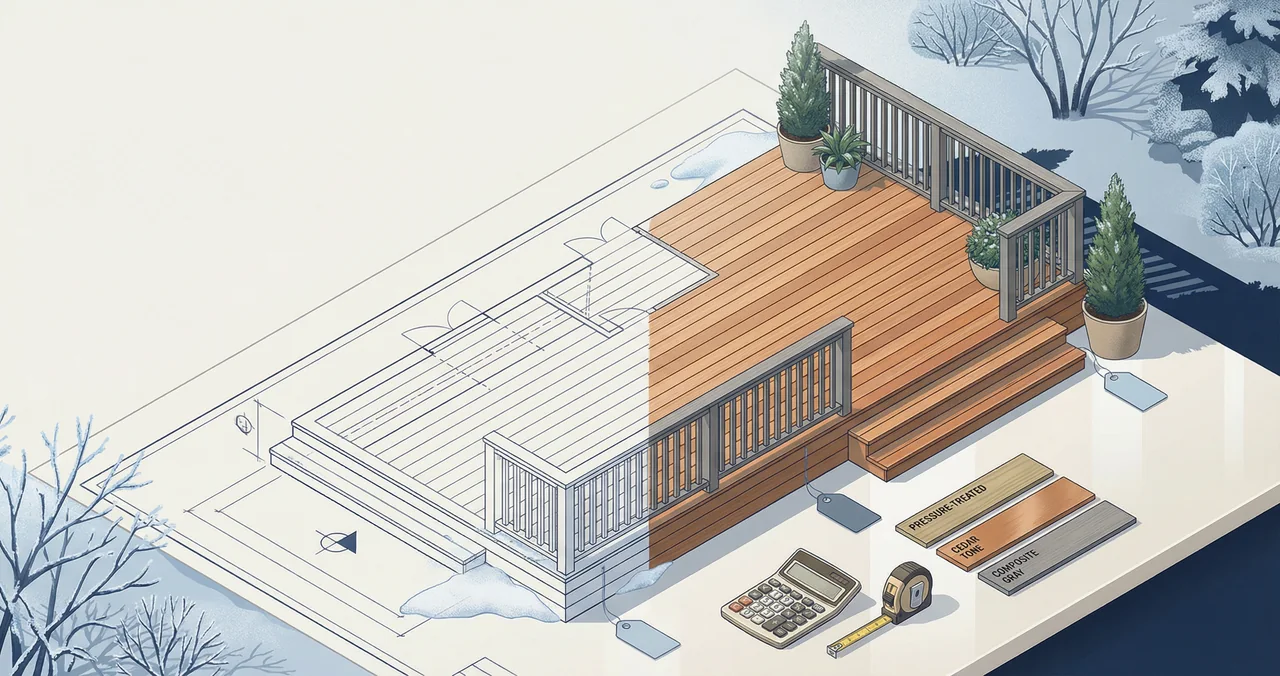
Deck Cost in Nashville: What Homeowners Are Paying in 2026
A new deck in Nashville runs anywhere from $8,000 to $30,000+ depending on size, materials, and how complex the build gets. That's a wide range — and not particularly helpful if you're trying to set a realistic budget.
🏗️ Planning a deck project?
Get a free manual project review, or visualize your dream deck with AI before requesting quotes.
🧮 Tool Alert: Deck Cost Calculator
Estimate your project costs in seconds based on local pricing bands for your area.
Calculate My Cost →Looking for more regional information? Check out our Tennessee State Decking Hub.
So here's what actually drives the number: material choice accounts for roughly 40–50% of your total cost, labor takes another 35–45%, and everything else — permits, railings, stairs, site prep — fills in the rest. Nashville's construction market stays competitive thanks to the city's long building season, but demand spikes hard in spring. Timing matters.
Below is a full breakdown of what Nashville homeowners are paying right now, by material, by square foot, and by project type.
<!-- slot:after-intro -->
For a broader look at deck pricing across different materials and regions, see our complete deck cost guide for Tennessee.
Average Deck Cost in Nashville by Material
These are installed prices — materials plus labor — based on 2026 pricing in the Nashville metro area. Expect variation based on your lot, the contractor, and project complexity.
| Material | Installed Cost (per sq ft) | 300 sq ft Deck | 500 sq ft Deck |
|---|---|---|---|
| Pressure-Treated Wood | $25–$45 | $7,500–$13,500 | $12,500–$22,500 |
| Cedar | $35–$55 | $10,500–$16,500 | $17,500–$27,500 |
| Composite | $45–$75 | $13,500–$22,500 | $22,500–$37,500 |
| Trex (brand-name composite) | $50–$80 | $15,000–$24,000 | $25,000–$40,000 |
| Ipe (hardwood) | $60–$100 | $18,000–$30,000 | $30,000–$50,000 |
Pressure-treated pine remains the most popular choice in Nashville by volume. It handles Tennessee's moderate climate well and costs roughly half what composite does. The trade-off is maintenance — you'll need to stain or seal it every 2–3 years.
Composite decking has gained serious ground in neighborhoods like Green Hills, Bellevue, and Franklin. The upfront premium pays off if you plan to stay in the home 10+ years and don't want annual maintenance weekends.
Cost Per Square Foot Breakdown
Per-square-foot pricing is the easiest way to compare bids. Here's how the numbers break down between materials and labor in Nashville:
Materials Only (No Labor)
- Pressure-treated lumber: $8–$15/sq ft
- Cedar: $12–$22/sq ft
- Composite boards: $20–$35/sq ft
- Trex Select/Enhance: $22–$38/sq ft
- Trex Transcend: $30–$45/sq ft
- Ipe hardwood: $25–$50/sq ft
Installed (Materials + Labor)
The installed prices in the table above include framing, decking, basic railing, and standard stairs. They do not include:
- Multi-level designs (add 20–40%)
- Built-in benches or planters (add $500–$2,000)
- Pergola or shade structure (add $3,000–$10,000)
- Under-deck drainage systems
- Specialty lighting packages
If you're comparing quotes, make sure each contractor is pricing the same scope. A bid that looks low might exclude railings, stairs, or demolition of your old deck.
Labor Costs in Nashville
Nashville labor rates for deck construction typically run $15–$30 per square foot, depending on the contractor and complexity. That puts labor at roughly 40% of your total project cost for wood decks and closer to 35% for composite (since the material cost is higher).
A few things that push labor costs up:
- Hillside or sloped lots — Common in areas like Sylvan Park, East Nashville, and parts of Brentwood. Elevated decks on steep grades require deeper footings and more structural engineering.
- Second-story decks — Anything above 8 feet off the ground adds scaffolding time, safety requirements, and engineering costs.
- Demolition of existing structures — Removing an old deck before building new runs $5–$15 per square foot depending on size and disposal.
- Access issues — Narrow side yards or homes without truck access to the backyard mean more hand-carrying of materials. That adds labor hours.
Nashville contractors generally charge more during the March through May rush. If your timeline is flexible, booking a build for September or October can save you 5–15% on labor — contractors are looking to fill their schedules before winter slowdown.
<!-- slot:mid-content -->
What Affects Your Total Price
Beyond material and labor, here's what moves the needle on your final invoice:
Deck Size and Layout
A simple rectangular 12×16 deck is the most cost-effective shape. Every angle, curve, or level change adds cutting waste and labor time. L-shaped and multi-level designs typically cost 20–40% more per square foot than a basic rectangle.
For a detailed look at how size impacts pricing, check out our guide on 12×16 deck costs or larger 16×20 builds.
Deck Height and Footings
Nashville's frost line sits at 18–36 inches depending on your specific location in Davidson County. Footings need to extend below frost depth to prevent heaving. For a ground-level deck, this is straightforward. For a raised deck off a walkout basement — common in Nashville's hilly terrain — you're looking at deeper piers and more concrete.
Footing costs: $75–$200 per footing, with most decks needing 6–12 footings.
Permits and Inspections
In Nashville, deck permits are typically required for structures over 200 square feet or 30 inches above grade. You'll need to work with Nashville's Building/Development Services department (Metro Codes).
Permit costs generally run $150–$500 depending on project size. Some contractors handle the permit process; others leave it to the homeowner. Ask upfront.
Building without a permit is a risk — it can complicate a future home sale and void your insurance coverage if something goes wrong. Worth the paperwork. For more on the risks of skipping permits, we break it down in detail.
Railings, Stairs, and Extras
Railings and stairs often surprise homeowners because they're not always clearly broken out in initial estimates.
- Wood railings: $20–$35 per linear foot
- Composite railings: $35–$60 per linear foot
- Aluminum or cable railings: $50–$100+ per linear foot
- Stairs: $75–$200 per step (depending on width and material)
Cable and glass railing systems have become popular in Nashville's newer builds, especially in The Gulch and 12 South. They look clean but cost 2–3× what standard wood railings do. For a rundown of railing options, see our deck railing systems guide.
Composite vs Wood: Cost Comparison
This is the decision most Nashville homeowners wrestle with. Here's an honest side-by-side:
| Factor | Pressure-Treated Wood | Composite |
|---|---|---|
| Upfront cost (installed, per sq ft) | $25–$45 | $45–$75 |
| Annual maintenance | Stain/seal every 2–3 years ($1–$3/sq ft) | Wash once a year |
| Lifespan | 15–25 years (with maintenance) | 25–50 years |
| 10-year maintenance cost | $3,000–$6,000 | ~$200–$500 |
| Warranty | Varies, usually limited | 25–50 years (most brands) |
| Heat retention | Moderate | Higher — can get hot in direct sun |
| Nashville climate fit | Good with regular sealing | Excellent — handles humidity and temperature swings well |
The Real Math
On a 350 sq ft deck, pressure-treated wood costs roughly $10,500–$15,750 installed. Over 10 years, add $3,000–$6,000 in stain and sealant. Total: $13,500–$21,750.
The same deck in composite runs $15,750–$26,250 installed with near-zero maintenance. Total over 10 years: $16,000–$27,000.
The gap narrows significantly when you factor in maintenance. If you're staying in the home long-term, composite often makes financial sense. If you're building on a tight budget or plan to sell within 5 years, pressure-treated wood delivers the best value.
Nashville's moderate humidity and seasonal temperature swings (highs in the 90s, lows in the 20s) are manageable for both materials. Wood needs consistent sealing to handle the moisture. Composite handles it without intervention.
Use PaperPlan to visualize different decking materials on your own home before committing — it helps you see how color and texture look against your siding and landscaping.
For a deeper comparison of top composite brands and what sets them apart, we've tested the major players.
How to Save Money on Your Nashville Deck
Smart budgeting doesn't mean cutting corners. Here's where you can realistically trim costs:
1. Build in Fall
Nashville's deck-building season runs March through November. Spring is peak demand. Booking for September through November often gets you better pricing and faster scheduling. Contractors want to keep crews busy before the slower winter months.
2. Keep the Design Simple
A rectangular deck with standard railings and one set of stairs is the most cost-effective build. Every bump-out, angle, and built-in feature adds cost. If budget is a priority, start simple — you can always add a pergola or built-in seating later.
3. Choose Pressure-Treated for the Frame
Even if you want composite decking on top, the substructure (joists, beams, posts) is almost always pressure-treated lumber. Some contractors push composite or aluminum framing — which can add $3–$8 per square foot to the frame alone. For most Nashville residential decks, pressure-treated framing is code-compliant and performs well. Learn more about aluminum deck framing and when it actually makes sense.
4. Get Three to Five Quotes
Nashville has no shortage of deck builders. Get at least three detailed, written quotes and compare them line by line. Make sure each quote includes:
- Material specifications (brand, product line, color)
- Footing type and number
- Railing and stair details
- Permit costs (included or not)
- Demolition of existing structures (if applicable)
- Timeline and payment schedule
5. DIY What You Can
Not the structural work — leave framing, footings, and ledger board connections to a licensed contractor. But staining, sealing, and finishing touches like lighting or planters are manageable DIY projects that save $500–$2,000.
6. Time Your Material Purchases
Lumber prices fluctuate. Pressure-treated wood tends to be cheapest in late fall and winter when demand drops. If you're planning a spring build, buying materials in January or February and storing them can save 10–15%.
<!-- slot:before-faq -->
🎨 Not sure which material to pick?
Upload a photo of your backyard and see exactly how Trex, TimberTech, or cedar would look — free and instant.
Frequently Asked Questions
How much does a 12×16 deck cost in Nashville?
A 12×16 (192 sq ft) deck in Nashville costs approximately $4,800–$8,640 in pressure-treated wood or $8,640–$14,400 in composite, fully installed. Add $1,500–$3,000 for railings and stairs if not included in the base quote. These are typical ranges — sloped lots, second-story builds, or custom features push costs higher.
Do I need a permit to build a deck in Nashville?
Yes, in most cases. Nashville (Davidson County) requires permits for decks over 200 square feet or more than 30 inches above grade. Contact Metro Nashville Codes Administration before starting your project. The permit process typically takes 1–3 weeks and costs $150–$500. Your contractor should be able to handle the application.
What is the cheapest decking material in Nashville?
Pressure-treated pine is the most affordable option at $25–$45 per square foot installed. It's widely available from Nashville-area lumber suppliers and handles Tennessee's climate well with regular maintenance. It does require staining or sealing every 2–3 years to prevent rot and weathering.
Is composite decking worth the extra cost in Nashville?
For most homeowners staying in their home 7+ years, yes. The higher upfront cost ($45–$75/sq ft vs $25–$45/sq ft for wood) is offset by virtually zero maintenance costs over time. Nashville's humidity and temperature swings mean wood decks need frequent sealing — composite doesn't. If you're budget-constrained or plan to sell soon, pressure-treated wood still delivers strong value.
When is the best time to build a deck in Nashville?
September through November offers the best combination of good weather and competitive pricing. Spring (March–May) is the busiest season — contractors are booked out, and you may pay a premium. Summer works too but Tennessee heat can slow crews down. Winter builds are possible for simple projects but frost and rain create scheduling uncertainty. Planning your project in fall often means best time to build a deck.
<!-- slot:end -->
📋 Planning a deck project?
Get a free manual project review from our team — no obligation, no spam.
Get Free Project Review →Upload a backyard photo and preview real decking materials with AI — free, instant, no sign-up.
Permits, costs, material comparisons, and questions to ask before requesting quotes — delivered to your inbox.