
Deck Cost in Phoenix (2026)
What does a deck cost in Phoenix in 2026? Get real pricing per square foot for composite, wood, and Trex decking — plus tips to save in Arizona's extreme heat.
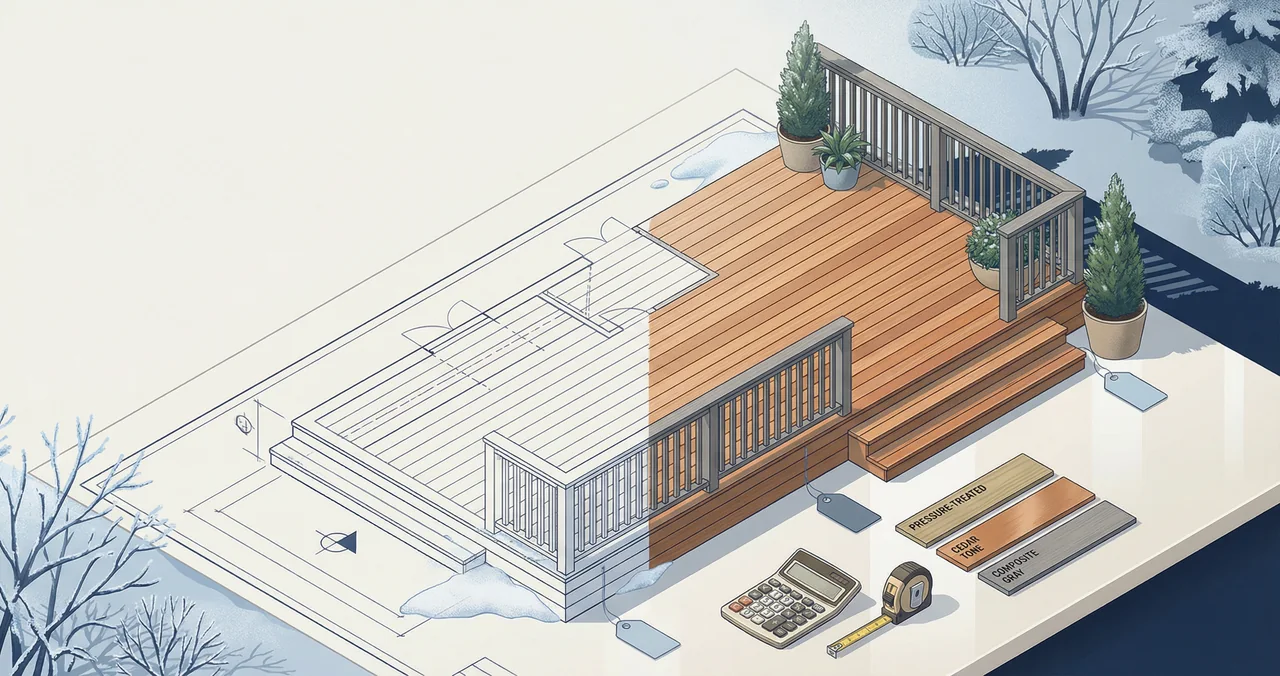
Phoenix homeowners pay anywhere from $8,000 to $30,000+ for a new deck, depending on size, materials, and how much the desert sun factors into your choices. That's a wide range — and the reason it varies so much comes down to one thing most pricing guides ignore: extreme heat changes everything about how you build a deck in Phoenix.
🧮 Tool Alert: Deck Cost Calculator
Estimate your project costs in seconds based on local pricing bands for your area.
Calculate My Cost →A material that works fine in Portland or Toronto can become untouchable in Scottsdale by mid-June. Dark composite boards routinely hit 150°F+ surface temperatures. Untreated wood dries out and cracks within a season or two. So the real question isn't just "what does a deck cost?" — it's "what does a deck cost that actually holds up in the Valley?"
Looking for more regional information? Check out our Arizona State Decking Hub.
Here's what Phoenix homeowners are paying right now, and what you should know before you sign anything.
<!-- slot:after-intro -->
For a broader look at deck pricing across different materials and regions, see our deck cost guide. Timing your build right can also save thousands — check our guide on the best time to build a deck.
Average Deck Cost in Phoenix by Material
These are installed prices — materials plus labor — based on what Phoenix-area contractors are charging in 2026 for a standard deck build:
🏗️ Planning a deck project?
Get a free manual project review, or visualize your dream deck with AI before requesting quotes.
| Material | Installed Cost Per Sq Ft | 12×16 Deck (192 sq ft) | 16×20 Deck (320 sq ft) |
|---|---|---|---|
| Pressure-Treated Wood | $25–$45 | $4,800–$8,640 | $8,000–$14,400 |
| Cedar | $35–$55 | $6,720–$10,560 | $11,200–$17,600 |
| Composite (mid-range) | $45–$75 | $8,640–$14,400 | $14,400–$24,000 |
| Trex (Transcend/Enhance) | $50–$80 | $9,600–$15,360 | $16,000–$25,600 |
| Ipe (Brazilian Hardwood) | $60–$100 | $11,520–$19,200 | $19,200–$32,000 |
A few things jump out. Pressure-treated lumber is the budget option, but in Phoenix's climate it demands annual sealing and staining or it'll split and gray fast. Cedar holds up better to heat but still needs UV protection. Composite and Trex dominate the Phoenix market for good reason — minimal maintenance in a city where nobody wants to re-stain a deck in July.
Ipe is the premium play. It's incredibly dense, naturally resistant to UV damage, and stays cooler than most composites. But the price reflects it.
Cost Per Square Foot Breakdown
When contractors quote you a per-square-foot price, here's roughly how that breaks down:
Materials Only (No Labor)
- Pressure-treated lumber: $8–$15/sq ft
- Cedar boards: $12–$22/sq ft
- Composite decking: $18–$32/sq ft
- Trex (premium lines): $22–$38/sq ft
- Ipe hardwood: $28–$45/sq ft
Installed (Materials + Labor)
Labor typically adds $15–$25 per square foot on top of materials in the Phoenix metro. That includes framing, fasteners, and basic finishing. The final installed price also factors in:
- Footings and foundation: Phoenix's frost line is shallow at 6–12 inches, which keeps foundation costs lower than cold-climate builds. But you'll still need proper footings to meet code.
- Railings: Add $20–$50 per linear foot for standard railings. Cable or glass railing systems run higher.
- Stairs: Each set of stairs typically adds $500–$2,000 depending on height and materials.
- Permits and inspections: Budget $200–$600 for the permit process in Phoenix.
What Size Deck Fits Your Budget?
Most Phoenix backyards suit a 12×16 to 16×20 deck. A small 10×12 deck off the back door might run $6,000–$12,000 in composite — enough for a grill and a couple chairs. A full 20×20 entertaining space pushes $18,000–$32,000 depending on material choices and extras like built-in seating or shade structures.
Labor Costs in Phoenix
Phoenix labor rates for deck building sit in the $15–$25 per square foot range, putting the metro roughly in line with national averages. A few factors affect where you land in that range:
Seasonal pricing matters. The best time to build a deck in Phoenix is October through May. Contractors are busier during these cooler months, but many still prefer the steady workflow over summer's brutal heat. If you're flexible, booking a build for late September or early October can sometimes get you better pricing — contractors are eager to fill their fall schedules.
Summer builds cost more — or don't happen at all. When temperatures hit 110°F+, many crews start at 4 or 5 AM and wrap up by noon. Some won't schedule deck builds at all from June through August. If you do find a contractor willing to work through summer, expect a 10–15% premium for the shortened workdays and heat-related challenges.
Complexity drives labor up fast. A straightforward rectangular deck on flat ground is the cheapest to build. Multi-level decks, curved designs, integrated shade structures, or decks built on slopes in areas like the North Mountain Preserve or South Mountain foothills add significant labor hours.
For a typical 300-square-foot composite deck, expect $4,500–$7,500 in labor costs alone.
<!-- slot:mid-content -->
What Affects Your Total Price
Beyond materials and labor, several Phoenix-specific factors move your final number:
Deck Height and Access
Ground-level decks cost the least. Once your deck rises above 30 inches from grade, you'll need railings (code requirement) and the structural framing gets more substantial. Elevated decks on sloped lots — common in areas like Ahwatukee, Paradise Valley, and the Desert Ridge corridor — can add 20–40% to your total.
Shade Structures
This is Phoenix. A deck without shade is a deck you won't use for five months of the year. Many homeowners here budget for a pergola, shade sail, or ramada as part of the deck project. Expect to add:
- Shade sails: $500–$2,000
- Aluminum pergola: $3,000–$8,000
- Wood or composite pergola: $5,000–$15,000
- Full ramada with roof: $8,000–$20,000+
If you're comparing quotes and one includes shade and another doesn't, make sure you're comparing apples to apples.
Permits in Phoenix
In Phoenix, deck permits are required for structures over 200 sq ft or those raised more than 30 inches above grade. Contact the City of Phoenix Development Services Department to confirm requirements for your specific project. Permits run $200–$600 depending on scope, and inspections are part of the process.
Skipping the permit is a bad idea — it can cause problems when you sell your home and your insurance may not cover an unpermitted structure.
Soil and Site Conditions
Phoenix's desert soil is generally stable, but caliche (that concrete-like layer of calcium carbonate underground) is common and can make footing excavation harder and more expensive. If your lot has heavy caliche, plan for an extra $500–$1,500 in excavation costs.
UV Protection and Finishing
Any wood deck in Phoenix needs UV-resistant sealant or stain applied at installation and reapplied every 1–2 years. That's an ongoing cost of $300–$800 per treatment for a mid-size deck. It's one of the main reasons many Phoenix homeowners choose composite — the upfront cost is higher, but you eliminate most of that recurring maintenance.
Composite vs Wood: Cost Comparison for Phoenix
This is the decision most Phoenix homeowners wrestle with. Here's how it actually plays out over time:
| Factor | Pressure-Treated Wood | Composite (Mid-Range) |
|---|---|---|
| Installed cost (320 sq ft) | $8,000–$14,400 | $14,400–$24,000 |
| Annual maintenance | $300–$800 (stain/seal) | $0–$100 (occasional cleaning) |
| 10-year maintenance total | $3,000–$8,000 | $0–$1,000 |
| 10-year total cost | $11,000–$22,400 | $14,400–$25,000 |
| Expected lifespan | 10–15 years | 25–30+ years |
| UV resistance | Low (needs treatment) | High (built-in) |
| Heat retention | Lower surface temps | Higher — choose light colors |
The gap narrows dramatically over 10 years. And if you factor in lifespan, composite often costs less per year of use.
The Phoenix-specific catch with composite: dark-colored boards get dangerously hot. Surface temperatures on dark brown or charcoal composite can exceed 150°F in direct afternoon sun. Light-colored composite or capped PVC handles heat best. Brands like Trex, TimberTech, and AZEK all offer lighter color options specifically suited for desert climates.
Use PaperPlan to visualize different decking materials and colors on your own home before committing — seeing how a light sandstone composite looks against your stucco can save you from an expensive color mistake.
For a deeper look at composite options, check out our guide on the best low-maintenance decking materials.
How to Save Money on Your Phoenix Deck
You don't have to blow your budget to get a great deck. Here's what actually moves the needle:
1. Choose Your Timing Carefully
Book your build during late spring or early fall when contractors are transitioning between peak seasons. Avoid the October–December rush when everyone's trying to get their outdoor projects done before the holidays.
2. Keep the Design Simple
Every angle, curve, and level change adds labor cost. A rectangular deck with standard railings is the most cost-effective design. You can always add visual interest with furniture, planters, and lighting instead of architectural complexity.
3. Go Composite Where It Counts
Consider a hybrid approach: composite decking boards on top (for the low-maintenance surface you'll actually touch) with a pressure-treated wood frame underneath (where it's protected from UV and doesn't need to look pretty). This is standard practice and saves 15–20% versus an all-composite build.
4. Compare at Least Three Quotes
Pricing varies significantly across the Phoenix metro. A reputable deck builder in Phoenix should provide a detailed written estimate breaking out materials, labor, permits, and any site-prep costs. If a quote is just one lump number with no breakdown, keep looking.
5. Skip the Extras You Can Add Later
Built-in benches, planters, and lighting are nice but add up fast. Build the deck now, accessorize later. Post-mount lighting and freestanding furniture can be added any time without modifying the structure. Our roundup of the best deck lighting kits covers options that don't require built-in wiring.
6. Consider Deck Size Carefully
An extra 4 feet in each direction sounds minor but adds significant square footage — and cost. A 12×16 deck (192 sq ft) handles dining and grilling comfortably. Going to 16×20 (320 sq ft) adds 128 sq ft and potentially $5,000–$9,000 more in composite. Make sure you'll actually use the space.
What About Pool Decks?
Phoenix and pools go together. If you're building a deck around an above-ground or in-ground pool, a few extra considerations apply:
- Slip resistance is critical — look for textured composite with good wet-traction ratings
- Surface temperature matters even more around a pool — stick with the lightest colors available
- Drainage needs to be planned into the design so water doesn't pool against your home's foundation
- Code setbacks from the pool edge may apply — your contractor should know Phoenix's specific requirements
Pool deck projects tend to run 15–25% more than standard decks due to the additional engineering and material requirements. For more on pool deck options, see our guide on the best pool deck materials.
Deck Railing Costs in Phoenix
Railings are required on any deck surface 30 inches or more above grade in Phoenix. Here's what you'll pay:
| Railing Type | Cost Per Linear Foot (Installed) |
|---|---|
| Pressure-treated wood | $20–$35 |
| Cedar | $25–$45 |
| Composite | $30–$60 |
| Aluminum | $40–$70 |
| Cable railing | $50–$90 |
| Glass panel | $70–$150+ |
Aluminum and cable railings are popular in Phoenix because they don't obstruct views and stay cooler to the touch than wood or composite. If you're in a neighborhood with mountain or city views — Arcadia, Camelback East, or Desert Ridge — railing choice makes a big difference in how much you enjoy the view from your deck.
For railing ideas, browse our guide to the best deck railing systems.
<!-- slot:before-faq -->
🎨 Not sure which material to pick?
Upload a photo of your backyard and see exactly how Trex, TimberTech, or cedar would look — free and instant.
Frequently Asked Questions
How much does a 12×16 deck cost in Phoenix?
A 12×16 deck (192 sq ft) in Phoenix costs between $4,800 and $15,360 installed, depending on materials. Pressure-treated wood sits at the low end ($4,800–$8,640), while Trex or premium composite runs $9,600–$15,360. Add railings, stairs, and a shade structure, and the total can push higher. Most Phoenix homeowners building this size deck in composite land around $10,000–$13,000 all-in.
What is the best decking material for Phoenix heat?
Light-colored capped composite or capped PVC performs best in Phoenix. These materials resist UV fading, don't crack or splinter like wood, and require almost zero maintenance. The key is choosing light colors — sandy beige, light gray, or coastal tones — that reflect heat rather than absorb it. Dark composites can hit surface temperatures above 150°F, making them uncomfortable or even unsafe to walk on barefoot. Ipe hardwood is another strong option; it stays naturally cooler than composite but costs significantly more.
Do I need a permit to build a deck in Phoenix?
Yes, in most cases. Phoenix requires building permits for decks that exceed 200 square feet or are raised more than 30 inches above grade. Even smaller decks may need permits depending on your lot's specific conditions. Contact the City of Phoenix Development Services Department before starting your project. Permit fees typically run $200–$600, and the process includes plan review and inspections. Building without a permit can create serious problems when selling your home.
When is the best time to build a deck in Phoenix?
October through May is the ideal building window. Temperatures are manageable for outdoor construction, and you'll have the deck ready before the summer heat hits. The busiest months for contractors tend to be October through December and March through May. If you want the best chance at competitive pricing, try booking for January or February — it's still comfortable building weather, and many contractors have more availability. Avoid scheduling a build from June through August unless you're prepared for higher costs and potential delays due to extreme heat.
Is a composite deck worth the extra cost in Phoenix?
For most Phoenix homeowners, yes. The math works out when you factor in maintenance savings. A pressure-treated wood deck needs staining and sealing every 1–2 years in Arizona's intense UV environment — that's $300–$800 per treatment, plus your time. Over 10 years, the total cost of a wood deck approaches what you'd pay for composite upfront. Composite also lasts 25–30+ years versus 10–15 for pressure-treated wood, making the cost per year of ownership significantly lower. The only caveat: choose light colors to manage surface heat, and plan for shade if the deck gets direct afternoon sun.
<!-- slot:end -->
📋 Planning a deck project?
Get a free manual project review from our team — no obligation, no spam.
Get Free Project Review →Upload a backyard photo and preview real decking materials with AI — free, instant, no sign-up.
Permits, costs, material comparisons, and questions to ask before requesting quotes — delivered to your inbox.