
Deck Cost in Providence (2026)
What does a deck cost in Providence in 2026? Get real pricing per square foot for composite, wood, and Trex decks plus local tips to save money.
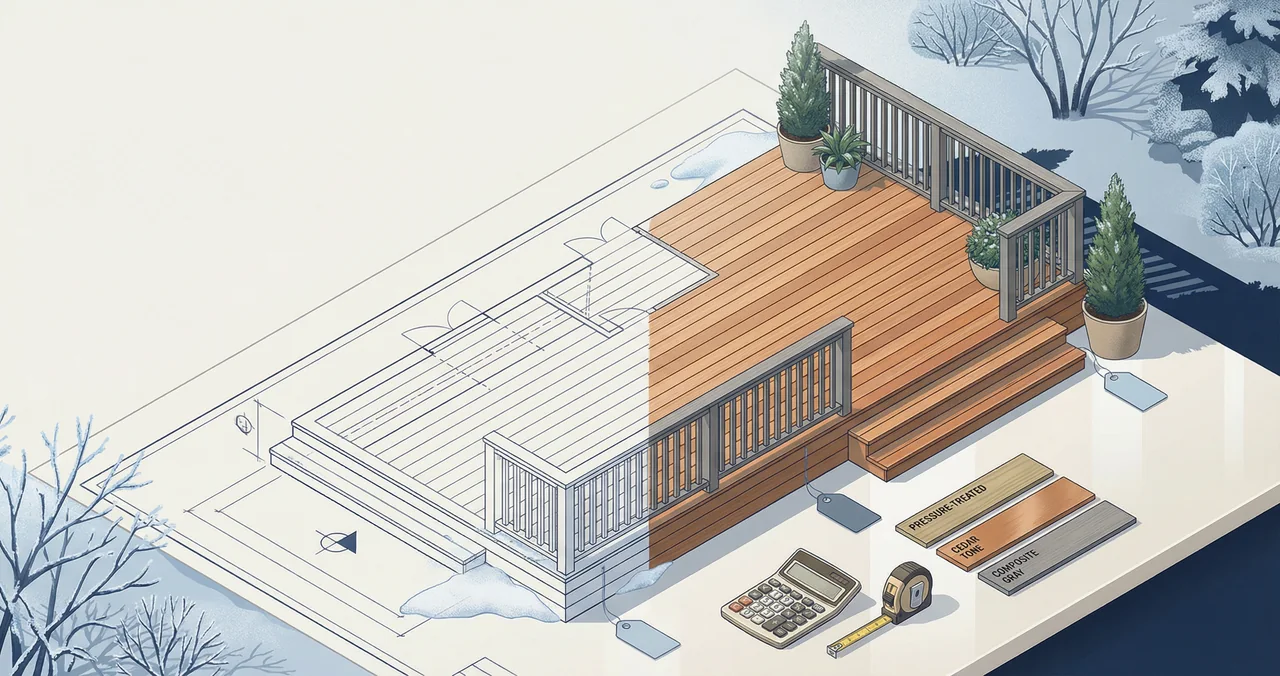
Deck Cost in Providence: What Homeowners Are Paying in 2026
If you're a Providence homeowner pricing out a new deck, the number you'll hear most often is somewhere between $8,000 and $30,000 — a range so wide it's almost useless. The real answer depends on your material, deck size, how high off the ground you're building, and whether your contractor can even fit you into a schedule that's already packed by April.
🏗️ Planning a deck project?
Get a free manual project review, or visualize your dream deck with AI before requesting quotes.
🧮 Tool Alert: Deck Cost Calculator
Estimate your project costs in seconds based on local pricing bands for your area.
Calculate My Cost →Here's what Providence homeowners are actually paying in 2026, broken down by material, square footage, and the local factors that push costs up or down.
<!-- slot:after-intro -->
For a broader look at deck pricing across different materials and regions, see our deck cost guide. Timing your build right can also save thousands — check our guide on the best time to build a deck.
Average Deck Cost in Providence by Material
Providence pricing runs slightly above the national average. A shorter building season (May through October, realistically), deep frost line requirements, and strong demand all contribute. Here's what you can expect for a fully installed deck in 2026:
| Material | Installed Cost Per Sq Ft | 12×16 Deck (192 sq ft) | 16×20 Deck (320 sq ft) |
|---|---|---|---|
| Pressure-Treated Wood | $25–$45 | $4,800–$8,640 | $8,000–$14,400 |
| Cedar | $35–$55 | $6,720–$10,560 | $11,200–$17,600 |
| Composite | $45–$75 | $8,640–$14,400 | $14,400–$24,000 |
| Trex (mid-to-high tier) | $50–$80 | $9,600–$15,360 | $16,000–$25,600 |
| Ipe (Brazilian Hardwood) | $60–$100 | $11,520–$19,200 | $19,200–$32,000 |
These prices include materials, labor, standard railings, and basic stairs. They don't include permits, demolition of an old deck, or extras like built-in benches or lighting.
Most Providence homeowners building a standard 16×20 composite deck land somewhere around $16,000 to $22,000 all in.
Cost Per Square Foot Breakdown
That per-square-foot number you see quoted everywhere? It hides a lot. Here's what's actually inside it:
Materials Only (No Labor)
- Pressure-treated lumber: $8–$15/sq ft
- Cedar decking boards: $12–$22/sq ft
- Composite boards: $18–$32/sq ft
- Trex Transcend or Select: $22–$38/sq ft
- Ipe hardwood: $25–$45/sq ft
Hardware and Substructure
On top of your decking boards, you'll need joists, beams, posts, ledger boards, concrete footings, joist hangers, screws, and flashing. Budget an additional $5–$12 per square foot for substructure and hardware, depending on height and complexity.
The Real Per-Square-Foot Number
When contractors quote you an installed price, it bundles everything — materials, substructure, labor, and basic finishing. That's why a "$25/sq ft pressure-treated deck" doesn't mean you're only paying $25 worth of wood per square foot. The wood might be $10; the rest is structure, fasteners, and the crew building it.
Labor Costs in Providence
Labor is a major piece of the puzzle in Providence — typically 40% to 60% of your total project cost.
Expect to pay $15–$35 per square foot for labor alone, depending on:
- Deck height and access. A ground-level deck on a flat Federal Hill lot costs less to build than a second-story walkout deck on a sloped yard in the East Side.
- Complexity. Multi-level decks, curved edges, inlays, and custom railings all add labor hours.
- Time of year. Book your contractor by March. By mid-April, the best crews in Providence and across Rhode Island are committed through September. Late bookings sometimes mean paying a premium — or waiting until the following year.
- Footing depth. Providence sits in a frost zone that requires footings at 36 to 60 inches deep depending on your specific location. Deeper footings mean more excavation time and concrete. This is non-negotiable — shallow footings will heave and shift after a hard freeze.
If you're comparing quotes, make sure each contractor is pricing the same scope. One quote might include demolition of your old deck and stairs; another might not. Ask for itemized breakdowns.
<!-- slot:mid-content -->
What Affects Your Total Price
Beyond materials and labor, several Providence-specific factors can swing your final number by thousands:
Frost Line and Footing Requirements
Rhode Island's frost line means your deck posts need to sit on footings that go 3 to 5 feet into the ground. Helical piles are gaining popularity with Providence contractors as an alternative to traditional poured footings — they're faster to install and perform well in New England's freeze-thaw soil. Expect helical piles to add $150–$300 per post compared to standard sono-tube footings.
Permits and Inspections
In Providence, you'll need a building permit for any deck over 200 square feet or 30 inches above grade. Contact Providence's Building/Development Services department before work starts. Permit fees typically run $75–$300 depending on project scope.
Don't skip this. Building without a permit creates problems when you sell your home — and inspectors in Providence do check. For more on why permits matter, read about the risks of building without a permit.
Lot Conditions
Sloped yards, rocky soil, limited access for equipment, and proximity to the property line all impact cost. Homes in neighborhoods like College Hill, Fox Point, and Wayland often have tighter lots with challenging access — expect a 10–15% cost bump if your contractor needs to hand-carry materials through a narrow side yard.
Snow Load and Structural Requirements
Providence gets an average of 35+ inches of snow per year. Your deck's structural design needs to account for snow load, which means heavier joists, closer spacing, and beefier connections. This isn't optional — it's code, and it adds roughly $2–$5 per square foot to your substructure cost compared to a deck built in a milder climate.
Demolition and Removal
Tearing out an old deck before building new? Budget $1,000–$3,000 for demolition and disposal, depending on size and whether the old deck was built with nails (easier) or screws and bolts (harder).
Extras That Add Up
| Add-On | Typical Cost |
|---|---|
| Built-in bench seating | $500–$1,500 |
| Deck lighting (low-voltage LED) | $500–$2,000 |
| Privacy screen or lattice | $300–$1,200 |
| Stairs (per flight) | $500–$2,000 |
| Pergola or shade structure | $2,000–$8,000 |
| Under-deck drainage system | $1,500–$4,000 |
Composite vs Wood: Cost Comparison
This is the decision most Providence homeowners wrestle with. Here's the honest breakdown:
Upfront Cost
Wood wins on day one. A 16×20 pressure-treated deck might cost you $8,000–$14,400 installed. The same deck in composite runs $14,400–$24,000. That's a significant gap.
Maintenance Cost Over 10 Years
Here's where wood loses ground — fast. In Providence's climate, a pressure-treated deck needs:
- Annual power washing: $150–$300/year
- Staining or sealing every 1–2 years: $400–$800 each time (DIY) or $800–$1,500 (professional)
- Board replacements as they crack, warp, or rot: $200–$600 over 10 years
Total 10-year maintenance on wood: $4,000–$10,000+
Composite decks need occasional cleaning. That's about it. No staining, no sealing, no replacing warped boards.
The Providence Factor
Rhode Island's freeze-thaw cycles are brutal on wood. Water seeps into grain, freezes, expands, and cracks the fibers. Road salt tracked onto a wood deck accelerates decay. Composite and PVC materials handle this dramatically better.
If you're planning to stay in your home for more than 5 years, composite typically costs less over the life of the deck despite the higher upfront price. The best composite brands for harsh climates are worth researching — check out this guide to the top composite decking brands for detailed comparisons.
For homeowners trying to decide between materials, the right choice often becomes clearer once you can actually see the options on your own home. Use PaperPlan to visualize different decking materials on your own home before committing.
Cedar: The Middle Ground
Cedar offers natural rot resistance and a warm aesthetic that many East Side and Blackstone Boulevard homeowners prefer. At $35–$55/sq ft installed, it splits the difference between pressure-treated and composite. But it still requires regular maintenance — plan on sealing every 1–2 years to keep it from graying out and checking. Learn more about the best sealers for your deck to protect your investment.
How to Save Money on Your Providence Deck
You don't have to cut corners to bring the price down. These strategies actually work:
1. Book Early — Like, January Early
Providence contractors start filling their spring schedules by February. If you wait until May to call around, you'll either pay more or get pushed to late summer. Get quotes in January or February and lock in your spot for a May or June build.
2. Keep the Shape Simple
Every angle, curve, and level change adds labor. A simple rectangular deck with one set of stairs is the most cost-efficient design. Multi-level decks can add 20–40% to your labor cost.
3. Use Composite Boards on a Pressure-Treated Frame
Almost every contractor in Providence does this already, but make sure you're not paying for an all-composite substructure unless there's a specific reason (like a ground-level deck where joists sit close to soil). Pressure-treated framing with composite decking boards gives you the best of both worlds.
4. Consider Standard Sizes
Decking boards come in standard lengths (12', 16', 20'). Designing your deck to match these lengths reduces waste and cutting labor. A 16×20 deck generates far less material waste than a 17×22.
5. Skip the Custom Railings (For Now)
Stock aluminum or composite railing systems run $30–$60 per linear foot installed. Custom cable railing or glass panels can hit $80–$150+ per linear foot. If you want to learn more about railing options and what meets code, see this overview of cable railing systems and deck codes. You can always upgrade railings later without rebuilding the deck.
6. DIY What You Can
You probably shouldn't frame and build a deck yourself unless you have real experience — structural mistakes are expensive to fix and dangerous. But you can save money by:
- Demolishing and removing the old deck yourself
- Staining or sealing (if you go with wood)
- Installing lighting and accessories after the build
- Handling landscaping around the finished deck
Doing your own demo can save $1,000–$2,500 easily.
7. Get Three Quotes Minimum
This sounds obvious, but many homeowners in Providence accept the first quote. Pricing varies significantly between contractors — sometimes by 30% or more for the same scope. If you're building a larger deck, looking at what a 16×20 deck costs in other markets can help you benchmark.
<!-- slot:before-faq -->
Related Deck Resources
🎨 Not sure which material to pick?
Upload a photo of your backyard and see exactly how Trex, TimberTech, or cedar would look — free and instant.
Frequently Asked Questions
How much does a 12×16 deck cost in Providence?
A 12×16 deck (192 sq ft) in Providence ranges from $4,800 to $15,360 installed, depending on material. Pressure-treated wood sits at the low end ($4,800–$8,640), while Trex or premium composite runs $9,600–$15,360. Add $500–$2,000 for stairs and $75–$300 for the permit. For a closer look at how size affects pricing, see this 12×16 deck cost breakdown.
Do I need a permit to build a deck in Providence?
Yes, in most cases. Providence requires a building permit for decks over 200 square feet or 30 inches above grade. You'll submit plans to Providence's Building/Development Services department. Your contractor should handle this, but confirm that permit costs are included in your quote. Expect the permit process to take 2–4 weeks, so factor that into your timeline.
What is the best decking material for Providence's climate?
Composite and PVC decking perform best in Providence's freeze-thaw climate. They won't crack, warp, or rot from moisture and snow. Brands like Trex Transcend, TimberTech, and Fiberon offer 25–50 year warranties. If you prefer real wood, cedar is a better choice than pressure-treated for weather resistance, but it still needs annual maintenance. For a deep dive into materials that handle freeze-thaw well, read this guide to the best decking materials for freeze-thaw climates.
When is the best time to build a deck in Providence?
May through October is the primary building season. The sweet spot is booking your contractor in January or February for a May or June start. This gives you the full summer to enjoy the deck and avoids the late-season rush when contractors are scrambling to finish before cold weather hits. Starting a deck project in November through March is possible for planning and permits, but pouring footings in frozen ground isn't practical.
How long does it take to build a deck in Providence?
A standard 200–350 sq ft deck takes most Providence crews 3–7 days once they're on site. The timeline that actually matters is everything before that: 2–4 weeks for permits, 1–3 weeks for material delivery (composite materials sometimes have lead times), and however long you waited to book. From first phone call to finished deck, plan on 6–10 weeks during peak season.
<!-- slot:end -->
📋 Planning a deck project?
Get a free manual project review from our team — no obligation, no spam.
Get Free Project Review →Upload a backyard photo and preview real decking materials with AI — free, instant, no sign-up.
Permits, costs, material comparisons, and questions to ask before requesting quotes — delivered to your inbox.