
Deck Permits in Providence (2026)
Need a deck permit in Providence? Learn requirements, fees, building codes, setback rules, and how to apply for your Providence deck permit in 2026.
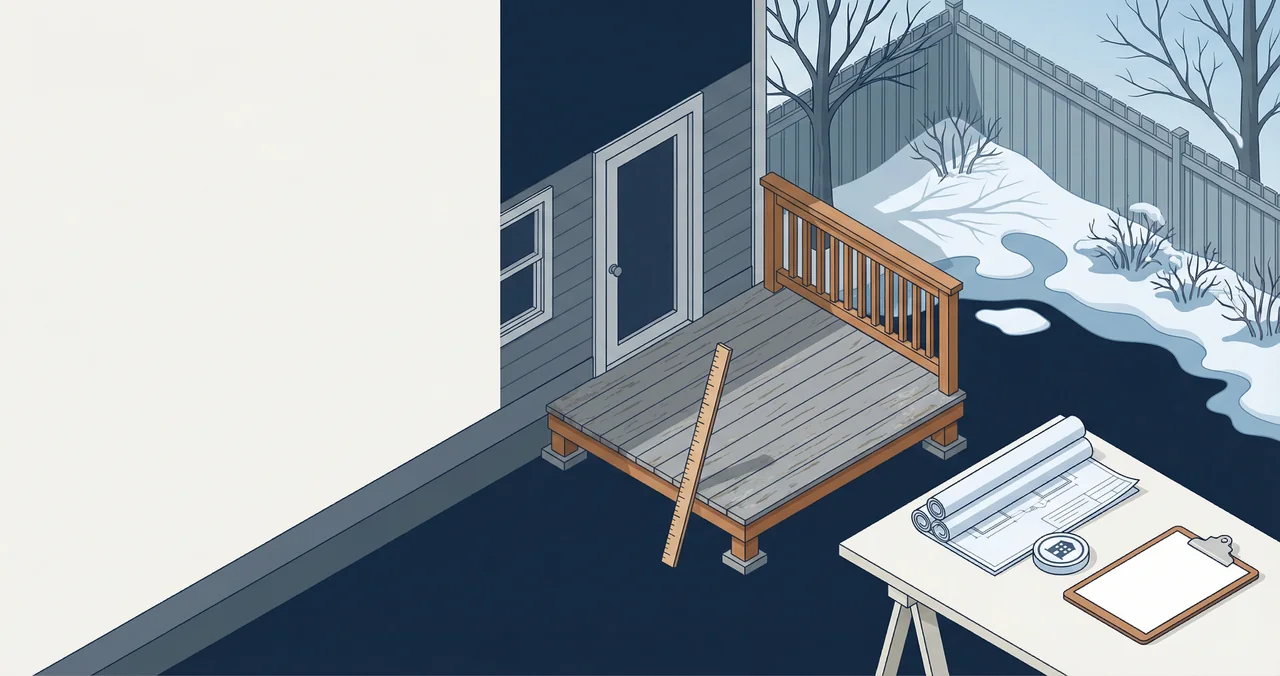
Deck Permits in Providence: Requirements, Costs & How to Apply in 2026
Planning a new deck in Providence? Before you pick out decking materials or call a contractor, you need to figure out one thing first: do you need a permit? The short answer for most projects is yes. Providence's Department of Inspection and Standards requires permits for the majority of residential deck builds, and skipping this step can cost you thousands down the road.
🏗️ Planning a deck project?
Get a free manual project review, or visualize your dream deck with AI before requesting quotes.
📋 Tool Alert: Permit Checker
Do you really need a permit? Check the exact rules for your city or township.
Check Permits →Here's everything you need to know about Providence deck permits in 2026 — the requirements, the fees, the codes, and the exact steps to get your application approved.
<!-- slot:after-intro -->
Do You Need a Deck Permit in Providence?
In most cases, yes. Providence requires a building permit for any deck that meets either of these thresholds:
- Over 200 square feet in area
- More than 30 inches above grade at any point
That second rule catches a lot of homeowners off guard. Even a modest deck on a sloped yard — common in neighborhoods like Federal Hill, Mount Pleasant, or the East Side — can easily exceed 30 inches above grade on the downhill side.
When You Might Not Need a Permit
A small ground-level platform deck under 200 square feet that sits less than 30 inches off the ground *may* be exempt. But "may" is doing heavy lifting in that sentence. Providence's Department of Inspection and Standards still recommends confirming with their office before you start building. Zoning overlays, historic district rules (and Providence has several), or HOA covenants can all change the equation.
Bottom line: Call the Providence Building/Development Services department at (401) 680-5550 or visit City Hall before you break ground. A five-minute phone call beats a stop-work order.
When a Permit Is Required
To be specific, Providence requires a deck permit when your project involves:
- New deck construction over 200 sq ft or 30+ inches above grade
- Structural modifications to an existing deck (adding a second level, extending the footprint, replacing the substructure)
- Attached decks that connect to your home's ledger board — these affect the building envelope
- Roofed or screened structures built on top of a deck
- Electrical or plumbing work on or under the deck (outdoor kitchens, hot tub wiring, lighting circuits)
Cosmetic work like re-staining boards, swapping out railing balusters, or replacing decking boards with the same material generally doesn't require a permit. But if you're changing the deck's structural capacity — say, upgrading to heavier composite boards that need beefed-up joists — that crosses into permit territory.
If you're weighing whether to attach your deck to the house or build it freestanding, understand that attached vs. freestanding decks have different permit implications. Freestanding decks under the size threshold are sometimes easier to permit, but they still need proper footings in Providence's climate.
Permit Fees & Processing Time
How Much Does a Deck Permit Cost in Providence?
Providence calculates building permit fees based on the estimated project value. Here's what to expect in 2026:
| Project Value | Approximate Permit Fee |
|---|---|
| Under $5,000 | $75–$125 |
| $5,000–$15,000 | $125–$250 |
| $15,000–$50,000 | $250–$500 |
| Over $50,000 | $500+ (calculated as percentage of value) |
For context, here's what typical Providence deck projects cost installed:
| Material | Installed Cost (per sq ft) |
|---|---|
| Pressure-treated wood | $25–$45 |
| Cedar | $35–$55 |
| Composite | $45–$75 |
| Trex (premium composite) | $50–$80 |
| Ipe (hardwood) | $60–$100 |
So a 300 sq ft composite deck at $45–$75/sq ft runs $13,500–$22,500 installed — putting your permit fee in the $125–$500 range. That's a fraction of the total project cost.
You may also need to pay for:
- Plan review fee: Often included, sometimes an additional $50–$100
- Zoning review: $25–$75 if your property requires zoning verification
- Electrical permit: Separate fee if you're adding outlets, lighting, or hot tub wiring
How Long Does Permit Approval Take?
Standard residential deck permits in Providence typically take 2–4 weeks for review and approval. Straightforward projects with complete applications move faster. Complex builds, properties in historic districts (like College Hill or Benefit Street), or projects requiring variances can take 6–8 weeks or longer.
Pro tip: Providence's building season runs roughly May through October. Contractors' schedules fill up fast because of the short season — book your contractor by March and submit your permit application no later than early April to avoid delays.
<!-- slot:mid-content -->
Building Codes & Setback Rules
Providence follows the Rhode Island State Building Code, which adopts the International Residential Code (IRC) with state amendments. Here are the key requirements for residential decks:
Structural Requirements
- Footing depth: Footings must extend below the frost line. In Providence, that means a minimum of 36 inches deep, though some inspectors require 42 inches depending on soil conditions. Rhode Island's frost line ranges from 36–60 inches, and Providence sits on the lower end — but don't cut it close. Frost heave will shift shallow footings and crack your deck's structure.
- Post sizing: Minimum 6x6 posts for most deck configurations; 4x4 posts are no longer code-compliant for structural support in most applications.
- Joist spacing: 16 inches on center is standard; 12 inches on center for composite decking or heavy loads.
- Ledger board attachment: Must use ½-inch lag screws or through-bolts into the rim joist, with proper flashing to prevent water infiltration. This is the #1 point of failure in deck collapses — inspectors scrutinize it closely.
- Snow load rating: Decks in Providence must be designed for a ground snow load of 30 psf (pounds per square foot) minimum. Your engineer or contractor should account for this in beam and joist sizing.
Setback Rules
Providence's zoning ordinance establishes setback requirements that vary by zone:
- Rear setback: Typically 15–25 feet from the rear property line, depending on zoning district
- Side setback: Usually 5–10 feet from side property lines
- Front setback: Decks are rarely permitted in front yards; the front setback is typically the same as the house setback
- Easements: Building over utility easements or drainage easements is prohibited. Check your property survey.
Your specific setbacks depend on your zoning district (R-1, R-2, R-3, etc.). You can look up your property's zoning on the Providence Zoning Map through the city's GIS portal, or request a zoning determination letter from the Department of Planning and Development.
Railing Requirements
- Height: Minimum 36 inches for residential decks up to 30 inches above grade; 42 inches for decks higher than 30 inches
- Baluster spacing: Maximum 4 inches between balusters (the "4-inch sphere rule" — a 4-inch sphere cannot pass through)
- Graspability: Top rails must be graspable with a cross-section of 1¼ to 2 inches
Stairway Requirements
- Width: Minimum 36 inches
- Rise: Maximum 7¾ inches per step
- Run: Minimum 10 inches per tread
- Handrail: Required on at least one side for 4+ risers; 34–38 inches high measured from stair nosing
Climate-Specific Code Considerations
Providence's harsh winters create specific challenges that inspectors and code enforcement look for:
- Freeze-thaw cycles demand proper drainage under and around the deck. Standing water that freezes will heave footings and buckle boards.
- Snow load on joists and beams — undersized lumber fails under heavy wet snow.
- Ice dam potential where an attached deck meets the house. Proper ledger board flashing is critical.
- Material selection matters. Composite and PVC decking hold up best against Providence winters. Pressure-treated wood and cedar need annual sealing to resist moisture, salt, and freeze-thaw damage. For a deeper comparison of materials that handle harsh winters, see our guide on the best decking materials for freeze-thaw climates.
How to Apply for a Deck Permit in Providence
Step 1: Gather Your Documents
Before you visit City Hall or submit online, assemble:
- Site plan showing your property boundaries, the house footprint, the proposed deck location, and distances to property lines (setbacks)
- Deck construction drawings — plan view, elevation view, and cross-section showing footings, posts, beams, joists, and decking. These don't need to be architect-drawn for simple decks, but they must be dimensioned and to scale.
- Structural details — footing size and depth, post-to-beam connections, joist hangers, ledger board attachment method
- Material specifications — what lumber, composite, or hardware you're using
- Property survey (if available — the city may require one for setback verification)
- Contractor license information if a licensed contractor is doing the work
Use PaperPlan to visualize different decking materials on your own home before committing — it helps both with your own decision-making and with communicating your vision to contractors and permit reviewers.
Step 2: Submit Your Application
You can apply through:
- In person: Providence Department of Inspection and Standards, City Hall, 25 Dorrance Street, Providence, RI 02903
- Online: Check the City of Providence website for the latest e-permitting portal availability. Providence has been expanding online permit services, though some applications still require in-person submission.
Fill out the Building Permit Application form completely. Incomplete applications are the #1 cause of delays.
Step 3: Plan Review
The building department reviews your plans for code compliance. They check:
- Structural adequacy (footing depth, beam sizing, connections)
- Zoning compliance (setbacks, lot coverage)
- Safety requirements (railings, stairs, egress)
If your property is in a historic district, expect an additional review by the Providence Historic District Commission (HDC). They may have requirements about deck visibility from the street, material choices, and design compatibility.
Step 4: Receive Your Permit & Schedule Inspections
Once approved, you'll receive your building permit. Post it visibly at the job site — it's required by law.
Typical inspections for a deck project:
1. Footing inspection — before pouring concrete, the inspector verifies hole depth and diameter
2. Framing inspection — after posts, beams, and joists are installed but before decking goes on
3. Final inspection — completed deck with railings, stairs, and any electrical work
Don't skip inspections. Each one must be passed before moving to the next phase. Your contractor should know this process — if they suggest skipping inspections, find a different contractor.
Step 5: Final Approval
After passing the final inspection, you'll receive a Certificate of Completion (or equivalent sign-off). Keep this document. You'll need it when you sell your home, refinance, or file an insurance claim.
For a detailed walkthrough of the application process with visual examples, check out our step-by-step deck permit guide.
What Happens If You Build Without a Permit
Don't do it. Here's what you're risking:
- Stop-work orders: The city can halt construction immediately. Your half-built deck sits in the rain while you scramble to get retroactive approval.
- Fines: Providence can levy fines of $100–$500 per day for unpermitted construction. These add up fast.
- Forced removal: In worst cases, the city can require you to tear down the unpermitted structure at your expense.
- Insurance problems: Homeowner's insurance may deny claims for injuries or damage related to an unpermitted deck. If someone falls through a deck that was never inspected, your liability exposure is enormous.
- Sale complications: When you sell your home, unpermitted work shows up during the buyer's inspection and title search. Buyers walk away, or they demand significant price reductions. You may need to retroactively permit the deck — which means bringing it up to current code, potentially requiring partial demolition and rebuilding.
- Reduced property value: An unpermitted deck doesn't add to your home's assessed value. You spent the money but don't get the return.
The risks of building a deck without a permit far outweigh the cost and hassle of getting one. A $200 permit protects a $15,000+ investment.
Can You Get a Retroactive Permit?
Sometimes. Providence does allow homeowners to apply for permits after the fact, but expect:
- Higher fees (often double the standard permit fee)
- Required inspections that may involve opening up finished work
- Mandatory upgrades to meet current building codes (which may have changed since original construction)
- No guarantee of approval — if the deck can't be brought to code, you may have to remove it
<!-- slot:before-faq -->
🎨 Not sure which material to pick?
Upload a photo of your backyard and see exactly how Trex, TimberTech, or cedar would look — free and instant.
Frequently Asked Questions
How much does a deck permit cost in Providence, RI?
Most residential deck permits in Providence cost between $75 and $500, depending on your project's estimated value. A typical 12x16 pressure-treated deck permit runs around $100–$150. Larger composite deck projects in the $20,000–$50,000 range will see permit fees closer to $300–$500. Additional fees may apply for electrical permits, zoning reviews, or historic district reviews.
How long does it take to get a deck permit approved in Providence?
Standard residential deck permits take 2–4 weeks from submission to approval. Projects in historic districts or those requiring zoning variances can take 6–8 weeks or longer. Submit your application by early April if you want to start building in May. Complete, accurate applications with proper drawings move through review significantly faster. For more on timing your deck project right, read about the best time to build a deck.
Do I need a permit for a small ground-level deck in Providence?
If your deck is under 200 square feet and less than 30 inches above grade at all points, it may be exempt from a building permit. However, you should still confirm with Providence's Department of Inspection and Standards, because zoning requirements, historic district overlays, and lot coverage limits can still apply. Even exempt decks must comply with building codes — the permit exemption doesn't mean a code exemption.
Can I build my own deck in Providence, or do I need a contractor?
Homeowners in Providence can build their own decks as owner-builders. You'll still need to pull permits, submit plans, and pass all inspections — the same requirements that apply to licensed contractors apply to you. The difference is that you're personally responsible for code compliance. If you're considering the DIY route, our guide on building your own deck covers what you need to know. For structural work, many homeowners hire a contractor for the substructure and handle the decking and railings themselves.
What is the frost line depth for deck footings in Providence?
Providence deck footings must extend to a minimum of 36 inches below grade to get below the frost line. Some inspectors may require 42 inches depending on your specific location and soil conditions. Rhode Island's frost line ranges from 36 to 60 inches statewide. Footings that don't reach below the frost line will heave during Providence's freeze-thaw cycles, causing the deck to shift, crack, and become unsafe. This is one area where cutting corners will cost you — properly poured footings are the foundation of a deck that lasts 20+ years.
<!-- slot:end -->
📋 Planning a deck project?
Get a free manual project review from our team — no obligation, no spam.
Get Free Project Review →Upload a backyard photo and preview real decking materials with AI — free, instant, no sign-up.
Permits, costs, material comparisons, and questions to ask before requesting quotes — delivered to your inbox.