
Cambridge (Ontario) Deck Permit Application: Step-by-Step (2026)
A practical walkthrough for applying for a deck permit in Cambridge in 2026: when you need a permit, what drawings to submit, common rejection reasons, and how inspections typically go.
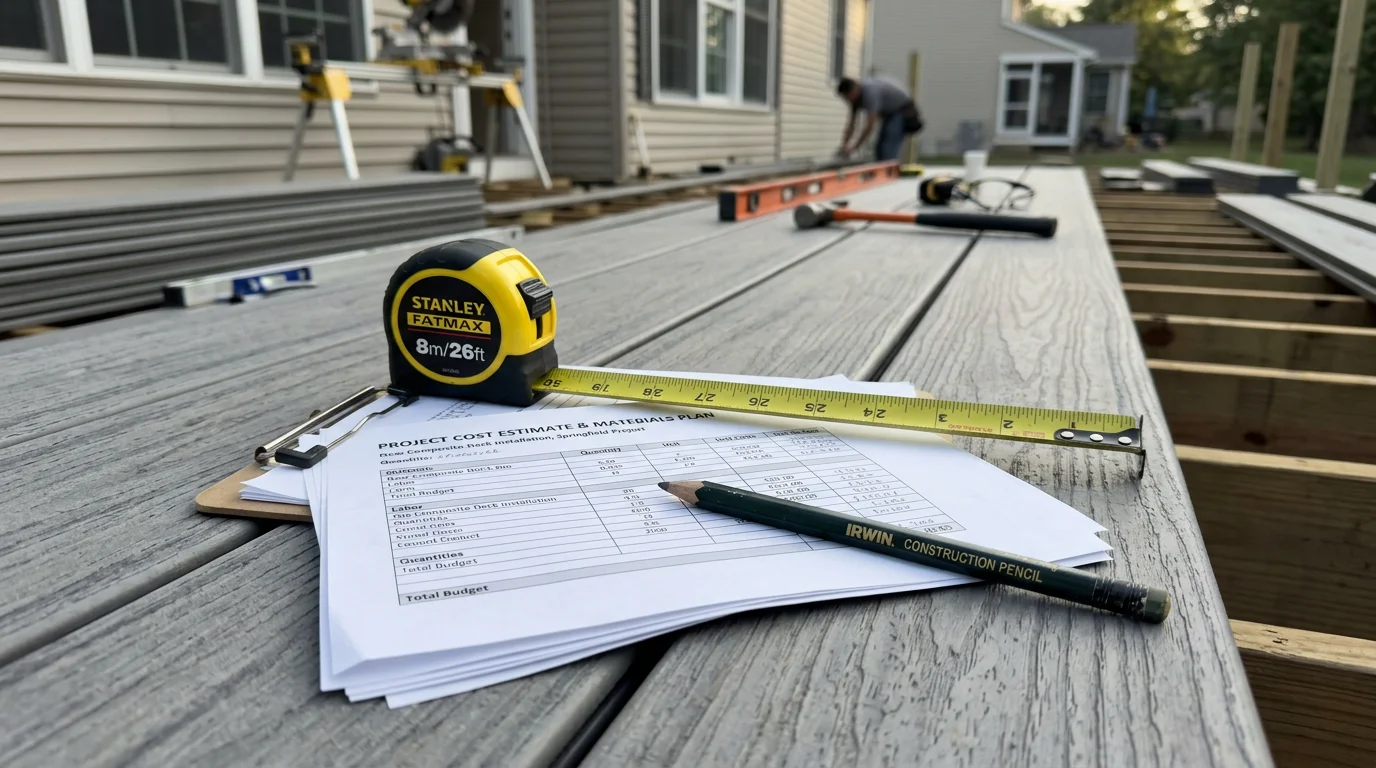
Deck permits in Cambridge usually aren’t “hard” — they’re just detail-sensitive. The most common failure mode is a permit package that doesn’t clearly show height, setbacks, stairs/guards, and footing layout.
This is the step-by-step process (written for homeowners) to get a cleaner application in 2026.
First: if you’re still on the fence about whether you need a permit, read:
If you want to skip the admin and start with quotes from builders who handle permits:
- Get Cambridge deck quotes: /#quote-form
Step 1: Decide the variables that drive the permit
Before drawings, lock in:
🏗️ Planning a deck project?
Get a free manual project review, or visualize your dream deck with AI before requesting quotes.
- Deck size (rough)
- Height from grade (rough)
- Attached vs freestanding
- Stair plan (where stairs land)
- Guard plan
- Any special loads (hot tub, roof cover)
Even if your exact material choice isn’t final, the structure and safety elements should be.
Step 2: Choose your structural approach
Ledger attachment (if attached)
If you’re attaching to the house, your permit package needs to make it obvious you’re not creating a future water/rot problem.
Helpful reads:
- /decks/blog/ledger-board-attachment-ontario-deck-safety-kitchener-waterloo
- /decks/blog/deck-ledger-flashing-ontario-water-damage-prevention
Footings: concrete vs helical piles
Cambridge jobs often choose helical piles for speed/access — but your permit package should still be clear on layout and connections.
- /decks/blog/deck-footing-options-ontario-sonotube-helical-piles-pros-cons
- /decks/blog/helical-piles-for-decks-kwc-permit-engineer
Step 3: Assemble the drawing package (use a checklist)
Start with:
Site plan
Your site plan should show:
- Property lines (as accurately as possible)
- House footprint
- Deck footprint + dimensions
- Setbacks
If you suspect your deck is close to property lines or a tricky lot, read:
Framing plan
Make it legible and consistent:
- Joist direction/spacing
- Beam/post locations
- Footing layout
- Stair/landing locations
- Guard locations
What inspectors commonly look for:
Elevations
Show:
- Deck height from grade
- Guard height concept
- Stairs (rise/run concept)
Stair details are a frequent “fix this and rebook” inspection issue:
Step 4: Submit and respond fast to clarification requests
If the reviewer asks a question, treat it like a ticket in a production system: respond quickly and with a clear revision.
Tips:
- Keep a single “latest” drawing set to avoid mismatches
- Label revisions (date/version)
- If you change deck height, re-check guard/stairs requirements
Step 5: Plan for inspections
Most decks will have inspections around:
- Footings/piles (or footing confirmation)
- Framing
- Final (guards/stairs)
A strong contractor will schedule inspections so the crew isn’t idle.
Step 6: Avoid the classic Cambridge deck permit mistakes
- Height from grade isn’t shown clearly
- Stair run/landing location isn’t clear
- Guard/railing locations missing
- Footing layout inconsistent
- Special load not disclosed (hot tub)
If a hot tub is even a “maybe,” read this now:
🎨 Not sure which material to pick?
Upload a photo of your backyard and see exactly how Trex, TimberTech, or cedar would look — free and instant.
Want a permit-ready deck in Cambridge without the headache?
If you want quotes from deck builders who do this every week — and can handle permits and inspections — we can help.
Get quotes: /#quote-form
Make sure to also review Deck Permits in Cambridge: Requirements, Costs & How to Apply in 2026 for local requirements.
Looking for local pros? Check out Deck & Patio Builders in Cambridge: Compare Options & Costs for 2026.
Looking for local pros? Check out Composite Deck Builders in Cambridge: Top Options for 2026.
Upload a backyard photo and preview real decking materials with AI — free, instant, no sign-up.
Permits, costs, material comparisons, and questions to ask before requesting quotes — delivered to your inbox.