
Deck Permit Drawings Checklist (Kitchener/Waterloo/Cambridge): What to Submit So You Don’t Get Rejected
A practical checklist for deck permit drawings in KWC: site plan, framing plan, elevations, stairs/guards, and the common reasons permits get kicked back.
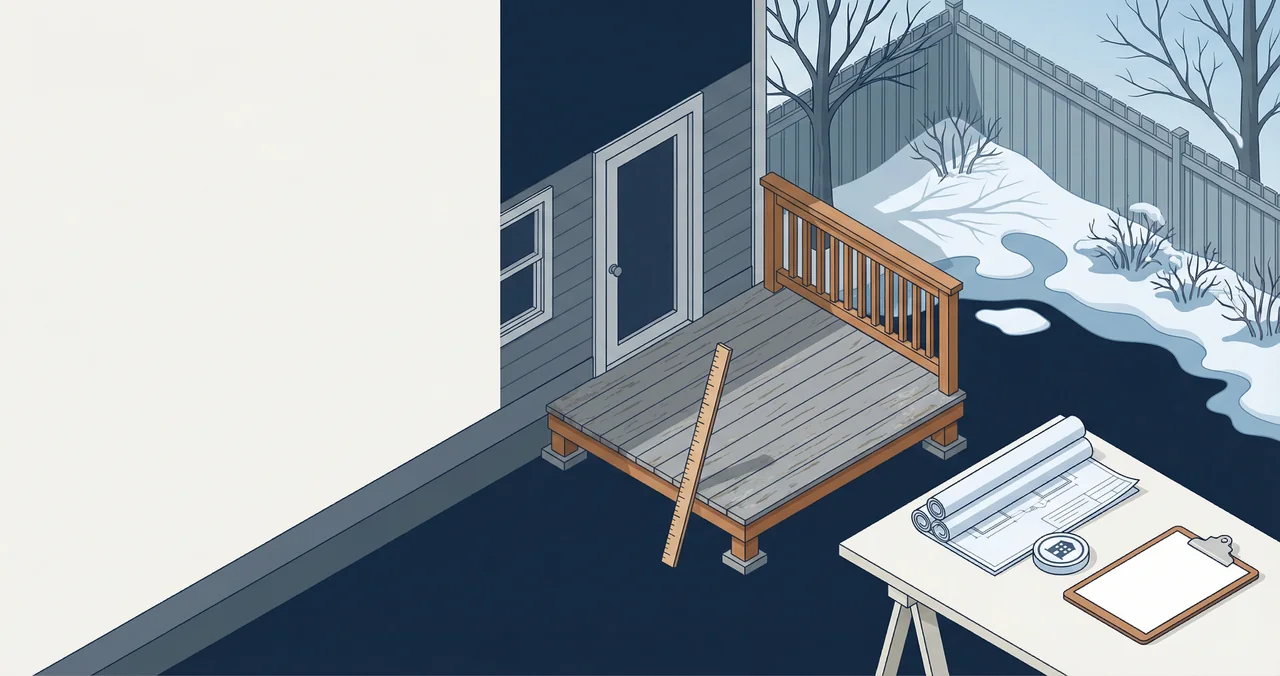
Deck permits in Kitchener, Waterloo, and Cambridge don’t fail because your deck is a bad idea — they fail because the submission package is missing something small.
If you want the fastest path to approval, treat your permit drawings like a checklist-driven deliverable.
This post lays out what you typically need to submit for a residential deck permit in KWC, what reviewers are looking for, and how to avoid the “please resubmit with…” loop.
> Note: requirements vary by project and municipality. Use this as a practical checklist, then confirm specifics with your City.
Step 1: Confirm you actually need a permit
Before you draw anything, confirm whether your deck triggers a permit based on height and structure.
🏗️ Planning a deck project?
Get a free manual project review, or visualize your dream deck with AI before requesting quotes.
Start here:
- Kitchener’s common threshold: /decks/blog/deck-permits-kitchener-24-inch-rule
- Waterloo overview: /decks/blog/do-you-need-a-permit-to-build-a-deck-waterloo-ontario
- Cambridge overview: /decks/blog/do-you-need-a-permit-to-build-a-deck-cambridge-ontario
If you’re adding a roof/pergola, it often changes what you must show:
Step 2: The “minimum viable” permit package
For most residential decks, the City typically expects four categories of drawings:
1. Site plan (where it is)
2. Framing plan (how it’s built)
3. Elevations / sections (how high, how it connects)
4. Stairs/guards details (life-safety)
If you nail these four, you usually avoid 80% of resubmits.
1) Site plan checklist (the #1 cause of resubmits)
Your site plan should show:
- Property lines and dimensions
- House footprint
- Proposed deck outline (including stairs and landings)
- Dimensions from deck to property lines (setbacks)
- Any easements (drainage/utilities) if known
If you’re tight to a boundary, read this: /decks/blog/deck-setback-rules-kitchener-waterloo-cambridge-property-lines
Common site plan mistakes:
- Stairs not shown (but they project)
- No dimension to a lot line (“close to fence” is not a dimension)
- Using a Google Maps screenshot without scale/dimensions
2) Framing plan checklist (what the inspector wants to “see” on paper)
Your framing plan typically includes:
- Overall deck size (length/width)
- Beam locations
- Joist direction and spacing
- Post locations and sizes
- Footing type and size
- Ledger connection details (if attached)
Key references:
- Footing decisions: /decks/blog/deck-footing-options-ontario-sonotube-helical-piles-pros-cons
- Frost depth: /decks/blog/how-deep-should-deck-footings-be-ontario-frost-line-guide
- Ledger attachment: /decks/blog/ledger-board-attachment-ontario-deck-safety-kitchener-waterloo
If you’re unsure about framing spans, you can use a span-table-driven approach (and have your builder/engineer confirm):
3) Elevations/sections checklist
Elevations answer: how high is it, and how does it sit relative to grade?
Include:
- Deck height above finished grade
- Guard/railing height (if required)
- Stair count + total rise
- Beam depth (if needed)
- Attachment method to the house (ledger vs freestanding)
Guard/railing rules matter once you cross certain heights:
4) Stairs + guards details checklist
Stairs and guards get reviewed hard because they’re where injuries happen.
What to show:
- Stair width
- Total rise and number of risers
- Run/going (tread depth)
- Landings (top/bottom)
- Handrail and guard locations
If you want a deeper stair explanation:
- /decks/blog/deck-stairs-code-ontario-rise-run-handrail-kitchener
- /decks/blog/how-many-stairs-do-i-need-for-my-deck-rise-run-explained-kwc
Optional but smart: add a “notes” box
A small “notes” section on the drawing can prevent misunderstandings:
- Proposed decking material (composite vs PT)
- Any special loads (hot tub)
- How drainage will be managed
- Confirmation that guard posts are blocked/through-bolted
Hot tub load considerations:
The most common reasons deck permits get rejected (and how to fix them)
1. No clear setbacks on site plan
- Fix: dimension deck + stairs to all relevant lot lines.
2. Ledger connection not specified
- Fix: show how the ledger attaches and how water is kept out.
3. Footings not defined
- Fix: specify size/type/depth, especially for frost.
4. Stairs missing details
- Fix: include rise/run/landing/handrail.
5. Deck height unclear
- Fix: show grade line and finished deck height.
“Can my builder handle the permit package?”
A good deck builder in KWC usually can — but don’t assume.
Ask them:
- Do you provide a stamped drawing if required?
- Who is the permit applicant (you or them)?
- What’s your typical approval timeline in Kitchener/Waterloo/Cambridge?
If you’re comparing quotes, this checklist helps you avoid surprises:
How long does a deck permit take in KWC?
Timelines vary by municipality and season, but the biggest driver you control is submission quality.
- A clean, complete submission often gets reviewed faster.
- A submission missing setbacks, stair details, or footing specs can bounce multiple times.
If you’re building in peak season (late spring/summer), expect queues to be longer.
Do you need an engineer-stamped drawing?
Sometimes. Common triggers include:
- unusually tall decks
- complex geometries (multi-level, long cantilevers)
- heavy concentrated loads (hot tub, outdoor kitchen)
- unusual soil/retaining conditions
If you’re planning a hot tub, read: /decks/blog/hot-tub-on-deck-ontario-structural-checklist-kwc
Quick “submission readiness” checklist
Before you upload/submit, confirm:
- Every sheet has your address + revision date
- Site plan includes setbacks to lot lines and shows stairs
- Framing plan specifies joist spacing + beam/post/footing layout
- Elevation shows deck height above grade
- Stairs/guards include rise/run/landing/handrail
If you can’t answer one of those from the drawings, the reviewer can’t either.
Related guides (to avoid permit delays)
- Start here (by-city permit rules): Kitchener vs. Waterloo vs. Cambridge deck bylaws
- Deck permit drawings checklist (KWC)
- Deck permit cost in KWC (fees + hidden costs)
- Deck zoning + setbacks in KWC: how to check your property fast
- How long do deck permits take in Kitchener/Waterloo/Cambridge?
🎨 Not sure which material to pick?
Upload a photo of your backyard and see exactly how Trex, TimberTech, or cedar would look — free and instant.
Want a quick review before you submit?
If you’re about to submit drawings and you want a second set of eyes (or you want a builder who can package it cleanly), use the quote form: /#quote-form.
Mention:
- your city (Kitchener/Waterloo/Cambridge)
- deck height
- whether it’s attached
- any constraints (property line, easements, hot tub, roof)
Upload a backyard photo and preview real decking materials with AI — free, instant, no sign-up.
Permits, costs, material comparisons, and questions to ask before requesting quotes — delivered to your inbox.