
How Deep Should Deck Footings Be in Ontario? Frost Line Guide
Footing depth is the #1 reason decks move and crack. Here’s what Ontario’s frost line means, typical depth expectations around Kitchener-Waterloo, and when shallow footings are allowed.
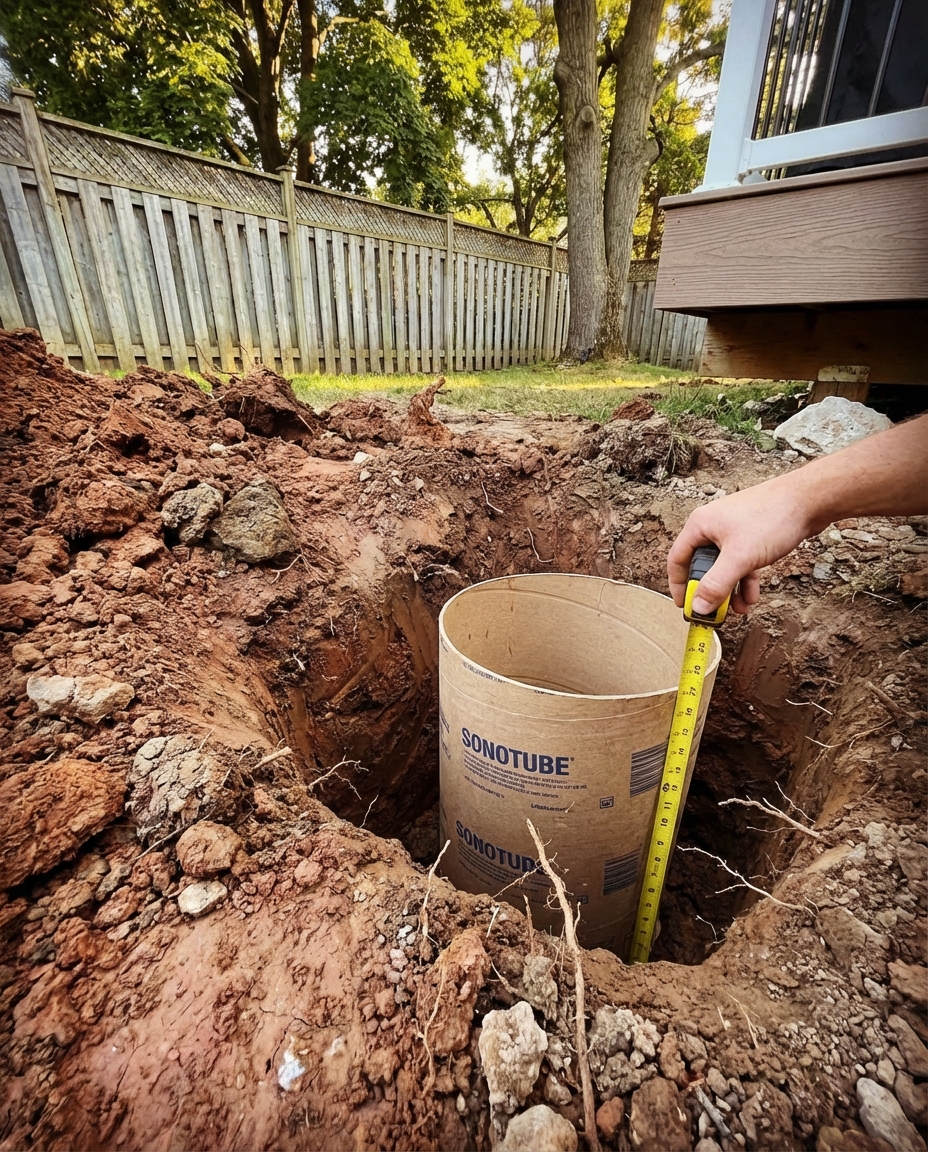
If you’ve ever seen a deck that *heaves*, tilts, or pulls away from the house after a couple winters, the culprit is usually the same: footings that don’t go below frost.
This guide explains how deep deck footings typically need to be in Ontario, what “frost line” actually means, and how to think about footing depth for a durable build.
Why footing depth matters (the frost problem)
Ontario winters create a freeze/thaw cycle where moisture in the soil expands as it freezes. If your footing sits in soil that freezes, it can be lifted (frost heave). When it thaws, it rarely settles back perfectly.
🏗️ Planning a deck project?
Get a free manual project review, or visualize your dream deck with AI before requesting quotes.
Over time you get:
- Uneven decks
- Stairs that no longer land properly
- Posts that shift
- Guard rails that loosen
Going below the frost-affected zone is the straightforward fix.
How deep is the frost line in Ontario?
There isn’t one single “Ontario frost line” because it depends on:
- Region (local climate)
- Soil type and drainage
- Snow cover and exposure
That said, building departments around Kitchener-Waterloo-Cambridge often expect deck footings on the order of ~1.2 m (about 4 ft) deep for typical conditions.
If you’re designing for long-term stability, assume you need a footing depth in that range unless your local inspector explicitly says otherwise.
The practical rule: go below frost, not “to a number”
The goal isn’t hitting a magic depth — it’s getting the bottom of the footing into soil that doesn’t experience seasonal freeze/thaw movement.
Two adjacent properties can require different solutions depending on:
- Fill vs native soil
- Clay vs sandy soil
- Drainage patterns
- Whether water pools near the footing
What about “low decks” (do shallow footings ever work?)
Some low, freestanding decks can be built without the same footing depth requirements (and sometimes without a permit), but the conditions matter.
In plain English, shallow or alternative foundations may be acceptable when:
- The deck is low to the ground
- The deck is not attached to the house
- The deck is small and doesn’t support additional loads
Even then, shallow footings can still move if the soil is wet and frost-susceptible.
Footing size matters too
Depth is only half the story. Your footing has to spread the load into soil that can support it.
A good footing design considers:
- Post loads (including occupants, furniture, snow drifting)
- Tributary area per post
- Soil bearing capacity (conservative assumptions are safest)
When in doubt, oversize slightly — concrete is cheap compared to redoing a moving deck.
Common failure modes (and how to avoid them)
1) Footings not below frost
Fix: plan for deeper holes and keep them straight. Use a sono-tube if required.
2) Poor drainage around the footing
Fix: keep water away from the base. Grade soil away from the deck. Avoid trapping water against posts.
3) Posts sitting directly in soil
Fix: use proper post bases and keep wood off the ground.
4) Deck attached to the house with a weak ledger detail
Fix: use proper flashing and attachment details. If you’re not sure, consider a freestanding deck.
Kitchener-Waterloo reality check
If you’re building in KWC, expect inspectors to care a lot about:
- Footing depth and diameter
- Beam/joist sizing
- Guard/railing requirements if the deck is elevated
If you want a smoother permit process, document your footing plan clearly in your drawings.
Next step
If you’re still in the planning stage, start with:
1. Your deck height above grade
2. Whether it’s attached to the house
3. Soil/drainage conditions around the deck footprint
Then browse our deck planning resources here: /decks/blog
You may also want to read How Many Deck Quotes Should You Get?.
You might also find Ontario 811: Before You Dig Guide for Homeowners helpful.
You may also want to read Property Line Dispute in Ontario: What to Do Before Building.
🎨 Not sure which material to pick?
Upload a photo of your backyard and see exactly how Trex, TimberTech, or cedar would look — free and instant.
Related Articles
- Can I Build My Own Deck in Ontario? DIY Permit Guide
- How Much Does a Deck Cost in Ontario? Complete 2026 Guide
- Deck Footing Depth in Ontario: Frost Line Requirements
- Deck Quote Line Items (Ontario): What a Professional Quote Should Include
Upload a backyard photo and preview real decking materials with AI — free, instant, no sign-up.
Permits, costs, material comparisons, and questions to ask before requesting quotes — delivered to your inbox.