
Can I Build My Own Deck in Ontario? DIY Permit Guide
Yes, you can build your own deck in Ontario—but you still need permits, inspections, and code compliance. Here's what DIY builders need to know.
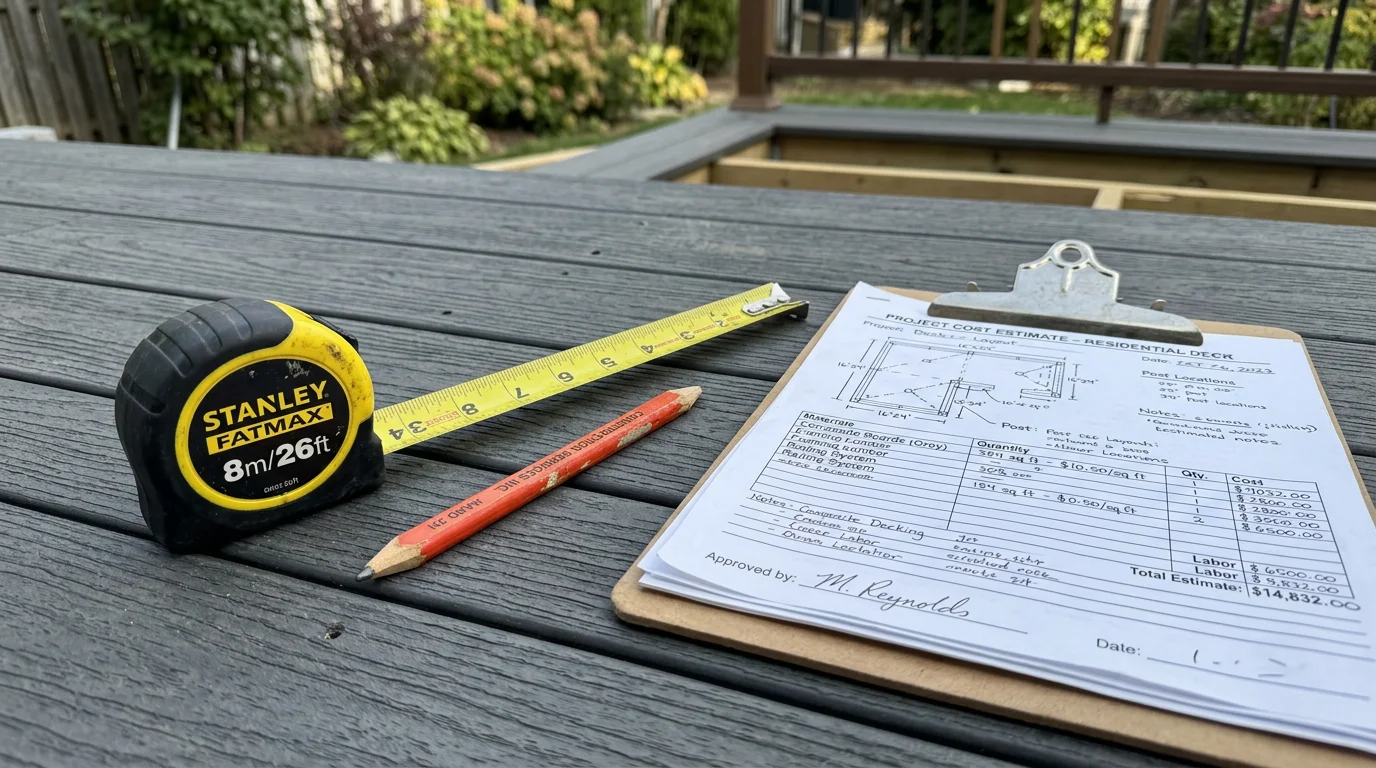
Yes, you can legally build your own deck in Ontario. The province doesn't require you to hire a licensed contractor for residential decks. But "can you build it yourself" and "should you build it yourself" are different questions—and either way, you still need a building permit for most deck projects.
Here's what Ontario homeowners need to know before tackling a DIY deck build.
Do You Need a Permit to Build Your Own Deck?
Most decks require a permit in Ontario, regardless of who builds them. The permit isn't about who does the work—it's about meeting structural safety standards.
🏗️ Planning a deck project?
Get a free manual project review, or visualize your dream deck with AI before requesting quotes.
You need a permit if your deck:
- Is more than 24 inches (0.6 m) above grade
- Is attached to your house (requires ledger board connection)
- Exceeds a certain size (varies by municipality, typically 108 sq ft in some areas)
- Supports a hot tub or other concentrated loads
- Is over a basement window well or door
You typically don't need a permit for:
- Ground-level decks under 24 inches high
- Freestanding platforms under the municipal size threshold
- Deck repairs that don't alter the structure (replacing boards, refinishing)
Check your local requirements:
- Kitchener: Deck permit rules
- Waterloo: Waterloo permit application guide
- Cambridge: Cambridge permit requirements
Permit fees range from $150 to $400 depending on your municipality and project scope.
What the Building Permit Process Involves for DIY Builders
When you apply as a homeowner-builder, you're taking on the same responsibilities a contractor would have:
1. Submit Permit Drawings
You'll need to provide:
- Site plan showing deck location, setbacks from property lines, and dimensions
- Framing plan with joist spacing, beam sizes, post locations
- Footing details showing depth (minimum 48 inches in Ontario for frost protection)
- Railing and stair drawings if applicable
Most municipalities accept hand-drawn plans as long as they're clear and dimensioned. See our deck permit drawings checklist for what to include.
2. Pass Inspections
Ontario Building Code requires inspections at specific stages:
Footing inspection: Before pouring concrete or backfilling holes. The inspector verifies depth (below frost line), diameter, and rebar placement.
Framing inspection: After framing is complete but before decking is installed. Inspectors check:
- Joist spacing and spans
- Beam and header sizing
- Ledger board attachment (if applicable)
- Post-to-beam connections
- Lateral bracing
Final inspection: After railings, stairs, and decking are complete. Confirms guard height, baluster spacing, and overall code compliance.
Learn what inspectors look for in our deck framing inspection guide.
3. Take Legal Responsibility
When you pull a permit as the homeowner, you're legally responsible for:
- Code compliance
- Structural safety
- Proper installation
- Liability if someone is injured
There's no WSIB coverage for DIY work. If you fall off your deck during construction, you're on your own for medical costs and lost income.
What You Need to Know Before Starting
Ontario Building Code Requirements
Your deck must meet OBC structural standards:
Joist sizing and spans: 2×8, 2×10, or 2×12 joists depending on span and spacing. See our joist span table for specifics.
Footing depth: Minimum 48 inches (1.2 m) below grade to prevent frost heave. In KWC's clay soil, you may need helical piles for stability. Read about footing options here.
Guardrail height: 42 inches (1,067 mm) minimum for decks over 24 inches high. Balusters can't allow a 4-inch sphere to pass through. Full details in our railing height guide.
Ledger board attachment: If attaching to your house, the ledger must be through-bolted to the rim joist (not just lag-screwed to siding). Flashing is required to prevent rot. See ledger board attachment standards.
Stair codes: Risers between 5-8 inches, treads minimum 10 inches, with consistent rise/run. Our stair code guide breaks down the math.
Skills and Tools Required
Minimum skill level: You should be comfortable with:
- Reading construction drawings
- Operating a circular saw, drill, and impact driver safely
- Measuring and cutting accurately
- Digging holes (or renting an auger)
- Mixing and pouring concrete
- Working at heights
Tools you'll need:
- Circular saw and miter saw
- Drill and impact driver
- Post hole digger or auger rental
- 4-foot level and string line
- Speed square and tape measure
- Safety gear (glasses, gloves, fall protection for elevated work)
Material handling: A 12×16-foot deck requires roughly 2,000 lbs of lumber. You'll need a truck or delivery, plus help moving beams and joists.
Time Investment
A typical 12×12-foot attached deck takes a DIY builder:
- 2-3 days for layout, digging, and footings (including concrete cure time)
- 2-4 days for framing and decking
- 1-2 days for railings and stairs
- Plus inspection wait times between stages
That's 5-9 full days of physical labor, assuming no weather delays, failed inspections, or mistakes requiring rework.
Compare that to a professional crew completing the same deck in 3-5 days.
Cost Comparison: DIY vs. Hiring a Deck Builder
Here's what a 12×12-foot (144 sq ft) pressure-treated deck might cost in Kitchener-Waterloo-Cambridge:
| Item | DIY Cost | Pro Cost (Included in Quote) |
|------|----------|-------------------------------|
| Lumber & materials | $2,800-3,500 | $3,200-4,000 (contractor pricing) |
| Hardware & fasteners | $300-500 | Included |
| Concrete for footings | $150-250 | Included |
| Permit fee | $200-350 | $200-350 (passed to client) |
| Tool rentals | $150-300 | N/A |
| Labour | Your time | $3,600-6,500 ($25-45/sqft) |
| Total | $3,600-4,900 | $7,000-11,000 |
DIY savings: $3,000-6,000 on a small deck.
But factor in:
- Your labour is worth something (80+ hours at $30/hr = $2,400)
- Risk of mistakes requiring expensive fixes
- No warranty (pros typically offer 1-5 years)
- No liability coverage if someone gets hurt
For a composite deck, material costs jump to $5,000-7,000 for the same 144 sq ft, with installed pricing at $9,500-13,700. Our complete guide to deck costs in Ontario covers all material tiers and project sizes in more detail.
When DIY Makes Sense (and When It Doesn't)
Good candidates for DIY:
Small, simple decks: Ground-level or low-height platforms with straightforward layouts. No stairs, no multi-level complexities.
Homeowners with construction experience: If you've framed walls, built sheds, or done structural carpentry, you'll adapt quickly.
Budget-focused projects: When saving $3,000-6,000 justifies the time and effort.
No time pressure: You can work evenings and weekends without a hard deadline.
Hire a professional if:
Your deck is elevated or complex: Second-story decks, multi-level designs, or pergola integration increase difficulty exponentially.
You lack carpentry skills: Mistakes in framing aren't cosmetic—they're structural safety issues.
You value time over money: A pro crew saves you 6-8 weekends of hard labour.
You want warranty protection: Most builders offer 1-5 year workmanship warranties.
Your home has tricky ledger attachment: Brick, stucco, or engineered rim joists require specialized knowledge to attach safely.
For elevated or complex projects, the cost difference narrows when you account for rental equipment, wasted materials from errors, and potential permit rejections.
DIY Deck Permit Tips for Ontario Homeowners
Before You Apply
Call Ontario One Call (811): Required before digging. Marks underground utilities for free. Learn why this matters in our Ontario One Call guide.
Check setback rules: Your deck must be a certain distance from property lines and easements. See setback rules for KWC.
Plan your inspections: Book footing inspections 2-3 days in advance. Don't pour concrete until it's approved.
During Construction
Take photos at each stage: Document footing depth, joist hangers, ledger bolts—evidence that you followed code if questions arise later.
Don't cover work before inspection: Inspectors need to see footings, framing connections, and structural elements. Covering before approval can mean tearing it apart.
Ask questions: Building inspectors would rather answer a quick call than fail your inspection. Most are helpful to DIYers.
If You Get Stuck
Hire a pro for tricky parts: Many deck builders will contract out just the ledger board attachment or railing install. Saves you time and ensures code compliance on complex elements.
Consider a structural engineer: If your deck is large, elevated, or supports a hot tub, an engineer's stamp ($500-1,200) may be required anyway. They can also review your DIY plans.
Alternatives to Full DIY
Hybrid Approach
Hire a pro for framing and inspection-critical work, then finish decking and railings yourself. Saves labour costs while ensuring structural integrity.
Pre-Fab Deck Kits
Companies sell complete deck kits with pre-cut lumber, hardware, and instructions. You still need a permit and inspections, but layout is simplified.
DIY the Prep, Hire for Build
You can save money by handling demolition (if replacing an old deck), site clearing, and post-construction cleanup. Let pros do the structural work.
What About Deck Repairs and Maintenance?
You don't need a permit for:
- Replacing deck boards (same material, same layout)
- Refinishing, staining, or sealing
- Minor joist repairs that don't affect structure
- Replacing balusters in existing railings
You do need a permit for:
- Replacing or relocating beams or posts
- Adding or moving stairs
- Increasing deck size
- Converting a deck to a screened porch or enclosed space
Routine maintenance—power washing, staining, board replacement—is fair game for DIY. Learn seasonal care in our winter deck maintenance guide.
🎨 Not sure which material to pick?
Upload a photo of your backyard and see exactly how Trex, TimberTech, or cedar would look — free and instant.
Common Questions
Can I build a deck without a contractor's license in Ontario?
Yes. Ontario doesn't require homeowners to have a contractor's license to build on their own property. You pull the permit as the "owner-builder" and you're legally responsible for the work.
Will my homeowners insurance cover a DIY deck?
Most policies cover properly permitted and code-compliant decks, regardless of who built them. But: if your deck fails inspection or causes damage due to faulty construction, your insurer may deny claims. Always disclose DIY work when filing claims.
How long does a DIY deck permit take in KWC?
Permit approval typically takes 2-4 weeks in Kitchener, Waterloo, and Cambridge, depending on workload. Incomplete applications add delays. See permit timelines for KWC.
Can I use helical piles instead of concrete footings for a DIY deck?
Yes, but helical pile installation usually requires specialized equipment and may need an engineer's letter for the permit. Most DIYers stick with concrete footings. Compare options in our helical piles vs. concrete guide.
What happens if I build a deck without a permit in Ontario?
Municipalities can issue stop-work orders, fines (often double the permit fee), and require you to tear down non-compliant work. You'll also have trouble selling your home—lawyers flag unpermitted structures during title searches. If someone is injured on an unpermitted deck, you face significant liability.
For related pricing details, see our guide on Deck Cost in Thornton: What Homeowners Are Paying in 2026.
Looking for local pros? Check out Deck & Patio Builders in Stratford: Compare Options & Costs for 2026.
Looking for local pros? Check out Custom Deck Builders in Hamilton: Design & Build Your Dream Deck in 2026.
Upload a backyard photo and preview real decking materials with AI — free, instant, no sign-up.
Permits, costs, material comparisons, and questions to ask before requesting quotes — delivered to your inbox.