
Ontario One Call 811 Before Deck Footings (KWC): What Builders Actually Do
Before you dig deck footings in Kitchener-Waterloo-Cambridge, you need locates. Here’s how Ontario One Call (811) works, what it covers (and doesn’t), and how locates affect footing placement and schedule.
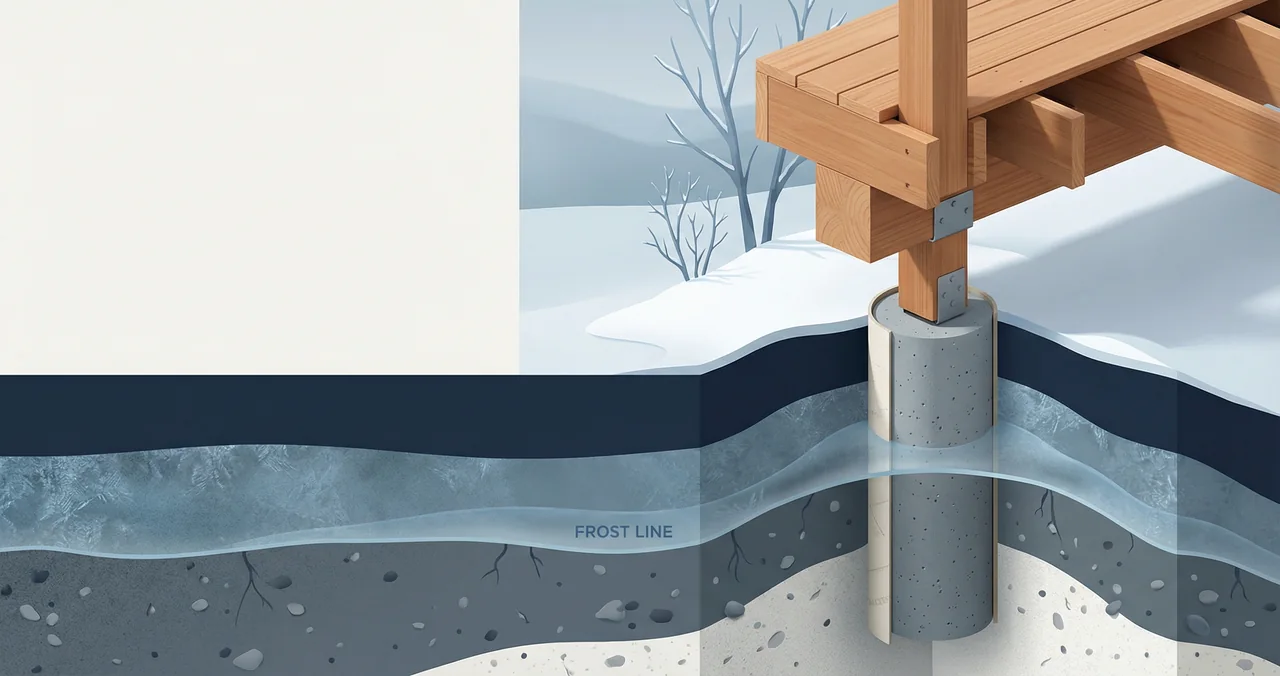
Digging for deck footings feels like the “simple part.” In reality, it’s where expensive mistakes happen.
In Kitchener-Waterloo-Cambridge, you should treat utility locates as a standard pre-build step — not an optional formality.
This guide explains:
- what Ontario One Call / 811 is
- what locates cover (and what they don’t)
- how locates change footing layout
- what a competent builder does to avoid hitting lines
If you want quotes from builders who coordinate locates as part of the job:
What Ontario One Call (811) does
Ontario One Call is the “request locates” system. In plain English: you submit a dig request, and participating utilities mark their buried infrastructure in the area.
🏗️ Planning a deck project?
Get a free manual project review, or visualize your dream deck with AI before requesting quotes.
For deck builds, this matters because footings and post holes are real excavation.
What locates usually cover (and the big thing they don’t)
Typically covered
- public utilities in the right-of-way and sometimes into the property
- markings for lines that utilities own/maintain
Often NOT covered: private lines
Private lines can include:
- irrigation
- private electrical runs to a shed/garage
- low-voltage lighting
- internet/cable runs that aren’t in the locate system
A builder who says “locates are done, so we’re safe” is oversimplifying.
How locates affect deck design and schedule
Locates can force changes like:
- shifting a footing location
- changing the beam span plan
- switching from a big sonotube hole to helical piles (tight access / obstacles)
If you’re comparing footing options:
If you’re considering helical piles specifically:
A practical checklist before digging footings
1) Request locates early
Don’t do this the day before excavation. Build it into your timeline.
2) Mark your proposed footing layout on the ground
A good crew will paint/flag the plan so it can be adjusted after locates.
3) Assume there are “unknowns”
Even with locates, dig carefully and be prepared to relocate a footing.
4) Coordinate with the permit drawing set
Your permit drawings should reflect a coherent footing layout.
Drawing checklist:
What to do if locates conflict with your deck plan
Options include:
- Adjusting the deck footprint slightly
- Shifting stairs (often the easiest “space creator”)
- Switching footing type
- Bringing in an engineer if the change affects structure — see how these adjustments affect overall deck costs in Ontario
If your deck is tall enough to need guards (and guard/stair requirements may change), plan those early:
🎨 Not sure which material to pick?
Upload a photo of your backyard and see exactly how Trex, TimberTech, or cedar would look — free and instant.
Want a builder who handles locates and footings properly?
Tell us your city and rough deck size — we’ll connect you with builders who plan locates, footing layout, and permit drawings as one system.
Get quotes: /#quote-form
You may also want to read Deck Setback From a Septic Tank in Ontario (KWC): Permits, Access, and What to Ask.
You may also want to read Fence Quote Checklist: Questions to Ask in Ontario.
Upload a backyard photo and preview real decking materials with AI — free, instant, no sign-up.
Permits, costs, material comparisons, and questions to ask before requesting quotes — delivered to your inbox.