
Deck Footing Depth in Kitchener/Waterloo/Cambridge: Permit + Inspection Checklist
How deep do deck footings need to be in Kitchener, Waterloo, and Cambridge? A practical Ontario frost-depth checklist, what inspectors look for, and questions to ask your contractor.
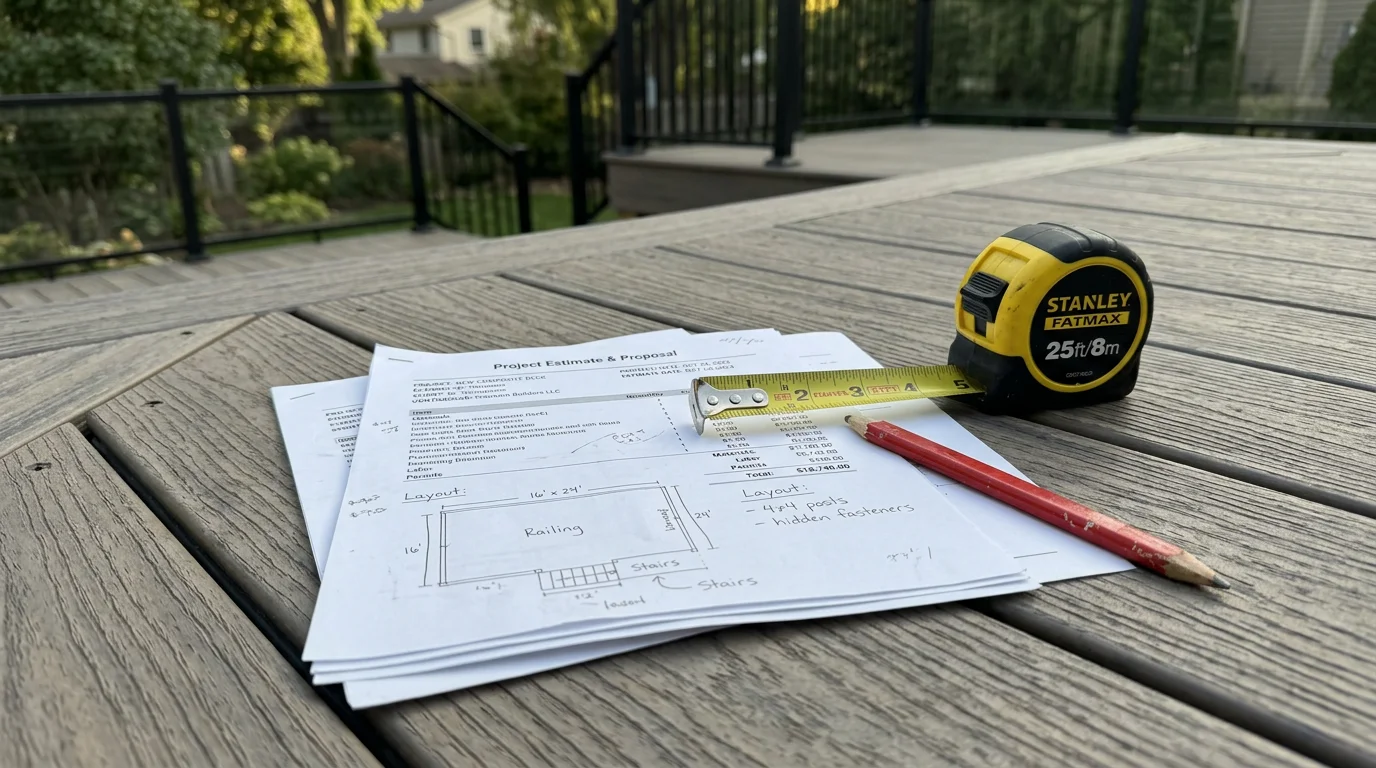
If you’re building a deck in Kitchener, Waterloo, or Cambridge, footing depth is one of the fastest ways to fail an inspection (or end up with a deck that moves after the first winter).
In Ontario, inspectors generally want footings that are below frost depth and supported by undisturbed soil — but the “right” depth can depend on site conditions and the approach you’re using (poured concrete vs helical piles).
Below is a practical, KWC-specific checklist you can use when talking to a builder, pulling a permit, or prepping for inspection.
Quick answer: how deep should deck footings be in KWC?
For most traditional poured-concrete deck footings in Kitchener–Waterloo–Cambridge, the expectation is typically “below frost depth.” In much of Southern Ontario, that’s often around the 4‑foot range, but you should confirm the current expectation with your City/inspector and/or your engineer — policies and site conditions change.
🏗️ Planning a deck project?
Get a free manual project review, or visualize your dream deck with AI before requesting quotes.
If you’re using helical piles, “depth” is less about a specific measurement and more about achieving a required bearing capacity and installation torque, with an installer letter or engineer sign-off (common in KWC).
Related reading:
- Footing basics: Do decks need footings in Ontario?
- Options: Deck footing options in Ontario (sonotube vs helical piles)
- KWC permit reality: Kitchener vs Waterloo vs Cambridge deck bylaws + permits
Why footing depth matters in Kitchener/Waterloo/Cambridge (freeze–thaw is brutal)
KWC winters bring repeated freeze–thaw cycles. When the ground freezes, moisture in soil expands. If a footing is in the zone that moves each winter, it can lift and settle slightly over time.
That doesn’t always show up as “the deck collapsed” — it’s usually the slow, expensive stuff:
- Posts go slightly out of plumb
- Railings start to loosen
- Stairs feel uneven
- Doors/thresholds near the deck get hard to align
If you’re investing in a higher-end deck (composite, glass railings, lighting), stable support is non-negotiable.
If you’re still choosing materials, see: Composite decking cost per square foot in Canada and Deck cost per square foot in Ontario.
Permit + inspection checklist (KWC-friendly)
Use this list as a pre-permit and pre-inspection walkthrough.
1) Confirm your permit path before you dig
Even if your builder “usually doesn’t bother,” you want clarity early — it changes what paperwork and inspections you’ll face.
Start here:
- Kitchener deck permits (step-by-step)
- Waterloo deck permits (step-by-step)
- Cambridge deck permits (step-by-step)
KWC-specific tip: older neighborhoods with tighter lots often trigger extra questions (lot lines, walkouts/slopes, drainage). If there’s any ambiguity, assume you’ll want the permit file clean.
2) Ask: “What depth are you designing to, and what are you using as grade?”
Footing depth is usually described as “below finished grade.” On a sloped backyard in Waterloo or a walkout in Cambridge, “grade” can be misunderstood.
Ask your contractor to explain:
- Where they’re measuring from (lowest adjacent grade vs average)
- How they handle grade changes across a deck footprint
- Whether landscaping changes later could expose a footing or change drainage
3) Ask: “How are you verifying soil and avoiding disturbed fill?”
This is the part homeowners miss.
In KWC, it’s common to find:
- Backfilled areas near old additions
- Soft spots where water collects
- Clay-heavy soils that behave differently when wet
If footings are bearing on disturbed soil (or sitting in a wet pocket), depth alone doesn’t fix the problem.
Good signs:
- They talk about reaching undisturbed soil
- They’re willing to move a footing location slightly to avoid junk soil
- They can explain why they’d switch to piles in problem spots
4) If poured concrete: confirm the *system*, not just the hole
Depth is one variable. Inspectors also care about the overall footing/pier system and how loads transfer.
A few smart questions:
- “What diameter are you using and why?”
- “How are you handling uplift and lateral movement (especially for tall decks)?”
- “How are you connecting post-to-pier so water doesn’t rot the base?”
If your deck is elevated, you’ll likely also care about stairs/landings and guard details. See: Deck stair landing requirements in Ontario (KWC).
5) If helical piles: ask for the paperwork your inspector will want
Helical piles can be a great fit in Kitchener/Waterloo/Cambridge — faster installs, less spoil, and often a cleaner path on tight lots.
But you need the right documentation. Ask:
- “Who’s the installer and are they providing a capacity letter?”
- “Is an engineer involved for this deck design?”
- “What’s the inspection process in *this* City for piles?”
A good comparison:
6) Utility locates: don’t skip it (it can change footing locations)
In KWC, it’s common to have surprises: old cable lines, gas routing, a shallow service run — especially on older lots.
Before you dig:
- Confirm your utility locate process
- Give your builder permission to shift footing locations within the plan tolerance
Skipping this is how you end up redesigning footings mid-project.
7) Drainage + downspouts: plan it before inspection day
Water is the enemy of footings.
Common KWC failure mode: downspouts dumping right where a footing is going, turning the hole into a muddy mess that compromises bearing. It’s also how you get frost issues later.
If drainage is a known issue, read: Deck drainage under a deck (Ontario).
What inspectors typically look for (without guessing exact code numbers)
Inspectors are usually trying to confirm a few realities:
- Footings are below frost-affected soil (or piles are engineered/verified)
- Bearing is on competent soil (not loose fill)
- Loads transfer cleanly from beams/posts into the footing/pile
- Connections are corrosion-resistant and don’t trap water
Instead of arguing exact inches, focus on being able to answer:
- “What is this deck bearing on?”
- “How do we know it won’t move after winter?”
If your deck is near a property line or you have a tight lot, also review setbacks/zoning early: Deck setback rules in Kitchener/Waterloo/Cambridge.
Common homeowner mistakes in KWC (that cause rework)
1) Trusting a generic rule from the internet (US-focused advice is everywhere)
2) Measuring from the wrong grade on a sloped yard
3) Pouring into a wet hole or bearing on disturbed soil
4) Not planning for drainage/downspouts
5) Choosing piles but skipping the engineering letter
Related guides (to avoid footing/inspection surprises)
- Start here (permit triggers): Kitchener vs. Waterloo vs. Cambridge deck bylaws
- Deck footing options in Ontario: sonotube vs helical piles
- Ontario One Call 811 before deck footings (KWC)
- Deck permit drawings checklist (KWC)
- Deck framing inspection in KWC: what inspectors look for
Get a deck quote (and avoid footing surprises)
If you want a contractor to sanity-check your yard and recommend the right footing approach (sonotubes vs helical piles) for Kitchener, Waterloo, or Cambridge, get a quote request started here:
- Get a deck quote: /#quote-form
When you submit, include:
- Your City (Kitchener/Waterloo/Cambridge)
- Whether it’s a walkout/slope
- Any drainage issues
- A rough deck size + height
🎨 Not sure which material to pick?
Upload a photo of your backyard and see exactly how Trex, TimberTech, or cedar would look — free and instant.
FAQ
Can I use deck blocks instead of footings in Ontario?
Sometimes for very small, low-to-the-ground structures — but in KWC, many builds that homeowners call a “floating deck” still end up needing proper support and (often) permits depending on size/height/location. Start with: Does a floating deck need footings in Ontario?.
Are helical piles always easier for permits?
Not always. They can reduce digging and avoid soil issues, but you may need installer documentation and (often) engineering. This guide covers the KWC reality: Helical piles vs concrete footings (KWC).
Do I need an engineer for my deck in Kitchener/Waterloo/Cambridge?
Sometimes — especially for taller decks, complex loads (hot tubs), unusual soil, or pile designs. If there’s uncertainty, an engineer’s letter is usually cheaper than rework.
If you have a hot tub planned, don’t guess: Hot tub on a deck in Ontario (KWC checklist).
Upload a backyard photo and preview real decking materials with AI — free, instant, no sign-up.
Permits, costs, material comparisons, and questions to ask before requesting quotes — delivered to your inbox.