
Deck Framing Inspection in Kitchener-Waterloo-Cambridge: What Inspectors Look For (and How to Pass)
If your deck needs an inspection in KWC, here’s what inspectors typically check: footings, ledger, joists/beams, guards, stairs, and fasteners — plus a pre-inspection checklist.
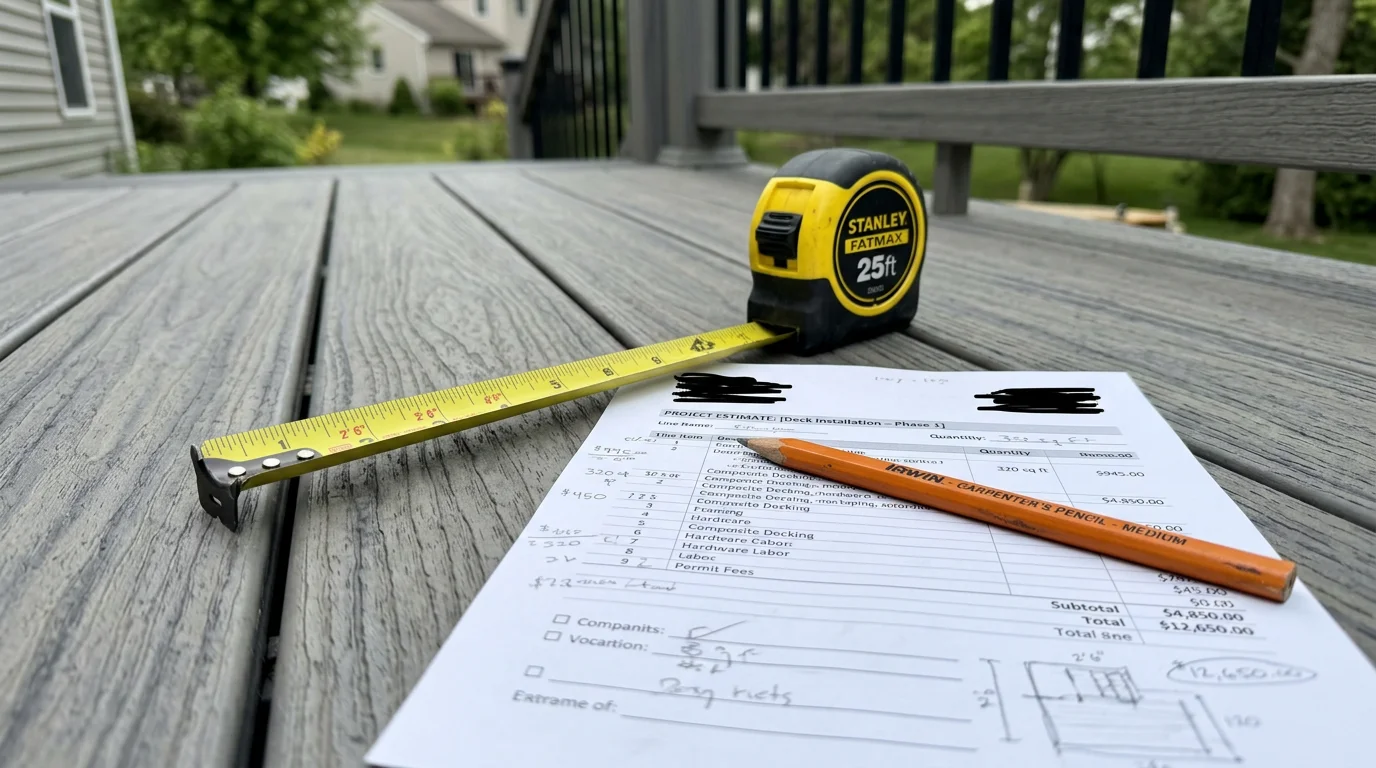
If your deck in Kitchener, Waterloo, or Cambridge needs a building permit, it will usually involve an inspection at one or more stages.
The fastest way to avoid delays is to know what inspectors are checking *before* you call for the inspection.
This guide explains the common inspection points for a residential deck in KWC, plus a practical checklist you (or your builder) can run the day before.
Why framing inspections matter
A deck is a structural platform exposed to weather. Most serious deck failures come from:
🏗️ Planning a deck project?
Get a free manual project review, or visualize your dream deck with AI before requesting quotes.
- weak ledger attachments
- underbuilt beams/joists
- inadequate footings
- missing lateral restraint
- guard/railing failures
The inspection is designed to catch these before the decking boards and finishes hide them.
Step 1: confirm your permit scope and what’s being inspected
Not every deck is inspected the same way.
Start with:
- Kitchener height rule: /decks/blog/deck-permits-kitchener-24-inch-rule
- Waterloo permit basics: /decks/blog/do-you-need-a-permit-to-build-a-deck-waterloo-ontario
- Cambridge permit basics: /decks/blog/do-you-need-a-permit-to-build-a-deck-cambridge-ontario
If you’re preparing drawings, use: /decks/blog/deck-permit-drawings-checklist-kwc-site-plan-framing
What inspectors typically look for (by category)
1) Footings: depth, placement, and bearing
Inspectors often check:
- footing depth (frost strategy)
- bearing on undisturbed soil
- post-to-footing connection
- spacing matches the drawing
Related reading:
- /decks/blog/how-deep-should-deck-footings-be-ontario-frost-line-guide
- /decks/blog/deck-footing-options-ontario-sonotube-helical-piles-pros-cons
2) Ledger attachment (if attached to the house)
This is one of the most critical failure points.
Inspectors typically look for:
- correct fastener type and spacing (as per plan)
- proper flashing/waterproofing
- solid connection into rim joist (not just into sheathing)
If you want a deep dive:
- /decks/blog/ledger-board-attachment-ontario-deck-safety-kitchener-waterloo
- /decks/blog/deck-ledger-flashing-ontario-water-damage-prevention
3) Beams + joists: size, spacing, and connections
Inspectors often check:
- joist spacing matches plan
- joist hangers installed correctly
- beam size and ply count
- post-to-beam connection
If you’re choosing framing sizes, use span-table thinking:
4) Lateral stability and bracing
This is the part most DIYers miss.
Inspectors may look for:
- bracing on tall posts
- diagonal bracing or blocking
- proper hardware for uplift/lateral loads
If your deck is elevated, read:
5) Guards/railings (if required)
If the walking surface is high enough, guards must meet height and strength requirements.
Start with:
- /decks/blog/deck-railing-height-ontario-code-kitchener-waterloo
- /decks/blog/deck-railing-cost-ontario-kitchener-waterloo
6) Stairs + handrails
Inspectors typically check:
- consistent rise/run
- landing requirements
- handrail placement
Relevant posts:
- /decks/blog/deck-stairs-code-ontario-rise-run-handrail-kitchener
- /decks/blog/how-many-stairs-do-i-need-for-my-deck-rise-run-explained-kwc
Pre-inspection checklist (print this)
The day before inspection:
1. Ensure the deck matches the approved drawings (dimensions + layout)
2. Footings complete, posts plumb
3. Ledger (if any) installed with correct fasteners + flashing
4. Joist hangers fully fastened (correct nails/screws)
5. Blocking installed where needed (especially at guard posts)
6. Stairs framed per plan (or ready for inspection if stairs are included)
7. Site is accessible and safe (no debris, clear access)
8. Have permit documents available on site
What happens if you fail an inspection?
Usually:
- you get a deficiency list
- you fix it
- you book a re-inspection
The cost is time. And if decking is already installed, fixes become more expensive.
The 5 biggest “fail points” we see on deck framing
1. Ledger details unclear or wrong (missing flashing, wrong fasteners)
2. Footing plan not followed (wrong spacing, shallow depth)
3. Hardware incomplete (hangers missing proper nails/fasteners)
4. Guard blocking missing (guard posts need real backing)
5. Stairs framed inconsistently (rise/run varies)
Even if your deck “looks strong,” inspectors focus on repeatable details.
What to have ready when the inspector arrives
- Permit documents and approved drawings
- Clear access to the underside (no stored materials blocking)
- A quick explanation of any deviations (with revised drawings if applicable)
If you’re DIY’ing: when to call for help
If your deck includes any of the following, a short consult is worth it:
- tall posts needing bracing
- complex stairs/landings
- long cantilevers
- hot tub load zones
Hot tub checklist: /decks/blog/hot-tub-on-deck-ontario-structural-checklist-kwc
Should decking boards be installed before the inspection?
Often, no.
Many issues (fastener patterns, hanger nails, blocking) are easiest to verify when the framing is visible. If you cover everything with decking boards too early, fixes become slower and more expensive.
If you’re unsure, call the City and ask what stage they want to see.
Pro tip: take photos before you cover framing
Even after you pass inspection, take a quick photo set of:
- ledger attachment
- beam/post connections
- blocking at guard posts
This is useful later for maintenance, repairs, and warranty questions.
How to avoid inspection scheduling delays
A lot of delays aren’t structural — they’re logistics.
- Book the inspection as soon as you have a realistic framing completion date.
- Make sure the site address and contact number are clear.
- Ensure someone can provide access if gates are locked.
If the inspector can’t access key areas, you may be rescheduled.
Small detail: stairs often have separate scrutiny
Even when the main framing is solid, stairs can fail for:
- inconsistent riser heights
- missing handrail requirements
- landings not shown on plan
If your stair layout changed during the build, update drawings (or at least document the change) before inspection.
🎨 Not sure which material to pick?
Upload a photo of your backyard and see exactly how Trex, TimberTech, or cedar would look — free and instant.
Want a quick “pre-inspection” sanity check?
If you’re building in Kitchener/Waterloo/Cambridge and you want a builder to sanity-check your framing approach (or you want a second opinion), submit your details here: /#quote-form.
Include:
You may also want to read Why 80% of Deck Quotes Fail (And How to Fix It).
- city
- deck height
- attachment type (ledger vs freestanding)
- whether you’re doing helical piles or concrete
Upload a backyard photo and preview real decking materials with AI — free, instant, no sign-up.
Permits, costs, material comparisons, and questions to ask before requesting quotes — delivered to your inbox.