
Attached vs Freestanding Deck Permits in Ontario: Which Needs One? (2026)
Attached decks almost always need a permit. Freestanding under 24\" might be exempt — but it depends on your municipality. Exact rules, costs, and the loopholes that save $300-800.
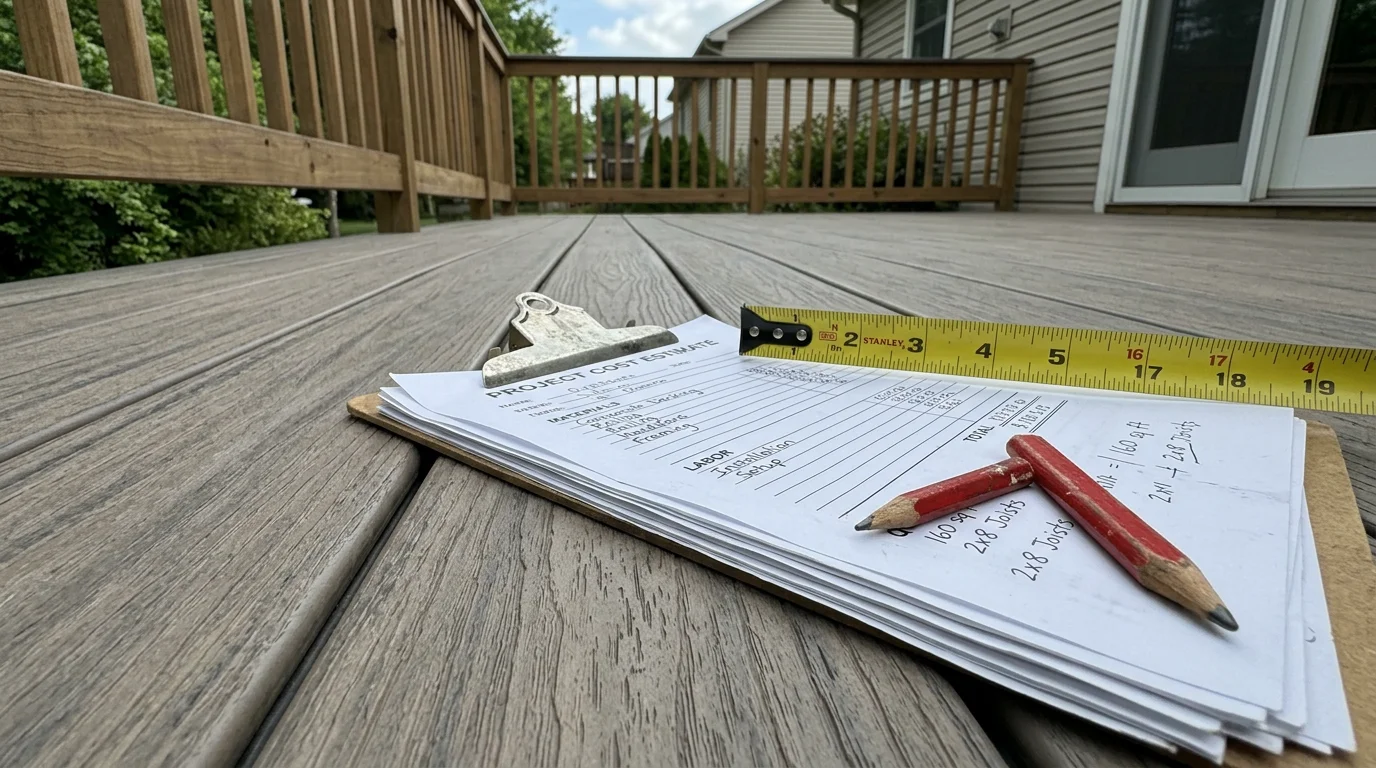
You're planning a deck and wondering whether to attach it to your house or build it freestanding—and more importantly, which option requires a permit in Ontario. The answer affects your budget, timeline, and legal obligations.
The short version: Attached decks always require a building permit in Ontario. Freestanding decks may not need a permit if they're under 24 inches (600 mm) above grade and not covered by a roof or attached to a building—but this rule varies by municipality.
Here's what Ontario homeowners need to know about permits, structural requirements, and building code compliance for both deck types.
What Makes a Deck "Attached" vs "Freestanding"?
Attached Decks
An attached deck is physically connected to your house structure, typically through a ledger board bolted to the home's rim joist or foundation wall. The house carries part of the deck's structural load.
🏗️ Planning a deck project?
Get a free manual project review, or visualize your dream deck with AI before requesting quotes.
Key characteristics:
- Ledger board lag-bolted or through-bolted to house framing
- Shares structural support with building
- Built within 1-2 feet of house exterior
- Most common type of residential deck in Ontario
Freestanding Decks
A freestanding deck stands independently on its own foundation system with no physical connection to your house. All structural support comes from posts and beams.
Key characteristics:
- No ledger board attachment to house
- Supported entirely by its own post-and-beam system
- Can be located anywhere on property (within setback rules)
- Structurally separate from dwelling
- Often built 3+ feet away from house
Important distinction: A deck built right next to your house but not physically attached to it is still considered freestanding from a code perspective.
Ontario Building Code Permit Requirements
The Ontario Building Code (OBC) establishes provincial standards, but municipalities enforce their own permit requirements within those guidelines.
When Attached Decks Need Permits
100% of the time. There are no exceptions in Ontario for attached decks.
According to OBC Division B Section 1.3.1.2, attached decks are considered alterations to the building structure. They require:
- Building permit application
- Engineered or code-compliant drawings
- Ledger board inspection before decking installation
- Final inspection before use
This applies regardless of:
- Deck height (even ground-level attached decks)
- Deck size (even small 8×10 platforms)
- Property ownership status
Why? Improper ledger attachment is the #1 cause of catastrophic deck collapse in North America. Ontario building departments inspect ledger connections to prevent structural failure.
When Freestanding Decks Need Permits
Freestanding decks follow the 24-inch rule in most Ontario municipalities:
Permit NOT required if ALL conditions are met:
- Platform height less than 24 inches (600 mm) above grade at any point
- Not covered by a roof, canopy, or overhead structure
- Not attached to a building
- Not intended to support guardrails or stairs
Permit REQUIRED if ANY of these apply:
- Height 24 inches or more above grade
- Has stairs (stairs trigger permit requirements regardless of platform height)
- Has guardrails (indicates elevated platform)
- Covered by roof, pergola with roof, or similar structure
- Area exceeds local exemption limits (some cities cap exempt decks at 100-200 sqft)
Municipal Variations in KWC
| Municipality | Freestanding Deck Exemption | Notes |
|--------------|----------------------------|-------|
| Kitchener | Under 24" height, no roof, not attached | Must still meet setback requirements |
| Waterloo | Under 600 mm height, no stairs/guardrails | Area limit may apply—confirm with building dept |
| Cambridge | Under 24" height, uncovered, no attachment | Deck must be entirely self-supporting |
Always verify with your local building department. Call Kitchener (519-741-2345), Waterloo (519-886-1550), or Cambridge (519-740-4680) to confirm current exemption rules for your specific project.
Learn the full permit process: Kitchener deck permit application | Waterloo permit guide | Cambridge permit process
Structural Requirements for Each Type
Attached Deck Code Requirements
Ontario Building Code mandates specific construction standards for attached decks:
Ledger board attachment:
- Minimum 2×8 pressure-treated ledger (2×10 for joists 16" OC)
- ½-inch diameter lag bolts or through-bolts
- Spacing: 16" OC maximum (12" OC for ledgers supporting joists over 12 feet)
- Bolts must penetrate rim joist AND band joist (not just rim alone)
- Flashing required above ledger to prevent water infiltration
Footing requirements:
- Minimum depth: 48 inches (1.2 m) below grade to reach below frost line
- Concrete footings (Sonotubes) or engineered helical piles
- Footing diameter: 10-12 inches for typical residential loads
- Must rest on undisturbed soil or engineered fill
Joist specifications:
- 2×8, 2×10, or 2×12 pressure-treated lumber
- Maximum spans per OBC Table 9.23.4.3 (depends on joist size, spacing, wood species)
- 16" OC spacing typical (12" OC for composite decking)
See detailed span tables: Deck joist span table Ontario
Guardrails required if:
- Platform exceeds 24 inches (600 mm) above grade
- Minimum height: 36 inches (42 inches recommended for safety)
- Baluster spacing: Maximum 4 inches (100 mm) clear opening
Full guardrail code: Deck railing height Ontario code
Freestanding Deck Code Requirements
Freestanding decks avoid ledger attachment but must support the entire structure independently:
Post-and-beam system:
- 6×6 pressure-treated posts minimum for typical residential decks
- Posts rest on concrete footings (same 48-inch depth requirement)
- Doubled 2×8 or 2×10 beams spanning between posts
- Joists rest on beams (not connected to house)
Foundation requirements:
- Same frost-depth requirements: 48 inches minimum in Ontario
- More footings needed (no house support means more posts)
- Typical 8×10 freestanding deck needs 6 footings vs 4 for attached version
Structural trade-offs:
- More excavation and concrete work
- Higher material cost (more posts, beams, footings)
- Greater structural flexibility (no dependence on house framing condition)
- Easier permitting if under 24 inches (exempt in many cases)
Footing options compared: Deck footing options Ontario
Cost Comparison: Attached vs Freestanding
Attached Deck Costs (2026 KWC Market)
Material cost savings:
- Fewer footings required (house carries partial load)
- Less lumber for beams and posts
- Typical material savings: $300-800 vs freestanding equivalent
Installed pricing (pressure-treated):
- 10×12 attached deck: $6,500-9,000 installed
- 12×16 attached deck: $10,500-14,500 installed
Permit costs:
- Kitchener: ~$250-350 depending on deck size
- Waterloo: ~$200-300
- Cambridge: ~$250-400
Full pricing breakdown: Deck permit cost KWC
Freestanding Deck Costs
Added material costs:
- 2-4 additional footings: $200-500 (excavation + concrete)
- Extra posts and beams: $150-400
- Total material premium: $350-900 vs attached
Installed pricing (pressure-treated):
- 10×12 freestanding deck: $7,000-9,800 installed
- 12×16 freestanding deck: $11,500-15,500 installed
Permit savings (if under 24"):
- Potentially $0 if exempt under municipal rules
- Savings: $200-400 compared to attached deck permit
Break-even analysis:
For decks under 24 inches, you'll pay $150-500 more in materials/labor but potentially save $200-400 in permit fees. Net difference is minimal—so choose based on structural needs, not cost alone. Our Ontario deck pricing guide breaks down total project costs for both configurations.
Get detailed cost estimates: Deck cost Kitchener 2026
Pros and Cons of Each Approach
Attached Deck Advantages
Structural benefits:
- More efficient use of materials
- Direct access from house (no gap to step across)
- Easier integration with door thresholds
- Typically more stable (leverage from house connection)
Practical benefits:
- Standard construction method (all contractors familiar)
- Less excavation work
- Smaller footprint (built right against house)
Drawbacks:
- Always requires permit (cost + time)
- Ledger attachment risk if done improperly
- Dependent on house framing condition (rot issues can complicate)
- Must install flashing correctly to prevent water damage
Prevent water issues: Deck ledger flashing Ontario
Freestanding Deck Advantages
Permit flexibility:
- May avoid permit if under 24 inches (check locally)
- Faster project start if exempt
- Potentially lower bureaucratic hurdles
Structural benefits:
- Independent of house framing condition
- No ledger connection risk (eliminates collapse concern)
- Can be built at any distance from house
- Easier to relocate or remove later
Drawbacks:
- Higher material cost (more posts/footings/beams)
- Small gap between deck and house (trip hazard unless built tight)
- More excavation required
- May feel less stable (perception issue, not structural if built correctly)
Building Without a Permit: What Happens?
Legal Risks
Building a deck that requires a permit without obtaining one exposes you to:
Municipal enforcement:
- Stop-work order
- Fines: $500-5,000+ depending on municipality and violation severity
- Forced demolition or retrofit to meet code
- Legal costs if dispute escalates
Real estate complications:
- Must disclose unpermitted work when selling
- Buyers can demand removal or price reduction
- Title insurance may not cover unpermitted structures
- Home inspection red flags
Insurance issues:
- Homeowner's insurance may deny claims related to unpermitted structure
- Liability exposure if deck fails and causes injury
- Coverage gaps if fire or storm damages unpermitted deck
"I Built It Without a Permit—Now What?"
If you've already built a deck without a permit, you have two options:
Option 1: Apply for a retroactive permit
- Contact your building department and explain the situation
- Submit drawings and photos of as-built structure
- Pay permit fees (sometimes with late penalty)
- May require partial demolition to expose framing for inspection
- Cost: Permit fee + potential inspection access work ($300-1,200)
Option 2: Remove or rebuild
- If deck doesn't meet code, removal may be required
- Demolition cost: $800-2,500 depending on deck size
Most building departments prefer retroactive permits over demolition. Be proactive—call before they find out another way.
Common Permit Myths Debunked
Myth 1: "Freestanding decks never need permits"
False. Only low freestanding decks (under 24") without stairs or roofs are potentially exempt—and rules vary by city.
Myth 2: "If I keep it under 100 sqft, no permit needed"
False. Size is not the determining factor. Height, attachment, stairs, and roof coverage matter more.
Myth 3: "My neighbor didn't get a permit, so I don't need one either"
Irrelevant. Your neighbor took a legal risk. Code enforcement can happen years later, affecting resale even if you're never "caught."
Myth 4: "Permit adds months to my project"
Partly false. Permits in KWC typically take 2-4 weeks to process. Inspections add 1-2 days total, not weeks. See realistic timelines: How long do deck permits take KWC
Myth 5: "Inspectors will find problems and make me rebuild everything"
Unlikely if you follow OBC guidelines. Inspectors check key structural points (ledger, footings, guardrails). If you're unsure, hire a qualified deck builder—they handle permits and inspections routinely.
Find what inspectors check: Deck framing inspection KWC
Making Your Decision: Attached or Freestanding?
Choose Attached If:
- Your deck will be 24+ inches high (permit required either way)
- You want direct access from house door
- You're hiring a contractor (they handle permits routinely)
- You want the most cost-effective structural solution
- You're building a large deck (200+ sqft)
Choose Freestanding If:
- You're building a low deck (under 24 inches) and want to avoid permits
- Your house has vinyl siding or framing concerns (ledger attachment complications)
- You want structural independence from house
- You may want to relocate deck later
- You're building far from house wall
Hybrid Approach: Low Freestanding Deck Now, Elevated Attached Deck Later
Some homeowners build a small freestanding deck (under 24") initially to avoid permits, then later remove it and build a proper permitted attached deck.
Pros:
- Get outdoor space immediately (summer season)
- Defer permit costs to next year
- Test deck layout before committing to permanent structure
Cons:
- Pay for two projects (demolition + new build)
- Freestanding deck has limited resale value
- May still need setback approval even if permit-exempt
This makes sense only if you're truly unsure about final deck design or need immediate outdoor space while planning a bigger project.
Common Questions
Does a ground-level deck attached to my house need a permit?
Yes. All attached decks require permits in Ontario, regardless of height. Even a ground-level platform attached via ledger board is considered a structural alteration to your house and must be permitted.
Can I build a freestanding deck right against my house without attaching it?
Technically yes, but it's impractical. You'll have a gap (1-3 inches) between deck and house, which creates a trip hazard and debris collection point. If you're building that close, attaching with a proper ledger board makes more structural sense—and requires a permit anyway. Most builders recommend a minimum 3-foot gap for truly freestanding decks to allow independent movement and access for maintenance.
How close to my property line can I build a freestanding deck?
Setback requirements vary by municipality and zoning district, but typical rules in KWC:
- 3-5 feet from side property lines
- 6-10 feet from rear property line
- 15-25 feet from front property line
Check your specific property zoning: KWC deck zoning setbacks
Do I need an engineer's stamp for a freestanding deck?
Not for typical residential decks following OBC prescriptive standards. An engineer's stamp is required if:
- You're using helical piles instead of concrete footings
- Deck exceeds standard span tables or loading
- Building on slope or challenging soil conditions
- Municipality specifically requests engineered design
For standard freestanding decks under 200 sqft with conventional footings, code-compliant drawings from your contractor or designer are sufficient. Learn more: Helical piles vs concrete footings KWC
If my freestanding deck is exempt from permits, do I still need to follow building code?
Yes. Permit exemption does not mean code exemption. Even permit-exempt decks must meet OBC structural standards:
- Proper footing depth (48 inches)
- Adequate joist sizing and spacing
- Guardrails if platform exceeds 24 inches
- Stair code compliance if stairs added
You're still liable for structural failures even without a permit. Building code exists to prevent collapse and injury—follow it regardless of permit status.
🎨 Not sure which material to pick?
Upload a photo of your backyard and see exactly how Trex, TimberTech, or cedar would look — free and instant.
Related guides (to avoid permit delays in KWC)
Local deck pages (Kitchener-Waterloo-Cambridge):
Permits + drawings:
- Kitchener vs Waterloo vs Cambridge deck bylaws
- Permit drawings checklist (KWC)
- Deck permits in Kitchener: the 24-inch rule
Safety-critical details:
Get quotes: /#quote-form
Make sure to also review Deck Permits in Red Deer: Requirements, Costs & How to Apply in 2026 for local requirements.
Make sure to also review Deck Permits in Halifax: Requirements, Costs & How to Apply in 2026 for local requirements.
Make sure to also review Deck Permits in Milton: Requirements, Costs & How to Apply in 2026 for local requirements.
Upload a backyard photo and preview real decking materials with AI — free, instant, no sign-up.
Permits, costs, material comparisons, and questions to ask before requesting quotes — delivered to your inbox.