
Deck Permits in Lethbridge (2026)
Need a deck permit in Lethbridge? Learn requirements, fees, building codes, setback rules, and how to apply for your 2026 deck project in southern Alberta.
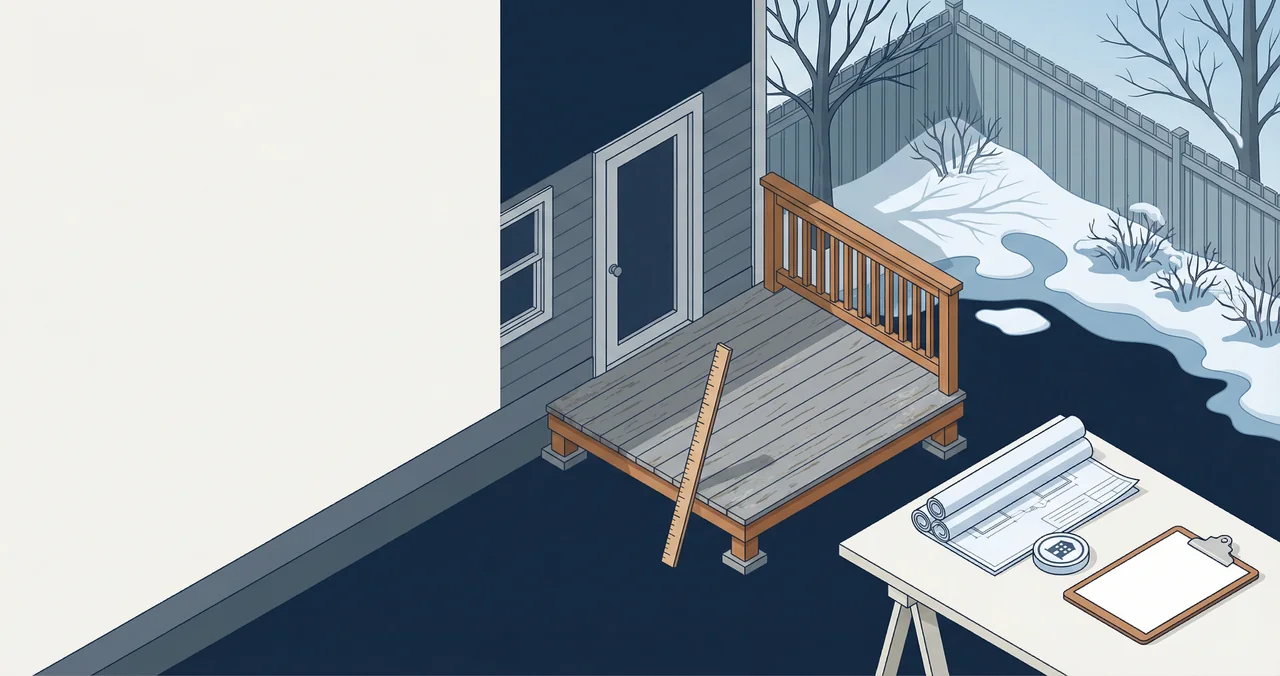
Planning a deck in Lethbridge and wondering if you need a permit? The short answer: probably yes. The City of Lethbridge requires building permits for most deck projects, and skipping one can cost you far more than the permit fee — think fines, forced removal, or problems when you sell your home.
Here's everything you need to know about Lethbridge deck permits in 2026, from requirements and fees to the actual application process.
📋 Tool Alert: Permit Checker
Do you really need a permit? Check the exact rules for your city or township.
Check Permits →Do You Need a Deck Permit in Lethbridge?
In Lethbridge, you need a building permit for any deck that is:
🏗️ Planning a deck project?
Get a free manual project review, or visualize your dream deck with AI before requesting quotes.
- More than 24 inches (0.6 m) above grade at any point
- Over 100 square feet (9.3 m²) in area
- Attached to your home's structure
A small, ground-level platform under 100 square feet that sits no higher than 24 inches off the ground may be exempt. But "exempt" doesn't mean "no rules." You still need to comply with the Alberta Building Code and Lethbridge's Land Use Bylaw for setbacks and lot coverage, even if no permit is required.
The safest move? Call the City of Lethbridge Planning and Development Services at (403) 320-3920 before you start. A quick phone call can save you months of headaches.
What About Freestanding Decks?
A common misconception: freestanding decks don't need permits. That's not true in Lethbridge. Whether your deck is attached to the house or freestanding, the height and size thresholds still apply. A freestanding deck that's 30 inches above grade absolutely requires a permit. For a deeper comparison, see our guide on attached vs. freestanding deck permits.
When a Permit Is Required
Here's a quick breakdown of common Lethbridge deck scenarios:
| Scenario | Permit Required? |
|---|---|
| Deck over 24" above grade | Yes |
| Deck over 100 sq ft | Yes |
| Deck attached to the house | Yes |
| Ground-level deck under 24" and under 100 sq ft | Usually no |
| Adding stairs to an existing deck | Yes |
| Replacing decking boards only (no structural changes) | No |
| Adding a roof or pergola to a deck | Yes |
| Hot tub on a deck (structural load considerations) | Yes |
If your project involves any structural work — new footings, ledger board attachment, beam replacement — assume you need a permit.
Lethbridge's Building Season Matters
Southern Alberta's climate gives you a realistic building window from May through October. Lethbridge's harsh winters, with freeze-thaw cycles and heavy snow loads, make winter construction impractical for most deck projects. That means contractor schedules fill up fast. Book your contractor by March and start the permit process even earlier — ideally in January or February — so you're not waiting on paperwork when the weather finally cooperates.
Permit Fees & Processing Time
How Much Does a Deck Permit Cost in Lethbridge?
Deck permit fees in Lethbridge are calculated based on the estimated construction value of your project. As of 2026, expect:
- Residential deck permit fee: approximately $100–$300 CAD for most standard deck projects
- Minimum permit fee: around $100 CAD
- The fee is typically calculated as a rate per $1,000 of construction value (roughly $8–$12 per $1,000)
For a typical 300-square-foot pressure-treated deck with a construction value of around $12,000–$16,500 CAD, you'd pay roughly $100–$200 in permit fees. A larger composite deck valued at $15,000–$25,500 CAD might push fees toward $200–$300.
To put that in perspective against your total project cost:
| Deck Type | Installed Cost (300 sq ft) | Estimated Permit Fee |
|---|---|---|
| Pressure-treated | $9,000–$16,500 CAD | $100–$175 |
| Cedar | $12,000–$19,500 CAD | $125–$225 |
| Composite | $15,000–$25,500 CAD | $150–$275 |
| Trex | $16,500–$27,000 CAD | $150–$300 |
| Ipe (hardwood) | $21,000–$36,000 CAD | $200–$350 |
For more detail on material pricing, check out our guide to the best composite decking brands in Canada.
Processing Time
Standard deck permit applications in Lethbridge typically take 10 to 15 business days to process. However, during the spring rush (March through May), processing times can stretch to 3–4 weeks as the department handles the seasonal surge.
Pro tip: Submit your application in January or February when volume is lower. You'll get approved faster and have your permit in hand before contractors start their busy season.
Building Codes & Setback Rules
Lethbridge follows the Alberta Building Code (ABC), which is based on the National Building Code of Canada. Here are the key requirements that affect your deck:
Structural Requirements
- Frost depth for footings: Footings must extend below the frost line, which in the Lethbridge region is typically 48 inches (1.2 m) or deeper. This is non-negotiable — shallow footings will heave in Lethbridge's freeze-thaw cycles and compromise your entire deck structure.
- Snow load: Decks must be engineered to handle southern Alberta's snow loads, typically 1.0–1.5 kPa for the Lethbridge area.
- Beam and joist sizing: Must comply with span tables in the Alberta Building Code. Undersized lumber is a common reason for permit rejection.
- Ledger board attachment: If attached to your house, the ledger must be properly flashed and lag-bolted to the rim joist — not just nailed.
Setback Rules
The City of Lethbridge's Land Use Bylaw dictates how far your deck must be from property lines:
- Rear setback: Typically 1.2 m (about 4 feet) from the rear property line for most residential zones
- Side setback: Usually 1.2 m from side property lines
- Front setback: Decks are generally not permitted to extend beyond the front building line
- Lot coverage: Your deck counts toward your lot's maximum site coverage, which is typically 40–45% in most Lethbridge residential districts
These vary by zoning district (R-L, R-N, R-M, etc.), so check your specific lot's zoning designation. You can look this up through the City of Lethbridge's online mapping tool or by calling Planning and Development.
Railing & Safety Requirements
- Guard rails required on any deck surface more than 24 inches above grade
- Minimum railing height: 42 inches (1,070 mm)
- Baluster spacing: No more than 4 inches (100 mm) between balusters — a child's head must not be able to pass through
- Stairs must be at least 36 inches wide with a handrail on at least one side
- For railing options that meet code, take a look at the best deck railing systems in Canada
How to Apply for a Deck Permit in Lethbridge
Step 1: Gather Your Documents
Before you contact the city, prepare:
- Site plan showing your property boundaries, the house footprint, and the proposed deck location with dimensions and setback distances
- Construction drawings including framing plan, cross-section, footing details, and material specifications
- Elevation drawings showing the deck height above grade
- Real property report or survey (the city may request this)
- Footing details — this is critical in Lethbridge given the frost depth requirements
Your contractor should handle most of this. If you're building yourself, you'll need to produce drawings that meet the city's standards. You don't necessarily need a stamped engineering drawing for a standard residential deck, but the plans must show code compliance.
Step 2: Submit Your Application
You can submit your deck permit application through:
- In person at the City of Lethbridge Citizen Service Centre, City Hall, 910 4th Avenue South
- Online through the City of Lethbridge's e-services portal (check the city website for current online submission options)
Include:
- Completed Building Permit Application form
- All required drawings and documents
- Payment for the permit fee
Step 3: Wait for Review
The city's plans examiner will review your submission for compliance with:
- The Alberta Building Code
- The Lethbridge Land Use Bylaw (setbacks, lot coverage)
- Any applicable development agreements or restrictive covenants
If there are deficiencies, you'll receive a correction notice outlining what needs to be revised. Respond promptly — delays in resubmission push your project further into the building season.
Step 4: Receive Your Permit and Build
Once approved:
- Post the permit on-site in a visible location
- Schedule inspections as required — typically a footing inspection before pouring concrete and a final inspection when the deck is complete
- Do not cover or backfill footings before the footing inspection
Step 5: Final Inspection
When construction is complete, call the city to schedule a final inspection. The inspector will verify:
- Footings are at proper depth
- Structural members match approved plans
- Railings meet height and spacing requirements
- The deck matches the approved setbacks and dimensions
Don't skip the final inspection. An unclosed permit can cause problems when you sell your home.
Climate Considerations for Lethbridge Decks
Lethbridge's climate is tough on outdoor structures. Before you finalize materials, consider what southern Alberta throws at your deck:
- Freeze-thaw cycles: Lethbridge can see temperatures swing from -30°C to +5°C within days during winter. This expansion and contraction punishes wood and compromises fasteners.
- Snow load: Accumulated snow adds serious weight. Your deck's structure needs to handle it.
- Chinook winds: Lethbridge is in the chinook belt. Rapid temperature swings from chinooks accelerate weathering.
- UV exposure: High-altitude prairie sun is intense. It fades and degrades unprotected wood faster than you'd expect.
- Frost heave: Improperly set footings will shift. This is why the city requires footings below the frost line — 48 inches minimum in Lethbridge.
What Materials Hold Up Best?
Composite and PVC decking perform best in Lethbridge's climate. They resist moisture absorption, won't crack from freeze-thaw, and require virtually no annual maintenance.
Pressure-treated wood is the budget option at $30–$55/sq ft CAD installed, but it demands annual sealing to survive Lethbridge winters. Skip a year and you'll see cracking, warping, and grey discoloration.
Cedar looks beautiful but needs the same annual maintenance commitment. At $40–$65/sq ft CAD, it's a mid-range choice that rewards diligent upkeep.
Use PaperPlan to visualize different decking materials on your own home before committing — it's a smart way to compare how composite, cedar, or pressure-treated will actually look against your siding and landscaping.
For a deep dive into materials that handle Canadian freeze-thaw conditions, read our guide on the best decking materials for freeze-thaw climates.
What Happens If You Build Without a Permit
Building a deck without a permit in Lethbridge is a gamble with serious consequences:
- Stop-work order: A bylaw officer can shut down your project immediately
- Fines: Penalties under the Municipal Government Act and Lethbridge bylaws can be $500–$10,000+ depending on the violation
- Forced removal: The city can require you to demolish the unpermitted structure at your own expense
- Insurance issues: If someone is injured on an unpermitted deck, your homeowner's insurance may deny the claim
- Sale complications: An unpermitted deck will show up during a home inspection or real property report review. Buyers will either walk away or demand a significant price reduction
- Retroactive permits: You can sometimes apply after the fact, but expect higher fees, mandatory inspections (which may require exposing hidden work), and no guarantee of approval
The math is simple. A permit costs $100–$300. An unpermitted deck can cost you thousands in fines and tens of thousands in lost home value. For more on what's at stake, see what happens when you build a deck without a permit.
Can You Get a Retroactive Permit?
Yes, in some cases. The City of Lethbridge may allow you to apply for a permit after construction. But you'll need to:
- Provide full drawings and documentation as if you were applying new
- Potentially expose footings or structural connections for inspection
- Pay any additional fees or penalties
- Bring the entire structure up to current code — not the code from when it was built
There's no guarantee a retroactive permit will be granted. If the deck doesn't meet code and can't be reasonably modified, demolition is on the table.
Tips for a Smooth Permit Process
- Start early. Submit in January or February for a spring build.
- Hire a contractor familiar with Lethbridge codes. They'll know what the city expects and can handle the paperwork.
- Confirm your zoning. Different residential zones have different setbacks and coverage limits. Don't assume — check.
- Get a real property report if you don't have a recent one. You'll likely need it anyway if you sell within the next few years.
- Communicate with your neighbours. Not legally required for most decks, but it prevents complaints to bylaw enforcement that can slow your project.
- Plan your timeline around Lethbridge's building season — May to October is your realistic window. Learn more about the best time to build a deck.
🎨 Not sure which material to pick?
Upload a photo of your backyard and see exactly how Trex, TimberTech, or cedar would look — free and instant.
Frequently Asked Questions
How much does a deck permit cost in Lethbridge?
Most residential deck permits in Lethbridge cost between $100 and $300 CAD, depending on the construction value of your project. The fee is calculated as a rate per $1,000 of estimated project value. For a standard 300-square-foot pressure-treated deck, expect to pay around $100–$175. Larger or premium-material decks will be on the higher end.
How long does it take to get a deck permit in Lethbridge?
Standard processing time is 10 to 15 business days. During the spring rush from March to May, it can take 3 to 4 weeks. Submitting a complete application with all required drawings is the single best way to avoid delays. Incomplete applications get sent back, resetting the clock.
Can I build a deck myself in Lethbridge, or do I need a contractor?
Homeowners in Alberta can build their own decks — there's no requirement to hire a licensed contractor for residential work on your own property. However, you still need a permit, your deck must meet the Alberta Building Code, and you'll need to pass all required inspections. If you're not confident producing code-compliant construction drawings, hiring a contractor or at least a draftsperson for the plans is worth the investment. Our guide on building your own deck covers what's involved.
Do I need a permit to replace deck boards in Lethbridge?
No. If you're only replacing surface decking boards and not altering the structure — no new footings, no beam changes, no resizing — a permit is typically not required. However, if the replacement involves structural repairs or modifications, you'll need a permit. When in doubt, call the city.
What setbacks do I need for a deck in Lethbridge?
Most Lethbridge residential zones require a minimum 1.2 m (approximately 4 feet) setback from rear and side property lines. Front setbacks follow the established building line. Your specific setback requirements depend on your lot's zoning district, so verify with the City of Lethbridge Planning and Development Services before designing your deck.
📋 Planning a deck project?
Get a free manual project review from our team — no obligation, no spam.
Get Free Project Review →Upload a backyard photo and preview real decking materials with AI — free, instant, no sign-up.
Permits, costs, material comparisons, and questions to ask before requesting quotes — delivered to your inbox.