
Deck Cost in Calgary (2026)
What does a deck cost in Calgary in 2026? Get real per-square-foot pricing for composite, wood, and Trex decks plus tips to save on your build.
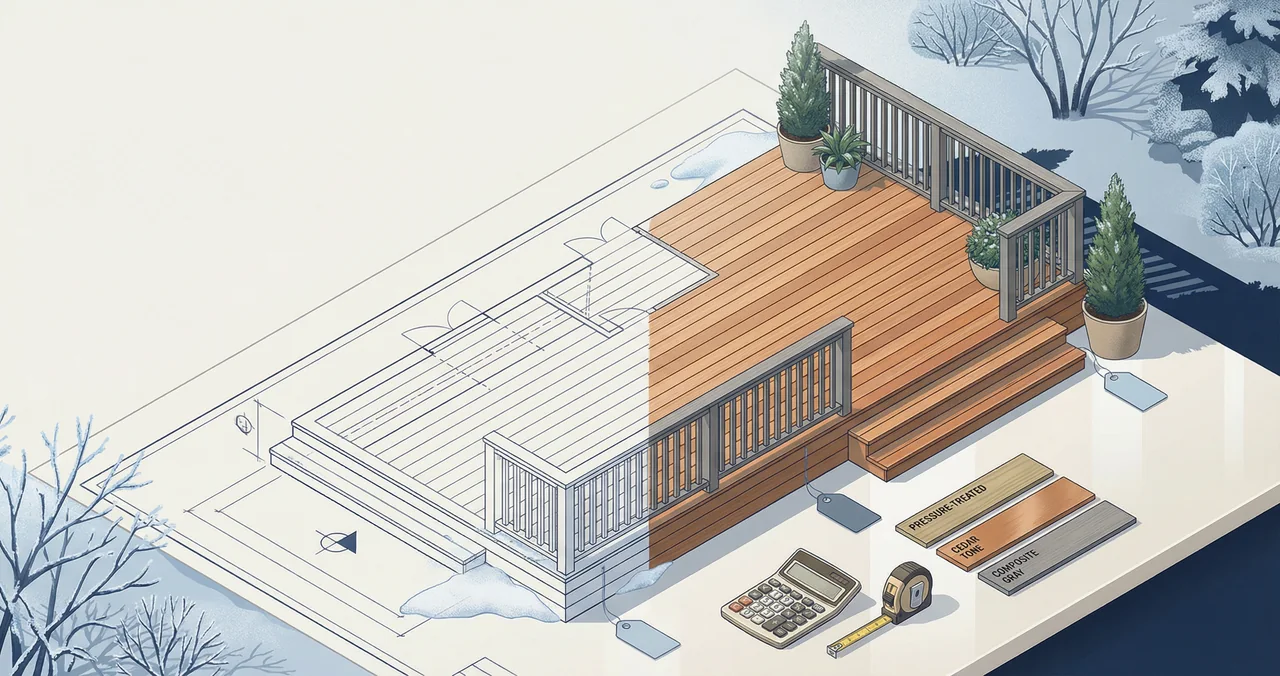
How Much Does a Deck Cost in Calgary?
If you're getting quotes for a new deck in Calgary, you've probably noticed the numbers vary wildly. One contractor says $15,000. Another says $40,000. Both might be right — it depends on size, material, and how much site prep your yard needs.
🏗️ Planning a deck project?
Get a free manual project review, or visualize your dream deck with AI before requesting quotes.
Here's the short answer: most Calgary homeowners pay between $15,000 and $45,000 CAD for a professionally built deck in 2026. A basic 12×16 pressure-treated deck comes in around $9,000–$10,500. A larger composite deck with railings and stairs can push well past $50,000.
The sections below break down exactly where that money goes — materials, labour, permits, and the Calgary-specific factors that push costs up or down.
🧮 Tool Alert: Deck Cost Calculator
Estimate your project costs in seconds based on local pricing bands for your area.
Calculate My Cost →For a broader look at deck pricing across different materials and regions, see our complete deck cost guide. Timing your build right can also save thousands — check our guide on the best time to build a deck.
Average Deck Cost in Calgary by Material
Material choice is the single biggest lever on your total price. Here's what Calgary deck builders are charging in 2026, fully installed:
| Material | Installed Cost (CAD/sq ft) | 300 sq ft Deck | 200 sq ft Deck |
|---|---|---|---|
| Pressure-treated wood | $30–$55 | $9,000–$16,500 | $6,000–$11,000 |
| Cedar | $40–$65 | $12,000–$19,500 | $8,000–$13,000 |
| Composite | $50–$85 | $15,000–$25,500 | $10,000–$17,000 |
| Trex (brand-name composite) | $55–$90 | $16,500–$27,000 | $11,000–$18,000 |
| Ipe (tropical hardwood) | $70–$120 | $21,000–$36,000 | $14,000–$24,000 |
A few things to note:
- Pressure-treated lumber is the most common choice in Calgary. It's affordable and structurally sound, but Calgary's freeze-thaw cycles will punish it if you skip annual sealing.
- Cedar looks great out of the gate but greys quickly without maintenance. Expect to stain every 1–2 years in Calgary's climate.
- Composite and Trex dominate the mid-to-high-end market. They handle Calgary winters without the annual maintenance headache. The upfront cost is higher, but you're not buying stain and sealer every spring.
- Ipe is a niche pick — incredibly durable but expensive and harder to source in Alberta.
If you're weighing composite brands available in Canada, the price gap between entry-level and premium lines is significant. Budget composites start around $50/sq ft installed; top-tier boards with realistic woodgrain textures push toward $85.
Cost Per Square Foot Breakdown
The installed per-square-foot price includes materials, labour, and basic hardware. But not every square foot costs the same. Here's how it actually breaks down for a typical composite deck in Calgary:
| Component | Approx. Cost per Sq Ft (CAD) |
|---|---|
| Decking boards | $15–$30 |
| Substructure (joists, beams, posts) | $8–$15 |
| Hardware & fasteners | $2–$5 |
| Labour | $20–$35 |
| Total | $50–$85 |
Why the Range Is So Wide
The low end assumes:
- Ground-level deck on flat terrain
- Standard 16" joist spacing
- Simple rectangular layout
- Easy site access
The high end factors in:
- Elevated decks requiring deeper footings
- Multi-level designs or angles
- Difficult access (hillside lots common in neighborhoods like Tuscany, Cougar Ridge, or Signal Hill)
- Premium board lines with matching fascia
Every cut, angle, and elevation change adds labour time. A straightforward rectangle is always cheaper per square foot than an L-shape or wraparound design.
Labour Costs in Calgary
Labour typically accounts for 40–50% of your total deck cost in Calgary. That's higher than the national average, and there are a few reasons why.
Calgary's building season is short. Realistically, outdoor construction runs May through October. Some builders push into late April or early November, but frost and snow make the work slower and more expensive. That compressed season means demand stacks up — and contractors price accordingly.
Expect to pay $20–$35 per square foot for labour on a standard deck build. Complex projects (multi-level, rooftop decks, significant elevation changes) can hit $40+ per square foot.
What Affects Labour Pricing
- Footing depth: Calgary's frost line sits at 36–60 inches depending on your specific location. Deeper footings mean more excavation, more concrete, and more hours. This isn't optional — shallow footings will heave.
- Site access: Tight side yards, sloped lots, and mature landscaping all slow the crew down. If materials have to be hand-carried to the backyard, that adds cost.
- Demolition: Removing an old deck runs $500–$2,500 CAD depending on size and disposal fees.
- Season timing: Booking your build for June or July — peak season — can cost 10–15% more than a May or September start. The sweet spot: book your contractor by March for early-season pricing and better scheduling flexibility.
What Affects Your Total Price
Beyond materials and labour, several factors specific to Calgary can push your deck cost up — sometimes significantly.
Permit Fees and Requirements
In Calgary, you need a building permit for any deck over 24 inches above grade or exceeding 100 square feet. The permit fee typically runs $200–$600 CAD depending on project value. Contact Calgary's Planning & Development department before you start — building without a permit creates real problems when you sell your home.
The permit process in Calgary usually takes 2–4 weeks. Your contractor should pull the permit (ask upfront), and the city will inspect footings before the deck goes up. Understand that skipping permits carries serious risks — the consequences are similar across Canadian provinces.
Frost and Foundation Requirements
This is where Calgary is different from, say, Vancouver. The freeze-thaw cycle is relentless here. Footings must extend below the frost line — minimum 36 inches, often 48 inches or deeper — or the deck will shift and crack.
Many Calgary builders use helical piles or sonotubes for deck foundations. Helical piles cost more upfront ($150–$300 per pile vs. $80–$150 for sonotubes) but install faster and eliminate concrete curing time. On a compressed building schedule, that speed matters.
Snow Load and Structural Design
Calgary decks need to handle serious snow load. The structural code in Alberta requires decks to support the local ground snow load, which in Calgary is roughly 1.6 kPa (about 33 lb/sq ft). Your builder should be sizing joists and beams accordingly — this isn't a place to cut corners on lumber dimensions or joist spacing.
Lot Conditions
Calgary has everything from flat suburban lots in Cranston and Auburn Bay to steep grades in Edgemont and the Slopes of Douglasdale. A hillside deck requiring 8-foot posts and complex bracing will cost 30–50% more than the same footprint on flat ground.
Railings, Stairs, and Add-Ons
These extras add up fast:
- Railings: $40–$100+ per linear foot (glass panels at the high end, aluminum at the low end)
- Stairs: $75–$200 per step, depending on width and material
- Built-in benches: $500–$1,500
- Lighting: $500–$3,000 (check out lighting kits designed for Canadian decks)
- Pergola or shade structure: $3,000–$10,000+
- Skirting: $5–$15 per linear foot
For railing systems specifically, there are several options that meet Canadian building codes — aluminum, glass, cable, and composite each have different price points and maintenance requirements.
Composite vs Wood: Cost Comparison
This is the decision most Calgary homeowners wrestle with. Here's a realistic 10-year cost comparison for a 300 sq ft deck:
| Pressure-Treated Wood | Composite | |
|---|---|---|
| Initial build cost | $9,000–$16,500 | $15,000–$25,500 |
| Annual maintenance | $200–$500/year (stain, sealer, cleaning) | $50–$100/year (cleaning only) |
| 10-year maintenance total | $2,000–$5,000 | $500–$1,000 |
| Board replacement (10 yrs) | $500–$2,000 | $0–$500 |
| 10-year total cost | $11,500–$23,500 | $15,500–$27,000 |
The gap narrows substantially over time. And here's the thing most people underestimate: in Calgary's climate, pressure-treated wood takes a beating. The freeze-thaw cycle forces moisture into cracks, which then expands as ice. Salt from winter boots accelerates the damage. Skip one year of sealing and you'll see the boards start to split and warp.
Composite and PVC decking holds up dramatically better. No sealing, no staining, no splintering. The surface sheds snow and ice more easily, and the boards won't crack from frost penetration.
If you're leaning toward low-maintenance decking options for Canadian weather, composite is the pragmatic choice for Calgary. Wood makes sense if you genuinely enjoy the annual maintenance ritual and want the lowest upfront cost.
Use PaperPlan to visualize different decking materials on your own home before committing — it's at paperplan.app and can save you from an expensive material regret.
How to Save Money on Your Calgary Deck
You don't need to sacrifice quality to bring costs down. These are the strategies that actually move the needle:
1. Build in the Shoulder Season
May and late September/October are your best windows. Contractors are less booked, and some offer off-peak pricing. Avoid the July crunch if you can.
2. Keep the Design Simple
A rectangle is cheaper than an L-shape. Ground-level is cheaper than elevated. Every angle, curve, and level change adds labour cost. A clean, simple 14×20 deck with quality materials will serve you better than a complex design built with budget boards.
3. Choose Your Splurges Strategically
Go premium on the decking surface (it's what you see and touch every day) but standard on the substructure. Pressure-treated framing under composite boards is the standard Calgary approach — and it works.
4. Get Three Quotes Minimum
Pricing varies significantly between Calgary deck builders. Get at least three detailed quotes and compare line by line. Watch for vague allowances — a good quote specifies exact materials, quantities, and labour rates.
5. Handle Demolition and Prep Yourself
If you're replacing an old deck, tearing it out yourself can save $500–$2,500. Same goes for clearing vegetation, moving landscape features, or grading the site. Just don't touch anything structural or anything that requires a permit.
6. Skip Features You Can Add Later
Lighting, built-in planters, and pergolas can all be added after the initial build. Get the deck structure right first. Add the extras in year two when your budget recovers.
For material-specific strategies, choosing the right decking material for freeze-thaw climates can prevent costly replacement down the road — the same freeze-thaw principles apply in Alberta.
🎨 Not sure which material to pick?
Upload a photo of your backyard and see exactly how Trex, TimberTech, or cedar would look — free and instant.
Frequently Asked Questions
How much does a 12×16 deck cost in Calgary?
A 12×16 deck (192 sq ft) in Calgary typically costs $5,800–$10,600 CAD for pressure-treated wood or $9,600–$16,300 CAD for composite, fully installed. These ranges include standard railings but not stairs, permits, or site prep. Add $1,000–$3,000 for stairs and railing upgrades. For reference, 12×16 deck pricing across Canadian markets follows similar patterns.
Do I need a permit to build a deck in Calgary?
Yes, in most cases. Calgary requires a building permit for decks that are over 24 inches above grade or exceed 100 square feet. Even a small ground-level deck may need a permit depending on your lot's zoning. Contact Calgary's Planning & Development department before construction starts. The permit process takes 2–4 weeks and costs $200–$600. Your contractor should handle the application, but confirm this before signing a contract.
What is the best decking material for Calgary winters?
Composite or PVC decking performs best in Calgary's harsh climate. The freeze-thaw cycle — where moisture enters wood grain, freezes, expands, and cracks the board — is particularly aggressive here. Composite boards resist moisture absorption entirely, don't splinter, and won't require annual sealing. If you prefer wood, cedar holds up better than pressure-treated lumber but still needs annual staining and sealing. Avoid untreated softwoods entirely. Check out top-performing decking materials for harsh Canadian winters for detailed comparisons.
When is the best time to build a deck in Calgary?
Book your contractor by March for a May or early June start. Calgary's outdoor building season runs roughly May through October, with peak demand in June and July. Early-season builds (May–early June) often get better pricing and scheduling priority. Fall builds (September–October) can also work well — cooler temperatures are actually easier on installers, and some contractors offer shoulder-season discounts. Avoid starting after mid-October unless your builder has experience with cold-weather installations.
Can I build my own deck in Calgary to save money?
You can, but understand the trade-offs. A DIY deck saves 30–50% on labour but takes most homeowners 3–6 weekends to complete. You'll still need permits, inspections, and footings that meet Calgary's frost depth requirements. Mistakes with footings or structural framing in Calgary's climate can lead to costly repairs within a few years. If you go the DIY route, at minimum hire a professional for the foundation work — getting the footings right in Calgary soil is critical. Learn more about the realities of building your own deck.
📋 Planning a deck project?
Get a free manual project review from our team — no obligation, no spam.
Get Free Project Review →Upload a backyard photo and preview real decking materials with AI — free, instant, no sign-up.
Permits, costs, material comparisons, and questions to ask before requesting quotes — delivered to your inbox.