
Deck Cost in St. Louis (2026)
What does a deck cost in St. Louis in 2026? Get real pricing by material, labor rates, and money-saving tips for Missouri homeowners building this year.
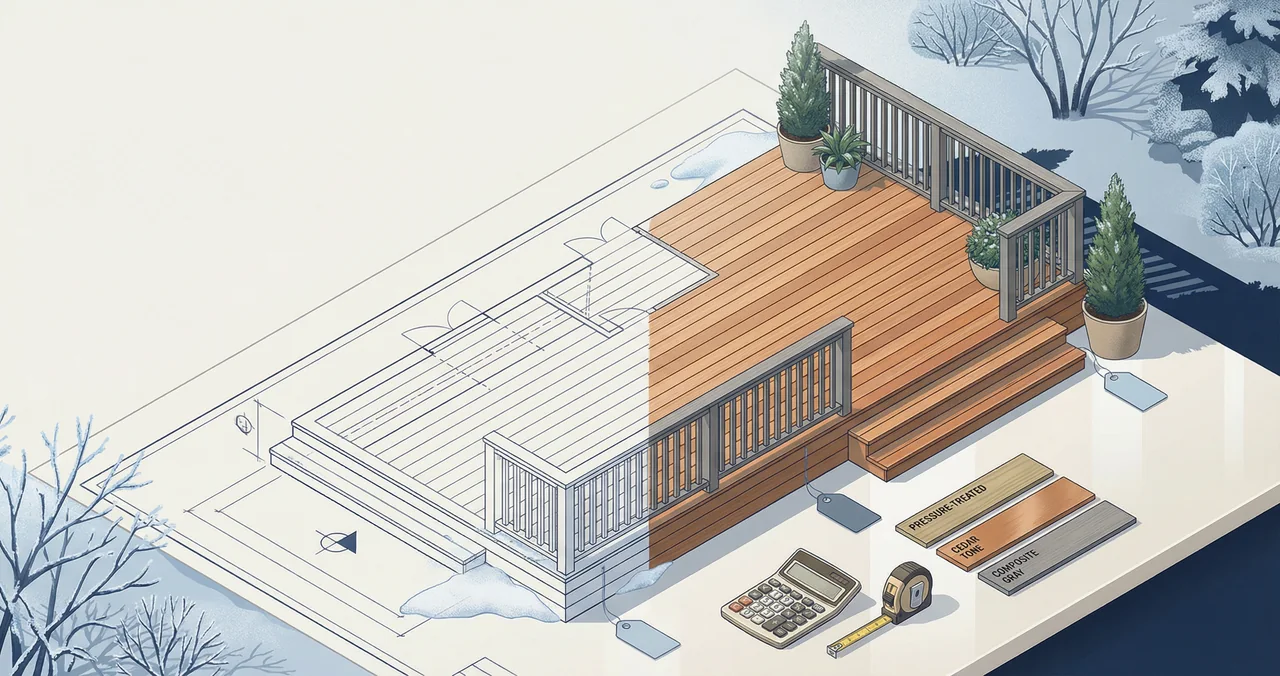
Deck Cost in St. Louis: What Homeowners Are Paying in 2026
A new deck in St. Louis runs anywhere from $8,000 to $30,000+ depending on size, materials, and complexity. That's a wide range — and the difference usually comes down to whether you're building a basic 12×14 pressure-treated platform or a multi-level composite entertaining space with built-in seating and lighting.
🏗️ Planning a deck project?
Get a free manual project review, or visualize your dream deck with AI before requesting quotes.
🧮 Tool Alert: Deck Cost Calculator
Estimate your project costs in seconds based on local pricing bands for your area.
Calculate My Cost →St. Louis homeowners face a specific challenge that drives costs: the freeze-thaw cycle. Footings need to reach 36 to 60 inches deep to get below the frost line, and that foundation work adds real money before a single deck board goes down. The materials you choose matter more here than in milder climates because Missouri winters punish wood that isn't properly sealed.
Here's what you can actually expect to pay in 2026.
<!-- slot:after-intro -->
For a broader look at deck pricing across different materials and regions, see our deck cost guide.
Average Deck Cost in St. Louis by Material
Material choice is the single biggest factor in your total cost. Here's what St. Louis contractors are charging in 2026, fully installed:
| Material | Installed Cost Per Sq Ft | 12×16 Deck (192 sq ft) | 16×20 Deck (320 sq ft) |
|---|---|---|---|
| Pressure-treated wood | $25–$45 | $4,800–$8,640 | $8,000–$14,400 |
| Cedar | $35–$55 | $6,720–$10,560 | $11,200–$17,600 |
| Composite | $45–$75 | $8,640–$14,400 | $14,400–$24,000 |
| Trex (brand-specific) | $50–$80 | $9,600–$15,360 | $16,000–$25,600 |
| Ipe (hardwood) | $60–$100 | $11,520–$19,200 | $19,200–$32,000 |
These prices include materials, labor, standard railings, and basic stairs. They don't include permits, complex designs, or add-ons like built-in benches or pergolas.
Pressure-treated lumber remains the most popular choice across neighborhoods like South City, Affton, and Oakville — primarily because of the upfront savings. But factor in annual staining and sealing, and the gap between treated wood and composite narrows over a 10-year span.
Cost Per Square Foot Breakdown
Understanding what you're paying per square foot helps you compare quotes accurately. Here's how a typical St. Louis deck cost breaks down:
- Decking boards: 40–50% of total cost
- Framing and substructure: 15–20%
- Footings and foundation: 10–15% (higher in St. Louis due to frost depth requirements)
- Railings and stairs: 10–15%
- Labor: 30–40% of total project cost
- Fasteners, hardware, flashing: 3–5%
For a standard 320 sq ft composite deck, you're looking at roughly:
- Materials: $9,500–$14,000
- Labor: $6,500–$10,000
- Permits and inspection: $150–$500
- Total: $16,000–$24,500
The footing cost is worth calling out. In cities with shallow frost lines, contractors can use basic sono tubes and be done in an afternoon. In St. Louis, those footings need to go 3 to 5 feet deep. That means more concrete, more digging (or augering), and more labor hours.
Labor Costs in St. Louis
Labor typically runs $15–$35 per square foot in the St. Louis metro area, depending on the complexity of your project and the contractor's experience level. That translates to roughly 30–40% of your total deck cost.
Several factors push labor costs in St. Louis:
- Shorter building season. Most deck construction happens between May and October. That compressed window means contractor schedules fill fast. If you wait until April to start calling around, you might not get on a schedule until July — or you'll pay a premium for a faster start.
- Frost line requirements. Deeper footings mean more site prep and excavation time compared to southern states.
- Permitting and inspections. The city requires footing inspections before you can pour, which adds scheduling coordination.
Book your contractor by March. Seriously. The best builders in the metro — from Chesterfield to Ballwin to Webster Groves — lock in their spring and summer schedules early. Getting quotes in February and signing a contract by March gives you the best shot at competitive pricing and a May start date.
Labor rates also vary by project type:
| Project Type | Labor Cost Per Sq Ft |
|---|---|
| Ground-level, simple layout | $15–$22 |
| Elevated deck (4+ feet) | $22–$30 |
| Multi-level or wraparound | $28–$35 |
| Second-story or complex access | $30–$35+ |
<!-- slot:mid-content -->
What Affects Your Total Price
Beyond materials and labor, these factors can swing your budget significantly:
Deck Size and Layout
A simple rectangle is the most cost-effective shape. Every angle, curve, or level change adds labor and material waste. A multi-level deck with an angled staircase can cost 20–30% more than a same-square-footage rectangle.
Elevation and Access
If your yard slopes — common in neighborhoods like Kirkwood, Crestwood, and parts of South County — the substructure gets more complex. Posts need to be longer, cross-bracing becomes necessary, and your contractor may need equipment access that flat lots don't require. Elevated decks over 30 inches above grade also trigger permit requirements in St. Louis.
Permits and Code Requirements
In St. Louis, deck permits are typically required for structures over 200 sq ft or 30 inches above grade. Contact St. Louis's Building/Development Services department before breaking ground. Permit fees generally run $150–$400 depending on project scope.
You'll need to meet specific code requirements for:
- Footing depth (below the frost line — 36 to 60 inches)
- Railing height (36 inches minimum for residential decks under 30 inches; 42 inches for higher)
- Joist spacing and load capacity (especially important given St. Louis snow loads)
- Ledger board attachment (if connecting to your house)
Skipping permits might save you a few hundred dollars upfront, but it creates real problems when you sell your home. Inspectors catch unpermitted work, and you could be forced to tear down and rebuild. Not worth it. For more on why permits matter, see this overview of the risks of building without a permit.
Add-Ons That Increase Cost
- Built-in benches: $1,500–$3,500
- Pergola or shade structure: $3,000–$8,000
- Deck lighting (low-voltage LED): $800–$2,500
- Under-deck drainage system: $1,500–$4,000
- Built-in planters or privacy screens: $500–$2,000
Removal of an Existing Deck
Tearing out an old deck before building new typically adds $5–$15 per square foot, or $1,000–$4,800 for a standard-sized deck. Disposal fees in St. Louis vary by hauler, but budget $300–$600 for a dumpster rental.
Composite vs Wood: Cost Comparison
This is the decision most St. Louis homeowners wrestle with. Here's an honest comparison:
| Factor | Pressure-Treated Wood | Composite |
|---|---|---|
| Upfront cost (320 sq ft) | $8,000–$14,400 | $14,400–$24,000 |
| Annual maintenance cost | $200–$500 (stain + seal) | $0–$50 (occasional cleaning) |
| 10-year total cost | $10,000–$19,400 | $14,400–$24,500 |
| Lifespan | 10–15 years (with maintenance) | 25–30+ years |
| Freeze-thaw resistance | Moderate (needs sealing) | Excellent |
| Warranty | 1–2 years (structural) | 25–50 years (depending on brand) |
In St. Louis specifically, composite and PVC hold up significantly better than wood. The freeze-thaw cycles that run from November through March are brutal on unsealed wood. Water gets into the grain, freezes, expands, and splits boards from the inside. If you miss even one season of staining, you'll see the damage by spring.
Pressure-treated wood also takes a beating from road salt tracked onto your deck during winter. Salt accelerates wood degradation and corrosion of fasteners.
If budget is the top priority, pressure-treated wood still makes sense — but commit to annual maintenance. Stain and seal every year, ideally in September or October before the first freeze. If you know you won't keep up with that, composite saves you money and headaches long-term.
For a deeper look at how different materials handle harsh winters, check out this guide on the best decking materials for freeze-thaw climates. The climate challenges are nearly identical.
Use PaperPlan to visualize different decking materials on your own home before committing — seeing composite versus cedar on your actual house helps make the decision concrete.
How to Save Money on Your St. Louis Deck
You don't have to cut corners to bring costs down. Here are strategies that actually work:
1. Build in the Off-Season
Contractors in St. Louis are hungriest for work in late October through early March. Some will discount labor by 10–15% for projects scheduled in the shoulder months. Foundation work can still happen in fall before the ground freezes hard, with decking installed in early spring.
2. Keep the Design Simple
A rectangular deck with a single level is the most cost-efficient layout. Every corner, angle, and level change adds complexity and cost. If you want visual interest, invest in a premium railing system or quality lighting instead of architectural complexity.
3. Use Pressure-Treated for the Substructure
Even if you choose composite decking boards, the framing underneath can be pressure-treated lumber. Nobody sees the joists, and treated wood performs well as substructure since it's protected from direct weather exposure. This hybrid approach can save 15–20% compared to an all-composite or aluminum framing system.
4. Get Multiple Quotes (Minimum Three)
Pricing varies widely across the St. Louis metro. A contractor based in Ladue may quote very differently from one in Arnold or O'Fallon. Get at least three quotes, and make sure each includes the same scope of work. Compare line by line — not just bottom-line totals.
5. Do Some Prep Work Yourself
Demolishing your old deck, clearing the site, or handling disposal yourself can knock $1,000–$3,000 off the project. Just be honest about your capabilities — don't take on structural work without experience.
6. Plan Your Size Carefully
Every extra square foot adds $25–$80 to your project depending on material. Measure your furniture, plan your traffic flow, and build what you'll actually use. A well-designed 14×16 deck often functions better than a sprawling 20×20 that wastes space. For reference, see what a larger deck project costs to understand how size scales pricing.
7. Time Your Material Purchases
Lumber prices fluctuate seasonally. Pressure-treated wood often hits its lowest prices in late fall and winter when demand drops. If you're doing a spring build, buying materials in January or February and storing them can save money — just keep them off the ground and covered.
<!-- slot:before-faq -->
🎨 Not sure which material to pick?
Upload a photo of your backyard and see exactly how Trex, TimberTech, or cedar would look — free and instant.
Frequently Asked Questions
How much does a 12×16 deck cost in St. Louis?
A 12×16 deck (192 sq ft) in St. Louis costs between $4,800 and $15,360 installed, depending on material. Pressure-treated wood comes in at the low end ($4,800–$8,640), while Trex or premium composite runs $9,600–$15,360. Add $1,500–$4,000 for extras like railings upgrades, stairs, or built-in features.
Do I need a permit to build a deck in St. Louis?
In most cases, yes. St. Louis typically requires permits for decks over 200 sq ft or more than 30 inches above grade. You'll need to submit a site plan and structural drawings. Contact St. Louis's Building/Development Services department for current requirements and fees. Even if your deck falls under the threshold, check first — rules can vary by neighborhood and zoning district.
What is the best decking material for St. Louis weather?
Composite or PVC decking handles St. Louis weather best. The freeze-thaw cycles between November and March are hard on wood, causing splitting and warping if it's not sealed annually. Composite resists moisture absorption, won't splinter, and needs minimal maintenance. If you prefer the look of real wood, cedar with annual staining is your next best option — it naturally resists rot better than pressure-treated pine. Read more about the best low-maintenance decking options for cold-weather performance.
When is the best time to build a deck in St. Louis?
The ideal building window is May through October, with May and June being the sweet spot — warm enough for consistent work, and early enough to enjoy the deck all summer. However, the key move is to start planning and booking contractors by March. The best builders fill their spring schedules months in advance. For more on seasonal timing, see best time to build a deck.
Is it cheaper to build a deck or a patio in St. Louis?
A basic concrete patio costs $8–$16 per square foot installed — significantly less than most decking options. However, patios require a level surface (or expensive grading), don't work well on slopes, and can't be easily elevated for views or second-story access. Decks offer more design flexibility, better drainage underneath, and higher property value returns. For a flat backyard where elevation isn't needed, a patio may save you 40–60%. On sloped lots — common in many St. Louis County neighborhoods — a deck is often the more practical and cost-effective choice. Compare your options with this patio vs. deck breakdown.
<!-- slot:end -->
📋 Planning a deck project?
Get a free manual project review from our team — no obligation, no spam.
Get Free Project Review →Upload a backyard photo and preview real decking materials with AI — free, instant, no sign-up.
Permits, costs, material comparisons, and questions to ask before requesting quotes — delivered to your inbox.