
Deck Permits in St. Louis (2026)
Need a deck permit in St. Louis? Learn requirements, fees, building codes, setback rules, and how to apply. Updated for 2026 with local costs and timelines.
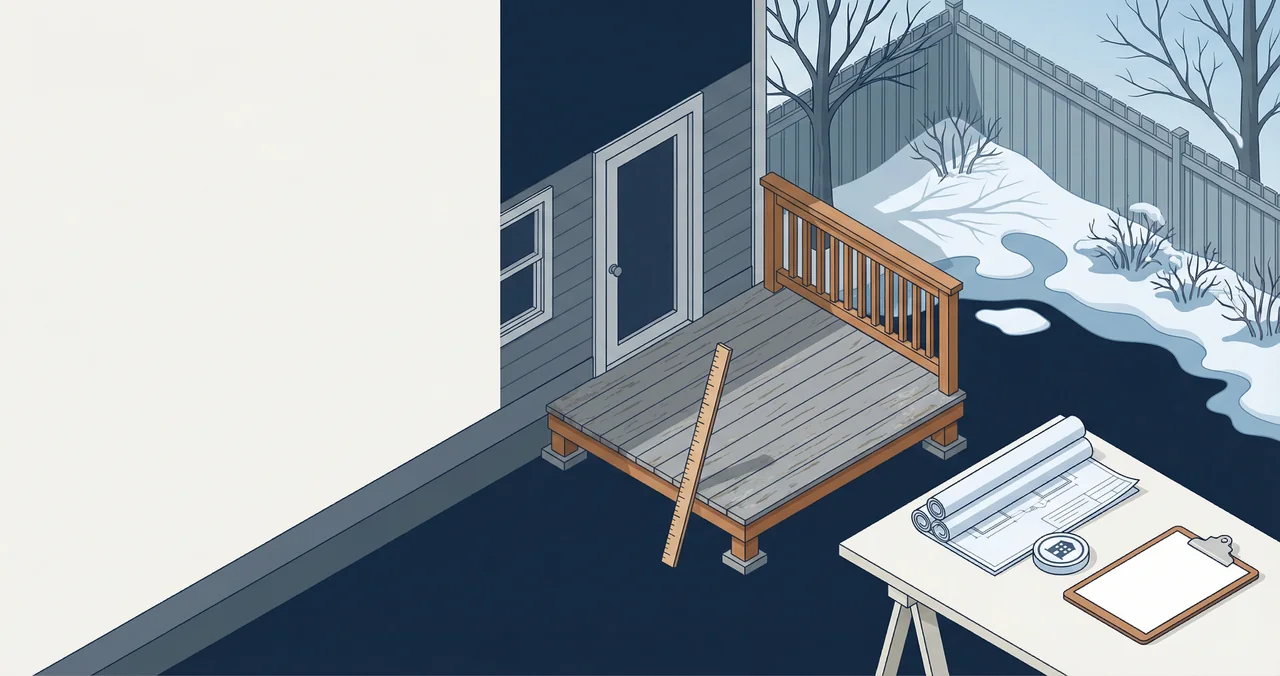
Deck Permits in St. Louis: Requirements, Costs & How to Apply in 2026
If you're planning a deck project in St. Louis, the permit question is probably one of the first things on your mind. Skip it, and you risk fines, forced demolition, or a nasty surprise when you try to sell your home. Get it right, and the process is straightforward — a few forms, a few weeks, and you're building.
🏗️ Planning a deck project?
Get a free manual project review, or visualize your dream deck with AI before requesting quotes.
📋 Tool Alert: Permit Checker
Do you really need a permit? Check the exact rules for your city or township.
Check Permits →Here's everything you need to know about deck permits in St. Louis for 2026, including what triggers the requirement, what it costs, and how to navigate the city's building codes.
<!-- slot:after-intro -->
Do You Need a Permit in St. Louis?
Short answer: almost certainly yes.
In St. Louis, Missouri, a building permit is required for most deck construction. The city's Building Division — part of the Department of Public Safety — enforces the International Residential Code (IRC) with local amendments. The general rule:
- Decks over 200 square feet require a permit
- Decks more than 30 inches above grade require a permit
- Any deck attached to the house typically requires a permit, regardless of size
Even a modest 12×16 deck (192 sq ft) can trigger the requirement if it's attached to your home or elevated. And in St. Louis, where many homes sit on sloped lots — especially in neighborhoods like Clifton Heights, The Hill, and South City — hitting that 30-inch threshold is common.
When You Don't Need a Permit
There are limited exceptions:
- Freestanding ground-level decks under 200 square feet and less than 30 inches above grade
- Simple platform decks sitting directly on the ground with no permanent footings
Even if your project falls into these categories, you still need to comply with setback requirements and zoning regulations. A permit-exempt deck that violates your property's setback lines is still illegal.
When a Permit Is Required
Let's get specific. You will need a deck permit in St. Louis if your project involves any of the following:
- New deck construction over 200 sq ft or 30+ inches above grade
- Structural modifications to an existing deck (replacing posts, beams, or ledger boards)
- Adding a roof or pergola over a deck
- Enclosing a deck with screens or walls
- Building a multi-level deck or one with stairs
- Adding electrical or plumbing (outdoor kitchen, hot tub wiring) — these require separate permits
Replacing deck boards on an existing, structurally sound frame generally does not require a permit. Same for cosmetic updates like staining, sealing, or adding furniture. But if you're swapping out railing systems, check first — railing height and spacing are code-regulated.
If you're weighing whether to attach your deck to the house or build freestanding, the permit implications differ. An attached deck must meet stricter ledger board fastening requirements. Learn more about attached vs. freestanding deck permits to understand the structural tradeoffs.
Permit Fees & Processing Time
How Much Does a Deck Permit Cost in St. Louis?
Permit fees in St. Louis are based on the estimated project value. Here's what to expect for 2026:
| Project Value | Approximate Permit Fee |
|---|---|
| Under $5,000 | $75–$125 |
| $5,000–$15,000 | $125–$250 |
| $15,000–$30,000 | $250–$400 |
| Over $30,000 | $400–$600+ |
Most standard deck projects in St. Louis fall in the $125–$400 range for permit fees. To put that in context against total project costs:
| Deck Material | Installed Cost (per sq ft) | 300 sq ft Deck Total |
|---|---|---|
| Pressure-treated wood | $25–$45 | $7,500–$13,500 |
| Cedar | $35–$55 | $10,500–$16,500 |
| Composite | $45–$75 | $13,500–$22,500 |
| Trex (premium composite) | $50–$80 | $15,000–$24,000 |
| Ipe (hardwood) | $60–$100 | $18,000–$30,000 |
A permit fee of $200–$300 on a $15,000 deck project is roughly 1.5–2% of your total cost. Not worth skipping.
For more detail on material pricing, check out the composite deck builders in St. Louis guide.
How Long Does It Take?
- Standard review: 10–15 business days
- Expedited review: 5–7 business days (additional fee, typically $50–$100)
- Inspections: Scheduled within 24–48 hours of request during peak season
Plan your timeline around St. Louis's building season. May through October is prime construction time, and the Building Division sees its heaviest volume from April through June. Submit your application in February or March to get approved before the rush.
St. Louis's harsh winters mean contractor schedules compress into a shorter window. Book your contractor by March if you want a summer build — by April, the best crews are booked out weeks.
<!-- slot:mid-content -->
Building Codes & Setback Rules
St. Louis follows the 2021 International Residential Code (IRC) with local amendments. Here are the key requirements for residential decks:
Structural Requirements
- Footings must extend below the frost line: In the St. Louis region, that's 36 inches minimum. Some areas require up to 42 inches depending on soil conditions. This is non-negotiable — St. Louis's freeze-thaw cycles will heave shallow footings right out of the ground.
- Ledger board attachment: Must use ½-inch lag screws or through-bolts spaced per IRC Table R507.9.1.3. Flashing is required between the ledger and house.
- Beam and joist sizing: Must meet span tables in IRC Section R507. A 2×8 joist can typically span 10.5 feet at 16-inch centers with pressure-treated southern pine.
- Post-to-beam connections: Require approved metal connectors — no notch-and-nail.
Railing Requirements
- Guardrails required when the deck surface is 30 inches or more above grade
- Minimum railing height: 36 inches for residential decks (42 inches for commercial)
- Baluster spacing: No more than 4 inches between balusters (the "4-inch sphere rule")
- Graspable handrail required on stairs
Setback Rules
St. Louis zoning varies by district, but typical residential setbacks are:
- Rear setback: 25 feet from the rear property line (varies by zoning district)
- Side setback: 3–5 feet minimum from side property lines
- Easements: Decks cannot encroach on utility or drainage easements
Check your specific lot. Pull up your property's zoning classification on the St. Louis Assessor's website or call the Building Division at (314) 622-3313. Setbacks in neighborhoods like Soulard, Tower Grove, and Lafayette Square may have additional historic district overlay requirements.
If your lot sits near an easement, understand the rules around building near easements before you design your layout.
Climate-Specific Code Considerations
St. Louis weather is brutal on decks. The combination of hot, humid summers and freezing winters with heavy snow creates unique challenges:
- Snow load: Decks must be designed for a minimum ground snow load of 20 psf in St. Louis. Roof-covered decks need higher load ratings.
- Freeze-thaw cycles: Footings must extend below frost line to prevent heaving. Concrete piers are preferred over deck blocks.
- Moisture management: Proper flashing, drainage, and ventilation prevent rot and mold. This is especially critical for attached decks where water can infiltrate the house rim joist.
- Material selection: Composite and PVC decking hold up best against St. Louis's climate swings. Pressure-treated wood works but requires annual sealing to resist moisture absorption and salt damage from winter de-icing.
Use PaperPlan to visualize different decking materials on your own home before committing — seeing how composite vs. cedar actually looks against your siding can save you from an expensive mistake.
How to Apply for a Deck Permit in St. Louis
Step 1: Prepare Your Documents
You'll need:
- Site plan showing your property boundaries, the house footprint, and the proposed deck location with dimensions and setbacks
- Construction drawings showing framing plan, footing details, ledger attachment, railing details, and a cross-section
- Material specifications (species and grade of lumber, or manufacturer specs for composite)
- Proof of property ownership or contractor authorization
- Contractor license information (if using a contractor)
Drawings don't need to be architect-grade, but they must be clear, legible, and to scale. Many St. Louis contractors include permit drawings in their project scope.
Step 2: Submit Your Application
You have two options:
In person: Visit the Building Division at 1200 Market Street, Room 425, St. Louis, MO 63103. Bring two copies of all documents.
Online: St. Louis has been expanding digital permitting. Check the city's online permit portal for current e-filing availability.
Step 3: Plan Review
A plans examiner reviews your submission for code compliance. Common reasons for rejection:
- Incomplete drawings (missing footing details or cross-sections)
- Setback violations
- Inadequate footing depth (must meet frost line requirements)
- Missing ledger board flashing details
If corrections are needed, you'll receive a revision letter. Respond promptly — resubmissions go back into the review queue.
Step 4: Receive Your Permit
Once approved, you'll receive your building permit. Post it visibly at the job site — inspectors will look for it.
Step 5: Schedule Inspections
St. Louis typically requires two inspections for deck projects:
1. Footing/foundation inspection — after holes are dug but before pouring concrete
2. Final inspection — after the deck is complete, including railings and stairs
Some projects require a framing inspection between the two. Your permit will specify which inspections are required.
Pro tip: Don't backfill footings or install decking before your footing inspection. If the inspector can't see the work, you may have to tear it out.
What Happens If You Build Without a Permit
Building a deck without a permit in St. Louis isn't just a gamble — it's a documented risk with real consequences:
- Stop-work order: The city can halt construction immediately if an inspector spots unpermitted work
- Fines: Penalties start at $100–$500 per violation and can increase with repeat offenses or refusal to comply
- Forced removal: In extreme cases, the city can require you to demolish the deck entirely
- Double permit fees: If you apply after the fact, expect to pay double the standard permit fee
- Home sale complications: Unpermitted structures show up during buyer inspections and title searches. Buyers walk, or they demand price reductions
- Insurance denial: Your homeowner's insurance may deny a claim for injuries or damage involving an unpermitted structure
- Liability: If someone is injured on an unpermitted deck, you face personal liability without insurance backing
The risks are especially high in St. Louis's established neighborhoods where neighbors and neighborhood associations actively report construction activity. Understand the full scope of building without a permit before you consider it.
Bottom line: A $200 permit fee protects a $15,000+ investment. There's no rational reason to skip it.
<!-- slot:before-faq -->
🎨 Not sure which material to pick?
Upload a photo of your backyard and see exactly how Trex, TimberTech, or cedar would look — free and instant.
Frequently Asked Questions
How much does a deck permit cost in St. Louis?
Most residential deck permits in St. Louis cost between $125 and $400, depending on the total project value. The fee is calculated as a percentage of estimated construction costs. Budget $200–$300 for a typical backyard deck project. Expedited review adds another $50–$100 if you need faster approval.
Can I build a small deck without a permit in St. Louis?
Possibly. A freestanding deck under 200 square feet and less than 30 inches above grade may be exempt from permit requirements. However, you must still comply with zoning setbacks and property line regulations. If the deck is attached to your house, a permit is almost always required regardless of size. When in doubt, call the Building Division at (314) 622-3313 — a quick phone call beats a stop-work order.
How deep do deck footings need to be in St. Louis?
Deck footings in St. Louis must extend at least 36 inches below grade to get below the frost line. Some areas with expansive clay soils may require 42 inches or deeper. This is critical — St. Louis experiences significant freeze-thaw cycling from November through March, and shallow footings will shift, crack, and compromise your entire deck structure. Always confirm the exact depth requirement with the Building Division for your specific lot.
How long does it take to get a deck permit approved in St. Louis?
Standard plan review takes 10–15 business days. Expedited review is available for 5–7 business days with an additional fee. During peak season (April–June), expect the longer end of that range. To hit a May or June build start, submit your application in February or March. If revisions are required, add another 5–10 days for resubmission and re-review.
Do I need a permit to replace deck boards in St. Louis?
Generally no — replacing deck boards on an existing, structurally sound frame is considered maintenance and doesn't require a permit. But if you're replacing structural components like joists, beams, posts, or the ledger board, that's a structural modification and a permit is required. Swapping out railing systems may also trigger a permit requirement since railings are code-regulated safety features. If you're doing a full deck renovation that changes the footprint or structure, get a permit.
What's the best time to apply for a deck permit in St. Louis?
February or March. St. Louis's building season runs May through October, and contractor schedules fill fast. Submitting your permit application in late winter gives you time for review, potential revisions, and contractor scheduling before the prime building months. By April, the Building Division is swamped and the best contractors are booked weeks out.
<!-- slot:end -->
📋 Planning a deck project?
Get a free manual project review from our team — no obligation, no spam.
Get Free Project Review →Upload a backyard photo and preview real decking materials with AI — free, instant, no sign-up.
Permits, costs, material comparisons, and questions to ask before requesting quotes — delivered to your inbox.