
Deck Cost in Kansas City (2026)
What does a deck cost in Kansas City in 2026? Get real pricing by material, labor rates, and money-saving tips for KC homeowners building this year.
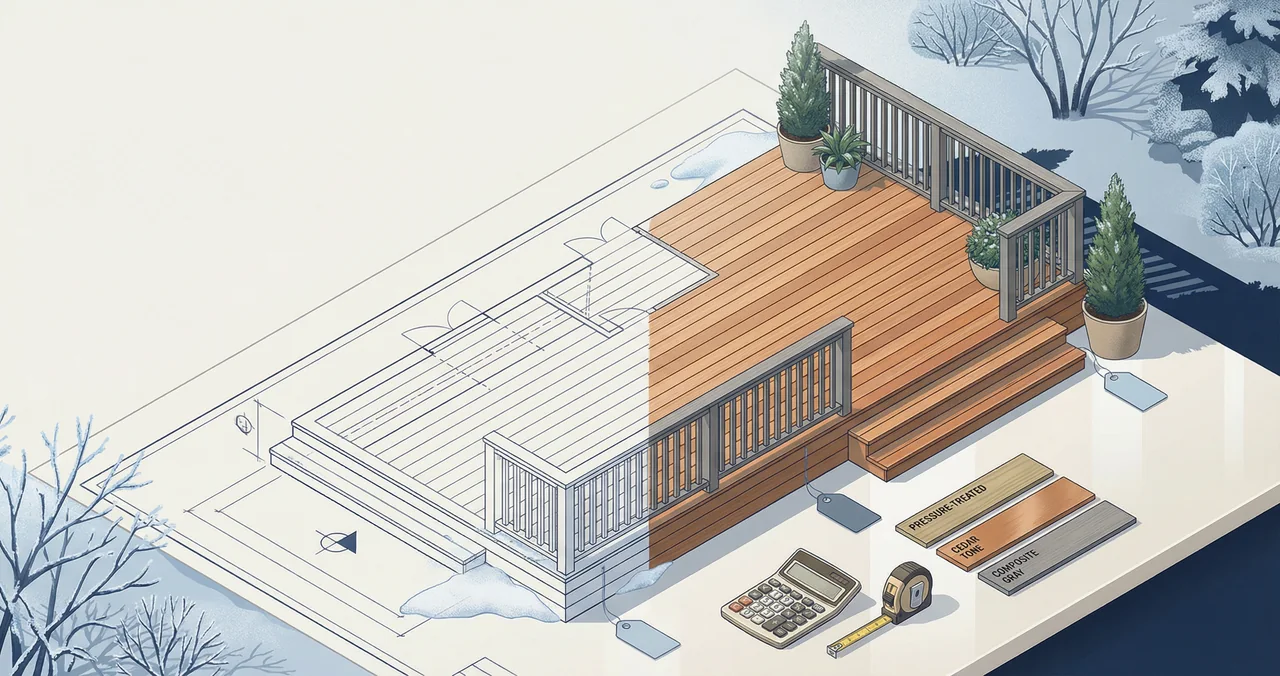
Deck Cost in Kansas City: What Homeowners Are Paying in 2026
A new deck in Kansas City runs anywhere from $8,000 to $30,000+ depending on size, material, and complexity. That's a wide range — and not very helpful if you're trying to set a realistic budget.
🏗️ Planning a deck project?
Get a free manual project review, or visualize your dream deck with AI before requesting quotes.
🧮 Tool Alert: Deck Cost Calculator
Estimate your project costs in seconds based on local pricing bands for your area.
Calculate My Cost →Here's what actually drives the price: material choice, deck size, how high off the ground you're building, and whether you need deep footings to get below Kansas City's 36- to 60-inch frost line. Those footings alone can add $1,000–$3,000 to a project compared to cities with shallower frost depths.
Below is a full breakdown of what KC homeowners are paying in 2026, material by material, with local labor rates and practical ways to trim the budget without cutting corners.
<!-- slot:after-intro -->
For a broader look at deck pricing across different materials and regions, see our deck cost guide. Timing your build right can also save thousands — check our guide on the best time to build a deck.
Average Deck Cost in Kansas City by Material
For a standard 12x16 deck (192 sq ft), here's what you can expect to pay fully installed in the Kansas City metro:
| Material | Installed Cost (Total) | Price Range per Sq Ft |
|---|---|---|
| Pressure-treated wood | $4,800 – $8,640 | $25 – $45 |
| Cedar | $6,720 – $10,560 | $35 – $55 |
| Composite | $8,640 – $14,400 | $45 – $75 |
| Trex (premium composite) | $9,600 – $15,360 | $50 – $80 |
| Ipe (hardwood) | $11,520 – $19,200 | $60 – $100 |
These prices include materials, labor, standard railing, and basic stairs. They don't include permits, demolition of an existing deck, or upgrades like built-in benches or lighting.
Most KC homeowners land somewhere in the $10,000–$18,000 range once they pick a mid-grade composite and add a set of stairs and simple railing.
Cost Per Square Foot Breakdown
The per-square-foot price is the fastest way to compare quotes. But keep in mind — smaller decks cost more per square foot because setup, permits, and mobilization costs get spread over fewer feet.
Typical installed cost per square foot in Kansas City (2026):
- Pressure-treated pine: $25–$45/sq ft
- Cedar: $35–$55/sq ft
- Composite (mid-range): $45–$75/sq ft
- Trex Transcend / Select: $50–$80/sq ft
- Ipe hardwood: $60–$100/sq ft
A few things push you toward the higher end of each range:
- Multi-level designs with separate platforms
- Elevated decks requiring taller posts and additional bracing
- Curved or angled edges that increase cutting waste and labor time
- Premium railing systems like cable rail or glass panels
For a deeper look at how size impacts total price, the cost dynamics are similar to what homeowners see in 12x16 deck builds and larger 16x20 projects — scale up the footprint and you'll see material costs rise but per-square-foot prices drop.
Labor Costs in Kansas City
Labor typically accounts for 50–65% of your total deck cost in Kansas City. That's slightly higher than the national average, and there's a straightforward reason: KC's shorter building season compresses contractor schedules.
What deck builders in Kansas City typically charge:
- General labor rate: $30–$50 per square foot (included in installed prices above)
- Footing excavation: $200–$500 per footing, depending on depth
- Demolition of old deck: $1,000–$3,000 for a standard-sized deck
- Stair construction: $500–$1,500 per flight
- Railing installation: $20–$50 per linear foot
Why KC Labor Runs Higher
Kansas City sits right in the transition zone where frost line depths vary from 36 to 60 inches. Your inspector will require footings below the frost line to prevent heaving, and that means more excavation, more concrete, and more labor hours than you'd see in warmer climates.
The building season realistically runs May through October. Contractors who are good stay booked solid through this window. If you wait until April to start calling around, you might not get on the schedule until midsummer — or you'll pay a premium for a faster start.
Book your contractor by March. This is the single most practical piece of scheduling advice for KC deck projects.
<!-- slot:mid-content -->
What Affects Your Total Price
Eight factors move the needle on your final invoice. Some you control, some you don't.
1. Deck Size
The obvious one. A 200 sq ft deck and a 400 sq ft deck won't cost double — the larger deck benefits from economies of scale — but size is still the biggest cost driver.
2. Material Choice
This is where you make the biggest decision. Pressure-treated wood at $25/sq ft installed versus Trex at $50–$80/sq ft can mean a $5,000–$10,000 difference on the same footprint.
3. Deck Height and Footings
Ground-level decks are cheapest. Once you're 30+ inches above grade, you need railings (code requirement), deeper posts, and more structural support. In Kansas City specifically, footing depths of 36–60 inches mean more concrete and excavation than builders deal with in, say, Houston or Phoenix.
4. Permits and Inspections
In Kansas City, Missouri, deck permits are typically required for structures over 200 sq ft or 30 inches above grade. Contact Kansas City's Building/Development Services department before breaking ground. Permit fees generally run $100–$500 depending on project scope. Building without a permit is risky — it can create real problems when you sell your home.
5. Railing Style
Basic wood railings might add $15–$25 per linear foot. Composite railings run $30–$45. Cable or glass panel systems can hit $60–$100+ per linear foot. For a 200 sq ft deck with 50 linear feet of railing, that's a $750–$5,000 swing. Check out the best railing systems to compare options.
6. Stairs and Access Points
Every set of stairs adds $500–$1,500. Multiple access points, wider stairs, or wraparound steps push costs further.
7. Site Conditions
Sloped yards require more grading and potentially retaining elements. Rocky soil makes footing excavation slower and more expensive. Tight access (no way to get a mini excavator back there) means hand-digging.
8. Season and Timing
Book during peak season (June–August) without advance planning and you'll pay top dollar. Off-season quotes in late fall or early spring can be 10–15% lower, though you'll need to wait for spring to build.
Composite vs Wood: Cost Comparison
This is the question most Kansas City homeowners wrestle with. Here's the honest comparison.
| Factor | Pressure-Treated Wood | Composite (Mid-Range) |
|---|---|---|
| Installed cost (per sq ft) | $25 – $45 | $45 – $75 |
| Lifespan | 10 – 15 years | 25 – 50 years |
| Annual maintenance | Stain/seal every 1–2 years | Occasional wash |
| Maintenance cost (yearly) | $200 – $500 | $0 – $50 |
| 10-year total cost* | $6,800 – $13,640 | $8,640 – $14,900 |
| Freeze-thaw resistance | Moderate (needs sealing) | Excellent |
| Snow/ice performance | Can crack, warp, splinter | Holds up well |
*\*Based on 192 sq ft deck with annual maintenance factored in.*
The Kansas City Climate Factor
This is where composite pulls ahead in ways the spreadsheet doesn't fully capture. KC's freeze-thaw cycles are brutal on wood. Water seeps into grain, freezes, expands, and cracks the board from the inside out. Over five to seven harsh winters, an unsealed wood deck deteriorates fast.
Pressure-treated wood *can* handle it — but only if you're religious about annual sealing against moisture and salt. Most homeowners aren't, and that's when boards start cupping, splitting, and turning gray.
Composite and PVC hold up best in Kansas City's climate. The upfront premium pays for itself in reduced maintenance and longer life. If you're exploring the best materials for freeze-thaw climates, composite consistently ranks at the top.
For homeowners who still prefer the look of real wood, cedar is the middle ground — naturally more rot-resistant than pressure-treated, though it still needs periodic staining. The best low-maintenance decking options are worth reviewing if upkeep is a dealbreaker.
Use PaperPlan to visualize different decking materials on your own home before committing — it's at paperplan.app and takes the guesswork out of color and texture decisions.
How to Save Money on Your Kansas City Deck
You don't need to compromise on quality to bring the price down. These are real strategies KC homeowners use.
Book Early, Build in Shoulder Season
Contact builders in January or February for a May start. You'll get better pricing and first pick of scheduling. Late-season builds (September–October) can also yield better quotes as contractors try to fill their calendars before winter.
Keep the Design Simple
Rectangles cost less than curves. One level costs less than two. Standard 90-degree corners cost less than 45-degree cuts. Every design flourish adds labor hours.
Choose Mid-Grade Composite Over Premium
Trex Enhance runs $6–$8 per board foot versus Trex Transcend at $9–$12. The color selection is narrower, but the performance warranty is comparable. That difference saves $1,500–$3,000 on a typical deck.
Supply Your Own Materials
Some contractors will reduce their quote if you purchase and deliver the decking materials yourself. You lose the contractor's supplier discount but gain the ability to shop sales and clearance stock. Ask upfront — not every builder works this way.
Go Ground-Level If Possible
A deck under 30 inches above grade in Kansas City doesn't require railings by code, and the footings and framing are simpler. That can shave 15–25% off the total project cost.
Get Three Quotes Minimum
Pricing varies significantly between contractors. Three quotes give you a realistic market range and negotiating leverage. Compare line items, not just totals — one contractor's "included" might be another's add-on.
Phase the Project
Build the deck platform this year. Add the pergola, built-in seating, or lighting next year. Spreading the work across two seasons keeps any single year's budget manageable.
<!-- slot:before-faq -->
🎨 Not sure which material to pick?
Upload a photo of your backyard and see exactly how Trex, TimberTech, or cedar would look — free and instant.
Frequently Asked Questions
How much does a 12x16 deck cost in Kansas City?
A 12x16 deck (192 sq ft) in Kansas City costs between $4,800 and $15,360 installed, depending on material. Pressure-treated wood sits at the low end around $5,000–$8,600. Mid-range composite lands at $8,600–$14,400. Add $500–$1,500 for stairs and $100–$500 for the building permit. Most homeowners with composite end up around $11,000–$14,000 all-in.
Do I need a permit to build a deck in Kansas City?
In most cases, yes. Kansas City, Missouri requires permits for decks over 200 sq ft or 30 inches above grade. Even smaller decks may need a permit depending on your property's zoning. Contact Kansas City's Building/Development Services department before you start. The permit process typically takes 1–3 weeks and costs $100–$500. Skipping it can result in fines and complications when you sell.
What is the best decking material for Kansas City's climate?
Composite and PVC decking perform best in Kansas City's freeze-thaw climate. They resist moisture absorption, won't crack from ice expansion, and handle snow removal without damage. If you prefer natural wood, cedar is a better choice than pressure-treated pine, but plan on staining every 1–2 years. Pressure-treated wood works on a budget, but it demands consistent annual sealing to survive KC winters without warping or splitting.
When is the best time to build a deck in Kansas City?
The ideal building window is May through October, with May and September being the sweet spot — mild temps, lower humidity, and slightly less contractor demand than peak summer. The critical step is booking your contractor by March. KC's compressed building season means good builders fill their schedules fast. If you wait until May to start calling, you may not get work done until July or August.
How long does it take to build a deck in Kansas City?
A straightforward 12x16 deck takes most professional crews 3–5 days once they start. Larger decks, multi-level designs, or projects with deep footing requirements can take 1–3 weeks. The real timeline bottleneck is usually the permit process (1–3 weeks) and contractor availability — not the actual build. Factor in 4–8 weeks total from signing a contract to walking on your finished deck during peak season.
<!-- slot:end -->
📋 Planning a deck project?
Get a free manual project review from our team — no obligation, no spam.
Get Free Project Review →Upload a backyard photo and preview real decking materials with AI — free, instant, no sign-up.
Permits, costs, material comparisons, and questions to ask before requesting quotes — delivered to your inbox.