
Deck Cost in Springfield (2026)
What does a deck cost in Springfield, MO? See 2026 pricing by material, labor rates, cost-saving tips, and what local homeowners are actually paying per square foot.
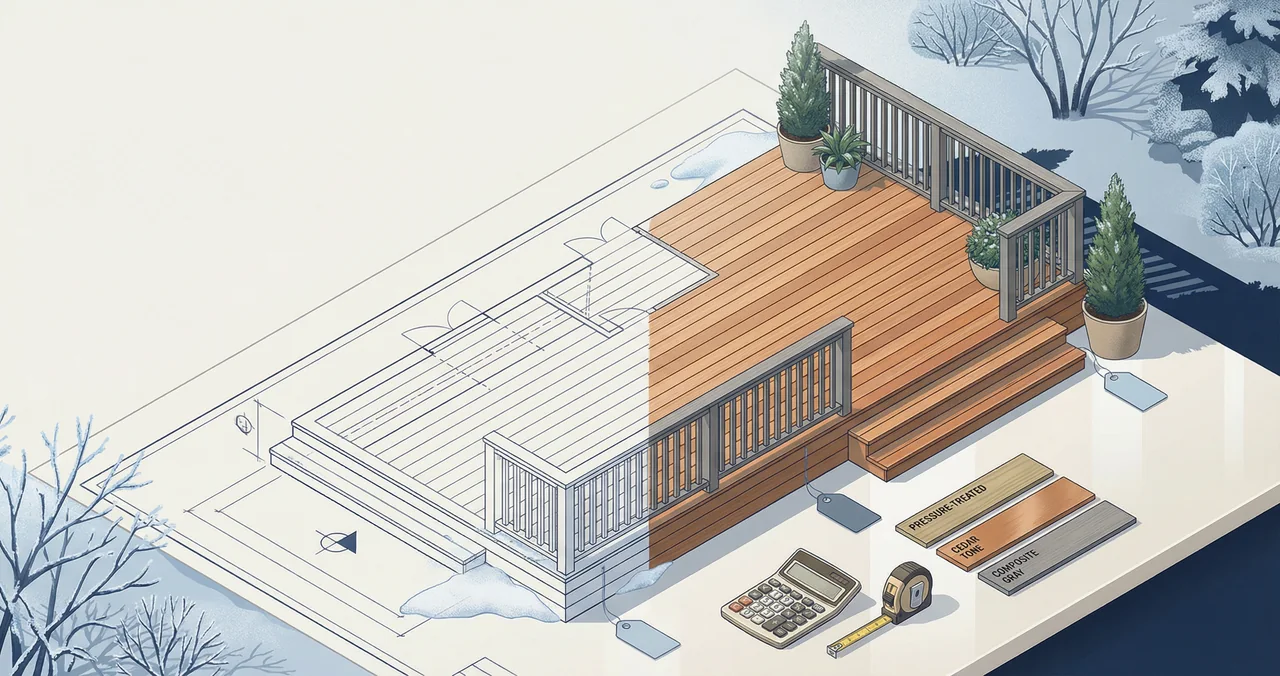
Deck Cost in Springfield: What Homeowners Are Paying in 2026
You're looking at your backyard and running the numbers. How much is a deck actually going to cost you in Springfield? The short answer: most homeowners here pay between $8,000 and $25,000 for a standard-sized deck, but the final number depends heavily on what material you pick and how complex the design gets.
🏗️ Planning a deck project?
Get a free manual project review, or visualize your dream deck with AI before requesting quotes.
🧮 Tool Alert: Deck Cost Calculator
Estimate your project costs in seconds based on local pricing bands for your area.
Calculate My Cost →Springfield sits in a sweet spot for deck building. Your moderate Ozarks climate means nearly nine months of buildable weather, and material costs tend to run lower than coastal cities. But there's real variation in what contractors charge — and making the wrong material choice for Missouri's temperature swings can cost you more down the road.
Here's what Springfield homeowners are actually paying in 2026.
<!-- slot:after-intro -->
For a broader look at deck pricing across different materials and regions, see our deck cost guide. Timing your build right can also save thousands — check our guide on the best time to build a deck.
Average Deck Cost in Springfield by Material
Material choice is the single biggest factor in your total deck cost. Here's what installed pricing looks like across Springfield in 2026:
| Material | Installed Cost Per Sq Ft | 12×16 Deck (192 sq ft) | 16×20 Deck (320 sq ft) |
|---|---|---|---|
| Pressure-Treated Wood | $25–$45 | $4,800–$8,640 | $8,000–$14,400 |
| Cedar | $35–$55 | $6,720–$10,560 | $11,200–$17,600 |
| Composite | $45–$75 | $8,640–$14,400 | $14,400–$24,000 |
| Trex (brand-name composite) | $50–$80 | $9,600–$15,360 | $16,000–$25,600 |
| Ipe (hardwood) | $60–$100 | $11,520–$19,200 | $19,200–$32,000 |
Pressure-treated lumber remains the most popular choice in Springfield by a wide margin. It handles Missouri's humidity and frost cycles well when properly sealed, and the upfront savings are hard to ignore. Most Springfield deck projects fall in the $10,000–$18,000 range for a mid-sized deck with standard railings and a single set of stairs.
Cedar runs about 30–40% more than pressure-treated but offers natural rot resistance and a richer appearance without the green tint. It still needs regular staining in Springfield's climate — plan on every two to three years.
Cost Per Square Foot Breakdown
That per-square-foot number includes both materials and labor, but it helps to understand where your money goes:
Materials Only (No Labor)
- Pressure-treated decking boards: $8–$15/sq ft
- Cedar decking boards: $12–$22/sq ft
- Composite decking boards: $20–$35/sq ft
- Trex decking boards: $22–$40/sq ft
- Ipe decking boards: $30–$50/sq ft
Structural Components
Don't forget the framing, hardware, and foundation — these add $5–$12 per square foot regardless of your decking surface:
- Joists and beams (pressure-treated): $3–$6/sq ft
- Concrete footings (critical in Springfield — frost line runs 18–36 inches deep): $1–$3/sq ft
- Hardware, fasteners, and flashing: $1–$3/sq ft
Those footing costs can climb if your yard slopes. Springfield's rolling terrain — especially in neighborhoods south of Battlefield Road or near Sequiota Park — often means deeper post holes and more concrete.
Labor Costs in Springfield
Springfield labor rates for deck construction typically run $15–$30 per square foot, depending on project complexity. That's competitive compared to larger metro areas like Kansas City or St. Louis, where you'll pay 15–25% more for the same work.
Here's how complexity affects labor pricing:
- Simple ground-level deck, rectangular: $15–$20/sq ft labor
- Elevated deck (4+ feet) with stairs: $20–$25/sq ft labor
- Multi-level or wraparound design: $25–$30/sq ft labor
- Curved edges, built-in seating, or custom features: $28–$35/sq ft labor
Permit costs are a separate line item. In Springfield, Missouri, deck permits are typically required for structures over 200 square feet or 30 inches above grade. Permit fees generally run $75–$200 depending on your project scope. Check with Springfield's Building/Development Services department before breaking ground — going without a permit creates real problems at resale.
If you're curious about the risks of skipping permits, this breakdown on building without a permit covers what can go wrong.
When to Build for the Best Price
Springfield's building season runs March through November, but timing matters for your wallet. Spring is peak season — contractors are booked, and you'll have less room to negotiate. September through November often brings better pricing as schedules open up. The weather still cooperates through most of fall in the Ozarks, so you're not sacrificing build quality.
<!-- slot:mid-content -->
What Affects Your Total Price
Two Springfield homeowners building the same size deck can easily end up $8,000–$12,000 apart on final cost. Here's what drives those differences:
Deck Size and Shape
Straightforward math: more square footage means more material and more labor. But shape matters too. A simple rectangle is the most cost-efficient design. Add angles, curves, or notches around trees and you're adding cutting waste and labor hours.
Height and Access
A deck that sits 30 inches or higher off the ground needs a full permit, deeper footings, more structural lumber, and stairs. Each set of stairs adds $800–$2,500 to your project depending on height and material. Walkout basements — common in Springfield's hillier neighborhoods like Galloway or Southern Hills — often mean elevated decks by default.
Railings and Stairs
Railings are required on any deck 30 inches or more above grade per Springfield code. Material choice for railings has a big impact:
- Wood railings: $20–$35 per linear foot
- Composite railings: $30–$60 per linear foot
- Aluminum or cable railings: $50–$100+ per linear foot
For a 16×20 deck with railing on three sides, that's roughly 52 linear feet — so railing alone could run $1,040–$5,200.
Site Prep and Demolition
Removing an old deck typically costs $500–$1,500 in Springfield. Grading, tree root removal, or retaining walls for sloped lots add more. Get a site visit before accepting any quote — a contractor who prices over the phone is guessing.
Add-Ons That Add Up
- Built-in bench seating: $200–$500 per section
- Deck lighting (recessed or post-cap): $500–$2,000
- Pergola or shade structure: $2,000–$8,000
- Skirting/lattice: $300–$1,000
For lighting options, this guide to deck lighting kits covers what's available and what actually lasts.
Composite vs Wood: Cost Comparison
This is the decision most Springfield homeowners wrestle with. Here's an honest side-by-side:
| Factor | Pressure-Treated Wood | Composite |
|---|---|---|
| Upfront cost (installed, 320 sq ft) | $8,000–$14,400 | $14,400–$24,000 |
| Annual maintenance | Stain/seal every 1–2 years ($300–$600) | Occasional cleaning ($50–$100) |
| 10-year maintenance cost | $2,000–$5,000 | $500–$800 |
| Lifespan | 15–25 years (with maintenance) | 25–50 years |
| 10-year total cost | $10,000–$19,400 | $14,900–$24,800 |
| Heat retention | Low | Moderate to high |
| Splinter risk | Yes | No |
The 10-year total cost gap narrows significantly once you factor in maintenance. If you plan to stay in your Springfield home long-term, composite often makes financial sense. If you're building on a tight budget or might sell within five years, pressure-treated is hard to beat on value.
One thing worth noting for Springfield specifically: composite decking gets hot in direct summer sun. Missouri's July heat means surface temperatures on dark composite boards can hit 140°F+. If your deck faces south or west with no shade, consider lighter-colored composites or plan for a shade structure.
Use PaperPlan to visualize different decking materials on your own home before committing — it's genuinely useful for seeing how color and material choices look against your siding and landscaping.
For a deeper comparison of the best composite decking brands available, that guide breaks down the major manufacturers.
How to Save Money on Your Springfield Deck
Real ways to bring your costs down — not gimmicks:
Choose pressure-treated wood for the frame, every time. Even if your deck surface is composite or cedar, the substructure should be pressure-treated. It's engineered for ground contact and structural loads. No reason to spend more on framing that nobody sees.
Build during the off-season. As mentioned, fall builds (September–November) give you more contractor availability and sometimes 10–15% lower labor rates in the Springfield market. Some contractors offer winter pricing for projects they can schedule for early spring.
Keep the design simple. A rectangular deck with standard dimensions (12×16, 14×20, 16×20) minimizes material waste and labor time. Each angle or custom cut adds cost. If you want visual interest, do it with railing details or planter boxes — not with complex geometry.
Get three quotes minimum. Springfield has a solid pool of deck builders. Get at least three written estimates and compare them line by line. Watch for vague line items like "materials" with no breakdown — you want to see board counts, footing specs, and hardware listed.
Do your own demo. If you're replacing an old deck, tearing out the existing structure yourself can save $500–$1,500. It's labor-intensive but straightforward. Rent a dumpster, get a pry bar, and budget a weekend.
Skip the exotic hardwoods. Ipe is gorgeous, but at $60–$100/sq ft installed, it's roughly triple the cost of pressure-treated. Modern composites give you a similar premium look at a lower price point with less maintenance. For most Springfield homeowners, low-maintenance decking options hit the sweet spot between appearance and cost.
Consider a freestanding deck. Freestanding (detached) decks sometimes have simpler permitting requirements and avoid the need for a ledger board attachment to your home — which means no flashing complications and less risk of water intrusion. This comparison of attached vs. freestanding decks walks through the trade-offs.
What NOT to Cheap Out On
- Footings. Springfield's 18–36 inch frost line means your footings need to go deep. Shallow footings will heave and shift. This is structural — do it right.
- Flashing. The connection between your deck ledger and your house is the number one source of water damage in attached decks. Proper flashing costs very little but prevents thousands in repairs.
- Fasteners. Use stainless steel or coated deck screws. Standard screws corrode in Missouri's humidity and leave rust streaks down your boards.
Springfield Deck Cost: Real-World Examples
To give you a sense of actual project costs local homeowners are seeing:
Budget Build — 12×14 Pressure-Treated
Ground-level, simple rectangle, wood railings on two sides, one set of 3-step stairs.
Total: $5,500–$8,500
Mid-Range — 16×20 Composite
Elevated 3 feet, composite railings, one set of stairs with landing, post-cap lighting.
Total: $16,000–$22,000
Premium — 20×24 Multi-Level with Trex
Two-tier design, aluminum cable railings, built-in bench, integrated lighting, pergola.
Total: $30,000–$45,000
Most Springfield projects land in that mid-range tier. If you're trying to estimate costs for specific deck sizes, this 16×20 deck cost breakdown gives a detailed look at where the money goes.
<!-- slot:before-faq -->
🎨 Not sure which material to pick?
Upload a photo of your backyard and see exactly how Trex, TimberTech, or cedar would look — free and instant.
Frequently Asked Questions
How much does a 12×16 deck cost in Springfield?
A 12×16 deck (192 sq ft) in Springfield typically runs $4,800–$8,640 for pressure-treated wood or $8,640–$14,400 for composite, fully installed. Add $800–$2,500 for stairs and $1,000–$3,000 for railings depending on material. Most homeowners with a standard ground-level pressure-treated build land around $7,000–$10,000 all-in.
Do I need a permit to build a deck in Springfield, MO?
Yes, in most cases. Springfield requires a building permit for decks that are over 200 square feet or more than 30 inches above grade. Even smaller decks may need a permit if they're attached to your home. Contact Springfield's Building/Development Services department before starting. Permit fees typically run $75–$200. Building without one can result in fines, required removal, or complications when you sell.
What is the cheapest decking material I can use?
Pressure-treated pine is the most affordable option at $25–$45 per square foot installed in Springfield. It's also the most commonly used material in the area. The trade-off is maintenance — you'll need to stain or seal it every one to two years to protect against Missouri's moisture and UV exposure. Budget roughly $300–$600 per application for a standard-sized deck.
Is composite decking worth the extra cost?
It depends on your timeline. If you plan to enjoy your deck for 10+ years, composite's lower maintenance costs close much of the upfront price gap. You'll skip the annual staining cycle and avoid board replacement from rot or warping. For Springfield's climate — with its freeze-thaw cycles and summer humidity — composite holds up exceptionally well. If you're selling within five years, pressure-treated gives you more immediate ROI.
When is the best time to build a deck in Springfield?
Late September through November often gives you the best combination of weather and pricing. Spring (March–May) is peak season — contractors are busiest and least likely to negotiate. Summer works fine but Springfield's heat makes it tougher on crews, which can slow timelines. Winter builds are possible for simple ground-level projects, but frost and frozen ground make footing work difficult. Plan your project early and book your contractor 6–8 weeks ahead of your preferred start date.
<!-- slot:end -->
📋 Planning a deck project?
Get a free manual project review from our team — no obligation, no spam.
Get Free Project Review →Upload a backyard photo and preview real decking materials with AI — free, instant, no sign-up.
Permits, costs, material comparisons, and questions to ask before requesting quotes — delivered to your inbox.