
Do Decks Need Footings in Ontario?
Yes, most decks in Ontario need footings below the 48-inch frost line. Learn code requirements, footing types, and when you can skip them.
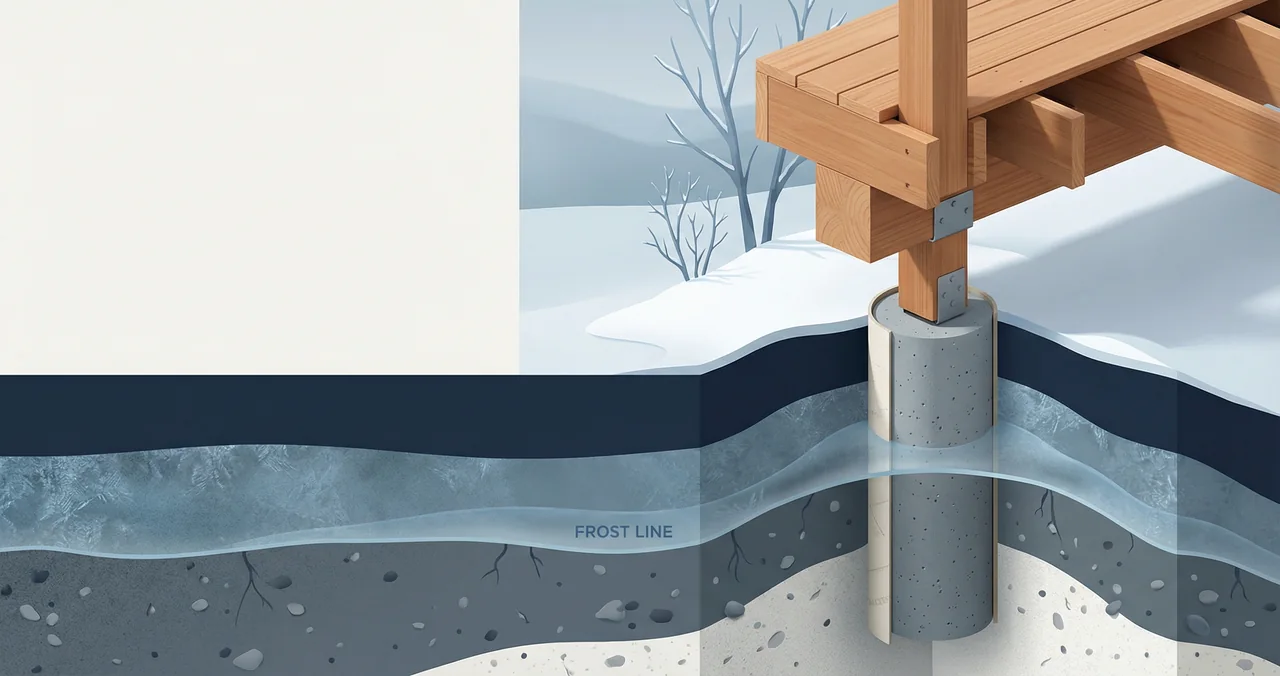
Yes, most Ontario deck guides need footings — and they need to go deep. The Ontario Building Code requires footings to extend below the frost line, which sits at 48 inches (1.2 m) in the KWC region. Skipping them or going too shallow risks structural failure, permit rejection, and expensive repairs.
But there are exceptions. Ground-level decks under 24 inches high sometimes don't need footings at all. Helical piles can replace traditional concrete footings. And floating decks dodge the requirement entirely by sitting on the surface without attaching to your house.
Here's what you actually need to know.
What Are Deck Footings and Why Do They Matter?
Footings are the concrete pads or cylinders that sit below ground, supporting the posts that hold up your deck. They transfer the deck's weight — including people, furniture, snow, and a potential hot tub — into stable soil below the frost line.
🏗️ Planning a deck project?
Get a free manual project review, or visualize your dream deck with AI before requesting quotes.
Why the frost line matters: Ontario's freeze-thaw cycle causes soil to expand when it freezes and contract when it thaws. If your footings sit above the frost line, they'll move up and down with the ground. This causes posts to shift, joists to crack, and the entire deck to become unsafe.
Footings below 48 inches sit in stable soil that never freezes. They stay put year-round.
Ontario Building Code Requirements for Deck Footings
The Ontario Building Code (OBC) doesn't mess around with footings. Here's what it requires:
- Minimum depth: 48 inches (1.2 m) below grade in KWC
- Footing diameter: Minimum 16 inches for Sonotube footings
- Post connection: Posts must be secured to footings with post brackets or embedded in concrete
- Load capacity: Footings must support live loads (people, furniture) plus dead loads (deck structure)
- Soil bearing capacity: Footings must rest on undisturbed soil with adequate bearing capacity
When you need footings:
- Decks attached to your house with a ledger board
- Elevated decks more than 24 inches above grade
- Decks supporting roofs, pergolas, or hot tubs
- Any deck requiring a building permit
When you might not:
- Freestanding floating decks sitting on patio blocks or gravel
- Ground-level decks under 24 inches high in some municipalities (check with Kitchener, Waterloo, or Cambridge bylaws)
Even if your deck doesn't legally require footings, they're still a good idea for long-term stability.
Types of Deck Footings in Ontario
You have three main options for footings in KWC. Each has pros and cons depending on your soil, budget, and timeline.
Sonotube Concrete Footings
The traditional approach. You dig a hole, drop in a cardboard Sonotube form, pour concrete, and set a post bracket on top.
Pros:
- Proven method that inspectors know and trust
- Lower cost for DIY: $50-100 per footing including concrete
- Works in most soil types
- Strong load capacity when properly sized
Cons:
- Labour-intensive digging, especially in clay soil
- Requires concrete truck access or mixing on site
- Takes 7-14 days to cure before building
- Difficult in rocky or waterlogged soil
Cost installed: $150-250 per footing (labour + materials)
Helical Piles
Steel screw piles that twist into the ground with hydraulic equipment. They've become popular in Ontario over the past decade, especially for difficult sites.
Pros:
- No digging required
- Instant load capacity — no curing time
- Works in poor soil, high water tables, and tight spaces
- Can be installed year-round, even in winter
- Engineer-certified load ratings
Cons:
- Higher upfront cost: $150-300 per pile installed
- Requires specialized equipment and installation crew
- May require engineering drawings for permit approval
- Not all inspectors are familiar with them
Helical piles vs. concrete footings — which should you choose? If you have tight access, poor soil, or want to build fast, helicals often win despite the higher cost.
Precast Concrete Piers
Factory-made concrete blocks with built-in post brackets. They sit on a gravel base below the frost line.
Pros:
- No concrete mixing
- Faster than Sonotubes
- Reusable if you move the deck
Cons:
- Still requires digging to frost line depth
- Harder to find in Ontario than Sonotubes
- Gravel base must be properly compacted
- Not ideal for heavy loads or unstable soil
Cost: $40-80 per pier plus installation labour
How Many Footings Does Your Deck Need?
The number of footings depends on your deck's size, shape, and load. But here's a starting point:
Typical footing layout:
- One footing under each corner post
- Additional footings every 6-8 feet along the perimeter
- Extra footings for interior beams supporting long joist spans
- Doubled footings under heavy loads (hot tubs, roof structures)
Example: 12×16 deck attached to house
- 4 footings along the outer beam (one per corner, two mid-span)
- 2 footings supporting an interior beam
- Total: 6 footings
Example: 16×20 freestanding deck
- 6 footings along the outer perimeter
- 4 footings supporting interior beams
- Total: 10 footings
Your permit drawings will specify exact footing locations. Learn what inspectors look for during the footing inspection before you pour concrete.
Footing Depth and Frost Line in KWC
The rule is simple: footings must extend below 48 inches (1.2 m) below grade in Kitchener-Waterloo-Cambridge. This is non-negotiable for code compliance.
Why 48 inches? That's where the frost line sits in southern Ontario. Soil below this depth never freezes, even during the coldest winters. Footings in stable, unfrozen soil won't shift or heave.
What happens if you go shallow?
- Frost heave pushes footings upward during winter
- Posts shift, causing the deck to tilt or rack
- Joists separate from the ledger board
- Deck becomes unsafe and fails inspection
- Expensive repairs: lifting the deck, digging deeper, re-pouring footings
Can you go deeper? Absolutely. Deeper footings (60-72 inches) add stability on sloped sites or in soft soil. They're overkill for most residential decks but sometimes necessary for hot tubs or second-story decks.
How deep should deck footings be in Ontario? — read the full guide for soil type considerations and measurement tips.
Do You Need Footings for Ground-Level Decks?
It depends on your municipality — and inspectors interpret the rules differently.
Kitchener's 24-inch rule: Decks under 24 inches high may not require a permit, which means no formal footing requirement. But most builders still recommend footings for stability, especially if the deck is attached to the house.
Waterloo and Cambridge: Similar exemptions exist, but you must confirm with the building department. Some inspectors require footings even for low decks if they're attached to the foundation.
Floating deck exception: If your ground-level deck is freestanding (not attached to the house), you can build it on patio blocks or gravel without footings. It sits on the surface and moves with the ground. This works fine for small decks (under 200 sq ft) that don't support heavy loads.
When footings still make sense for low decks:
- Attached to your house with a ledger board
- Built over sloped or unstable soil
- Intended to support furniture, planters, or outdoor kitchens
- You want long-term stability without seasonal shifting
Check permit requirements by city before skipping footings on a ground-level deck.
Footing Size and Diameter
Standard Sonotube footings in Ontario use 12-inch or 16-inch diameter forms. Bigger footings spread the load over more soil, increasing capacity.
When to use 12-inch footings:
- Single-level decks under 200 sq ft
- Light loads (no hot tub, no roof)
- Good soil bearing capacity (stable clay or sandy loam)
When to use 16-inch footings (or larger):
- Decks over 300 sq ft
- Multi-level or elevated decks
- Hot tubs, pergolas, or covered structures
- Poor soil or high water table
- Inspectors may require engineering for loads over 2,000 lbs per footing
Helical pile sizing: Piles are rated by load capacity, not diameter. A typical residential deck uses piles rated for 8,000-15,000 lbs. Your engineer specifies the exact pile type and depth based on soil conditions.
Permit Inspections for Deck Footings
Footings are inspected before you pour concrete or build the deck. Here's what the inspector checks:
Inspection checklist:
- Footing holes reach 48 inches depth minimum
- Holes are dug to undisturbed soil, not fill or loose dirt
- Diameter meets code (typically 16 inches)
- Post brackets are positioned correctly
- Rebar is installed if required (typically two vertical bars per footing)
- Sonotubes are level and properly staked
Common rejection reasons:
- Holes too shallow (inspector measures from grade to bottom)
- Footing diameter too narrow
- Holes dug into fill soil instead of undisturbed earth
- Missing rebar or post brackets
- Poor hole quality (collapsed sides, water pooling)
Timeline: Book your footing inspection at least 2-3 business days in advance. Don't pour concrete until the inspector approves the holes. Once approved, pour within 24-48 hours before rain or collapse changes the hole condition.
Deck permit timelines in KWC — how long the full process takes from application to final inspection.
Footing Costs in Ontario (2026 Pricing)
Footings typically represent 10-15% of total deck cost, but prices vary based on method and site conditions.
DIY Sonotube footings:
- 12-inch Sonotube form: $15-20
- Concrete (1 cubic foot): $8-12
- Post bracket: $10-15
- Rebar (if required): $5-10
- Total per footing: $50-100
Contractor-installed Sonotubes:
- Labour + materials: $150-250 per footing
- Includes digging, forming, pouring, bracket installation
Helical piles installed:
- $150-300 per pile depending on depth and load rating
- Includes installation crew and equipment
- May require engineering ($500-1,200 for stamp and drawings)
Example: 12×16 deck with 6 footings
- DIY Sonotubes: $300-600
- Contractor Sonotubes: $900-1,500
- Helical piles: $1,200-2,400
When helicals save money: If you have difficult access, rocky soil, or tight timelines, helicals can cost less than the labour and equipment rental for digging and pouring Sonotubes yourself.
Compare full project costs: deck cost in Kitchener, Waterloo, or Cambridge. For a province-wide view, our deck cost overview for Ontario covers every major cost factor.
Before You Dig: Call Ontario One Call (811)
You must call 811 at least five business days before digging footing holes. This is the law in Ontario.
Ontario One Call locates underground utilities — gas lines, electrical, water, sewer, telecom cables — and marks them with flags or paint. Hitting a utility line during excavation can cause:
- Gas explosions or leaks
- Electrical shocks or power outages
- Water main breaks
- Expensive repair bills (you're liable for damage)
- Project delays while utilities are repaired
The service is free. Locators visit your property within 5 business days and mark all utilities. Once marked, you're clear to dig — carefully.
Ontario One Call requirements — what to expect and how to prepare for the locator visit.
Alternatives to Traditional Footings
Helical piles are the main alternative, but you have other options depending on deck type:
Deck blocks (floating deck only):
- Precast concrete blocks that sit on gravel
- No digging required
- Works for freestanding decks under 200 sq ft
- Not suitable for attached or elevated decks
- Not permitted in most municipalities for structural decks
Ground screws:
- Similar to helical piles but smaller diameter
- Twist into the ground by hand or with portable equipment
- Lower cost than helical piles ($50-100 per screw)
- Limited load capacity — check with your inspector
Post-on-grade (rare):
- Pressure-treated posts sit directly on gravel pads
- Only allowed for small, freestanding floating decks
- Not permitted for attached or elevated decks
For any deck requiring a permit, Sonotube footings or helical piles are your realistic options.
Floating Decks: The No-Footing Exception
Floating decks don't use footings because they're not anchored to the house or ground. They sit on the surface and move with freeze-thaw cycles.
Floating deck characteristics:
- Freestanding (no ledger board attachment)
- Built on patio blocks, gravel, or deck blocks
- Usually under 200 sq ft
- Low to the ground (under 24 inches)
Pros:
- No digging or concrete
- Faster to build
- Often no permit required
- Easy to relocate or remove
Cons:
- Less stable — shifts slightly with ground movement
- Not suitable for heavy loads
- Can't attach to house for lateral support
- Limited design options (no stairs or multi-level)
Floating decks work well for small backyard patios, but most homeowners prefer the stability of a properly footed deck attached to the house.
What Happens If You Skip Footings?
Building a deck without proper footings is a bad idea — and not just because of code violations.
Structural risks:
- Deck shifts and tilts during freeze-thaw cycles
- Posts sink into soft soil under load
- Joists separate from ledger board, creating a gap
- Deck pulls away from house or collapses
- Unsafe for people, especially with heavy snow loads
Permit and insurance consequences:
- Failed inspection = stop-work order
- Forced removal and rebuild with proper footings
- Homeowner's insurance may deny claims for unpermitted decks
- Lower resale value (home inspectors flag code violations)
Repair costs:
- Lifting and temporarily supporting the deck: $2,000-4,000
- Digging and pouring footings under existing deck: $3,000-6,000
- Total retrofit: $5,000-10,000+
The takeaway: Cutting corners on footings costs more in the long run. Do it right the first time.
🎨 Not sure which material to pick?
Upload a photo of your backyard and see exactly how Trex, TimberTech, or cedar would look — free and instant.
Common Questions
Do I need footings for a deck on concrete patio?
It depends. If your deck sits directly on a concrete patio slab and is freestanding (not attached to the house), you can anchor it to the concrete using Tapcon screws or epoxy-set anchors without digging footings. But if the deck is attached to your house with a ledger board, you still need footings for the outer posts — the patio doesn't provide frost-protected support. Check with your local building department.
Can I pour footings in winter in Ontario?
Yes, but it's complicated. Concrete can be poured in winter if you use cold-weather mix with accelerators and protect the pour from freezing for 48-72 hours using insulated blankets or temporary heat. Most contractors avoid winter pours due to unpredictable weather and higher material costs. Helical piles are a better winter option — they install year-round without temperature restrictions.
Do deck footings need rebar in Ontario?
Usually yes. The OBC requires reinforcement in concrete footings to prevent cracking. Most inspectors expect two vertical rebar dowels (10M or 15M size) running from the bottom of the footing to the top, tied with horizontal wire. The rebar must extend into the concrete, not just sit loosely in the hole. Some municipalities waive rebar for small decks under 200 sq ft — check your local requirements.
How long do concrete deck footings last?
50+ years if properly installed. Concrete footings below the frost line in well-drained soil last indefinitely. The weak point is usually the post-to-footing connection — post brackets rust, wood posts rot at the base, or improper flashing allows water infiltration. Pressure-treated posts last 20-30 years before needing replacement, but the footings stay solid much longer.
What size Sonotube do I need for a deck?
16-inch diameter for most residential decks. This is the OBC minimum for decks supporting standard loads. Use 12-inch footings only for very small decks (under 150 sq ft) with inspector approval. Use 18-inch or larger footings for heavy loads (hot tubs, roof structures, multi-level decks) or poor soil conditions. Your permit drawings specify exact sizes — don't guess.
Upload a backyard photo and preview real decking materials with AI — free, instant, no sign-up.
Permits, costs, material comparisons, and questions to ask before requesting quotes — delivered to your inbox.