
Deck Permits in St. Paul (2026)
Need a deck permit in St. Paul? Learn requirements, fees, building codes, setback rules, and how to apply. Avoid fines and build your deck right in 2026.
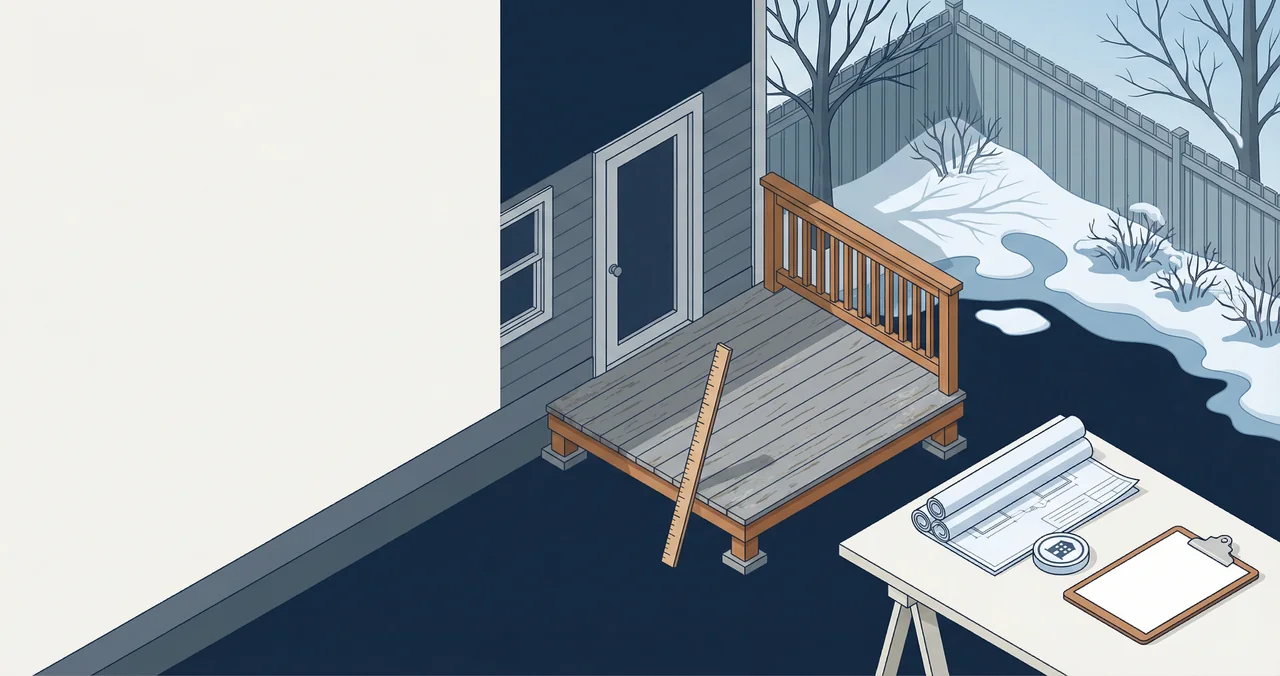
Deck Permits in St. Paul: Requirements, Costs & How to Apply in 2026
If you're planning to build a deck in St. Paul, the permit question is probably one of the first things on your mind. Skip it, and you risk fines, forced removal, or a nightmare when you try to sell your home. Get it right, and the process is straightforward — just a few forms, a fee, and some patience.
🏗️ Planning a deck project?
Get a free manual project review, or visualize your dream deck with AI before requesting quotes.
📋 Tool Alert: Permit Checker
Do you really need a permit? Check the exact rules for your city or township.
Check Permits →Here's exactly what St. Paul requires, what it costs, and how to get your permit approved without delays.
<!-- slot:after-intro -->
Do You Need a Deck Permit in St. Paul?
Yes, in most cases. St. Paul's Department of Safety and Inspections (DSI) requires a building permit for most deck construction projects. The city follows Minnesota State Building Code with local amendments, and the rules are clear:
- Decks over 200 square feet require a permit
- Decks more than 30 inches above grade at any point require a permit
- Any deck attached to your house requires a permit (because it affects the building's structural envelope)
A small ground-level platform under 200 square feet that sits less than 30 inches off the ground *might* be exempt — but even then, you still need to comply with setback requirements and zoning rules. When in doubt, call DSI at (651) 266-8989 before you start buying lumber.
What About Replacing an Existing Deck?
Replacing decking boards on an existing structure (same size, same footprint) typically doesn't require a new permit. But if you're changing the footprint, adding height, or modifying the structural framing, you'll need one. Expanding a 10x12 deck into a 16x20? That's a new permit.
When a Permit Is Required
Here's a quick breakdown of what triggers a permit in St. Paul:
| Project | Permit Required? |
|---|---|
| New deck over 200 sq ft | Yes |
| New deck over 30" above grade | Yes |
| Deck attached to house (any size) | Yes |
| Ground-level deck under 200 sq ft, under 30" | Usually no — verify with DSI |
| Replacing deck boards only (same structure) | No |
| Adding stairs or railings to existing deck | Yes |
| Changing deck footprint or height | Yes |
| Adding a roof or pergola over deck | Yes (separate permit may apply) |
| Hot tub on existing deck | Likely yes — structural load review needed |
Important: Even exempt projects must follow zoning setbacks and lot coverage limits. A permit-exempt deck built too close to your property line still violates code.
Permit Fees & Processing Time
St. Paul's permit fees are based on the estimated project value. Here's what to expect for typical residential deck projects in 2026:
Fee Structure
| Estimated Project Cost | Approximate Permit Fee |
|---|---|
| Under $5,000 | $75–$120 |
| $5,000–$15,000 | $120–$250 |
| $15,000–$50,000 | $250–$450 |
| Over $50,000 | $450+ (scaled by value) |
Fees also include a plan review fee (typically 65% of the building permit fee) and a State surcharge. Budget roughly $150–$400 total for a standard residential deck.
To put project costs in perspective, here's what deck installation typically runs in the St. Paul market:
| Material | Installed Cost per Sq Ft |
|---|---|
| Pressure-treated wood | $25–$45 |
| Cedar | $35–$55 |
| Composite | $45–$75 |
| Trex (brand-name composite) | $50–$80 |
| Ipe (tropical hardwood) | $60–$100 |
So a 400 sq ft composite deck at $45–$75/sqft puts your project cost at $18,000–$30,000, meaning you'd pay roughly $250–$450 in permit fees. That's less than 2% of the total project — a small price for doing it right.
Processing Time
- Standard review: 10–15 business days
- Simple projects (straightforward deck, no variances): sometimes faster
- Complex projects (multi-level, near setback lines, steep lots): 3–4 weeks or more
Pro tip for St. Paul homeowners: Submit your permit application by late February or early March. The building season here runs roughly May through October, and contractor schedules fill up fast. A March submission gives you time to get approved and scheduled before the rush.
<!-- slot:mid-content -->
Building Codes & Setback Rules
St. Paul follows the Minnesota Residential Code (based on the IRC) with local amendments. Here are the key requirements that affect deck construction:
Structural Requirements
- Footings must extend below the frost line — in the Twin Cities, that's 42 inches minimum. St. Paul's freeze-thaw cycles are brutal, and shallow footings will heave. This is non-negotiable.
- Footing size: Typically minimum 12-inch diameter concrete piers for standard decks, larger for heavy loads
- Ledger board attachment: Must be bolted (not nailed) to the house rim joist with ½-inch lag screws or through-bolts spaced per code. Flashing is required to prevent water intrusion.
- Beam and joist sizing: Must meet span tables in the Minnesota Residential Code. A 2x8 joist can span roughly 10–12 feet depending on spacing and species.
- Deck screws, not nails: Fasteners must be corrosion-resistant (stainless steel or hot-dipped galvanized)
Railing Requirements
- Railings are required on any deck surface 30 inches or more above grade
- Minimum railing height: 36 inches (42 inches if more than 30 inches above grade in some interpretations — confirm with your inspector)
- Baluster spacing: No more than 4 inches between balusters (the "4-inch sphere" rule)
- Railings must resist 200 lbs of lateral force at the top rail
For a deeper look at railing code specifics, see our guide on cable railing systems and code compliance.
Setback Rules
Setbacks in St. Paul depend on your zoning district. Typical residential setbacks:
- Front yard: 25 feet from the front property line (varies by district)
- Side yard: 4–9 feet minimum (depends on lot width and zoning)
- Rear yard: 25 feet from rear property line for principal structures; detached/freestanding decks may have reduced setbacks
- Corner lots: Additional street-side setback applies
Check your specific zoning district. St. Paul has multiple residential zones (R1–R4, RT1–RT2, RL), and setbacks vary. You can look up your zoning at the city's online zoning map or call DSI.
Lot Coverage
St. Paul limits how much of your lot can be covered by structures (house, garage, deck, shed, etc.). In most residential zones, the maximum is 35% lot coverage. Your new deck counts toward this total. A large deck on a small lot could push you over the limit, requiring a variance.
Snow Load & Climate Considerations
St. Paul gets serious winter weather. Your deck design needs to account for:
- Ground snow load: 50 lbs per square foot in the Twin Cities metro
- If adding a pergola or roof: Snow load calculations become critical — a covered structure traps snow and ice
- Freeze-thaw cycles: Water gets into wood grain, freezes, expands, and splits boards over time. Composite and PVC materials hold up significantly better than untreated wood in this climate.
- Ice dam potential: Where the deck meets the house, improper flashing leads to ice dams and water damage. Your inspector will check this.
For material selection in harsh winter climates, our comparison of the best decking materials for freeze-thaw conditions covers what holds up and what doesn't.
How to Apply for a Deck Permit in St. Paul
Here's the step-by-step process:
Step 1: Prepare Your Documents
You'll need:
- Site plan showing your property boundaries, the house footprint, and the proposed deck location with dimensions and distances to property lines
- Construction drawings showing the deck framing plan, footing locations, beam/joist sizes, railing details, and ledger board attachment
- Elevation drawings showing the deck height above grade and stair details
- Material specifications — what lumber, fasteners, and hardware you're using
Use PaperPlan to visualize different decking materials on your own home before committing — it helps when you're still deciding between pressure-treated and composite.
If your contractor is pulling the permit (most reputable ones will), they handle the drawings. If you're doing it yourself, the drawings don't need to be architect-grade, but they need to be accurate, legible, and to scale.
Step 2: Submit Your Application
You can submit to St. Paul's Department of Safety and Inspections:
- Online through the city's AccelaPower portal — search for "building permit application"
- In person at 375 Jackson Street, Suite 220, St. Paul, MN 55101
- By appointment — check DSI's website for current hours and scheduling
Pay the application fee at submission. Credit cards accepted.
Step 3: Plan Review
A plans examiner reviews your submission for code compliance. If something's missing or doesn't meet code, they'll issue corrections. Respond promptly — delays here push your project into the shorter building window.
Common reasons for corrections:
- Footings not deep enough (must be 42" minimum)
- Missing ledger board flashing detail
- Joist spans exceeding tables for the specified lumber size
- Setback violations
- Missing railing details
Step 4: Get Your Permit & Post It
Once approved, you'll receive your permit. Post it visibly at the job site before any work begins. Inspectors can (and do) stop by.
Step 5: Schedule Inspections
St. Paul typically requires two inspections for a deck:
1. Footing inspection — before you pour concrete. The inspector checks hole depth (42" minimum), diameter, and soil conditions.
2. Final inspection — after construction is complete. They check framing, connections, railings, stairs, ledger attachment, and overall compliance.
Do not backfill footings or close up framing before the footing inspection. If the inspector can't see it, they can't approve it. You'll have to dig it up.
For a detailed walkthrough of the application process, our step-by-step deck permit guide covers what to expect at each stage.
What Happens If You Build Without a Permit
This comes up a lot. "It's just a deck — do I really need a permit?" Yes, and here's why skipping it is a bad idea in St. Paul:
Immediate Consequences
- Stop-work order: If a city inspector spots unpermitted construction, they'll issue a stop-work order immediately
- Fines: St. Paul can levy fines for unpermitted work. Expect double the normal permit fee as a penalty, plus the original fee
- Forced removal: In extreme cases, the city can require you to tear down the structure
Long-Term Problems
- Home sale complications: Title companies and buyers' inspectors check for permits. An unpermitted deck can delay or kill a sale. You may need to retroactively permit and inspect — or demolish.
- Insurance issues: If someone gets injured on your unpermitted deck, your homeowner's insurance may deny the claim
- Neighbor complaints: St. Paul's code enforcement responds to complaints. A neighbor dispute plus an unpermitted deck equals a bad time.
If you've already built without a permit, you can apply for a retroactive permit. It costs more, requires inspection of existing work (which may mean opening up sections for review), and there's no guarantee of approval. Don't put yourself in this position.
For a detailed look at the risks, see what happens when you build a deck without a permit.
Should You DIY or Hire a Contractor?
Pulling your own permit is perfectly legal in St. Paul — homeowners can act as their own general contractor. But here's the reality: a deck with proper 42-inch footings, engineered connections, and code-compliant railings is a significant structural project. If you're experienced, great. If not, consider whether a DIY deck build is right for your situation.
Most St. Paul contractors include permit costs in their quotes. Ask upfront. If a contractor tells you a permit isn't needed for a 400 sq ft elevated deck, find a different contractor.
<!-- slot:before-faq -->
🎨 Not sure which material to pick?
Upload a photo of your backyard and see exactly how Trex, TimberTech, or cedar would look — free and instant.
Frequently Asked Questions
How much does a deck permit cost in St. Paul?
Most residential deck permits in St. Paul run $150–$400 total, including the building permit fee, plan review fee, and state surcharge. The exact amount depends on your project's estimated value. A simple $8,000 pressure-treated deck might cost around $150 in permits, while a $30,000 composite deck could run $350–$450. Call DSI at (651) 266-8989 for a precise estimate based on your project scope.
How long does it take to get a deck permit in St. Paul?
Plan for 10–15 business days for standard residential deck permits. Simple, straightforward projects sometimes clear faster. Complex builds — multi-level decks, projects near setback lines, or anything requiring a variance — can take 3–4 weeks or longer. Submit your application by early March to stay ahead of the building season crunch.
Do I need a permit for a ground-level deck in St. Paul?
It depends. A freestanding deck that's under 200 square feet and less than 30 inches above grade may be exempt from a building permit. However, you still need to follow zoning setback rules and lot coverage limits. If your ground-level deck is attached to the house, you'll likely need a permit regardless of size. Always verify with DSI before starting work.
How deep do deck footings need to be in St. Paul?
Deck footings in St. Paul must extend at least 42 inches below grade to get below the frost line. This is one of the most critical code requirements in Minnesota. Footings that are too shallow will heave during freeze-thaw cycles, causing your deck to shift, crack, and potentially separate from the house. The footing inspection happens before you pour concrete — inspectors measure the depth.
Can my neighbor complain about my deck in St. Paul?
Yes, and it happens. If your deck violates setback rules, exceeds lot coverage limits, or was built without a permit, a neighbor complaint can trigger a code enforcement investigation. Even if you have a permit, issues like privacy, noise, and sight lines can cause friction. Talk to your neighbors before you build — it's not required, but it prevents headaches. If your deck is fully permitted and code-compliant, you're in a strong legal position.
<!-- slot:end -->
📋 Planning a deck project?
Get a free manual project review from our team — no obligation, no spam.
Get Free Project Review →Upload a backyard photo and preview real decking materials with AI — free, instant, no sign-up.
Permits, costs, material comparisons, and questions to ask before requesting quotes — delivered to your inbox.