
Best Fence Stains for Ontario: Cedar and PT Wood
Compare the best fence stains for Ontario's freeze-thaw climate. Cedar vs PT wood stains, pricing, coverage, and longevity tested for 2026.
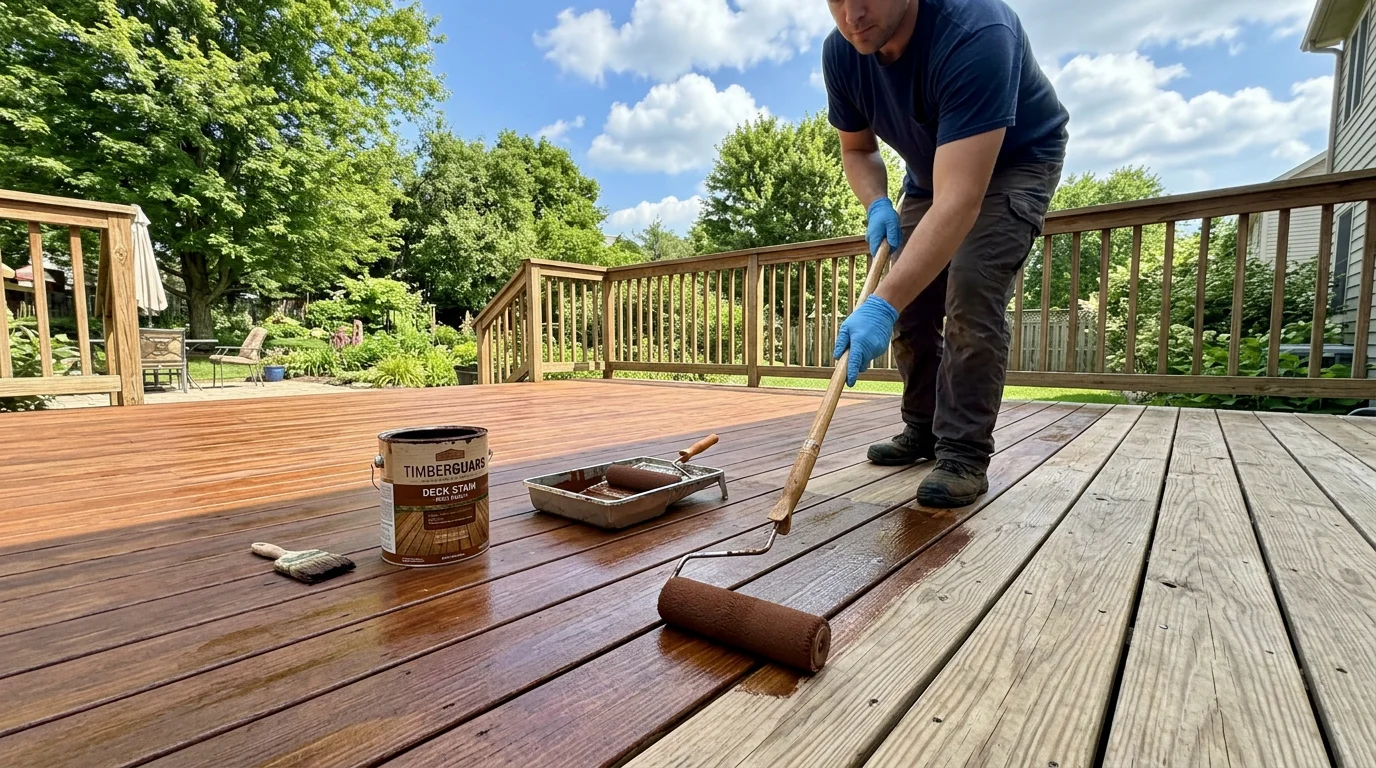
Your fence takes a beating in Ontario. Freeze-thaw cycles crack unprotected wood, UV bleaches cedar to grey, and summer humidity feeds mildew. The right stain protects your investment and keeps your fence looking sharp for years.
Here's what actually works for cedar and pressure-treated (PT) fences in Ontario's climate—tested products, real coverage rates, and what you'll pay in 2026.
Why Ontario Fences Need Special Treatment
Ontario's weather swings are brutal on wood. Winter temperatures hit -25°C, summer climbs past 30°C, and spring brings relentless rain. That 55°C annual swing causes wood to expand and contract constantly.
🏗️ Planning a deck project?
Get a free manual project review, or visualize your dream deck with AI before requesting quotes.
Cedar fences installed without protection grey out in 12-18 months. PT wood checks and splinters within 2-3 years. Both attract mildew in shaded areas.
A quality stain does three things: blocks UV rays, repels water, and lets wood breathe. You need breathability—trapped moisture under film-forming stains causes peeling and rot.
Best Fence Stains for Cedar (Ontario Tested)
1. Sansin Enviro Stain (Natural)
Price: $95-110/gallon CAD (2026)
Coverage: 150-200 sq ft/gallon on smooth cedar
Finish: Semi-transparent, penetrating
Sansin is Canadian-made (Vancouver) and formulated for extreme climates. The water-based formula penetrates deep without forming a surface film. Won't peel or blister.
You get 3-5 years on vertical cedar fence boards before recoating. The natural tones let cedar grain show through while blocking 95% of UV.
Best for: Homeowners who want low-maintenance protection and natural wood look. Slightly higher upfront cost but longer intervals between recoats.
2. Benjamin Moore Arborcoat Semi-Transparent Stain
Price: $75-90/gallon CAD
Coverage: 200-250 sq ft/gallon
Finish: Semi-transparent, alkyd-based
Arborcoat uses alkyd resins for deep penetration. The semi-transparent formula enhances cedar's natural color while providing solid UV protection.
Expect 2-4 years in full sun exposure, 4-6 years in shaded areas. Slightly shorter lifespan than Sansin but easier to find at most Ontario paint retailers.
Best for: Cedar fences with partial shade. Good balance of cost and performance.
3. Sikkens Cetol SRD (Semi-Transparent)
Price: $110-130/gallon CAD
Coverage: 175-225 sq ft/gallon
Finish: Semi-transparent, translucent resins
Premium European formula with translucent iron oxide pigments for UV blocking. The SRD (Semi-Transparent Deck & Siding) version works well on rough-sawn cedar.
You'll get 4-6 years on vertical surfaces. The higher pigment load means better fade resistance than budget stains.
Best for: High-visibility fences where color retention matters. Premium product with premium results.
4. Olympic Maximum Semi-Transparent Stain
Price: $50-65/gallon CAD
Coverage: 200-300 sq ft/gallon on smooth cedar
Finish: Semi-transparent, water-based
Budget-friendly option that still delivers decent performance. The Maximum line includes mildewcide for Ontario's humid summers.
Expect 2-3 years before noticeable fading. You'll recoat more often but the lower cost balances out.
Best for: Budget-conscious homeowners. Works fine if you don't mind recoating every 2-3 years.
Best Fence Stains for Pressure-Treated Wood
PT lumber needs 3-6 months drying time after installation before staining. The preservative treatment keeps wood wet initially. Test by sprinkling water—if it beads up, wait longer.
1. Sansin Classic Transparent Stain
Price: $85-100/gallon CAD
Coverage: 125-175 sq ft/gallon on PT
Finish: Transparent to semi-transparent
Same Sansin technology as their cedar stain but formulated for PT wood's higher moisture content. Penetrates treated wood effectively without trapping moisture.
You get 2-4 years on PT fences. The transparent finish keeps that fresh PT look while blocking greying.
Best for: New PT fences where you want to preserve the natural wood color.
2. Cabot Australian Timber Oil
Price: $70-85/gallon CAD
Coverage: 150-200 sq ft/gallon
Finish: Lightly tinted penetrating oil
Oil-based formula that soaks deep into PT lumber. The tinted versions add subtle color while letting grain show through.
Expect 1-3 years depending on sun exposure. Easier recoating than film-forming stains—just clean and reapply.
Best for: PT fences in full sun. The oil formula handles UV better than water-based options.
3. Behr Premium Semi-Transparent Weatherproofing Stain
Price: $55-70/gallon CAD
Coverage: 200-300 sq ft/gallon
Finish: Semi-transparent, water-based
Widely available at Home Depot locations across Ontario. The Premium line includes UV blockers and water repellents formulated for PT wood.
You'll get 2-3 years before fading becomes noticeable. Recoats easily without stripping.
Best for: Accessibility and convenience. Decent performance at mid-range pricing.
4. TWP (Total Wood Preservative) 100 Series
Price: $95-115/gallon CAD
Coverage: 100-150 sq ft/gallon on PT
Finish: Semi-transparent penetrating oil
Heavy-bodied penetrating oil specifically designed for treated lumber. Higher pigment load than most competitors.
Expect 3-5 years on vertical PT surfaces. The trade-off is lower coverage rates—you'll use more product upfront.
Best for: Long-term protection on PT fences. Higher material cost but fewer recoat cycles.
Stain Coverage Calculator
A typical 6-foot privacy fence has roughly 72 square feet per linear foot of fence (both sides).
| Fence Length | Total Area (both sides) | Gallons Needed (200 sq ft/gal) | Cost @ $80/gal |
|--------------|-------------------------|--------------------------------|----------------|
| 50 ft | 3,600 sq ft | 18 gallons | $1,440 |
| 100 ft | 7,200 sq ft | 36 gallons | $2,880 |
| 150 ft | 10,800 sq ft | 54 gallons | $4,320 |
Coverage rates drop on rough-sawn cedar or weathered wood. Budget 20-30% more product for aged fences or rough textures.
Solid Stain vs Semi-Transparent: When to Use Each
Semi-transparent stains let wood grain show through. They penetrate the wood surface and won't peel. Best for new or lightly weathered fences where you want natural wood character.
Solid stains provide opaque coverage like paint but breathe better. Use them on heavily weathered fences where the wood has greyed significantly or shows inconsistent color.
Solid stains last 4-7 years on vertical surfaces but require stripping before recoating. Semi-transparent stains need recoating every 2-5 years but you just clean and reapply.
Most Ontario homeowners choose semi-transparent for new cedar or PT fences, then switch to solid stain after 10-15 years when the wood shows significant weathering.
Application Tips for Ontario Climate
Timing matters. Apply stain when temperatures stay between 10-25°C for 48 hours. Avoid staining in direct sun—the wood surface heats up and stain dries too fast for proper penetration.
Spring and fall are ideal. Late May to early June or September to early October give you stable temperatures and moderate humidity.
Surface prep is everything. New cedar needs light sanding to remove mill glaze. PT lumber needs 3-6 months drying. Weathered fences need pressure washing (1,500 PSI max) and 48 hours drying time.
Apply two coats. First coat soaks in, second coat builds color and protection. Wait 4-6 hours between coats in Ontario's humidity.
Back-brush. After spraying or rolling, back-brush the stain with a natural bristle brush. This works product into wood pores for better penetration.
What About Clear Sealers?
Clear sealers (no pigment) provide water repellency but zero UV protection. Cedar and PT wood will still grey within 12-18 months.
You'll find clear sealers marketed for fences, but they're designed for covered structures like pergolas where UV isn't the primary concern.
For exposed fences, always choose a stain with UV-blocking pigments. Even "natural" or "transparent" stains include enough pigment to block UV while maintaining wood grain visibility.
Maintenance Schedule
| Fence Type | Stain Type | Recoat Interval | Annual Cost (100 ft fence) |
|------------|-----------|-----------------|----------------------------|
| Cedar | Semi-transparent premium | 4-5 years | $575-720/year |
| Cedar | Semi-transparent budget | 2-3 years | $960-1,440/year |
| PT | Penetrating oil | 2-4 years | $720-1,440/year |
| PT | Semi-transparent water-based | 2-3 years | $960-1,440/year |
Premium stains cost more upfront but lower annual cost when you factor in labor and recoat frequency.
Links to Related Resources
If you're building a new fence, check the deck setback rules in Kitchener-Waterloo-Cambridge—fence setbacks often mirror deck requirements.
For pressure-treated wood maintenance, see our PT deck maintenance guide—same principles apply to fences.
Planning fence timing? Our best time to build a deck in Ontario article covers optimal weather windows that apply equally to fence staining.
🎨 Not sure which material to pick?
Upload a photo of your backyard and see exactly how Trex, TimberTech, or cedar would look — free and instant.
Common Questions
How long should I wait to stain a new cedar fence in Ontario?
Wait 2-4 weeks minimum for new cedar, longer if installed during humid months. Test by sprinkling water on the boards—if water beads up, the wood is still too wet. If water soaks in within 5-10 minutes, you're ready to stain. Cedar mills often apply protective coatings that prevent stain penetration, so light sanding helps.
Can I stain my fence in winter?
No. Stain won't penetrate properly below 10°C and won't cure correctly. Water-based stains can freeze during application. Oil-based stains become too thick to spread evenly. Wait until spring when daytime temperatures stay consistently above 10°C and nighttime lows stay above 5°C for 48 hours minimum.
Should I stain both sides of my fence?
Yes, if you want maximum longevity. The back side (facing your yard) gets just as much UV and moisture exposure as the front. Staining one side only cuts lifespan by 30-40%. Most Ontario homeowners stain both sides at installation, then focus on the visible side for recoats.
Do I need to strip old stain before recoating?
Not for penetrating stains. Semi-transparent and transparent penetrating stains can be recoated after cleaning. Pressure wash at 1,500 PSI, let dry 48 hours, then apply new stain. Yes for solid stains—they build up on the surface and must be stripped before recoating to prevent peeling.
What's the difference between deck stain and fence stain?
Mostly marketing. The same semi-transparent penetrating stains work on both vertical fences and horizontal deck surfaces. Deck stains sometimes include extra abrasion resistance for foot traffic, but that's unnecessary for vertical fence boards. You can use deck stain on fences and vice versa—just match the product type (penetrating vs film-forming) to your needs.
Upload a backyard photo and preview real decking materials with AI — free, instant, no sign-up.
Permits, costs, material comparisons, and questions to ask before requesting quotes — delivered to your inbox.