
4-Foot vs 6-Foot Fence in Ontario: Code and Cost
Choosing between a 4-foot vs 6-foot fence in Ontario? Compare code requirements, costs, privacy benefits, and bylaw restrictions for KWC homeowners.
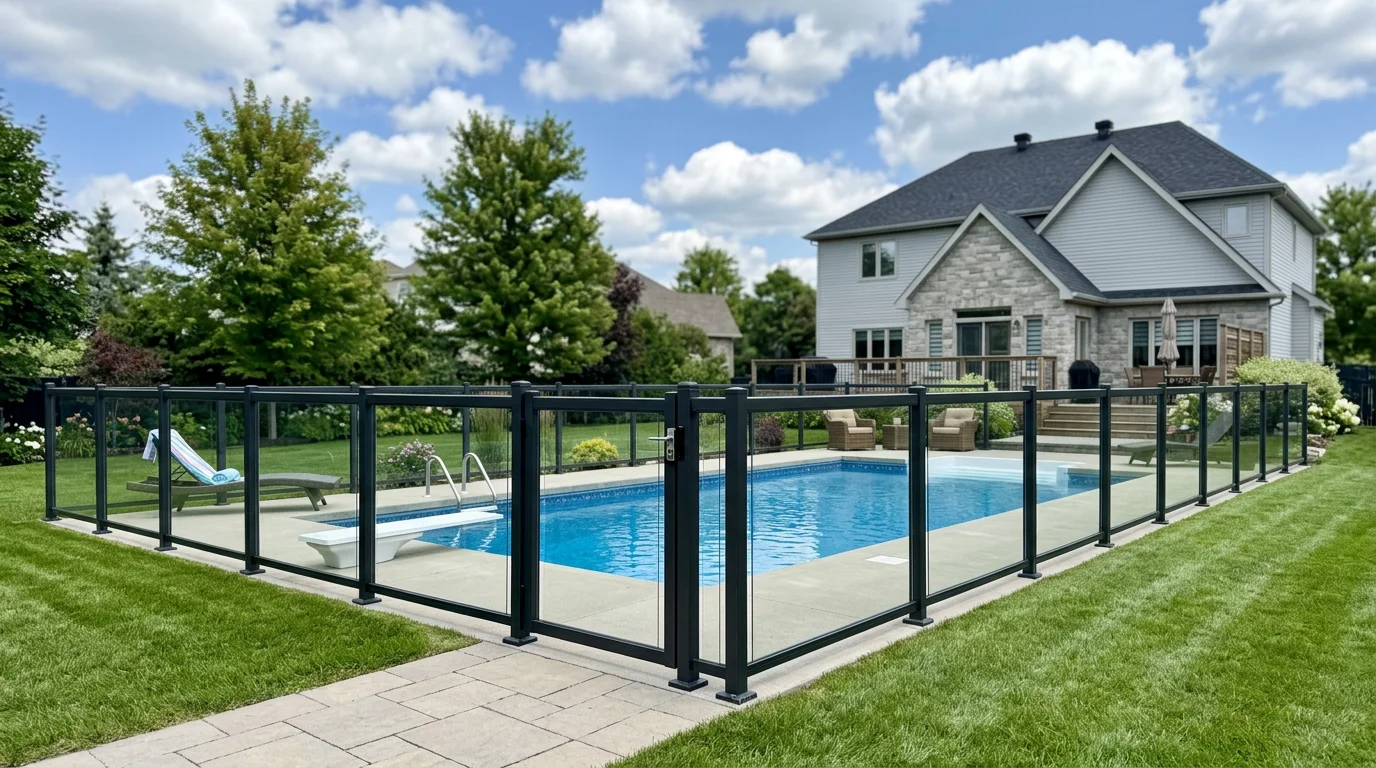
You're planning a fence and trying to decide: 4 feet or 6 feet? The choice affects your privacy, your budget, whether you need a permit, and what your municipality even allows you to build.
Here's what actually matters when comparing fence heights in Ontario.
Height Limits Under Ontario Bylaws
Most Ontario municipalities restrict fence heights differently depending on where the fence sits on your property.
🏗️ Planning a deck project?
Get a free manual project review, or visualize your dream deck with AI before requesting quotes.
Typical height restrictions:
- Front yard: 3-4 feet maximum (often measured from the front building line or porch)
- Side yard (beside house): 4-6 feet depending on setback from property line
- Rear yard and side yard (behind house): 6 feet maximum, sometimes 8 feet with approval
In Kitchener, Waterloo, and Cambridge, you'll generally find 6-foot fences allowed in backyards without variance applications, but front yard fences capped at 3.5-4 feet.
Check your specific property's zoning before ordering materials. Corner lots often have stricter rules because the "side yard" facing the street is treated as a second front yard. If you're on a corner lot, you may be limited to 4 feet along both street-facing sides.
When You Need a Fence Permit
Most Ontario municipalities require a permit for:
- Fences over 6 feet tall
- Fences within setback zones near property lines (typically 1-3 feet from the line)
- Fences along a corner lot street frontage
You typically don't need a permit for:
- Rear and side yard fences under 6 feet that sit directly on the property line
- Interior landscaping features under 4 feet
Permit costs run $50-200 depending on the municipality. If your 6-foot fence meets all setback and height requirements for your zone, you may not need a permit at all in KWC—but you're required to verify with your city first.
Need to apply for a deck permit too? Check out Kitchener deck permit application step-by-step or the Cambridge deck permit guide.
Cost Difference: 4-Foot vs 6-Foot Fence
Fence pricing scales with height because you need taller posts, more pickets or panels, and additional labor.
Material Cost Comparison
For 100 linear feet of fence installed in Ontario (2026 pricing):
| Material | 4-Foot Fence | 6-Foot Fence | Price Increase |
|----------|--------------|--------------|----------------|
| Pressure-treated wood | $2,500-3,500 | $3,500-5,000 | +40% |
| Cedar | $3,200-4,500 | $4,500-6,000 | +40% |
| Vinyl | $3,800-5,500 | $5,000-7,000 | +30% |
| Aluminum | $4,500-6,500 | $5,500-8,000 | +25% |
| Chain-link | $2,000-3,000 | $2,500-3,500 | +20% |
Why 6-foot fences cost more:
- Taller posts: 6-foot fences need 8-foot posts (2 feet underground), while 4-foot fences can use 6-foot posts
- More material: Roughly 50% more picket or panel material per linear foot
- Heavier gates: Gates need stronger hinges and diagonal bracing for taller heights
- Wind load: 6-foot fences catch more wind and may require deeper post holes or closer post spacing in Ontario's freeze-thaw climate
Labour Cost Per Foot
Expect to pay:
- 4-foot wood fence: $30-45/linear foot installed
- 6-foot wood fence: $35-55/linear foot installed
The difference comes from longer installation time, heavier materials to lift, and the need for scaffolding or ladders on some projects.
Privacy: Does 2 Feet Actually Matter?
A 6-foot fence provides head-height privacy for most adults. A 4-foot fence does not.
What you get with a 6-foot fence:
- Full visual privacy when you're standing in your yard
- Blocks sightlines from ground-level windows in neighbouring homes
- Reduces noise from streets and adjacent properties (marginal improvement)
What you get with a 4-foot fence:
- Defines property boundaries clearly
- Keeps kids and pets contained without feeling like a fortress
- Maintains open sightlines—useful for front yards or street-facing sides where you want visibility
- Complies with front-yard height restrictions
If your goal is true privacy, a 6-foot fence is the standard. If you're installing in a front yard or just want a decorative boundary, 4 feet works fine and costs less.
Structural Requirements for 6-Foot Fences
Taller fences face higher wind loads, especially in exposed backyards. Ontario's freeze-thaw cycles also push posts out of alignment over time if they're not installed deep enough.
Standard post requirements for 6-foot fences in Ontario:
- Post depth: Minimum 30 inches below grade, ideally 36 inches to get below the frost line (around 4 feet in KWC but varies by soil type)
- Post spacing: Maximum 8 feet apart, 6 feet if the fence runs perpendicular to prevailing wind
- Post size: Minimum 4x4 for wood, larger for corner and gate posts
For 4-foot fences:
- Post depth: 24-30 inches is often sufficient
- Post spacing: Can stretch to 8-10 feet apart
- Post size: 4x4 works fine for most applications
If you're building on clay soil (common in KWC), you'll want deeper posts regardless of height—clay expands and contracts significantly with moisture, which can heave shallow posts over a few winters.
Curious about other structural requirements? The deck footing options guide covers similar concepts for deck posts.
Fence Styles That Work at Both Heights
Some fence styles look proportional at either 4 or 6 feet. Others look awkward when shortened.
Styles that work at 4 feet:
- Picket fences (classic proportions)
- Horizontal board fences (modern look, still balanced)
- Decorative aluminum or wrought iron (often used at 3-4 feet in front yards)
- Split-rail fences (rustic, open design)
Styles that work better at 6 feet:
- Privacy fences (board-on-board, shadowbox, solid panels)
- Lattice-top fences (decorative upper section looks undersized at 4 feet)
- Vertical board fences with caps (cap rail feels cramped on short fences)
If you're going with a 4-foot fence, consider a semi-open style like horizontal boards or classic pickets. Solid privacy panels at 4 feet don't provide privacy and look incomplete.
Wind and Snow Load Considerations
A 6-foot fence is a sail. In open backyards with no windbreak, solid 6-foot fences take a beating from Ontario wind and snow.
How to reduce wind load on tall fences:
- Use shadowbox or board-on-board designs instead of solid panels—air passes through gaps between boards
- Install horizontal bracing on the back of the fence (diagonal bracing on gates)
- Space posts no more than 6-8 feet apart in exposed areas
- Use gravel backfill around posts instead of concrete only—allows drainage and reduces frost heave
Snow load in Ontario winters:
Snow drifts against 6-foot fences and pushes them over time. Clear heavy snow from the base of the fence after storms, especially if the fence faces north or west (prevailing wind direction in KWC).
A 4-foot fence is far less likely to suffer wind damage. It's low enough that snow typically blows over it rather than drifting against it.
For more on freeze-thaw impacts on outdoor structures, see winter deck care in Ontario.
Neighbourly Considerations and Shared Costs
If your fence sits directly on the property line, it's a shared fence under Ontario's Line Fences Act. That means your neighbour has a say in the height, style, and cost.
What happens if you want 6 feet and your neighbour wants 4 feet?
You can build 6 feet, but you may be responsible for the full cost if your neighbour disputes the height as unnecessary. Under the Line Fences Act, both parties are expected to split costs for a "reasonable and sufficient" fence. A 6-foot privacy fence is considered reasonable in a rear yard, but a neighbour can argue that 4 feet is sufficient and refuse to pay the difference.
To avoid disputes:
- Discuss height and style before ordering materials
- Get written agreement on cost-sharing
- Consider installing the fence 6 inches inside your property line so you don't need neighbour approval (but you lose 6 inches of yard space)
If you can't agree, either party can apply for a fence arbitration through the municipality. It's cheaper and faster to just compromise upfront.
Read more about shared fence issues in do both neighbours pay for a fence in Ontario.
Which Height Should You Choose?
Go with a 6-foot fence if:
- You're fencing the rear or side yard (behind the house) where bylaws allow it
- Privacy is the main goal
- You're okay with the extra cost (roughly 25-40% more than 4 feet)
- Your yard is sheltered from extreme wind
Go with a 4-foot fence if:
- You're fencing the front yard or street-facing side yard where height is restricted
- You want to define boundaries without blocking sightlines
- You're building on a tight budget
- You prefer an open, neighbourly aesthetic
In KWC backyards, 6-foot fences are the default for privacy. In front yards, 4-foot fences or shorter are usually required by bylaw.
How to Verify Your Property's Height Limits
Before you order materials or hire a contractor, confirm your property's fence height rules.
Steps to verify:
1. Check your zoning: Look up your property on your municipality's GIS map (Kitchener, Waterloo, and Cambridge all have online zoning maps)
2. Read the fence bylaw: Each city publishes a fence bylaw—search "[your city] fence bylaw" and look for height restrictions by zone
3. Call the building department: If you're unsure or on a corner lot, call and ask directly (they're used to this question)
4. Review any site plan conditions: If your house is in a newer subdivision, the developer may have imposed additional restrictions through site plan agreements
If you find conflicting information, call the city. Bylaw officers would rather answer a question upfront than issue a violation notice after your fence is built.
For more on checking zoning rules, see KWC deck zoning setbacks: how to check your property.
Installing a Taller Fence Later
Can you start with a 4-foot fence and upgrade to 6 feet later?
Technically yes, but it's not cost-effective. You'd need to:
- Replace all pickets or panels with taller ones
- Replace posts with longer posts (4-foot posts aren't tall enough for a 6-foot fence)
- Dig deeper post holes
You're basically building a new fence. If you think you'll want 6 feet eventually, build it now. The cost difference upfront is much smaller than the cost of rebuilding later.
🎨 Not sure which material to pick?
Upload a photo of your backyard and see exactly how Trex, TimberTech, or cedar would look — free and instant.
Common Questions
Can I build a 6-foot fence in my front yard in Ontario?
Not in most municipalities. Front yard fences are typically capped at 3-4 feet to maintain sightlines for traffic and neighbourhood aesthetics. You can apply for a minor variance, but approval is rare unless you have a corner lot with unique privacy concerns. Check your city's fence bylaw before planning.
Do I need a permit for a 4-foot fence in Kitchener, Waterloo, or Cambridge?
Usually no, as long as the fence is in the rear or side yard and meets setback requirements. You do need a permit if: the fence is over 6 feet, within a setback zone near the street, or on a corner lot. Call your city's building department to confirm before starting.
How much more wind damage does a 6-foot fence get compared to 4 feet?
Significantly more. A 6-foot fence has 50% more surface area than a 4-foot fence, which means roughly 50% more wind force. Use closer post spacing (6-8 feet instead of 8-10 feet), deeper footings, and consider semi-open designs like shadowbox to reduce wind load in exposed yards.
Is a 6-foot fence tall enough to block my neighbour's second-floor windows?
No. A 6-foot fence provides ground-level privacy but doesn't block views from second-floor windows or elevated decks. If your neighbour has a raised deck or bedroom window overlooking your yard, a fence won't solve the sightline issue—consider adding privacy screens, pergolas, or tall plantings near seating areas.
Can I install a 6-foot fence on a retaining wall or raised bed?
Check with your municipality. The total height (retaining wall + fence) is usually what matters for bylaw compliance. If your retaining wall is 2 feet tall and you add a 6-foot fence, the effective height is 8 feet, which may exceed limits. Some cities measure from grade level; others measure from the base of the retaining wall. Call and ask before building.
Upload a backyard photo and preview real decking materials with AI — free, instant, no sign-up.
Permits, costs, material comparisons, and questions to ask before requesting quotes — delivered to your inbox.