
Winter Deck Care in Ontario: Snow, Ice, and Salt (What to Do + What to Avoid)
Ontario winters are hard on decks. Here's how to shovel safely, avoid damaging salt, reduce slip risk, and prevent spring rot on wood and composite decking.
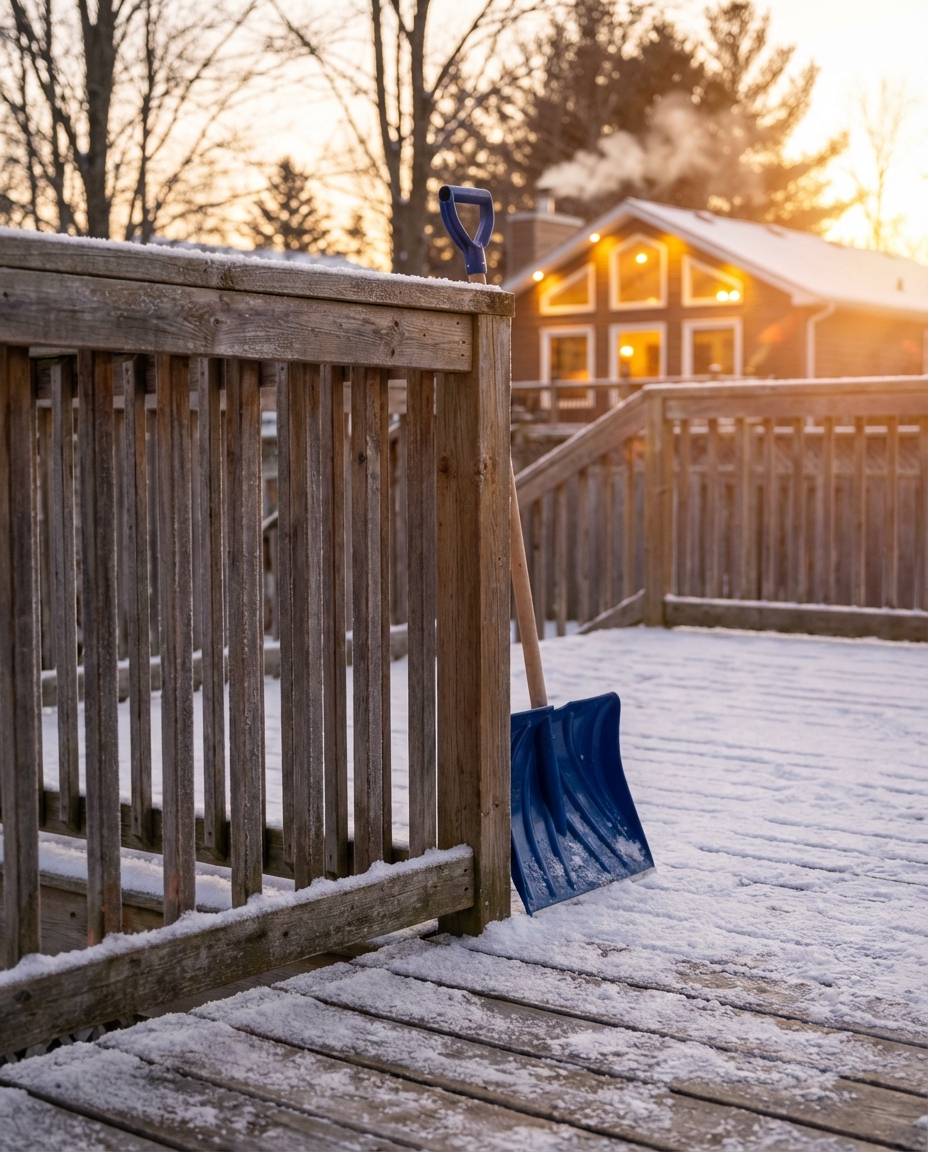
Ontario winters are brutal on outdoor surfaces — and decks take a beating from snow loads, ice, and de-icing products. Between November and April, KWC typically sees 150+ cm of snowfall, multiple freeze-thaw cycles per week, and temperatures that swing from -20C to +5C in days.
If you want your deck to look good in spring (and not turn into a slip hazard in February), a few small habits make a big difference.
Preparing your deck for winter (fall checklist)
The best winter deck care starts before the first snowfall. Aim to complete this by mid-November:
🏗️ Planning a deck project?
Get a free manual project review, or visualize your dream deck with AI before requesting quotes.
- Clean the deck thoroughly. Sweep leaves, dirt, and debris. Organic material trapped under snow accelerates rot on wood and mould on composite.
- Clear the gaps between boards. Use a putty knife to remove compacted debris. Blocked gaps prevent drainage and trap water.
- Seal or stain wood decks. Apply a fresh coat before temperatures drop below 10C. A sealed deck sheds water instead of absorbing it. See PT maintenance schedules.
- Check all fasteners. Tighten loose screws in the surface, stair treads, and railing connections.
- Move planters and furniture. Heavy pots trap moisture underneath and can crack during freeze cycles. Elevate remaining furniture on rubber pads.
- Inspect the underside. Check for blocked ventilation, damaged skirting, and animal nesting. See skirting and ventilation tips.
1) Shovel early and often
The longer snow sits, the more it:
- Compacts into ice that bonds to the deck surface
- Traps moisture against boards, accelerating rot and mould
- Creates a slick top layer during thaw/refreeze cycles
Technique matters
- Push with the grain. On wood decks, shovel in the direction the boards run to avoid catching board edges.
- Use a rubber-blade snow pusher. Rubber or polyurethane edges move snow without scraping. Avoid metal-edge shovels — they scratch composite and gouge wood.
- Do not pry ice. If ice has bonded to the surface, use a de-icer rated for your deck material and let it work before scraping gently.
- Shovel before it compacts. Clearing 5 cm of fresh snow takes two minutes. Clearing 15 cm of compacted, refrozen snow takes far longer and usually damages the surface.
- Keep a path to stairs. Stairs are the highest-risk slip area. Prioritize treads before addressing the main surface.
2) Be careful with salt and de-icers
Not all de-icing products are safe for decks. The wrong choice corrodes fasteners, damages finishes, and leaves residues that attract moisture.
De-icer comparison for deck surfaces
| Product | Deck Safety | Melts to | Residue | Notes |
|---|---|---|---|---|
| Calcium chloride | Best | -30C | Low | Least corrosive chloride. Preferred for wood and composite. |
| Magnesium chloride | Good | -15C | Moderate | Works well in moderate cold. |
| Sand | Safe (no melt) | N/A | High | Traction only. Accumulates in board gaps. |
| Potassium chloride | Moderate | -7C | Moderate | Safer for nearby plants. |
| Rock salt (sodium chloride) | Worst | -10C | High | Corrosive to hardware. Stains wood. Avoid. |
| Urea-based | Poor | -4C | High | Stains light composite. Not effective in deep cold. |
Key rules:
- Never use rock salt on a deck. It corrodes joist hangers, post brackets, and screws.
- Apply de-icer sparingly. Enough to break the ice bond, not enough to create a slush lake.
- Rinse in spring. Residue left into summer attracts moisture and causes discolouration.
3) Reduce slip risk without destroying the deck
- Adhesive anti-slip strips. Rubber-backed grip strips on stair treads provide reliable winter traction. Remove in spring to prevent moisture trapping.
- Rubber mats at door transitions. Catches snow from boots and provides grip at the highest-traffic spot.
- Traction sand in moderation. Provides grip without melting, but fills board gaps and needs spring cleanup.
- Traction additive in stain. Some penetrating stains accept a grit additive (rubber or aluminum oxide particles) that creates a permanently slip-resistant surface.
- Keep high-traffic paths shoveled. Prioritize stairs and the area outside the door.
Avoid wire brushes and metal ice choppers — these damage surfaces and create rough spots that trap moisture.
4) Watch the stairs and guard rails
Freeze-thaw cycles are hard on connections. Water seeps into fastener holes, freezes, expands, and loosens hardware.
Check monthly through winter:
- Post base bolts. Grab each post and push sideways. Movement means the connection needs retightening.
- Stringer lag screws. Check where stringers connect to the rim joist. Confirm lag screws are tight and surrounding wood has not softened.
- Cap rail connections. Face-nailed or screwed cap rails work loose over winter.
- Guard rail fasteners. Push against railing sections between posts. Flex means bracket connections need attention.
If anything wobbles, fix it before someone leans on it. See railing code requirements.
5) Spring cleanup matters
As soon as temperatures stay above freezing (late March to mid-April in KWC), clean up before winter damage becomes permanent.
- Sweep all debris from corners, the house wall, and board gaps.
- Wash off de-icer residue. Garden hose and deck brush for light buildup. Oxygen bleach-based cleaner (not chlorine bleach) for heavy residue.
- Power wash with caution. Below 1,500 PSI for composite, 2,000 PSI for PT wood. Fan tip (25- or 40-degree), 12+ inches of distance, with the grain on wood. A pro clean in KWC runs $150-400.
- Check for soft spots. Press down on areas under heavy snow all winter. Spongy boards indicate rot. See ledger rot warning signs.
- Look for popped fasteners. Raised screw heads are a trip hazard. Back out and drive a slightly longer screw.
- Check for warped boards. Give them a few weeks of warm weather before deciding to replace — they may flatten as they dry.
For composite-specific cleaning, see the composite maintenance guide.
Wood vs composite in winter
Pressure-treated wood
- Sensitive to moisture. Water in the grain freezes and expands, causing checking, splitting, and rot. A good stain or sealer reduces absorption significantly.
- Finish degrades faster in winter. Winter UV plus moisture and salt breaks down stain quicker. Full-sun decks may need refinishing every 2 years.
- Vulnerable to shoveling damage. Always use a rubber-blade pusher on bare PT.
- See the full PT maintenance schedule.
Composite decking
- More dimensionally stable. Resists checking, splitting, and warping through freeze-thaw, though it still expands and contracts. See board spacing guidance.
- Capped composite handles salt better than uncapped. Capped composite (core wrapped in a polymer shell) resists de-icer damage. Uncapped composite is porous and can absorb residue, causing discolouration.
- Gets slick when wet or icy. Smoother than wood — anti-slip strips and traction mats help. Some newer products have textured finishes for better wet grip.
- Mould is the main enemy. Composite does not rot, but organic material trapped on the surface grows mould in damp winter conditions. See composite maintenance.
Either way, the main lever is cleanliness. A deck that goes into winter clean and comes out clean will last significantly longer than one buried under debris from November to April. If winter damage has you considering a rebuild, our guide to deck costs in Ontario covers what replacement runs by material.
🎨 Not sure which material to pick?
Upload a photo of your backyard and see exactly how Trex, TimberTech, or cedar would look — free and instant.
Next step
If you are planning a new deck and want a material that is easier to live with in Ontario winters, compare options here:
You may also want to read Deck Winterizing Checklist for Ontario: Complete Guide.
You may also want to read Winter Fence Protection in Ontario: Snow and Ice.
Also consider reading Patio with Fire Pit in Ontario: Permit, Safety, and Design.
- Composite vs wood: /decks/blog/composite-vs-wood-decking-ontario-which-should-you-choose
Upload a backyard photo and preview real decking materials with AI — free, instant, no sign-up.
Permits, costs, material comparisons, and questions to ask before requesting quotes — delivered to your inbox.