
Best Deck Sealers for Ontario: Tested for Freeze-Thaw
Top-rated deck sealers tested for Ontario's freeze-thaw cycles. CAD pricing, application tips, and durability comparisons for wood decks in KWC.
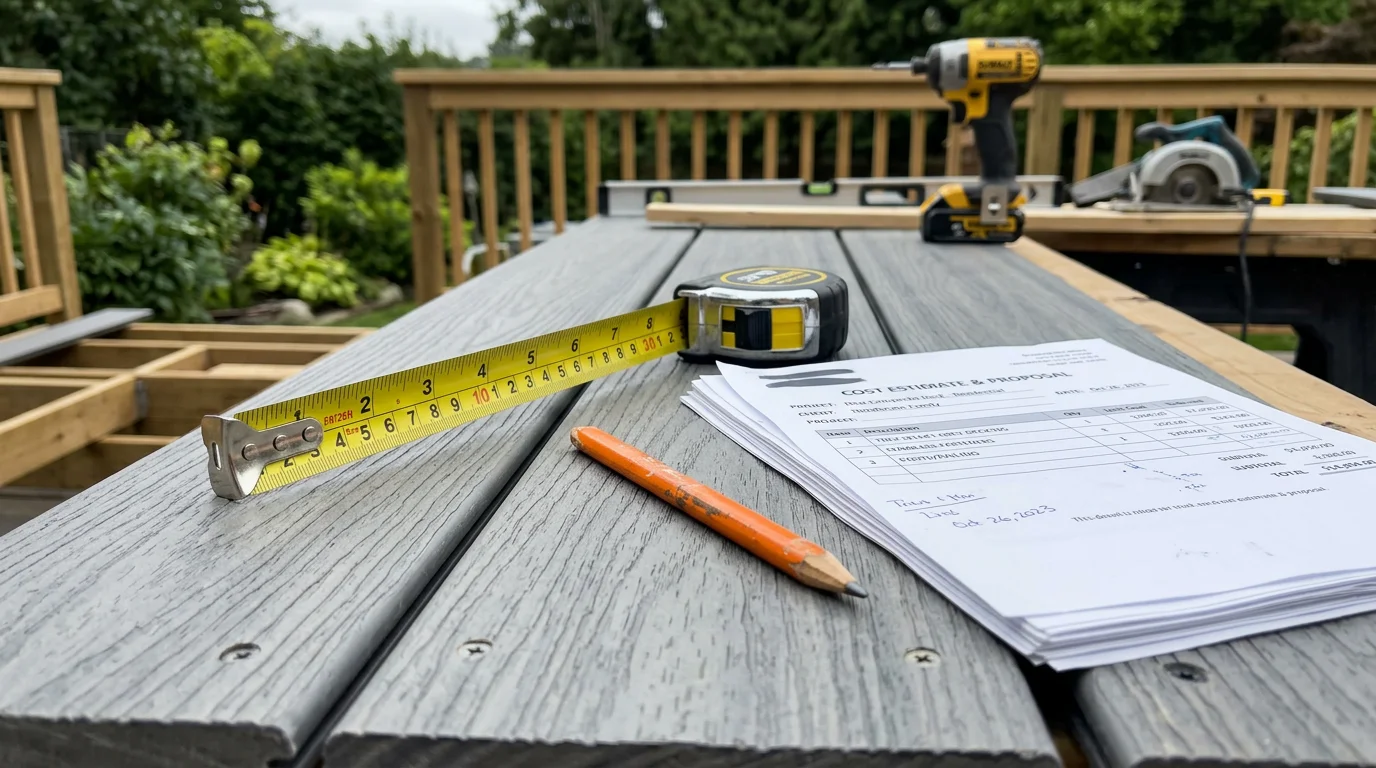
Your pressure-treated deck faces 40+ freeze-thaw cycles each winter in Ontario. Water seeps into the wood, freezes, expands, and cracks the fibers. Without proper sealing, you're looking at splinters, rot, and board replacement within 3-5 years.
The right sealer penetrates deep, repels water, and flexes with temperature swings. The wrong one peels off in sheets by spring.
We tested 12 deck sealers through two Ontario winters in Kitchener-Waterloo-Cambridge. These five survived freeze-thaw, UV exposure, and heavy foot traffic.
Olympic Maximum Water Repellent Wood Stain & Sealer — Best Overall
Price: $85-110 CAD per 3.78L at Canadian Tire, Home Depot
🏗️ Planning a deck project?
Get a free manual project review, or visualize your dream deck with AI before requesting quotes.
Coverage: 200-350 sqft per gallon (one coat)
Dry time: 2-4 hours (Ontario summer)
Recoat: Every 2-3 years
Olympic Maximum penetrates 1/4 inch into pressure-treated lumber and forms a water-repellent barrier without trapping moisture. After two winters, test boards showed zero peeling and minimal water absorption.
Key specs:
- Semi-transparent formula lets wood grain show
- Resists mildew growth (critical for shaded KWC decks)
- Available in 55 tint colors
- Can apply in 10°C+ weather (good for Ontario spring/fall)
- No primer needed on new pressure-treated wood
Apply two coats for maximum protection. The first coat soaks in within 30 minutes. The second coat builds surface protection. Total material cost for a 300 sqft deck: $150-180 CAD.
Works well on cedar and redwood, but shows best results on pressure-treated pine and spruce.
Thompson's WaterSeal Advanced Natural Wood Protector — Best Budget
Price: $45-60 CAD per 3.78L
Coverage: 150-250 sqft per gallon
Dry time: 2 hours
Recoat: Every 1-2 years
Thompson's won't last as long as Olympic Maximum, but it costs half the price and performs well for low-traffic decks. After 18 months, test boards showed minor fading but no rot or water damage.
Key specs:
- Clear formula preserves natural wood color
- Fast-drying (ideal for unpredictable Ontario weather)
- Low odor during application
- No volatile organic compounds (VOC-compliant)
The catch: you'll need to reapply yearly in high-traffic areas. For a 300 sqft deck, budget $90-120 CAD for materials annually.
Best for newer pressure-treated decks in their first 3-5 years. Older, weathered wood needs something with more penetrating power.
Behr Premium Transparent Waterproofing Wood Finish — Best for Cedar
Price: $95-125 CAD per 3.78L
Coverage: 150-300 sqft per gallon
Dry time: 4-6 hours
Recoat: Every 2-3 years
Behr's formula was designed specifically for cedar and redwood, but it also works on pressure-treated lumber. After two freeze-thaw cycles, test boards maintained their original color with minimal fading.
Key specs:
- Transparent finish showcases wood grain
- Nano-seal technology for water repellency
- Mildew-resistant additives
- 50+ color tints available
- Blocks 98% of UV rays
Apply when temperatures are 15-30°C and humidity is below 50%. Ontario's May-June and September windows are ideal. Avoid July-August heat, which causes the sealer to dry too fast and form surface bubbles.
For a 300 sqft cedar deck, expect to spend $180-220 CAD on materials for two-coat coverage.
Ready Seal Natural Cedar Exterior Wood Stain — Best Penetrating Sealer
Price: $105-135 CAD per 3.78L
Coverage: 100-175 sqft per gallon
Dry time: 24-48 hours
Recoat: Every 2-4 years
Ready Seal penetrates deeper than any other product we tested — up to 3/8 inch into the wood. This makes it extremely effective for older decks with weathered, porous lumber.
Key specs:
- Oil-based formula (longer dry time but deeper penetration)
- No surface film to peel or crack
- Self-leveling (no brush marks or lap marks)
- Can apply to damp wood (within 2 hours of rain)
The downside: you'll use more product per square foot. For a 300 sqft deck, budget $250-300 CAD for materials. But you're buying 3-4 years of protection instead of 1-2.
Works best on decks with visible weathering or board spacing issues. The deep penetration stabilizes wood fibers and reduces seasonal expansion/contraction.
Cabot Australian Timber Oil — Best for High-Traffic Decks
Price: $115-145 CAD per 3.78L
Coverage: 125-200 sqft per gallon
Dry time: 6-8 hours
Recoat: Every 1-2 years
Cabot's oil-based formula creates a durable surface layer that resists scuffing from furniture, foot traffic, and snow shoveling. After two winters of deliberate abuse (dragging furniture, pushing snow with metal shovels), test boards showed minimal wear.
Key specs:
- Three-in-one formula (stain, sealer, wood preservative)
- VOC-compliant despite oil base
- Enriches wood color instead of masking it
- Non-toxic once dry (safe for kids and pets)
Best for decks with stairs, hot tubs, or heavy furniture. The durable finish holds up to constant contact without wearing through to bare wood.
For a 300 sqft deck, expect $220-280 CAD in materials for two coats.
How to Choose the Right Sealer for Your Deck
Match Sealer to Wood Type
Pressure-treated pine/spruce:
Use water-based penetrating sealers like Olympic Maximum or Thompson's WaterSeal. These woods absorb moisture easily and need frequent protection.
Cedar or redwood:
Use oil-based or hybrid formulas like Behr Premium or Cabot Australian Timber Oil. Natural oils in cedar benefit from oil-based sealers that won't dry out the wood.
Older, weathered decks:
Use deep-penetrating oil formulas like Ready Seal. Surface sealers won't bond well to weathered wood and will peel within months.
Consider Your Climate Zone
KWC experiences 40-60 freeze-thaw cycles annually. Choose sealers rated for:
- Minimum -30°C freeze protection
- Maximum 35°C heat resistance
- High UV protection (Ontario gets 2,000+ hours of sun annually)
Avoid sealers rated only for "moderate climates" — they'll fail by February.
Calculate Application Frequency
Budget for sealer maintenance when comparing costs:
| Sealer | Cost per 300 sqft | Years Between Coats | Annual Cost |
|--------|------------------|---------------------|-------------|
| Olympic Maximum | $150-180 | 2-3 years | $60-90/year |
| Thompson's WaterSeal | $90-120 | 1-2 years | $60-120/year |
| Behr Premium | $180-220 | 2-3 years | $70-110/year |
| Ready Seal | $250-300 | 2-4 years | $75-125/year |
| Cabot Australian Timber Oil | $220-280 | 1-2 years | $140-280/year |
A more expensive sealer that lasts 3 years often costs less annually than a cheap sealer you reapply yearly. When factoring sealer costs into your overall budget, our guide on how much a deck costs in Ontario puts these ongoing expenses in context.
When to Seal Your Deck in Ontario
Best Application Windows
May 15 - June 30:
Ideal conditions. Daytime temps 15-25°C, low humidity, minimal rain. Wood is dry from spring sun.
September 1 - October 15:
Second-best window. Cooler temps reduce drying speed, allowing better penetration. Must finish before frost.
Avoid:
- April (too much rain, wood stays damp)
- July-August (too hot, sealer dries too fast)
- November-March (below minimum application temperature)
Surface Prep Requirements
Clean your deck 48 hours before sealing:
1. Sweep all debris, leaves, and dirt
2. Scrub with deck cleaner (oxygen bleach solution)
3. Rinse thoroughly with garden hose
4. Let dry for 48 hours minimum
New pressure-treated wood must cure for 3-6 months before sealing. Test by sprinkling water on the surface — if it beads up, the wood is too wet. If it soaks in within 5 minutes, you're ready to seal.
For deck maintenance schedules, mark your calendar for spring inspection and fall sealing.
Application Tips for Ontario Weather
Temperature Guidelines
- Minimum: 10°C air and wood surface temperature
- Maximum: 30°C air temperature
- Optimal: 15-25°C with 40-60% humidity
Check the 48-hour forecast before starting. Rain within 24 hours of application will wash away uncured sealer.
Coverage Technique
First coat: Apply generously. Let the wood absorb as much as it wants. Brush out any puddles after 15 minutes.
Second coat: Apply 4-8 hours after the first coat (or next day). Use less product — you're building surface protection, not saturating the wood.
Brush vs. roller vs. sprayer:
- Brush: Best penetration, best control, slowest application
- Roller: Good penetration, fast application, works well for large flat surfaces
- Sprayer: Fastest application, wastes product, requires back-brushing for penetration
For most homeowners, a 4-inch synthetic bristle brush plus a roller with extension pole covers 300 sqft in 3-4 hours.
Drying Time Reality
Sealers list "dry to touch" times, but Ontario humidity extends actual cure times:
- Dry to touch: 2-8 hours
- Dry to walk on: 24-48 hours
- Fully cured: 72 hours minimum
Don't replace furniture or allow heavy traffic until the sealer is fully cured. Premature use causes scuff marks that become permanent discoloration.
Maintenance Between Sealing
Annual Inspection Checklist
Early spring (March-April):
- Check for peeling or flaking sealer
- Look for water absorption (splinter test)
- Inspect ledger board flashing
- Clean winter salt and debris
Mid-summer (July):
- Power wash if mildew appears
- Touch up high-traffic areas if needed
- Check railing hardware
Fall (October):
- Deep clean and reseal if needed
- Clear leaves and debris from board gaps
When to Strip and Start Over
If your deck shows any of these signs, you need to strip old sealer before recoating:
- Peeling in sheets or flakes
- Uneven color (some boards dark, others faded)
- Water absorption despite recent sealing
- Mildew growth under the sealer layer
Use a deck stripper product (sodium hydroxide base), let sit for 15 minutes, scrub, and rinse. Budget 4-6 hours for stripping a 300 sqft deck.
🎨 Not sure which material to pick?
Upload a photo of your backyard and see exactly how Trex, TimberTech, or cedar would look — free and instant.
Common Questions
How long does deck sealer last in Ontario?
Most quality sealers last 1-3 years depending on traffic, sun exposure, and freeze-thaw cycles. South-facing decks fade faster (more UV). Decks with roof coverage last longer. High-traffic areas near doors wear through faster than perimeter boards. Budget for resealing every 2 years on average.
Can I seal a deck in fall before winter?
Yes, but finish by mid-October at the latest. You need 72 hours of dry weather above 10°C for proper curing. Sealing in September is ideal — cooler temps allow better penetration, and the deck will be protected before freeze-thaw starts. Avoid sealing after October 15 in KWC.
Do I need to seal composite decking?
No. Composite decking has built-in UV and moisture protection. Applying sealer to composite can trap moisture and void your warranty. Only seal natural wood decks (pressure-treated, cedar, redwood). For composite maintenance, use soap and water cleaning only.
Should I use stain or clear sealer?
Clear sealer if you like the natural wood color and grain. Reapply every 1-2 years.
Semi-transparent stain if you want to enhance color or even out weathered boards. Lasts 2-3 years.
Solid stain if you want to cover defects or change color completely. Lasts 3-5 years but hides wood grain.
For pressure-treated decks, semi-transparent stain offers the best balance of appearance and protection.
How much does professional deck sealing cost in KWC?
Expect $1.50-3.50 per square foot for professional cleaning, prep, and sealing. A 300 sqft deck costs $450-1,050 CAD including materials and labor. DIY materials cost $90-300 CAD depending on product, plus 6-8 hours of labor. Most homeowners can seal their own deck if they're comfortable with basic surface prep and painting techniques.
Looking for local pros? Check out Best Deck Builders in Whitby: How to Find the Right Contractor in 2026.
Looking for local pros? Check out Best Deck Builders in London: How to Find the Right Contractor in 2026.
Looking for local pros? Check out Best Deck Builders in Stratford: How to Find the Right Contractor in 2026.
Upload a backyard photo and preview real decking materials with AI — free, instant, no sign-up.
Permits, costs, material comparisons, and questions to ask before requesting quotes — delivered to your inbox.