
Composite Deck Maintenance in Ontario: Cleaning, Mold, Snow & Salt
What actually works for composite deck care in Ontario winters: safe cleaners, stain removal, snow tools, and what to avoid.
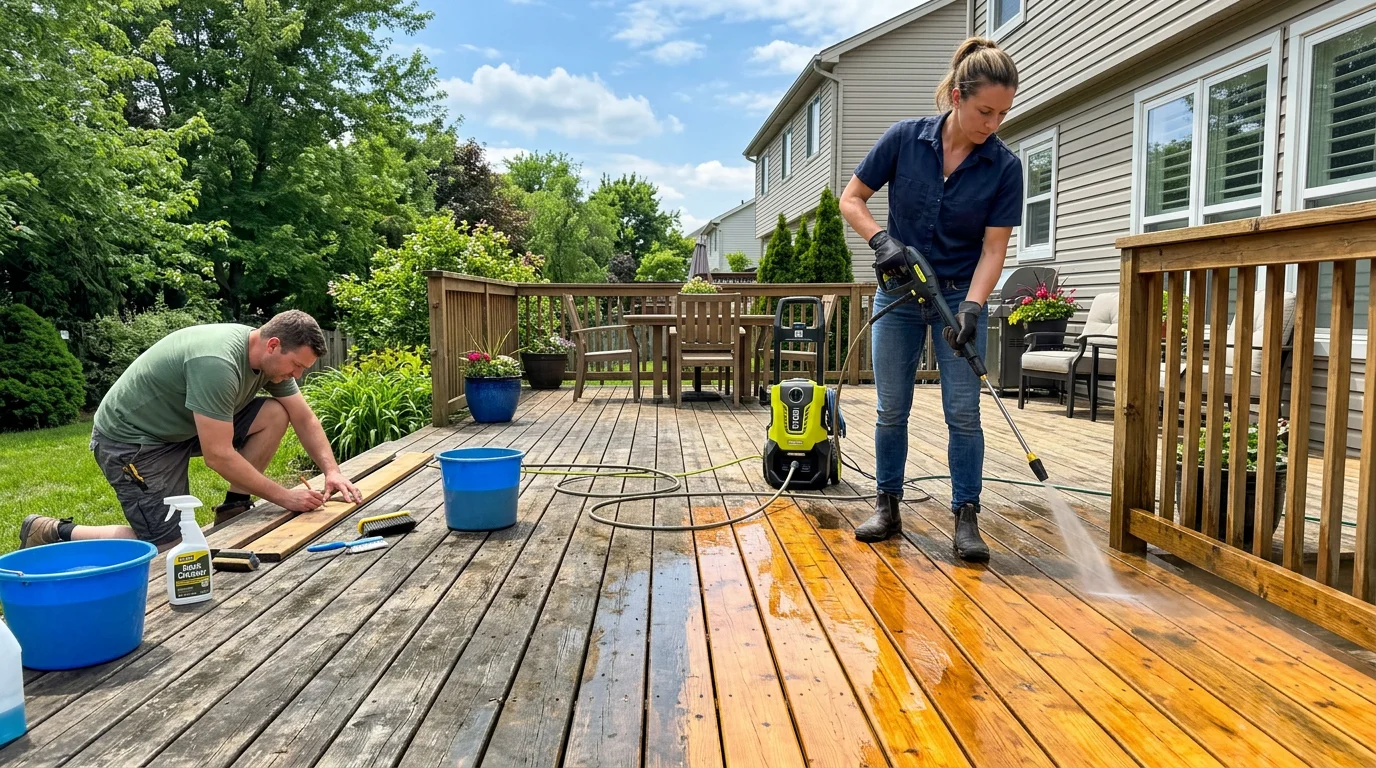
Composite decking is popular in Kitchener–Waterloo–Cambridge because it looks good without the yearly “stain weekend” that many pressure-treated decks require.
But in Ontario, “low maintenance” doesn’t mean “no maintenance.” Composite decks still collect:
- spring pollen and grime
- algae/mildew film in shaded areas
- leaf tannins in fall
- winter residue from boots and nearby de-icing products
The good news: keeping composite clean is mostly about gentle routine cleaning and using the right winter tools. This guide covers what actually works in KWC, what to avoid, and a simple seasonal checklist.
Internal resources:
- Deck services + estimates: /decks
- More local deck planning guides: /decks/blog
- City pages: /decks/kitchener, /decks/waterloo, /decks/cambridge
What makes composite decks look dirty in Ontario?
Most composite “stains” in Kitchener, Waterloo, and Cambridge come from a handful of repeat offenders:
🏗️ Planning a deck project?
Get a free manual project review, or visualize your dream deck with AI before requesting quotes.
1) Spring pollen + shade + moisture → slippery green film
2) BBQ grease → dark spots that attract dust
3) Leaf tannins → brown/black discoloration
4) Hard water + winter residue → chalky haze
5) Planters and outdoor rugs → trapped moisture marks
Composite boards don’t rot like wood, but the surface texture can hold grime. If it stays damp, it can get slippery.
The safest default cleaning method (works for most decks)
If you’re not sure what cleaner to use, start here.
Step 1: Sweep first
Dry debris removal matters because leaves and grit trap moisture.
- sweep off leaves/pine needles
- clear gaps between boards
Step 2: Wash with mild soap and water
- use warm water + mild soap
- scrub with a soft-bristle brush
- scrub along the direction of the board texture
Step 3: Rinse thoroughly
Soap residue can leave a film that attracts dirt.
Step 4: Let it dry and reassess
Many marks lighten significantly once dry.
Pressure washing composite: can you do it?
Often yes, but carefully.
Pressure washing can damage some composites if you:
- use too narrow a tip
- get too close
- hold the wand in one spot
If you pressure wash:
- use a fan tip (not a pinpoint tip)
- keep distance
- keep the wand moving
- test a hidden area first
When in doubt, stay gentle—your goal is to clean without roughening the surface.
Mold, mildew, and algae film (the KWC spring problem)
In Kitchener-Waterloo-Cambridge, the worst months for slippery film are often April through June, especially on:
- north-facing decks
- decks shaded by fences or tall evergreens
- areas under overhangs where rain doesn’t rinse naturally
Prevention
- keep debris out of gaps
- trim plants for airflow
- fix drainage so water isn’t constantly flowing across the deck
Drainage has a big impact on how often you’ll fight algae. Under-deck and foundation water management: /decks/blog.
Removal (safest approach)
- start with soap + soft scrub
- if film persists, use a composite-safe cleaner recommended by your board manufacturer
- rinse extremely well
Avoid mixing chemicals. Strong cleaners can discolor boards.
Stain removal by type
Grease and BBQ drips
- remove excess promptly
- use warm soapy water first
- use a composite-approved degreaser if needed
Pro tip: a grill mat saves a lot of cleanup.
Leaf tannins (fall stains)
- remove leaves quickly
- wash and scrub before stains “bake” in sun
Rust marks
Rust often comes from furniture feet or accessories.
- identify the source
- add protective pads
- consider stainless hardware when adding accessories
Food and berry stains
Clean quickly and avoid letting it sit through hot sun.
Winter composite care in Ontario: snow, salt, and ice
Winter is when many homeowners accidentally damage their deck.
Snow removal: use plastic tools
- plastic shovel or snow pusher
- avoid metal edges that gouge boards
Ice: don’t hack at it
Chipping ice with metal tools causes permanent scratches.
Instead:
- improve traction with sand where appropriate
- use only manufacturer-approved de-icers
What about salt?
Many KWC homes have salt tracked from sidewalks/driveways.
Best practices:
- use the minimum needed
- avoid leaving residue all season
- rinse on mild days if allowed and safe
Always check your composite brand’s guidance.
Seasonal composite maintenance checklist (Ontario)
Spring (best time for a deep clean)
1) sweep and clear gaps
2) wash with soap/water
3) inspect railings and fasteners (freeze/thaw loosens hardware)
4) check for water pooling and drainage issues
Summer
- spot-clean grease and sunscreen spills
- move planters and rugs occasionally
Fall
- keep leaves off the deck (tannins stain and hold moisture)
- do a final wash before freezing weather
Winter
- plastic shovel only
- avoid aggressive chipping
- keep stairs lit and safe
Lighting is a winter safety upgrade many homeowners wish they planned earlier. Lighting guide: /decks/blog.
Common composite mistakes to avoid
- harsh cleaners without manufacturer approval
- wire brushes
- metal snow shovels used aggressively
- letting wet leaves sit for weeks
- trapping moisture under non-breathable rugs
What composite maintenance costs in KWC
Composite maintenance costs are mostly small purchases and time:
- basic soap/brush: low
- occasional specialty cleaner: modest
- grill mat, furniture pads: modest
The “expensive” outcomes usually come from damage (gouges) or chronic drainage issues. If you're curious about what you'll pay for a deck in Ontario, our full cost guide covers materials, labour, and ongoing upkeep.
Quick troubleshooting (common KWC questions)
“My deck feels slippery even after cleaning.”
That’s usually one of three things:
- the deck stays shaded and damp (airflow problem)
- debris is trapped in gaps (water sits longer)
- drainage routes water across the surface (downspout or slope issue)
If the problem keeps returning, it’s worth addressing the water management rather than just cleaning more often. Drainage guide: /decks/blog.
“Can I use a magic ‘mold killer’ product?”
Use caution. Many harsh products can discolor composite or affect warranty coverage. Start with mild methods and use manufacturer-approved cleaners when you need something stronger.
“Do outdoor rugs damage composite?”
They can if they trap moisture. If you use a rug, choose one that’s breathable, and lift it periodically to let the deck dry.
“How do I keep composite looking new?”
The most effective habits are simple:
- sweep often in fall
- spot-clean grease quickly
- do a spring wash
- avoid surface damage from winter tools
---
🎨 Not sure which material to pick?
Upload a photo of your backyard and see exactly how Trex, TimberTech, or cedar would look — free and instant.
Want help choosing low-maintenance decking for your Kitchener, Waterloo, or Cambridge home?
If you’re comparing composite lines, colours, railings, and a layout that stays safe and clean through Ontario winters, we can help.
- Get a deck estimate: Get a deck quote
Share your rough size, height, and whether the deck is sunny or shaded for more accurate recommendations.
You might also find Deck Spring Cleaning Guide for Ontario helpful.
For upkeep tips, read Fall Deck Maintenance in Ontario: Prepare for Winter.
You may also want to read Deck Snow Removal in Ontario: Safe Tools and Techniques.
Upload a backyard photo and preview real decking materials with AI — free, instant, no sign-up.
Permits, costs, material comparisons, and questions to ask before requesting quotes — delivered to your inbox.