
Cedar vs Pressure-Treated Deck in Ontario: Which to Choose?
Cedar vs pressure-treated deck in Ontario: compare costs, lifespan, maintenance, and climate performance to choose the right wood for your KWC deck project.
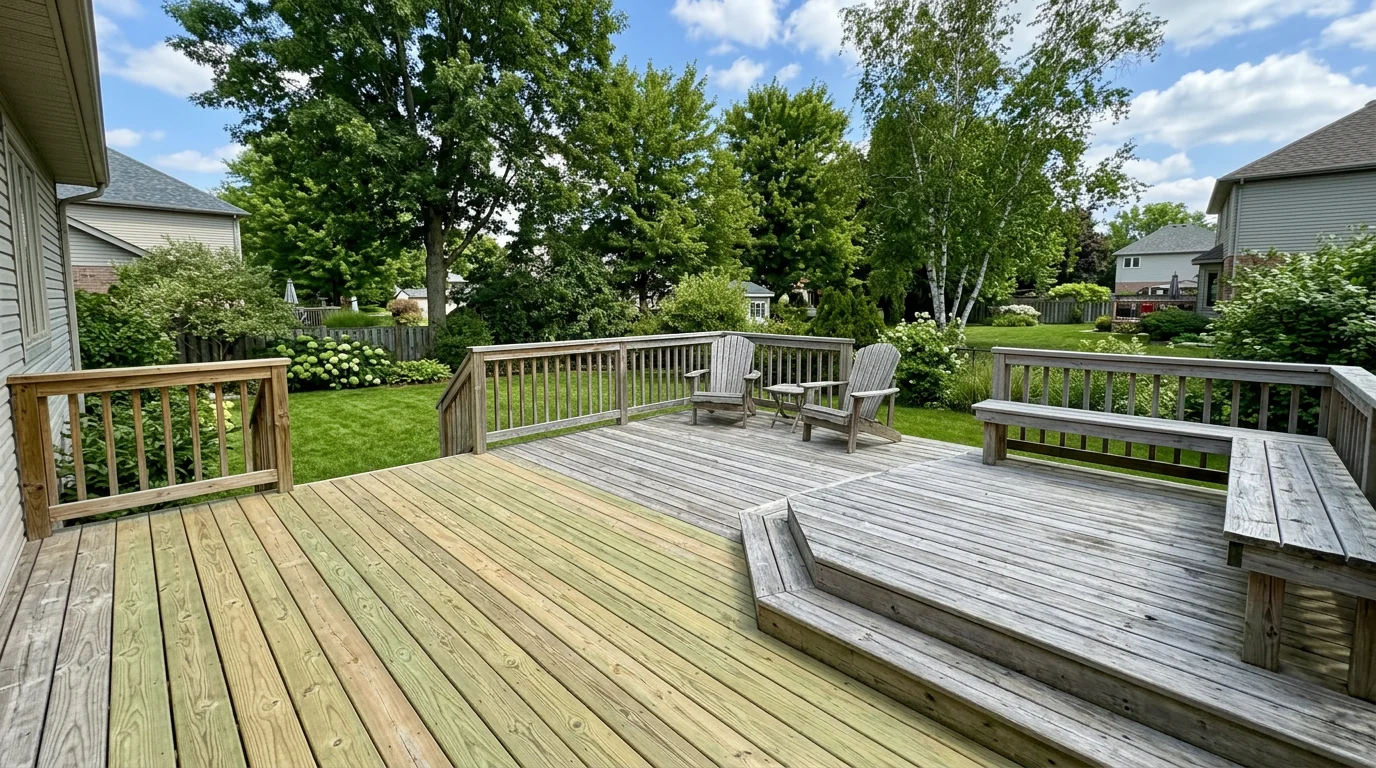
You're planning a wood deck and trying to decide between cedar and pressure-treated lumber. Both handle Ontario winters, both meet code requirements, and both cost less than composite. But they're different materials with different price tags, different maintenance schedules, and different lifespans.
Here's what you need to know to make the right choice for your KWC deck project.
Price: How Much More Does Cedar Cost?
Pressure-treated decking runs $45-65/sqft installed in the KWC area. Cedar decking costs $55-80/sqft installed—roughly $10-15/sqft more.
🏗️ Planning a deck project?
Get a free manual project review, or visualize your dream deck with AI before requesting quotes.
For a typical 12x16 deck (192 sqft):
- Pressure-treated: $8,640-12,480
- Cedar: $10,560-15,360
That's a $2,000-3,000 premium for cedar on an average-sized deck.
The price gap comes from the material itself. Pressure-treated lumber (typically spruce, pine, or fir treated with preservatives) costs $3-6/linear foot for 5/4x6 deck boards. Cedar boards run $5-10/linear foot depending on grade and availability.
Your framing—joists, beams, posts—will almost always be pressure-treated regardless of which decking you choose. Cedar is too expensive for structural members that nobody sees. The cost difference shows up in the visible deck boards and railings.
Get detailed KWC pricing breakdowns in our guides for Kitchener, Waterloo, and Cambridge, or see our province-wide deck cost guide for Ontario-wide numbers.
Lifespan: Which Wood Lasts Longer in Ontario?
Pressure-treated decks last 15-25 years in Ontario with proper maintenance. Cedar decks last 15-20 years with regular care—slightly shorter in freeze-thaw climates like ours.
Both materials handle Ontario weather, but they age differently.
Pressure-Treated Aging
Pressure-treated lumber is chemically protected against rot and insects. The preservatives penetrate deep into the wood—typically 0.85 inches or more—creating long-lasting protection. You can cut and drill it without sacrificing durability because the treatment goes well beyond the surface.
It starts greenish or brown (depending on treatment type) and weathers to silver-grey if you don't stain it. The wood itself stays structurally sound for decades, but surface checking, splintering, and cupping increase over time—especially if you skip maintenance.
Cedar Aging
Cedar contains natural oils (thujaplicins) that resist rot and repel insects. But these oils are concentrated in the heartwood (the darker reddish-brown center). Sapwood (the lighter outer wood) has minimal natural protection and rots faster.
Cedar weathers to an attractive silver-grey patina if left unstained. The wood stays smoother longer than pressure-treated because it's less dense and has a more uniform grain structure. But the natural oils degrade under UV exposure, and unprotected cedar loses rot resistance within 3-5 years.
Both materials need regular sealing to hit their full lifespan potential. Skip maintenance and you'll see rot in both—cedar in the sapwood-heavy areas, pressure-treated at cut ends and areas where the preservative didn't fully penetrate.
Maintenance: What You'll Actually Have to Do
Both cedar and pressure-treated decks need cleaning, sealing, and inspection. The schedules are nearly identical.
Annual Cleaning
Sweep off debris regularly. Power wash (max 1,200 PSI) once per year in spring to remove dirt, mildew, and algae. Use a deck cleaner if you see mold or heavy staining—plain water won't cut it.
Both woods grow mold and algae in shaded areas or under patio furniture. Ontario's humidity makes this inevitable. Clean it off before it etches into the grain.
Sealing Schedule
Cedar: Apply a clear or semi-transparent sealer within 3-6 months of installation to lock in the natural oils. Reapply every 2-3 years. If you want to keep the natural reddish tone, use a UV-blocking sealer—otherwise it'll grey within one season.
Pressure-treated: Wait 6-12 months before sealing to let the wood dry out. The preservative treatment leaves the lumber wet, and sealer won't penetrate properly until the moisture content drops below 15%. Once sealed, reapply every 2-3 years.
Both woods accept stain equally well. Semi-transparent stains show the grain; solid stains cover it like paint. Darker stains hide weathering and UV damage better than clear sealers.
Learn more in our pressure-treated deck maintenance guide.
Winter Care
Both materials handle freeze-thaw cycles, but salt damage is real. If you use ice melt on your deck, rinse it off in spring—salt accelerates wood breakdown regardless of species.
Shovel snow with a plastic shovel to avoid gouging. Don't let ice build up against the deck boards; it forces moisture into cracks and accelerates rot.
See our full winter deck care checklist for Ontario-specific tips.
Appearance: Look and Feel
Cedar wins on aesthetics. It has a warm, natural reddish-brown color with tight, straight grain. It's smooth to walk on barefoot and doesn't splinter as aggressively as pressure-treated.
Pressure-treated lumber has visible grain and knots. The chemical treatment gives it a greenish or brown tint (newer ACQ and CA-B treatments are less green than old CCA). It's rougher underfoot and more prone to splintering, especially as it ages.
If you plan to stain the deck, the appearance gap narrows. Solid stain covers both equally. Semi-transparent stain looks better on cedar because the grain is more uniform, but pressure-treated with a quality stain still looks fine.
If you're going for a natural, unstained look, cedar weathers to an attractive silver-grey. Pressure-treated also turns grey, but unevenly—some boards go darker, some lighter, and the overall effect is less refined.
Ontario Climate Performance
Both materials meet Ontario Building Code requirements for exterior decks. Both handle our freeze-thaw cycles (we get 40-60 per winter in KWC). Both resist rot when properly maintained.
Moisture and Rot Resistance
Pressure-treated lumber is chemically protected against ground contact rot. You can bury it, and it'll still last 20+ years. Cedar's natural oils resist decay, but only in the heartwood—and only when fresh. Once UV exposure breaks down the oils, unprotected cedar rots.
In practice: pressure-treated performs better in high-moisture areas like ground-level decks or decks over clay soil (common in KWC). Cedar performs better in drier, elevated decks with good airflow underneath.
Both need proper drainage. If water pools on your deck boards or traps moisture against the joists, you'll get rot regardless of material. Install deck joist tape and slope the deck 1/8 inch per foot to shed water.
Expansion and Contraction
Wood moves with humidity changes. Both cedar and pressure-treated expand when wet, shrink when dry. In Ontario, that means boards swell in spring/fall and shrink in summer/winter.
Pressure-treated: Installed wet (fresh from treatment), shrinks significantly as it dries. You'll see gaps open up between boards in the first year. Install boards tight together; they'll gap naturally.
Cedar: Installed dry (or nearly dry), moves less overall. Gap boards 1/8 to 3/16 inch at installation. They'll swell slightly in humid months but won't close up completely.
Learn more about deck board spacing in Ontario.
Building Code and Permit Considerations
Both cedar and pressure-treated are approved materials under the Ontario Building Code. Your permit application won't be rejected based on wood species.
What matters:
- Framing lumber: Must be pressure-treated or naturally rot-resistant lumber rated for ground contact (if posts/beams touch soil) or above-ground use (if fully elevated).
- Deck boards: Can be pressure-treated, cedar, or other approved species. No structural rating required—just span tables for joist spacing.
- Railings: If your deck is more than 24 inches above grade, you need a railing. Both cedar and pressure-treated work, but pressure-treated posts are more common for structural reasons.
Your deck permit drawings must specify materials, but inspectors care more about structural integrity than aesthetics. Use either wood—both pass.
For KWC-specific permit requirements, see:
Availability and Supply Chain (2026 Update)
Pressure-treated lumber is widely available year-round at every big-box and lumber yard in KWC. Supply is stable, prices are predictable, and you can get it delivered same-week.
Cedar availability fluctuates. Most yards stock it, but selection varies—especially for higher grades. If you want clear, knot-free cedar boards, expect to order ahead or pay a premium. Lower-grade cedar (more knots, some sapwood) is easier to find.
Pressure-treated pricing has stabilized after the 2021-2022 lumber spike. Cedar prices remain volatile because it's harvested in smaller volumes and competes with other premium lumber markets.
Should You Choose Cedar or Pressure-Treated?
Choose cedar if:
- You want a premium natural look and don't mind paying $2,000-3,000 more upfront
- You're building an elevated deck with good airflow underneath (cedar's rot resistance works best in dry conditions)
- You plan to leave the deck unstained and want an attractive weathered appearance
- You value a smooth, splinter-free surface for barefoot use
- You're willing to seal every 2-3 years and maintain the wood properly
Choose pressure-treated if:
- You're on a budget and want to save $10-15/sqft on material costs
- You're building a ground-level deck or a deck over high-moisture soil (pressure-treated handles ground contact better)
- You plan to stain the deck anyway (appearance gap disappears under solid stain)
- You prioritize durability and low-fuss performance over aesthetics
- You want a deck that's easy to replace board-by-board in 15 years without worrying about matching wood grades
Neither material is "better" across the board. Pressure-treated gives you more deck for your dollar. Cedar gives you a nicer-looking deck with a smoother feel. Both last 15-20 years with proper care. Both handle Ontario winters.
If you're comparing wood to composite, see our full composite vs wood decking guide.
🎨 Not sure which material to pick?
Upload a photo of your backyard and see exactly how Trex, TimberTech, or cedar would look — free and instant.
Common Questions
Can you mix cedar decking with pressure-treated framing?
Yes—this is the standard approach. Use pressure-treated for all structural framing (joists, beams, posts) and cedar only for the visible deck boards and railings. You get cedar's aesthetics where it matters and pressure-treated's durability where it doesn't show. This keeps costs reasonable while upgrading the look.
Does cedar decking need to be sealed right away?
Seal cedar within 3-6 months of installation to preserve the natural oils and color. If you wait longer, UV exposure will start breaking down the rot-resistant compounds in the heartwood. You can leave it unsealed if you want a weathered grey look, but you'll sacrifice some longevity—expect rot to appear sooner in sapwood areas.
Is pressure-treated lumber safe for decks where kids play?
Yes. Modern pressure-treated lumber uses ACQ (alkaline copper quaternary) or CA-B (copper azole) preservatives, which replaced the old arsenic-based CCA treatment in 2003. ACQ and CA-B are approved for residential use and safe for skin contact. The copper in the treatment is the same element found in copper piping and cookware.
Which wood is easier to repair—cedar or pressure-treated?
Both are equally easy to repair at the board level. Damaged boards pop out and new ones go in. Pressure-treated is easier to match during repairs because the color and grade are more consistent. Cedar repairs are visible if you can't find the same grade—mixing clear heartwood with knotty sapwood looks patchy. If you choose cedar, buy a few extra boards at installation and store them dry so you have matching stock for future repairs.
Can you use cedar for deck posts and joists?
Technically yes—cedar is naturally rot-resistant and meets code for above-ground structural use. But it's rarely done because cedar is expensive and pressure-treated performs better in ground-contact and high-moisture applications. If you're installing posts in concrete footings or attaching a ledger board to your house, use pressure-treated. Save cedar for the parts you actually see.
Upload a backyard photo and preview real decking materials with AI — free, instant, no sign-up.
Permits, costs, material comparisons, and questions to ask before requesting quotes — delivered to your inbox.