
Cedar vs Pressure-Treated Deck Cost in Ontario: Worth the Upgrade?
Cedar deck cost in Ontario runs $55-80/sqft vs $45-65/sqft for pressure-treated. Compare lifespan, maintenance, and ROI to decide what's worth it.
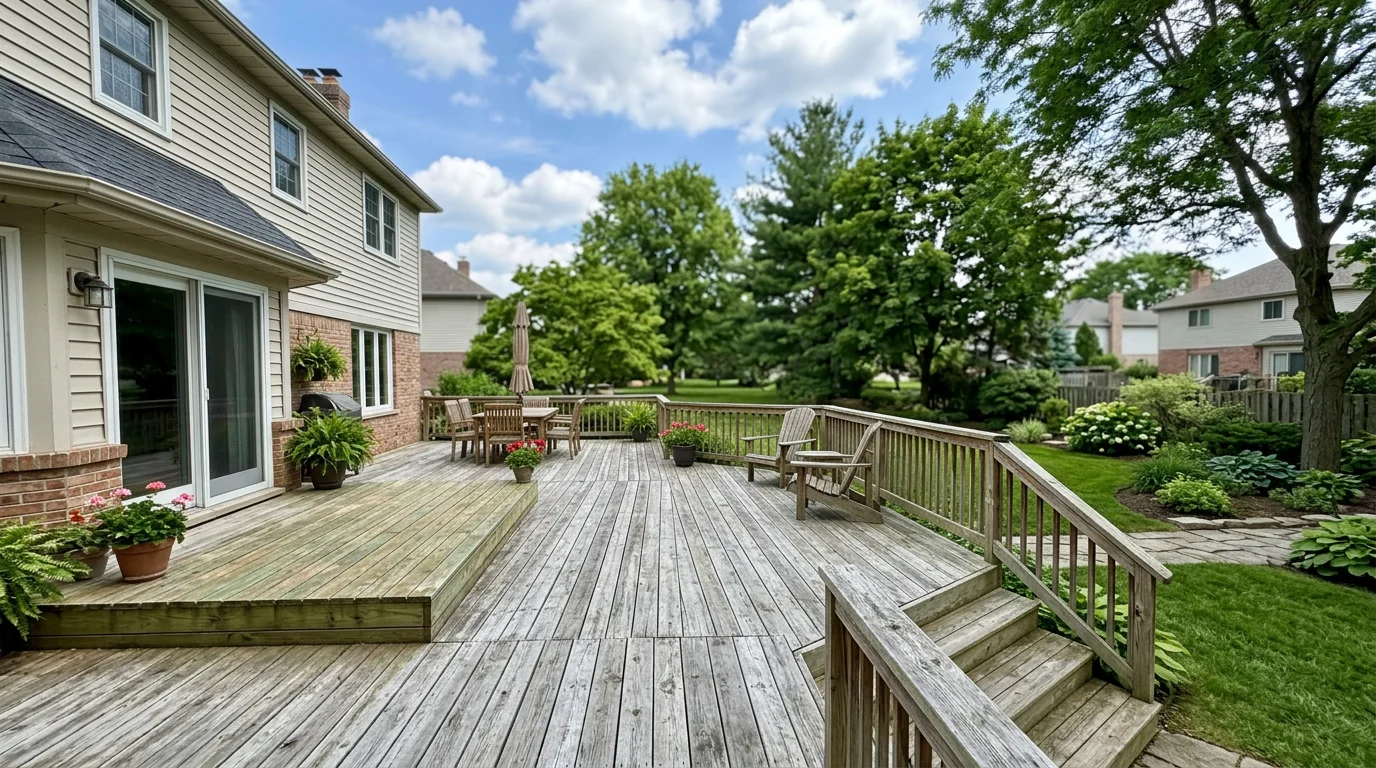
You're planning a deck and wondering whether cedar is worth the extra money over pressure-treated lumber. The short answer: cedar costs $10-15 more per square foot installed, but it looks better, lasts longer with proper care, and requires less toxic maintenance. Whether that's worth it depends on your budget, timeline, and how long you plan to stay in your home.
Here's what the numbers actually look like in Ontario's 2026 market, and what you're really paying for. (For all materials side by side, see our Ontario deck cost per square foot guide or our comprehensive Ontario deck pricing guide.)
Cedar vs Pressure-Treated Cost Breakdown (2026 KWC Pricing)
| Cost Component | Pressure-Treated | Cedar |
🏗️ Planning a deck project?
Get a free manual project review, or visualize your dream deck with AI before requesting quotes.
|----------------|-----------------|-------|
| Material (decking boards only) | $3-5/sqft | $6-9/sqft |
| Labour (installed) | $25-35/sqft | $28-40/sqft |
| Total installed cost | $45-65/sqft | $55-80/sqft |
| 300 sqft deck (typical) | $13,500-19,500 | $16,500-24,000 |
The $2,500-4,500 premium on a typical deck comes from:
- Higher material cost: Cedar boards cost roughly double what pressure-treated boards cost
- Slower installation: Cedar is softer and requires more careful handling to avoid splitting
- Premium appearance: You're paying for aesthetics, not just function
Why Cedar Costs More
Cedar is naturally rot-resistant thanks to oils in the heartwood. Pressure-treated lumber gets its durability from chemical preservatives (typically ACQ or CA-B) forced into the wood under pressure. You're not just paying for a prettier board—you're paying for a wood that resists decay without synthetic chemicals.
That said, not all cedar is created equal. Western Red Cedar heartwood (the reddish-brown center) has the rot resistance. The lighter sapwood (outer rings) doesn't. Make sure your quote specifies heartwood or premium grade if rot resistance matters.
Lifespan: How Long Does Each Actually Last?
Pressure-treated pine: 15-25 years with regular maintenance (staining every 2-3 years, cleaning, sealing)
Cedar: 20-30 years with proper care (cleaning annually, sealing/staining every 3-5 years)
Cedar left untreated: 15-20 years (it'll weather to silver-gray and check/crack more, but still resist rot)
Ontario's freeze-thaw cycles are brutal on decks. Water gets into cracks, freezes, expands, and splits the wood. Cedar's tighter grain handles this better than pressure-treated pine, but both need seasonal maintenance to hit their upper lifespan limits.
If you skip maintenance entirely, pressure-treated will outlast neglected cedar. The chemical treatment keeps working even when the surface looks terrible. Cedar relies on its natural oils, which degrade faster when exposed to UV and moisture without protection.
Maintenance Reality Check
Pressure-Treated Maintenance
- Wait 6-12 months before staining (let the wood dry and off-gas)
- Clean and restain every 2-3 years to prevent graying and surface rot
- Expect splinters and cracks as the wood ages, especially on handrails
- Watch for green/black mold in shaded areas—pressure-treated is treated against rot, not mold
Total maintenance cost over 20 years: $2,000-4,000 (cleaning, staining, minor repairs)
Cedar Maintenance
- Can stain immediately if you want to preserve the natural color
- Or let it weather naturally to silver-gray (still protects against rot, just looks different)
- Clean annually with mild soap and water
- Seal or stain every 3-5 years if you want to keep the color
Total maintenance cost over 20 years: $1,500-3,500 (less frequent staining, fewer repairs)
Cedar is softer, so it dents more easily if you drop tools or furniture. But it also means fewer splinters and a more comfortable barefoot surface in summer.
Climate Performance in Ontario
Freeze-Thaw Durability
Both materials expand and contract with moisture and temperature. Cedar's cellular structure handles this better—it swells less when wet and returns to shape more consistently. Pressure-treated lumber can warp and twist as it dries out after installation, especially if it wasn't properly kiln-dried before treatment.
If you're building in Cambridge, Waterloo, or Kitchener and the deck faces north or gets limited sun, moisture retention becomes a bigger issue. Cedar dries faster after rain or snow, reducing the risk of surface mold and ice buildup.
Heat and Comfort
On a 30°C July afternoon, pressure-treated decking gets uncomfortably hot to walk on barefoot. Cedar stays 5-10°C cooler thanks to its lower density and lighter color. If you have kids or pets using the deck in summer, this matters.
Resale Value and ROI
A well-maintained cedar deck adds $5,000-10,000 to your home's resale value in KWC markets, assuming it's less than 10 years old. A pressure-treated deck in similar condition adds $3,000-7,000.
Buyers notice:
- Appearance: Cedar looks upscale, especially if it's been maintained with a semi-transparent stain
- Age: Cedar ages more gracefully—weathered cedar still looks intentional, weathered pressure-treated looks neglected
- Health perception: Some buyers avoid pressure-treated because of chemical concerns, especially with young kids
If you're planning to sell within 5-7 years, cedar's appearance premium can help your home stand out. If you're staying 15+ years, the difference matters less—by then, either material will need refinishing or replacement.
When Pressure-Treated Makes More Sense
Choose pressure-treated if:
- Budget is tight: That $3,000-5,000 savings is real money
- You're building a rental property: Durability-to-cost ratio favors pressure-treated when you're not using it daily
- The deck is hidden: If it's a utility deck behind a garage, appearance doesn't justify the premium
- You plan to replace in 10-15 years anyway: Why pay for 30-year lifespan if you'll remodel sooner?
- You're DIY-building: Pressure-treated is more forgiving for beginner mistakes
When Cedar Justifies the Cost
Choose cedar if:
- This is your forever home: Spread the premium over 20-30 years and it's $100-200/year
- You care about aesthetics: Cedar's natural grain and warm color are legitimately beautiful
- You have young kids: Fewer splinters, cooler surface, no chemical concerns
- You're willing to maintain it: Cedar rewards care with longevity and appearance
- You're selling within 5-10 years: The resale bump can recover part of the premium
Framing: Where Material Choice Actually Matters
Most KWC deck quotes include pressure-treated framing (joists, beams, posts) regardless of whether you choose cedar or pressure-treated decking. This is standard and smart—framing lumber is hidden and needs maximum rot resistance.
Some builders offer cedar framing for an additional $5-10/sqft, but it's rarely worth it. Save the cedar premium for visible surfaces: decking boards, railings, fascia, and stair treads.
Building Code and Permit Considerations
Both materials meet Ontario Building Code requirements for residential decks. Your deck permit application doesn't change based on decking material—you're still looking at $150-400 in permit fees depending on municipality.
However, deck joist spacing can differ. Cedar's softness means some builders use 12-inch on-center joist spacing instead of 16-inch to reduce bounce. This adds $2-4/sqft to framing costs. Confirm spacing requirements with your builder and make sure your permit drawings reflect the actual plan.
Hidden Costs to Watch For
Fasteners
Cedar requires stainless steel or coated fasteners. Regular deck screws will corrode and leave black streaks on the boards. Add $100-300 for upgraded fasteners on a typical deck.
Staining Immediately
If you stain cedar right away to preserve the color, factor in $1.50-3/sqft for materials and labour. Some quotes include first staining, some don't.
Railing Material
If you're choosing cedar decking, you'll likely want cedar railings to match. This adds $60-100/linear foot vs $40-70/linear foot for pressure-treated railings. On a deck with 40 linear feet of railing, that's an extra $800-1,200.
Hybrid Approach: Best of Both Worlds?
Some homeowners choose pressure-treated framing and joists with cedar decking and railings. This gets you:
- Maximum rot resistance where moisture collects (framing)
- Premium appearance where it's visible (surface boards)
- Cost savings vs all-cedar construction
Typical cost: $50-70/sqft installed, splitting the difference between pure pressure-treated and pure cedar.
You can also use composite decking with cedar railings for a maintenance-free surface and natural accents. See our composite vs wood guide for full cost breakdowns.
How to Get Accurate Quotes
When requesting quotes, specify:
- Material preference: Cedar heartwood, pressure-treated, or open to both
- Grade: Premium cedar vs standard, ground-contact vs above-ground for pressure-treated
- Staining: Included in install or DIY later
- Fasteners: Stainless steel for cedar, coated for pressure-treated
- Railing material: Match decking or mix materials
Use our deck quote checklist to make sure you're comparing apples to apples. Some builders quote cedar heartwood, others quote a mix of heartwood and sapwood—the difference is $1-2/sqft in material cost and significant in longevity.
What About Composite?
If you're already considering the cedar premium, look at composite too. Installed composite costs $65-95/sqft in KWC—overlapping with high-end cedar pricing—but requires almost zero maintenance and lasts 25-40 years.
The trade-offs:
- Composite: Higher upfront cost, no maintenance, synthetic look
- Cedar: Mid-range cost, regular maintenance, natural aesthetic
Check our composite deck cost guide for detailed comparisons.
🎨 Not sure which material to pick?
Upload a photo of your backyard and see exactly how Trex, TimberTech, or cedar would look — free and instant.
Common Questions
How much does a 12x16 cedar deck cost in Ontario?
A 192 sqft cedar deck installed runs $10,500-15,400 in the KWC area, assuming standard construction with pressure-treated framing and cedar decking and railings. The same deck in pressure-treated costs $8,600-12,500. Add $150-400 for permits and $500-1,200 if you need deck demolition first.
Can you mix cedar and pressure-treated on the same deck?
Yes, and it's common. Use pressure-treated for joists, beams, and posts (hidden structural elements) and cedar for decking boards, railings, stair treads, and fascia (visible surfaces). This saves $8-12/sqft vs all-cedar while keeping the premium look where it matters.
Does cedar need to be stained right away?
No. Cedar can be installed and left to weather naturally to silver-gray over 6-12 months. If you want to preserve the natural honey color, stain within 2-3 months of installation using a semi-transparent UV-blocking stain. Waiting longer is fine structurally, but the color will shift to gray as the wood oxidizes.
How does cedar hold up to Ontario winters?
Cedar handles freeze-thaw cycles well due to its tight grain and low moisture absorption. It's less prone to cracking and warping than pressure-treated pine. However, you still need to clear snow regularly, avoid salt or harsh de-icers, and ensure proper drainage underneath to prevent ice buildup.
Is cedar decking worth it if I'm planning to sell in 5 years?
Possibly. A cedar deck in good condition adds $5,000-10,000 to resale value in KWC markets, which can offset half to all of the $3,000-5,000 premium you paid vs pressure-treated. It depends on your neighborhood—in higher-end areas like Beechwood or Laurelwood, cedar is expected and adds value. In entry-level markets, pressure-treated is standard and cedar may not move the needle.
Upload a backyard photo and preview real decking materials with AI — free, instant, no sign-up.
Permits, costs, material comparisons, and questions to ask before requesting quotes — delivered to your inbox.