
Deck Demolition & Disposal in Kitchener-Waterloo-Cambridge: Costs, Dump Fees, and What to Ask
Removing an old deck in KWC? Learn typical disposal logistics, what affects cost, and how to avoid surprises in quotes (hidden rot, dumpsters, and cleanup scope).
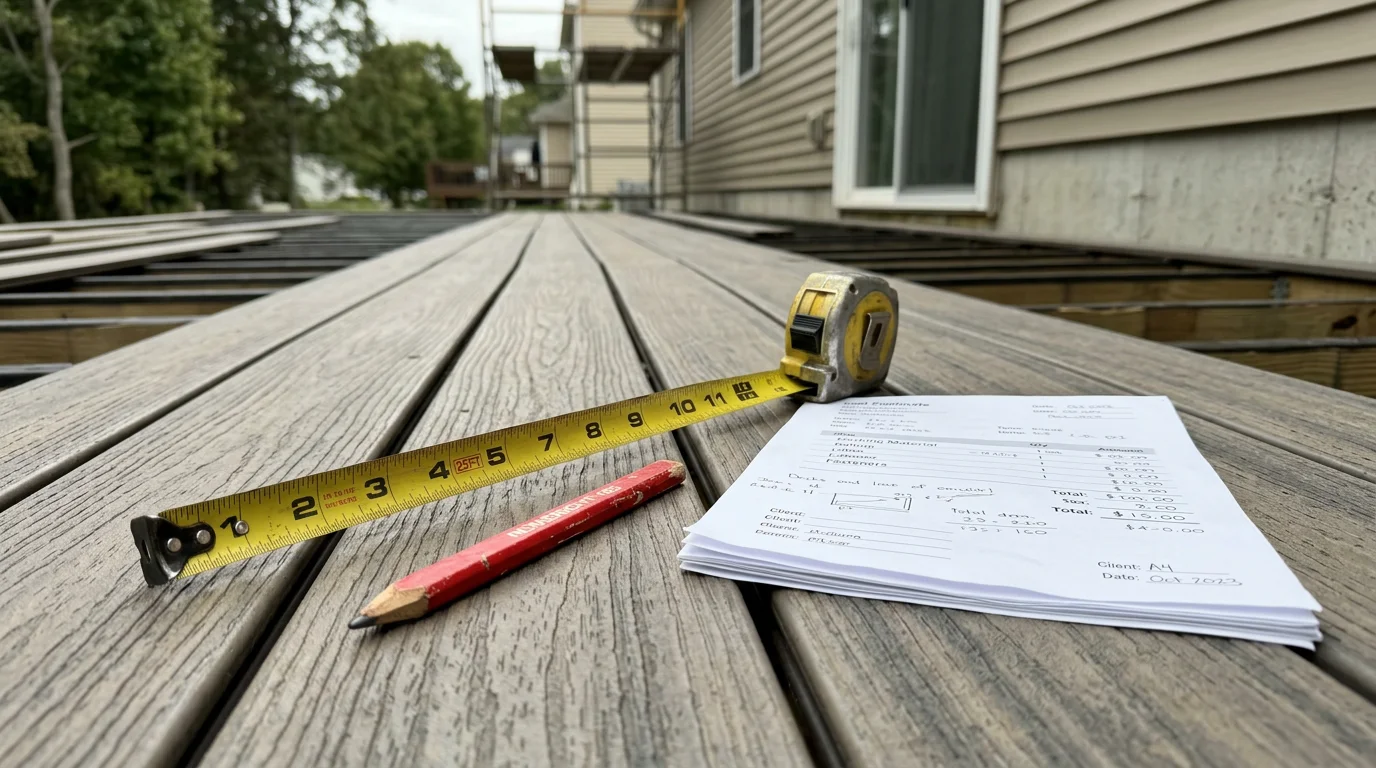
When you’re rebuilding a deck in Kitchener-Waterloo-Cambridge, demolition is often treated like an afterthought.
Then you get a quote with a confusing line like:
> “Demo: $1,200–$3,500 depending.”
This guide breaks down what drives demolition and disposal costs in KWC, what to ask your builder so there are no surprises, and when a “resurface” might be smarter than a full tear-out.
What affects demo cost the most
1) Size and height
A small low deck is quick. A tall multi-level deck with stairs and railings can be a major teardown.
🏗️ Planning a deck project?
Get a free manual project review, or visualize your dream deck with AI before requesting quotes.
If you’re deciding whether you can resurface instead, read:
2) Material type
- pressure-treated lumber: usually straightforward
- composite/PVC: heavier, more volume
- railings (aluminum/glass): more disassembly time
3) Hidden rot and attachment issues
If the ledger area is compromised, removal can require careful work to avoid damaging the house.
Ledger risk context:
4) Access constraints
A narrow gate or steep yard can change everything:
- manual carry-out instead of wheelbarrows
- smaller dumpster loads
5) Dumpster vs trailer vs bagster
Disposal method impacts cost and speed.
A professional quote should specify:
- dumpster size (if any)
- number of hauls
- where it will be placed
- who is responsible for driveway/lawn protection
What to put in writing (demo scope checklist)
Ask your builder to specify:
- what is being removed (decking, framing, posts, footings)
- whether stairs and railings are included
- whether concrete footings are removed or cut off below grade
- what happens if there is rot at the house attachment
- cleanup standards (nails, debris, lawn damage)
Contract checklist:
Permits: do you need one for a rebuild?
Sometimes.
Even if you’re “replacing,” a rebuild that changes structure/height often triggers permit requirements.
Start with:
If you’re in Waterloo or Cambridge:
- /decks/blog/do-you-need-a-permit-to-build-a-deck-waterloo-ontario
- /decks/blog/do-you-need-a-permit-to-build-a-deck-cambridge-ontario
How to compare quotes fairly
If one builder is cheaper, ask:
- Are you including dumpster/hauls?
- Are you removing footings or leaving them?
- Is cleanup included?
- What happens if you find rot at the ledger?
Use the quote checklist:
Typical demo surprises (and how to price them)
1. Rot at the ledger/rim area
- may require extra carpentry to repair the house edge
2. Old footings in the wrong place
- may need removal or cutting below grade
3. Buried debris
- previous owners sometimes bury old concrete or scraps
A good quote will state how these are handled (time-and-material vs fixed allowance).
DIY vs pro demo: when DIY makes sense
DIY demo can make sense for small, low decks with easy access.
Pro demo is usually worth it when:
- the deck is attached (risk to the house)
- the deck is tall
- there are railings/stairs
- disposal logistics are hard
If you’re rebuilding, plan the new layout early
Sometimes the cheapest demo is the one where the new deck reuses some of the existing footprint — but only if the existing structure is sound.
Rebuild vs resurface: /decks/blog/deck-rebuild-vs-resurface-kitchener-waterloo-when-to-replace
Environmental/cleanup details that change cost
Even for small decks, disposal cost is often driven by:
- number of trips/hauls
- sorting requirements (metal railings vs wood)
- nails and debris cleanup time
Ask whether the quote includes:
- a magnetic nail sweep
- board-by-board cleanup around gardens
- protection for interlock/driveway where dumpsters sit
If you’re rebuilding: use demo time to learn about your house edge
Demo is the best time to inspect:
- rim joist condition
- siding condition
- drainage at the foundation
If you’re going to attach the new deck, ledger details matter:
- /decks/blog/ledger-board-attachment-ontario-deck-safety-kitchener-waterloo
- /decks/blog/deck-ledger-flashing-ontario-water-damage-prevention
Rough cost ranges (what’s normal in KWC)
Costs vary widely, but as a gut-check:
- small, low deck demo with easy access: often the low end
- large, elevated deck with stairs/railings + difficult access: often the high end
The best way to control cost is to define scope:
- are footings removed?
- how is debris handled?
- what’s the cleanup standard?
Safety note
Deck demo involves:
- nails and sharp fasteners
- falling hazards on elevated decks
- hidden electrical (lighting)
If lighting is present, make sure power is safely handled.
Lighting context: /decks/blog/deck-lighting-ideas-ontario-low-voltage-permit-safety
🎨 Not sure which material to pick?
Upload a photo of your backyard and see exactly how Trex, TimberTech, or cedar would look — free and instant.
FAQ
Do I need a permit to remove an old deck?
Removal alone is often not the permit trigger — the new build is. But if you’re rebuilding, confirm permit needs early.
Can I reuse existing footings?
Sometimes, but it depends on condition, location, and whether they match the new layout. Reuse is easiest when the new deck footprint is similar.
Timeline: demo is usually 1–2 days, but permits can take longer
Most demo work is fast once a crew is on site. The longer timeline risk is usually the permit and redesign cycle for the new deck.
If you’re rebuilding, confirm setbacks and drawings early:
- /decks/blog/deck-setback-rules-kitchener-waterloo-cambridge-property-lines
- /decks/blog/deck-permit-drawings-checklist-kwc-site-plan-framing
Want a rebuild quote without surprises?
If you’re rebuilding a deck in Kitchener/Waterloo/Cambridge, submit your details here: /#quote-form.
Mention:
- city
- approximate deck size and height
- whether you want to reuse any parts
- access constraints
Upload a backyard photo and preview real decking materials with AI — free, instant, no sign-up.
Permits, costs, material comparisons, and questions to ask before requesting quotes — delivered to your inbox.