
Deck Builder Contract Checklist (Kitchener-Waterloo-Cambridge): Payments, Warranty, and What to Put in Writing
Before you sign a deck quote in KWC, use this contract checklist: scope, materials, change orders, payment schedule, timelines, warranty, permits, and cleanup.
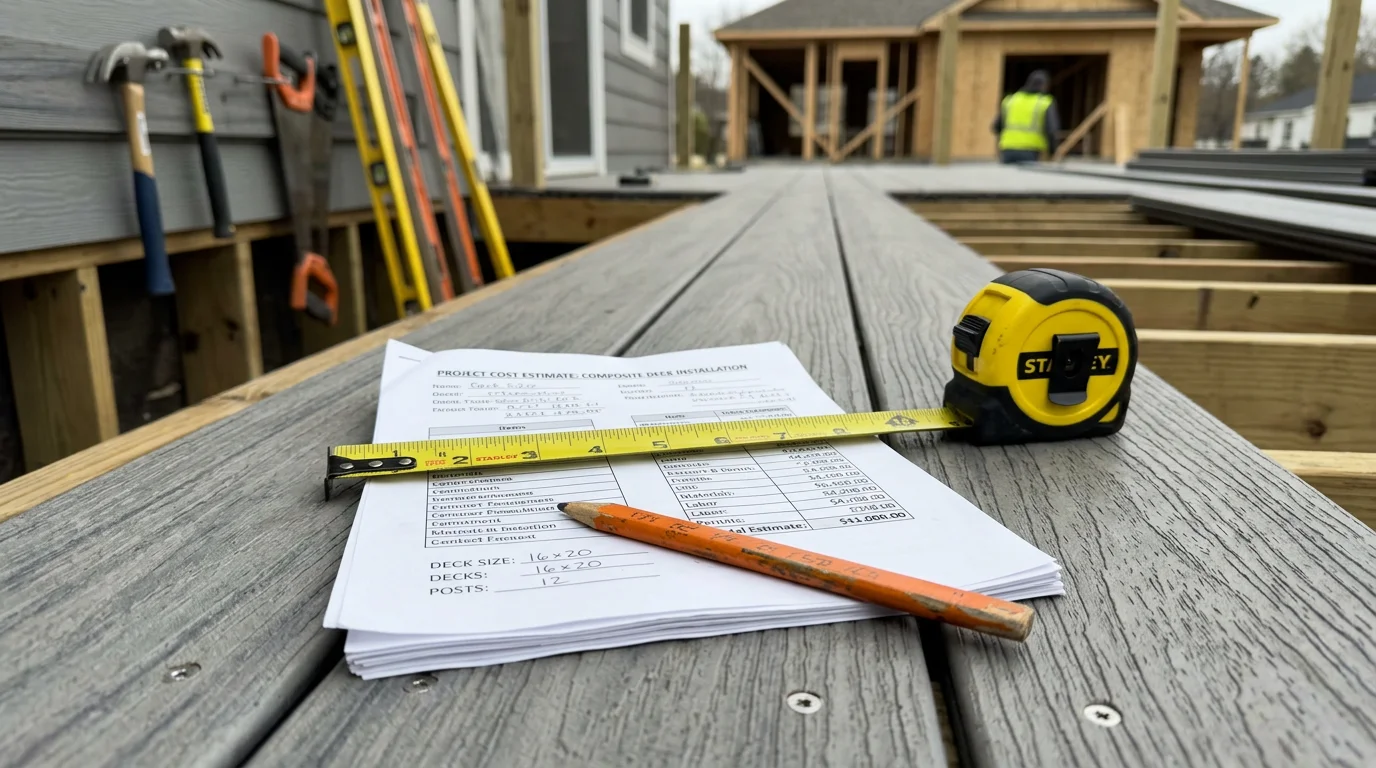
Deck projects go sideways in Kitchener-Waterloo-Cambridge for the same reason they go sideways everywhere: the contract is vague.
A deck quote can look professional and still leave enough ambiguity to trigger:
- surprise “extras”
- timeline drift
- material substitutions
- warranty arguments
This checklist helps you turn a quote into a clear agreement — without turning it into a legal battle.
The goal: reduce ambiguity, not add paperwork
A strong deck contract does two things:
🏗️ Planning a deck project?
Get a free manual project review, or visualize your dream deck with AI before requesting quotes.
1. Defines scope precisely (so you’re not arguing later)
2. Defines the process for changes (so upgrades don’t become chaos)
If you’re still selecting a builder, start with the quote checklist:
1) Scope of work (be painfully specific)
Your contract should list:
- deck size and layout (attach drawings)
- stairs count and configuration
- railing type and total linear feet
- skirting, privacy screens, or under-deck storage (if any)
- demolition/removal of existing deck (if any)
If you’re rebuilding vs resurfacing, read this to avoid scope confusion:
2) Materials (brand, line, color, and fasteners)
“Composite deck boards” is not a specification.
Include:
- decking material (PT / composite / PVC)
- brand + product line (for composite)
- color
- board width
- fastening system (surface screws vs hidden fasteners)
If you’re comparing composite vs wood, use:
Also specify railing system clearly:
3) Permit responsibility (who pulls it, who pays, what’s included)
This is a frequent “gotcha.” Your contract should state:
- Who is the permit applicant (homeowner vs builder)
- Who pays permit fees
- Who produces drawings
- Who responds to City comments/resubmissions
Helpful permit references:
- /decks/blog/deck-permits-kitchener-24-inch-rule
- /decks/blog/deck-permit-drawings-checklist-kwc-site-plan-framing
4) Structural assumptions (footings, ledger, frost)
If the contract doesn’t specify structure, you can end up paying for “surprises” that are actually normal.
Include:
- footing type (concrete vs helical)
- minimum depth / frost strategy
- ledger attachment method (if attached)
- guard post attachment method
Links:
- /decks/blog/deck-footing-options-ontario-sonotube-helical-piles-pros-cons
- /decks/blog/ledger-board-attachment-ontario-deck-safety-kitchener-waterloo
5) Payment schedule (avoid “90% upfront”)
A healthy payment schedule aligns money with work completed.
A common pattern:
- deposit to book slot (reasonable)
- payment after materials delivered
- payment after framing inspection passes (if applicable)
- final payment only after punch-list is complete
If your deck requires an inspection, understand the milestones:
6) Timeline + weather clause
Ontario weather is real.
Include:
- start window (not just “spring”)
- substantial completion date (with a range)
- how rain delays are handled
- what happens if materials are delayed
If you’re timing a build, this helps:
7) Change orders (the single biggest money leak)
If you only add one clause, add a change-order process.
It should say:
- no changes without written approval
- price impact must be quoted before work begins
- schedule impact must be acknowledged
This prevents the classic:
> “We already did it — it’s $1,800 extra.”
8) Warranty (what is covered, and for how long)
Separate two warranties:
1. Workmanship warranty (builder)
2. Product warranty (manufacturer)
Your contract should include:
- workmanship warranty length
- what is excluded (normal movement, staining, etc.)
- how warranty claims are handled
Maintenance expectations affect warranties. For example:
- /decks/blog/pressure-treated-deck-maintenance-ontario-stain-seal-schedule
- /decks/blog/composite-deck-maintenance-ontario-cleaning-mold-snow-salt
9) Cleanup, disposal, and site protection
Specify:
- disposal of old deck and packaging
- protection of lawn/driveway
- daily cleanup expectations
If demolition is part of your project, read:
10) “Red flags” to watch for
- No address or company info on the quote
- No permit language for a permit-triggering deck
- Vague materials (“composite”, “aluminum railing”)
- Payment schedule heavily front-loaded
- No written change-order process
A simple “holdback” idea that keeps everyone honest
Many homeowners in KWC use a practical version of holdback:
- Keep a meaningful amount (even 5–10%) for the final walk-through.
- Tie it to a punch-list: railings solid, stairs consistent, cleanup complete, no wobbles.
This isn’t about being difficult — it’s about aligning incentives.
What to verify at the final walk-through
Walk the deck and check:
- Guards/railings feel rigid (no significant sway)
- Stairs are consistent (no weird step that trips you)
- Fasteners are clean (no protruding screws)
- Water drains off (no obvious low spots)
- Any skirting panels are secure and removable
If you’re dealing with inspections, this helps: /decks/blog/deck-framing-inspection-kwc-what-inspectors-look-for
🎨 Not sure which material to pick?
Upload a photo of your backyard and see exactly how Trex, TimberTech, or cedar would look — free and instant.
FAQ
Should I pay extra for composite framing?
Usually not. Composite boards are common; composite framing is less common and should be justified by design.
Do I need the builder’s insurance info?
It’s reasonable to ask for proof of insurance and business details, especially for larger decks.
Materials substitutions (protect yourself politely)
Supply chains change. Substitutions can be reasonable — but they should be controlled.
Add a simple clause:
- substitutions must be equal or better
- must be approved in writing
- any price difference must be documented
This prevents quiet downgrades (“different railing line, same price”).
Communication + decision cadence
Deck projects move fast once framing starts. Agree on:
- who the point of contact is
- how changes are approved (text/email)
- how quickly you’ll respond to questions
Clear communication is a quality multiplier.
Want help comparing two quotes?
If you have two deck quotes and you want a fast “what’s missing?” review, submit your project details here: /#quote-form.
Include:
You may also want to read Deck Warranty: What to Look For in Builder and Material Warranties.
Looking for local pros? Check out Deck Builder Payment Schedule: What's Fair in Ontario?.
You may also want to read Deck and Fence Package in KWC: Save by Bundling.
- city (Kitchener/Waterloo/Cambridge)
- deck size + height
- materials you want
- whether you need a permit
Upload a backyard photo and preview real decking materials with AI — free, instant, no sign-up.
Permits, costs, material comparisons, and questions to ask before requesting quotes — delivered to your inbox.