
Deck Cost in Washington (2026)
What does a deck cost in Washington, DC in 2026? Get real pricing by material, labor rates, and money-saving tips for DC homeowners building this year.
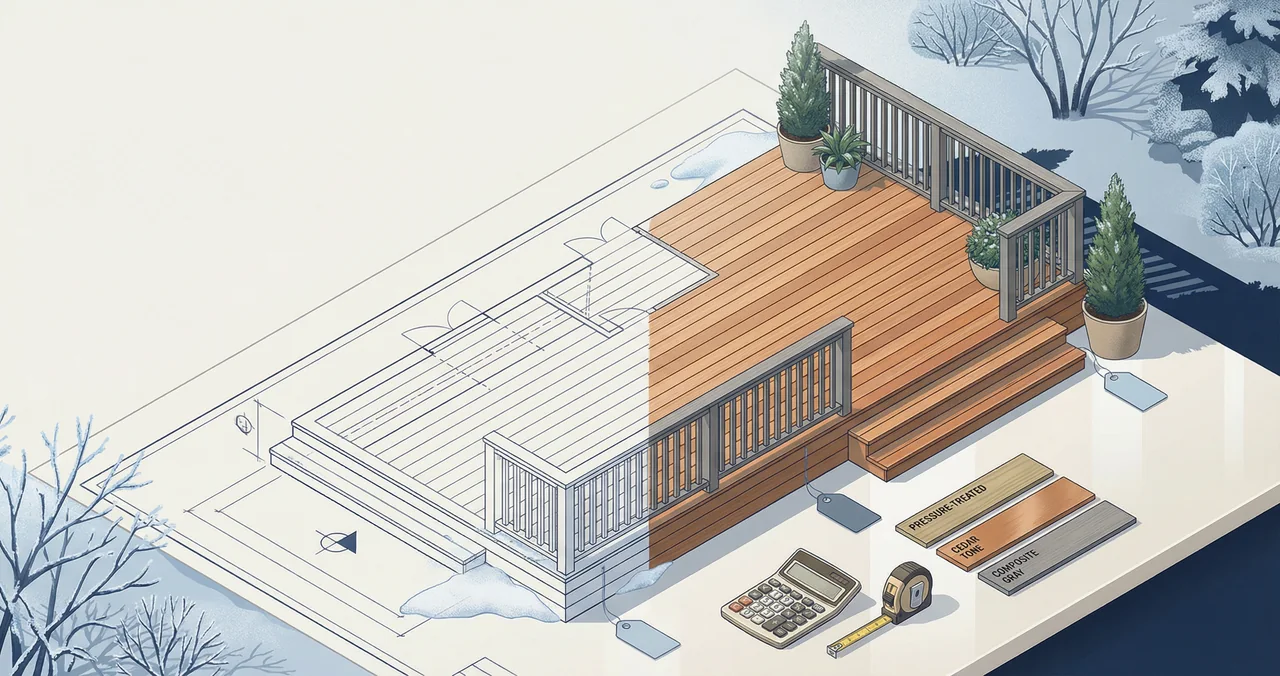
How Much Does a Deck Cost in Washington, DC?
You're here because you want a number. A real one — not a vague range that could mean anything.
🏗️ Planning a deck project?
Get a free manual project review, or visualize your dream deck with AI before requesting quotes.
🧮 Tool Alert: Deck Cost Calculator
Estimate your project costs in seconds based on local pricing bands for your area.
Calculate My Cost →In 2026, a typical deck in Washington, DC costs between $8,000 and $30,000+ depending on size, material, and complexity. For a standard 300-square-foot deck, most DC homeowners are paying somewhere between $10,500 and $22,500 installed.
That's a wide range. The material you choose is the single biggest factor, but labor rates in the District, your lot's grading, and whether you need footings dug below DC's 18- to 36-inch frost line all push the final number around.
Here's what you'll actually pay by material, what drives costs up (and down), and how to get the best value for your money in the DC market right now.
<!-- slot:after-intro -->
For a broader look at deck pricing across different materials and regions, see our deck cost guide.
Average Deck Cost in Washington by Material
These are installed prices — materials plus labor — based on what DC-area contractors are charging in 2026.
| Material | Cost Per Sq Ft (Installed) | 12×16 Deck (192 sq ft) | 16×20 Deck (320 sq ft) |
|---|---|---|---|
| Pressure-Treated Wood | $25–$45 | $4,800–$8,640 | $8,000–$14,400 |
| Cedar | $35–$55 | $6,720–$10,560 | $11,200–$17,600 |
| Composite | $45–$75 | $8,640–$14,400 | $14,400–$24,000 |
| Trex (brand-name composite) | $50–$80 | $9,600–$15,360 | $16,000–$25,600 |
| Ipe (hardwood) | $60–$100 | $11,520–$19,200 | $19,200–$32,000 |
Pressure-treated lumber remains the go-to for budget-conscious homeowners in DC. It handles the District's moderate humidity and seasonal freeze-thaw cycles well, though it requires staining every 2–3 years. Composite decking has taken over a huge share of the market because homeowners in neighborhoods like Capitol Hill, Petworth, and Brookland are willing to pay more upfront for decades of low maintenance.
If you're weighing sizes, our guides on 12×16 deck costs and 16×20 deck costs break down what to expect at those common dimensions.
Cost Per Square Foot Breakdown
The per-square-foot number is your best tool for comparing quotes. But understand what's included — and what isn't.
What's typically included in installed cost per square foot:
- Decking boards and hidden fasteners
- Substructure (joists, beams, ledger board)
- Concrete footings
- Basic railing (one style, usually aluminum or wood)
- Labor and cleanup
What's usually extra:
- Stairs — add $75–$200 per step depending on material
- Permit fees — DC charges roughly $100–$400 depending on project scope
- Built-in benches or planters — $500–$2,000+
- Upgraded railing — cable railing or glass panels can add $50–$120 per linear foot
- Lighting — recessed deck lighting runs $500–$1,500 installed
- Multi-level design — adds 15–25% to total cost
A simple, ground-level pressure-treated deck hits the low end at $25/sq ft. A raised composite deck with stairs, custom railing, and lighting? You're looking at $70–$80/sq ft or more.
Labor Costs in Washington, DC
DC is not a cheap labor market. Skilled tradespeople in the District command premium rates compared to national averages.
Typical labor rates for deck building in Washington:
- General labor: $50–$80/hour
- Skilled carpenter/deck builder: $70–$110/hour
- Labor as a percentage of total cost: 40–60%
On a $15,000 composite deck, you're paying roughly $6,000–$9,000 just for labor. That's normal in this market. DC contractors carry higher insurance costs, deal with District-specific licensing requirements, and often work in tight urban lots that slow progress — especially in row-house neighborhoods like Adams Morgan, Shaw, or Georgetown where access is limited.
Spring is the busiest season. Contractors book up fast from March through June. If your timeline is flexible, scheduling your build for September or October can mean better availability and sometimes better pricing. DC's building season runs March through November, so a fall build doesn't sacrifice quality — you just skip the rush.
What Affects Your Total Price
Eight factors determine where your deck lands on the cost spectrum:
1. Material Choice
The table above tells the story. Pressure-treated at $25/sq ft versus Ipe at $100/sq ft — that's a 4x difference on the same footprint.
2. Deck Size
Bigger decks cost more total but less per square foot. A 200-sq-ft deck might run $50/sq ft while a 400-sq-ft deck of the same material comes in at $42/sq ft. Fixed costs like permits, mobilization, and footings get spread across more area.
3. Height and Elevation
A ground-level deck needs minimal structural support. A deck that's 30 inches or more above grade requires posts, additional bracing, and more concrete — and in DC, it triggers a permit requirement. Elevated decks typically cost 20–40% more than ground-level builds.
4. Frost Line Requirements
Washington's frost line sits at 18–36 inches. Your footings need to reach below that depth, or they'll heave with winter freezes. Deeper footings mean more digging and more concrete. Most DC contractors default to 36 inches to be safe and meet code.
5. Site Access and Conditions
That beautiful Georgetown row house? The alley access (or lack thereof) affects cost. Contractors who have to hand-carry materials through a house or over fences charge more. Sloped lots in neighborhoods like Foxhall or Forest Hills require additional grading work.
6. Railing and Stairs
Basic wood railing is included in most quotes. Upgrade to cable railing or glass panels and you'll add thousands. Stairs are priced per step and add up fast on elevated decks.
7. Permits and Inspections
In Washington, DC, deck permits are required for structures over 200 sq ft or 30 inches above grade. Contact DC's Department of Consumer and Regulatory Affairs (now the Department of Buildings) before starting. Permit fees range from $100–$400, and your contractor should handle the application — if they suggest skipping it, that's a red flag. Building without a permit creates real problems down the road.
8. Design Complexity
Curves, multiple levels, integrated lighting, built-in seating — each adds cost. A rectangular single-level deck is the most cost-effective shape. Every angle and design feature adds labor hours.
<!-- slot:mid-content -->
Composite vs Wood: Cost Comparison
This is the decision most DC homeowners wrestle with. Here's the honest breakdown.
Upfront Cost
| | Pressure-Treated Wood | Composite |
|---|---|---|
| Installed cost (per sq ft) | $25–$45 | $45–$75 |
| 300 sq ft deck | $7,500–$13,500 | $13,500–$22,500 |
Composite costs roughly 60–80% more upfront. No getting around it.
Long-Term Cost (10-Year View)
| | Pressure-Treated Wood | Composite |
|---|---|---|
| Initial build (300 sq ft) | $10,500 | $18,000 |
| Staining (every 2–3 years) | $1,200–$2,000 × 4 = $6,000 | $0 |
| Repairs/board replacement | $500–$1,500 | $0–$200 |
| Power washing | $150/year × 10 = $1,500 | $150/year × 10 = $1,500 |
| 10-year total | $18,500–$23,500 | $19,200–$19,700 |
Over a decade, the costs nearly converge. And composite comes with a 25-year warranty from most major brands.
What Makes Sense for DC?
Washington's climate — moderate humidity, summer heat, winter frost — is manageable for both materials. Pressure-treated wood handles it fine with proper maintenance. Composite handles it fine without maintenance.
If you plan to stay in your home for 7+ years, composite usually wins on total cost. If you're building for a short-term hold or on a strict budget, pressure-treated is the smart play.
For a closer look at the best composite decking brands, our comparison covers the major options and their warranty terms.
Use PaperPlan (paperplan.app) to visualize different decking materials on your own home before committing — it's especially helpful when you're torn between color tones or trying to see how composite versus natural wood looks against your home's exterior.
How to Save Money on Your Washington Deck
You don't have to sacrifice quality to keep costs reasonable. These strategies work in the DC market.
Build in the Off-Season
September through November is your sweet spot. Contractors are less booked, and some offer 5–10% discounts to fill their fall schedule. DC weather is still cooperative through mid-November most years.
Choose a Simple Design
Every corner, curve, and level change adds labor. A rectangular, single-level deck is the most cost-effective layout. You can always add visual interest with furniture, planters, and deck lighting rather than built-in features.
Use Pressure-Treated for the Substructure
Even if you want composite decking boards on top, your joists and beams can be pressure-treated lumber. This is standard practice and saves hundreds compared to an all-composite or aluminum frame. Some homeowners also explore aluminum framing for longevity — but it's a premium choice.
Get Three Quotes Minimum
DC has no shortage of deck contractors. Get at least three detailed written quotes that break down materials, labor, and timeline separately. Watch for lowball bids that skip permit costs or use vague material descriptions.
Do Your Own Demo
If you're replacing an old deck, tearing it down yourself saves $500–$1,500 in labor. It's straightforward work — a pry bar, reciprocating saw, and a dumpster rental are all you need. Just confirm with your contractor that self-demo won't affect their warranty or timeline.
Consider a Smaller Footprint
Before defaulting to the biggest deck your yard allows, think about how you'll actually use it. A well-designed 200-square-foot deck with the right furniture often functions better than a sprawling 400-square-foot platform that feels empty. For ideas on what larger builds cost, check our 20×20 deck cost guide.
Skip the Premium Railing (For Now)
Basic aluminum railing looks clean and meets code. You can always upgrade to cable or glass railing in a few years when budget allows — railing swaps are one of the easiest deck upgrades.
<!-- slot:before-faq -->
🎨 Not sure which material to pick?
Upload a photo of your backyard and see exactly how Trex, TimberTech, or cedar would look — free and instant.
Frequently Asked Questions
How much does a 12×16 deck cost in Washington, DC?
A 12×16 deck (192 sq ft) in DC typically costs $4,800–$8,640 in pressure-treated wood or $8,640–$14,400 in composite, fully installed. Add $1,000–$3,000 for stairs, upgraded railing, or permit fees. Most DC homeowners building this size end up spending $8,000–$12,000 all-in with a mid-range material.
Do I need a permit to build a deck in Washington, DC?
Yes, in most cases. DC requires a building permit for decks over 200 square feet or 30 inches above grade. Even smaller decks may need a permit depending on your property's zoning. Contact the DC Department of Buildings before starting. Your contractor should pull the permit — it's part of their job. Expect to pay $100–$400 in permit fees and wait 2–4 weeks for approval.
What is the best decking material for Washington's climate?
All standard decking materials work in DC's climate. Pressure-treated wood is the most affordable and handles moderate freeze-thaw well with regular staining. Composite decking is the low-maintenance choice that resists humidity, won't splinter, and doesn't need staining. Cedar offers natural beauty but requires upkeep. Ipe is the most durable but also the most expensive. For most DC homeowners, the choice comes down to composite versus pressure-treated — and that's a budget-versus-maintenance tradeoff.
When is the cheapest time to build a deck in DC?
Late September through November offers the best pricing. Spring is peak season — contractors are fully booked and have less incentive to negotiate. By fall, schedules open up. Some builders offer off-season discounts of 5–10% to keep crews busy. January and February are generally too cold for outdoor construction, but March through November is fair game. Learn more about best time to build a deck for detailed seasonal advice.
Does a deck add value to a home in Washington, DC?
A well-built deck typically returns 60–80% of its cost at resale in the DC market. In outdoor-space-starved neighborhoods like Dupont Circle, Logan Circle, and Capitol Hill, a functional deck can be a major selling point. Composite decks tend to show better at resale because they look new longer. A $15,000 composite deck could add $9,000–$12,000 to your home's value — plus make it sell faster in a competitive market.
<!-- slot:end -->
📋 Planning a deck project?
Get a free manual project review from our team — no obligation, no spam.
Get Free Project Review →Upload a backyard photo and preview real decking materials with AI — free, instant, no sign-up.
Permits, costs, material comparisons, and questions to ask before requesting quotes — delivered to your inbox.