
Deck Permits in Washington (2026)
Need a deck permit in Washington, DC? Learn 2026 requirements, permit fees, building codes, setback rules, and how to apply through DCRA step by step.
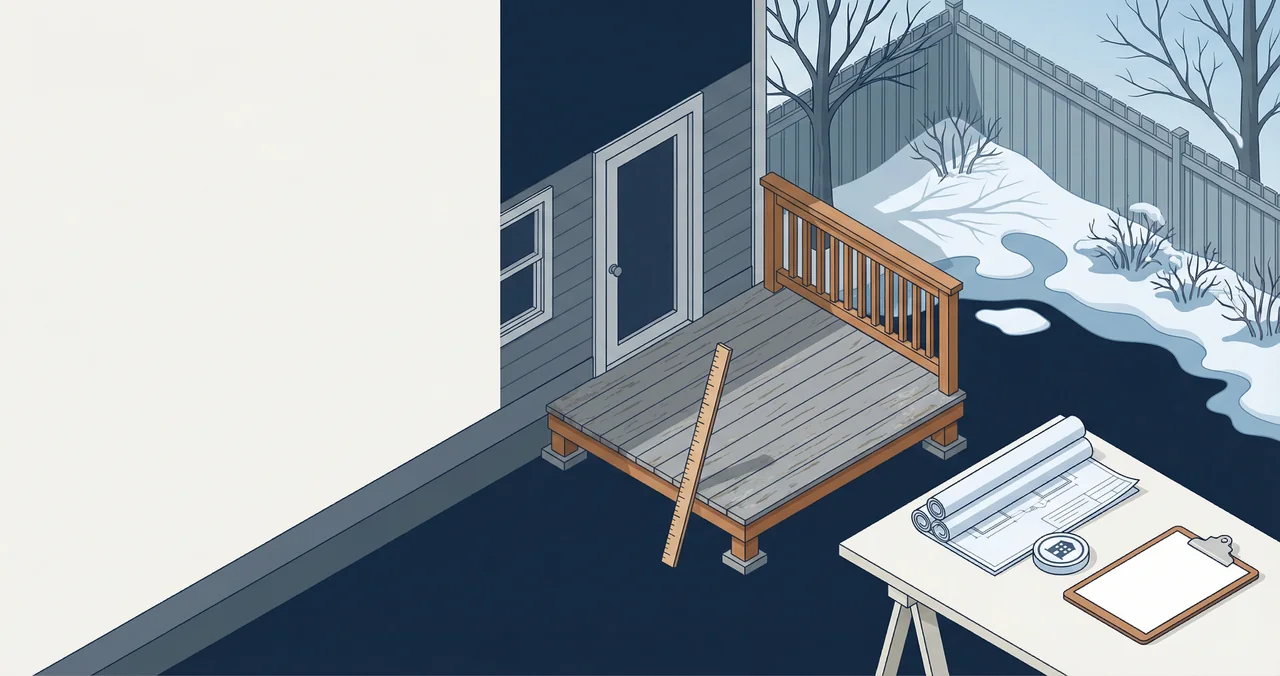
Deck Permits in Washington: Requirements, Costs & How to Apply in 2026
Building a deck in Washington, DC without checking permit requirements first is one of the most expensive mistakes a homeowner can make. Fines, forced removal, and problems at resale — all avoidable if you know what the District requires before you start.
🏗️ Planning a deck project?
Get a free manual project review, or visualize your dream deck with AI before requesting quotes.
📋 Tool Alert: Permit Checker
Do you really need a permit? Check the exact rules for your city or township.
Check Permits →Here's exactly what you need to know about deck permits in Washington, DC for 2026, including costs, timelines, code requirements, and the step-by-step application process through the Department of Buildings (formerly DCRA).
<!-- slot:after-intro -->
Do You Need a Deck Permit in Washington, DC?
Yes, in most cases. Washington, DC requires a building permit for most deck construction projects. The Department of Buildings (DOB) oversees residential construction permits across all eight wards.
The general rule: if your deck is over 200 square feet or more than 30 inches above grade, you need a permit. But even smaller projects can trigger permit requirements depending on your lot, your Historic District status, and whether the deck attaches to your home's structure.
A few specifics:
- Decks over 200 sq ft — permit required regardless of height
- Decks more than 30 inches above grade — permit required regardless of size
- Attached decks — almost always require a permit because they involve structural connections to your home
- Freestanding, ground-level decks under 200 sq ft and under 30 inches — may be exempt, but confirm with DOB first
- Any deck in a Historic District — requires additional review from the Historic Preservation Office (HPO)
Washington has more historic neighborhoods than almost any other US city. If you live in Georgetown, Capitol Hill, Dupont Circle, Logan Circle, Anacostia, or dozens of other designated areas, you'll need HPO clearance on top of your building permit. This adds time and potentially design restrictions.
Bottom line: Call the DC Department of Buildings at (202) 442-4400 or visit their online portal before starting any deck project. Even "permit-exempt" projects should be verified.
When a Permit Is Required
Let's break this down by project type so you know exactly where yours falls.
New Deck Construction
Any new deck that meets the size or height thresholds needs a full building permit. In DC, this means submitting construction documents — plans showing dimensions, materials, structural details, and how the deck connects to your home (if attached).
For raised decks — common in row houses across Capitol Hill, Petworth, and Brookland where backyards often sit below the main floor level — you'll also need engineered drawings showing footing depth and load calculations.
Deck Replacement or Major Renovation
Replacing an existing deck typically requires a permit if you're changing the footprint, height, or structural elements. A simple board-for-board replacement on an existing frame *might* not require one, but if you're upgrading the substructure, changing the size, or adding features like stairs or railings, plan on pulling a permit.
Adding Features to an Existing Deck
These additions usually trigger permit requirements:
- Stairs with more than two risers
- Railings (required on any deck surface 30+ inches above grade)
- Roof structures, pergolas, or covered sections — these often require separate permits
- Electrical work for lighting or outlets — requires an electrical permit
- Built-in seating with structural connections
When You Probably Don't Need a Permit
- Freestanding, ground-level platforms under 200 sq ft and under 30 inches high
- Cosmetic changes like staining, sealing, or painting
- Replacing individual boards without altering the structure
- Adding freestanding furniture, planters, or portable fire pits
Even for exempt projects, DC zoning rules still apply. You still need to respect setback requirements and lot coverage limits.
Permit Fees & Processing Time
How Much Does a Deck Permit Cost in Washington, DC?
Permit fees in DC are based on the estimated construction cost of your project. Here's what to expect in 2026:
| Project Cost | Approximate Permit Fee |
|---|---|
| Under $5,000 | $75–$150 |
| $5,000–$25,000 | $150–$400 |
| $25,000–$50,000 | $400–$750 |
| Over $50,000 | $750+ |
Additional fees may apply for:
- Plan review: $50–$200 depending on complexity
- Historic Preservation review: $100+ (if applicable)
- Zoning review: Included in most standard permits but may add cost for variances
- Electrical permit: $75–$150 (if adding lighting or outlets)
To estimate your total project cost for permit purposes, here's what deck construction typically runs in DC:
| Material | Installed Cost (per sq ft) |
|---|---|
| Pressure-treated wood | $25–$45 |
| Cedar | $35–$55 |
| Composite | $45–$75 |
| Trex (brand-name composite) | $50–$80 |
| Ipe (hardwood) | $60–$100 |
A typical 300 sq ft composite deck in DC runs $13,500–$22,500 installed, putting your permit in the $400–$750 range. For a budget-friendly pressure-treated deck of the same size, you're looking at $7,500–$13,500 and a permit fee of $150–$400.
Use PaperPlan to visualize different decking materials on your own home before committing — it helps you see how composite, cedar, or pressure-treated options actually look against your home's exterior.
How Long Does the Permit Process Take?
- Simple residential deck (no historic review): 2–4 weeks for plan review and approval
- Projects requiring Historic Preservation review: 4–8 weeks, sometimes longer
- Projects requiring zoning variances: 6–12 weeks or more
- Expedited review: Available for an additional fee (typically 1.5x the standard review fee), can cut timelines in half
Pro tip: Submit your permit application in late fall or winter. DC's building season runs March through November, and spring is the busiest time for both contractors and the permit office. A fall or winter submission means your permit is ready when building season starts — and you may get best time to build a deck during the slower months.
<!-- slot:mid-content -->
Building Codes & Setback Rules
Washington, DC follows the International Residential Code (IRC) with local amendments. Here are the key code requirements for deck construction in 2026.
Structural Requirements
- Footings must extend below the frost line — 36 inches deep in DC (the District's frost line ranges from 18–36 inches, but DOB typically requires the full 36 inches for permit approval)
- Ledger boards (where the deck attaches to the house) must use approved fasteners — lag bolts or through-bolts, not nails
- Joist spacing typically 16 inches on center for standard decking, 12 inches on center for diagonal installations or certain composite products
- Beam sizing depends on span and load — your plans must show load calculations
- Post size minimum 4x4 for decks under 8 feet, 6x6 recommended for taller structures
Railing and Safety Requirements
- Railings required on any deck surface 30 inches or more above grade
- Minimum railing height: 36 inches for residential decks
- Baluster spacing: Maximum 4 inches between balusters (a 4-inch sphere cannot pass through)
- Stair railings: Required on any stairway with 4 or more risers, graspable handrail between 34–38 inches high
- Stair dimensions: Maximum 7¾-inch rise, minimum 10-inch tread depth
Setback and Zoning Rules
DC zoning can be complex, especially in older neighborhoods. General rules:
- Rear yard setback: Typically 15 feet from the rear lot line, but varies by zone
- Side yard setback: Varies by zone — row houses often have zero-lot-line conditions on the sides
- Lot occupancy limits: DC caps how much of your lot can be covered by structures (deck included). In most residential zones, lot occupancy is 40–60% — your deck counts toward this total
- Height restrictions: Decks themselves don't usually trigger height limits, but any roof structure or pergola above might
- Alley access: Many DC homes back onto alleys. If your deck affects alley access or sightlines, additional review may apply
Special Considerations for Washington, DC
Historic Districts are the biggest wildcard. If your property falls within one of DC's 40+ historic districts, the Historic Preservation Office reviews your deck plans for:
- Visual impact from public spaces (alleys, streets)
- Material compatibility with the historic character
- Height and massing relative to neighboring properties
Expect restrictions on visible materials and sometimes design elements. A deck hidden in a rear yard behind a row house has a much easier path than one visible from the street.
Climate considerations matter for code compliance too. DC's moderate four-season climate with freeze-thaw cycles means:
- Footings must reach full frost depth (36 inches)
- Proper drainage away from the house foundation is essential
- Material selection matters — pressure-treated wood handles moisture well but needs regular sealing; composite handles humidity and temperature swings with less maintenance
How to Apply for a Deck Permit in Washington, DC
Step 1: Gather Your Documents
Before you start the application, assemble:
- Site plan showing your lot with the proposed deck location, dimensions, and distances from property lines
- Construction drawings with deck dimensions, joist layout, beam and post locations, footing details, railing design, and stair specs
- Structural details including lumber sizes, hardware specifications, and load calculations
- Material specifications — what you're building with and any manufacturer installation requirements
- Photos of the existing site (helpful, sometimes required)
- Proof of ownership or authorization from the property owner
For complex or raised decks, you may need drawings prepared or stamped by a licensed engineer or architect. Many DC contractors include permit drawings in their project scope — ask upfront.
Step 2: Check Zoning and Historic Status
Before submitting:
1. Visit the DC Office of Zoning website or use the DC Property Information tool to confirm your zoning designation
2. Check whether your property is in a Historic District using the HPO map
3. Review your lot's existing lot occupancy to confirm the deck won't push you over the limit
Step 3: Submit Your Application
DC handles building permits through the DOB Online Portal (formerly the DCRA Scout system):
1. Create an account on the DOB portal
2. Select "Building Permit" and choose "Residential"
3. Upload your plans and documents
4. Pay the application and plan review fees
5. Submit and receive your tracking number
Step 4: Plan Review
A DOB plan examiner reviews your submission for code compliance. You'll receive one of three responses:
- Approved — proceed to permit issuance
- Approved with conditions — minor changes required, usually addressed quickly
- Revisions required — resubmit corrected plans (this adds 1–3 weeks)
Step 5: Receive Your Permit and Schedule Inspections
Once approved:
- Post your permit visibly at the job site before any work begins
- Schedule inspections at required stages — typically:
- Footing inspection (before pouring concrete)
- Framing inspection (before decking goes on)
- Final inspection (completed deck)
- Keep a copy of approved plans on-site during construction
Working with a Contractor
Most experienced deck builders in the DC area handle the permit process as part of their service. When interviewing contractors, ask:
- "Do you pull the permit, or do I?"
- "Is the permit fee included in your quote?"
- "Have you worked in [your specific neighborhood/historic district] before?"
A contractor familiar with DC's permit process — especially Historic District requirements — can save you weeks of back-and-forth.
What Happens If You Build Without a Permit
Don't risk it. DC takes unpermitted construction seriously, and the consequences are real.
Fines and Penalties
- Stop-work orders: DOB can shut down your project immediately if they discover unpermitted work
- Fines: Up to $2,000 per violation in DC, and each day of continued work can count as a separate violation
- Retroactive permit fees: You'll pay the standard permit fee plus a penalty surcharge — typically double the original fee
- Required engineering review: You may need to hire an engineer to verify the unpermitted structure meets code, at your expense
Impact on Home Sale
This is where it really hurts. When you sell your home in DC:
- Title searches and property records reveal unpermitted structures
- Buyers (and their lenders) may require you to obtain a retroactive permit or remove the deck before closing
- Unpermitted work can reduce your home's appraised value
- It gives buyers leverage to negotiate your price down significantly
Insurance Issues
Your homeowner's insurance may deny claims related to unpermitted structures. If someone is injured on your unpermitted deck, you could face personal liability without insurance coverage.
The risk of building without a permit far outweighs the cost of getting one. A $200–$750 permit protects a $10,000–$25,000 investment.
<!-- slot:before-faq -->
🎨 Not sure which material to pick?
Upload a photo of your backyard and see exactly how Trex, TimberTech, or cedar would look — free and instant.
Frequently Asked Questions
How much does a deck permit cost in Washington, DC?
Permit fees range from $75 to $750+ depending on your project's estimated construction cost. A typical backyard deck project runs $150–$400 in permit fees. Add $50–$200 for plan review and potentially $100+ for Historic Preservation review if you're in a designated district. Budget $300–$600 total for permit-related costs on a mid-range deck project.
Can I build a small deck without a permit in DC?
Possibly. Freestanding decks under 200 square feet and under 30 inches above grade may be exempt from building permit requirements. However, you still need to comply with zoning setback and lot occupancy rules. And if you're in a Historic District, even small structures may need HPO review. Always confirm with the Department of Buildings before starting work.
How long does it take to get a deck permit approved in Washington, DC?
Standard residential deck permits take 2–4 weeks for plan review and approval. Projects in Historic Districts add 4–8 weeks for HPO review. Expedited review is available for an additional fee. Submitting complete, accurate plans on the first try is the single best way to speed up the process — most delays come from incomplete applications or required revisions.
Do I need a permit to replace my existing deck in DC?
If you're doing a board-for-board replacement on an existing, previously permitted structure without changing the footprint, height, or substructure, you may not need a new permit. But if you're changing the deck's size, height, structural framing, or adding new features like stairs or railings, a permit is required. When in doubt, a quick call to DOB saves you from potential fines and complications down the road.
What inspections are required for a deck permit in Washington, DC?
DC typically requires three inspections for permitted deck work: a footing inspection (before pouring concrete — inspectors verify depth reaches 36 inches), a framing inspection (after the structural frame is complete but before decking boards are installed), and a final inspection (completed deck including railings, stairs, and all safety features). Failing to schedule inspections can result in fines or required demolition of completed work. Your contractor should coordinate all required inspections as part of the project.
<!-- slot:end -->
📋 Planning a deck project?
Get a free manual project review from our team — no obligation, no spam.
Get Free Project Review →Upload a backyard photo and preview real decking materials with AI — free, instant, no sign-up.
Permits, costs, material comparisons, and questions to ask before requesting quotes — delivered to your inbox.