
Waterloo Deck Permit Application: Step-by-Step (2026)
How to apply for a deck permit in Waterloo in 2026: permit triggers, drawing checklist, inspection flow, and the fastest way to avoid a ‘missing info’ rejection.
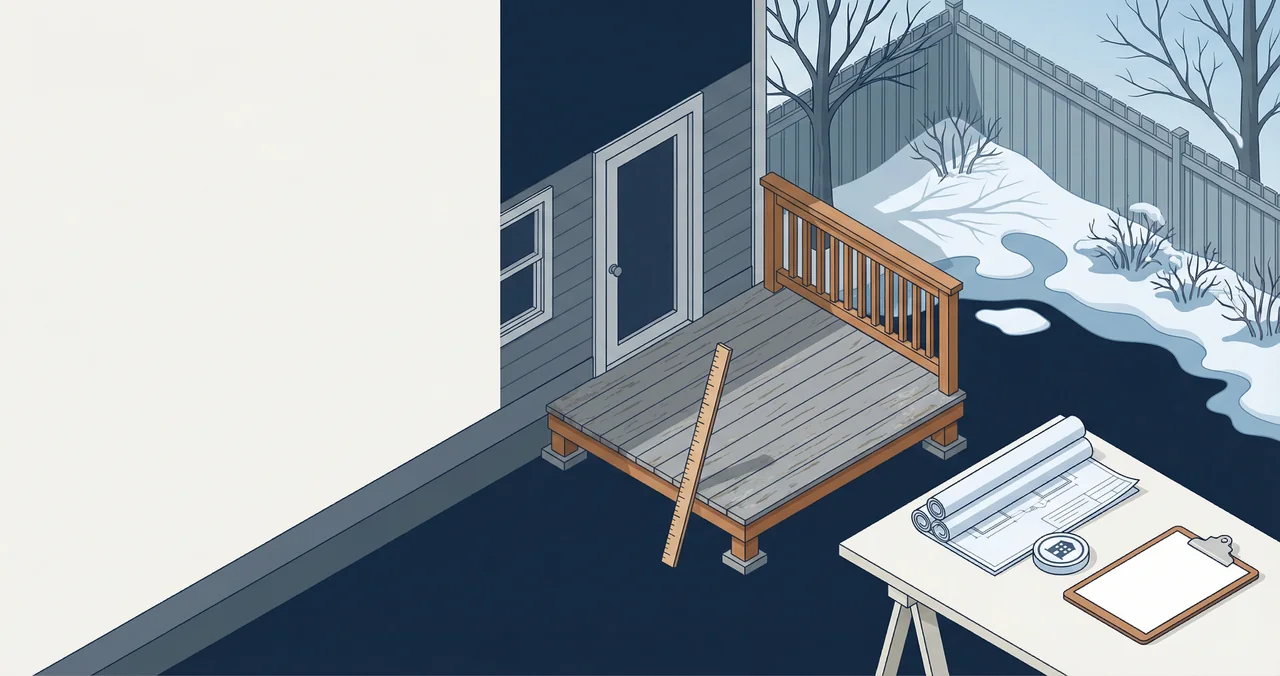
A Waterloo deck project usually fails for one of two reasons:
1) The deck design changes mid-way (height, stairs, guard, hot tub, privacy screen), and the permit package doesn’t match reality.
2) The application is missing a couple key details, and you lose weeks to back-and-forth.
This guide is the simple, repeatable way to submit a cleaner deck permit application in 2026.
If you’re not sure you need a permit in the first place, start here:
Want a builder who can quote and handle the permit process?
- Get Waterloo deck quotes: /#quote-form
Step 1: Lock the inputs that drive the permit
Before drawings, decide:
🏗️ Planning a deck project?
Get a free manual project review, or visualize your dream deck with AI before requesting quotes.
- Approx deck size (width × depth)
- Height off grade (rough)
- Attached vs freestanding
- Stairs (how many runs, where they land)
- Guards/railings
- Any “special” elements: hot tub, roof cover, tall privacy screen
Those choices affect what gets shown and what gets inspected.
Step 2: Choose your structural approach
Attached vs freestanding
Attached decks need ledger attachment and flashing details. If your builder can’t explain their ledger plan clearly, treat that as a red flag.
Two useful reads:
- /decks/blog/ledger-board-attachment-ontario-deck-safety-kitchener-waterloo
- /decks/blog/deck-ledger-flashing-ontario-water-damage-prevention
Footings vs helical piles
A clean permit package calls out the footing type, layout, and connection details.
- /decks/blog/deck-footing-options-ontario-sonotube-helical-piles-pros-cons
- /decks/blog/helical-piles-for-decks-kwc-permit-engineer
Step 3: Build the drawing set (what to include)
Use this as your core checklist:
Site plan (don’t hand-wave it)
Your site plan should communicate, quickly:
- Where the deck sits relative to the house
- Key dimensions
- Setbacks to property lines
If setbacks/property lines are the thing you’re worried about:
Framing plan (where inspectors “debug” your design)
Include:
- Joist spacing/direction
- Beam and post locations
- Footing layout
- Stairs and landings
- Guard locations
A quick “what inspectors usually care about” overview:
Elevations
Show:
- Height from grade
- Guard height concept
- Stair rise/run concept
Stairs are where a lot of jobs get forced into last-minute redesign:
Step 4: Plan for inspection scheduling (so your crew isn’t idle)
Whether you DIY or hire a builder, you want to avoid “we can’t do anything until inspection.”
Practical tips:
- Confirm what needs inspection *before* you cover it up
- Keep the site accessible and safe
- Have your drawings on-site and match the built layout
Step 5: DIY vs contractor (and who should apply)
In Waterloo, the safest approach is: whoever is responsible for the build quality should be responsible for the permit package.
If you hire a builder, ask:
- Do you include permit handling?
- If inspection asks for changes, is that included or a change order?
Use this to compare quotes:
Common reasons Waterloo deck applications get bounced back
- Missing or unclear deck height from grade
- Stair details not shown (or don’t match elevation)
- Guard locations missing
- Footing layout inconsistent between drawings
- Special loads not disclosed (hot tub)
If you’re even considering a hot tub on the deck, read this early:
🎨 Not sure which material to pick?
Upload a photo of your backyard and see exactly how Trex, TimberTech, or cedar would look — free and instant.
Want help getting a permit-ready deck built in Waterloo?
If your goal is a deck that gets approved, passes inspection, and doesn’t rot out early, start with builders who have a repeatable process.
Get deck quotes: /#quote-form
You may also want to read Top Deck Design Trends for 2026 in Ontario.
Upload a backyard photo and preview real decking materials with AI — free, instant, no sign-up.
Permits, costs, material comparisons, and questions to ask before requesting quotes — delivered to your inbox.