
Deck Cost in Greensboro (2026)
What does a new deck cost in Greensboro? See 2026 pricing by material, labor rates, cost per square foot, and smart ways to save on your build.
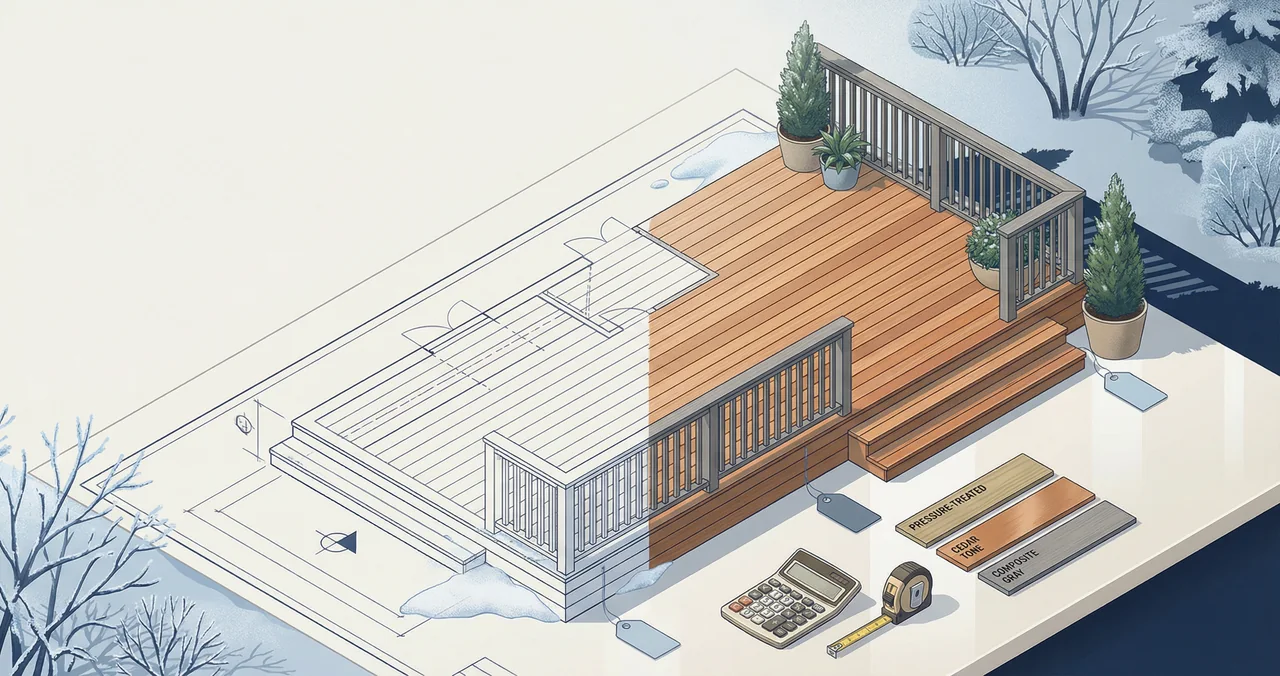
Deck Cost in Greensboro: What Homeowners Are Paying in 2026
You want a deck. You want to know what it's going to cost. Fair enough — Greensboro homeowners are paying anywhere from $8,000 to $30,000+ for a new deck in 2026, depending on size, materials, and how complex the design gets. That's a wide range, so let's break it down into numbers you can actually use.
🏗️ Planning a deck project?
Get a free manual project review, or visualize your dream deck with AI before requesting quotes.
🧮 Tool Alert: Deck Cost Calculator
Estimate your project costs in seconds based on local pricing bands for your area.
Calculate My Cost →Looking for more regional information? Check out our North Carolina State Decking Hub.
The Triad area has seen steady construction activity, and deck builds are no exception. Material prices have stabilized compared to the volatility of recent years, but labor demand — especially during Greensboro's busy spring season — still drives pricing. Here's what you need to know before you start calling contractors.
<!-- slot:after-intro -->
For a broader look at deck pricing across different materials and regions, see our deck cost guide. Timing your build right can also save thousands — check our guide on the best time to build a deck.
Average Deck Cost in Greensboro by Material
Material choice is the single biggest factor in your total cost. Here's what Greensboro homeowners are paying in 2026 for a fully installed deck, including materials, labor, and basic railing:
| Material | Installed Cost per Sq Ft | 12×16 Deck (192 sq ft) | 16×20 Deck (320 sq ft) |
|---|---|---|---|
| Pressure-Treated Pine | $25–$45 | $4,800–$8,640 | $8,000–$14,400 |
| Cedar | $35–$55 | $6,720–$10,560 | $11,200–$17,600 |
| Composite | $45–$75 | $8,640–$14,400 | $14,400–$24,000 |
| Trex (brand-name composite) | $50–$80 | $9,600–$15,360 | $16,000–$25,600 |
| Ipe (hardwood) | $60–$100 | $11,520–$19,200 | $19,200–$32,000 |
Pressure-treated pine remains the most popular choice in Greensboro by a wide margin. It's affordable, readily available from local lumber yards, and handles North Carolina's moderate climate just fine. The downside? You'll need to stain or seal it every one to three years.
Composite decking has been gaining ground fast, particularly in neighborhoods like Irving Park, Starmount, and New Irving Park where homeowners want a polished look without the upkeep. If you're comparing options, our composite vs. wood cost breakdown covers the long-term math in detail.
Cost Per Square Foot Breakdown
The per-square-foot price your contractor quotes includes more than just decking boards. Here's what's typically bundled in:
- Decking material: $8–$40/sq ft (material only)
- Substructure and framing: $5–$12/sq ft
- Railing and stairs: $3–$10/sq ft
- Hardware, fasteners, flashing: $1–$3/sq ft
- Labor: $10–$25/sq ft
When a contractor in Greensboro quotes you $45/sq ft for composite, roughly half of that is material and half is labor plus substructure. Knowing this helps when you're comparing bids — a lower quote might mean cheaper framing lumber or fewer joist hangers, not necessarily a better deal.
Small Decks vs. Large Decks: The Per-Foot Trap
Here's something that catches people off guard: smaller decks cost more per square foot. A 10×10 deck still needs footings, ledger board attachment, permits, and mobilization. Those fixed costs get spread over fewer square feet. A 100 sq ft pressure-treated deck might run $40–$50/sq ft, while a 320 sq ft deck of the same material comes in at $25–$35/sq ft.
If you're building small, budget accordingly.
Labor Costs in Greensboro
Labor typically accounts for 40% to 60% of your total deck cost in Greensboro. Here's what drives that number:
- Basic deck labor rate: $10–$18/sq ft for a straightforward, ground-level rectangular deck
- Elevated or multi-level deck: $15–$25/sq ft due to additional framing, bracing, and safety requirements
- Specialty work (curved designs, built-in benches, pergola attachments): Quoted by the project, usually adding $2,000–$6,000+
Greensboro sits in a mid-range labor market compared to the rest of the state. You'll pay less than Raleigh or Charlotte, but more than smaller Triad-area towns. Most local contractors charge between $40–$60 per hour for crew labor, with a typical two-to-three-person crew.
When You Hire Matters
Spring (March through May) is the busiest season for deck builders in Greensboro. Contractors are booked out, and you'll have less negotiating room. Schedule your build for late September through November and you may find contractors willing to sharpen their pencils. The weather is still mild enough for construction — Greensboro doesn't typically see hard freezes until late December — and builders are looking to fill their calendars before winter.
If you're still researching builders, see how Charlotte-area homeowners find affordable contractors — many of the same strategies apply in the Triad.
<!-- slot:mid-content -->
What Affects Your Total Price
Beyond material and labor, these factors move your final number up or down:
Deck Height and Foundation
Greensboro's frost line sits at 18 to 36 inches depending on your specific location. Footings need to extend below this depth to prevent heaving. A ground-level deck on sono tubes is straightforward. An elevated deck off a second-story walkout? That requires deeper footings, more concrete, taller posts, and additional bracing. Expect elevated decks to cost 30–50% more than ground-level builds of the same square footage.
Permits and Inspections
In Greensboro, you'll need a building permit for any deck over 200 square feet or more than 30 inches above grade. Contact Greensboro's Building/Development Services department before your build starts. Permit fees typically run $75–$300 depending on project scope, and you'll need inspections at the footing and framing stages.
Skipping the permit is a bad idea. It creates problems when you sell your home, and your homeowner's insurance may not cover an unpermitted structure.
Site Conditions
Sloped lots — common in parts of western Greensboro near Country Park and Hicone — require more grading, retaining work, or taller post systems. Trees, root systems, underground utilities, and existing concrete pads all add complexity and cost. Get at least three on-site quotes to account for your specific conditions.
Railings, Stairs, and Add-Ons
Railing alone can account for 15–25% of your total deck cost. Basic pressure-treated wood railing runs $15–$25 per linear foot installed. Composite or aluminum railing jumps to $30–$60 per linear foot. Cable railing? Budget $60–$100+ per linear foot.
Common add-ons and their approximate costs:
- Stairs (per step): $75–$200
- Built-in benches: $500–$1,500
- Deck lighting (low-voltage LED): $500–$2,000
- Pergola or shade structure: $2,500–$8,000
- Privacy screen or lattice: $300–$1,200
Shape and Complexity
A rectangle is the cheapest shape to build. Every angle, curve, notch, or multi-level transition adds labor hours. A wraparound deck or one with an octagonal bump-out can add 15–25% to your labor costs compared to a simple rectangle of the same total area.
Composite vs Wood: Cost Comparison
This is the most common debate Greensboro homeowners face. Here's the honest comparison:
| Factor | Pressure-Treated Wood | Composite |
|---|---|---|
| Upfront cost (installed, 320 sq ft) | $8,000–$14,400 | $14,400–$24,000 |
| Annual maintenance | $200–$500 (staining/sealing) | $0–$50 (occasional cleaning) |
| Lifespan | 15–20 years with maintenance | 25–30+ years |
| 10-year total cost | $10,000–$19,400 | $14,400–$24,500 |
| 20-year total cost | $14,000–$24,400+ (may need board replacement) | $14,400–$25,000 |
| Warranty | None (typically) | 25–50 years (manufacturer) |
The numbers tell a clear story: composite costs more upfront but approaches parity around the 15-year mark once you factor in staining, sealing, and board replacement for wood. In Greensboro's humid summers, pressure-treated wood needs consistent maintenance to avoid mold, mildew, and premature decay.
That said, if your budget is tight and you're okay with annual upkeep, pressure-treated pine is still a solid choice. It's not the wrong answer — it's the affordable answer.
Use PaperPlan to visualize different decking materials on your own home before committing. Seeing composite and wood side by side on your actual house helps more than any swatch sample.
For homeowners specifically looking at Trex or TimberTech products, our guide to composite decking brands compares the top options.
How to Save Money on Your Greensboro Deck
You don't have to gut your budget to get a great deck. Here are proven ways Greensboro homeowners are keeping costs down:
1. Build in the Off-Season
As mentioned, fall builds (September–November) often come with better pricing. Some contractors offer 5–15% discounts to keep crews working through the slower months. Greensboro's mild fall weather makes this a genuine option — not just a theoretical one.
2. Keep the Design Simple
A 16×20 rectangle with one set of stairs will always be cheaper than a multi-level, wraparound design of the same square footage. If your budget is limited, go rectangular and invest the savings in better materials or lighting.
3. Choose Pressure-Treated for the Frame, Composite for the Surface
This is the move many savvy homeowners make. The substructure doesn't need to be beautiful — it needs to be strong and code-compliant. Pressure-treated framing with composite decking boards gives you the low-maintenance surface you want at a lower total cost than an all-composite build.
4. Get Multiple Quotes
Three quotes minimum. Five is better. Pricing in Greensboro can vary by 20–30% between contractors for the same scope of work. Make sure each quote covers the same specs — material grade, joist spacing, railing type, and whether permits and cleanup are included.
5. Do the Demo Yourself
If you're replacing an old deck, tearing out the existing structure yourself saves $500–$1,500 in labor. Rent a dumpster, grab some friends, and handle the demolition. Leave the building to the pros.
6. Phase Your Project
Want a pergola, built-in planters, and deck lighting but can't afford it all now? Build the deck first. Add features in year two or three. The deck itself is the structural investment — the add-ons can come later without rework.
For more strategies, check out how homeowners in nearby Durham approach deck planning and Austin homeowners find affordable builders.
<!-- slot:before-faq -->
🎨 Not sure which material to pick?
Upload a photo of your backyard and see exactly how Trex, TimberTech, or cedar would look — free and instant.
Frequently Asked Questions
How much does a 12×16 deck cost in Greensboro?
A 12×16 deck (192 sq ft) in Greensboro typically costs $4,800–$8,640 for pressure-treated wood and $8,640–$15,360 for composite, fully installed. These ranges include materials, labor, standard railing, and a basic set of stairs. Permit fees, site prep for difficult lots, or premium railing upgrades would add to these figures.
Do I need a permit to build a deck in Greensboro?
Yes, in most cases. Greensboro requires a building permit for decks exceeding 200 square feet or 30 inches above grade. You'll submit plans to the Building/Development Services department, pay a permit fee (typically $75–$300), and schedule inspections during construction. Even if your deck falls below these thresholds, it's worth confirming with the city — setback and zoning rules may still apply.
What is the cheapest decking material for a Greensboro deck?
Pressure-treated southern yellow pine is the most affordable option at $25–$45 per square foot installed. It's the go-to budget choice across the Triad. The trade-off is maintenance — you'll need to sand, stain, or seal the deck every one to three years. If you skip maintenance, expect the wood to gray, splinter, and show wear within five years, especially given Greensboro's summer humidity.
How long does it take to build a deck in Greensboro?
Most residential decks take one to three weeks from start to finish, assuming permits are already in hand. A straightforward 12×16 ground-level deck might be done in four to five days of active work. Larger or elevated decks with custom features can stretch to three weeks or more. The permit process itself adds one to four weeks depending on the city's current backlog — plan for this when setting your timeline.
Is composite decking worth the extra cost in Greensboro's climate?
For most homeowners, yes. Greensboro's combination of humid summers, moderate rainfall, and occasional frost is tough on wood. Composite handles all of these without staining, sealing, or sanding. You'll pay 40–60% more upfront, but you'll recoup much of that through zero maintenance and a longer lifespan. If you plan to stay in your home for 10+ years, composite is typically the better financial decision. If you're building on a tight budget or plan to sell within five years, pressure-treated wood delivers solid value. Explore how other homeowners weigh these trade-offs when choosing materials.
<!-- slot:end -->
📋 Planning a deck project?
Get a free manual project review from our team — no obligation, no spam.
Get Free Project Review →Upload a backyard photo and preview real decking materials with AI — free, instant, no sign-up.
Permits, costs, material comparisons, and questions to ask before requesting quotes — delivered to your inbox.