
Best Composite Decking for North Caroli (2026)
Choosing the best composite decking for your North Carolina home? Compare top brands like Trex, TimberTech, Fiberon & learn about NC-specific considerations.
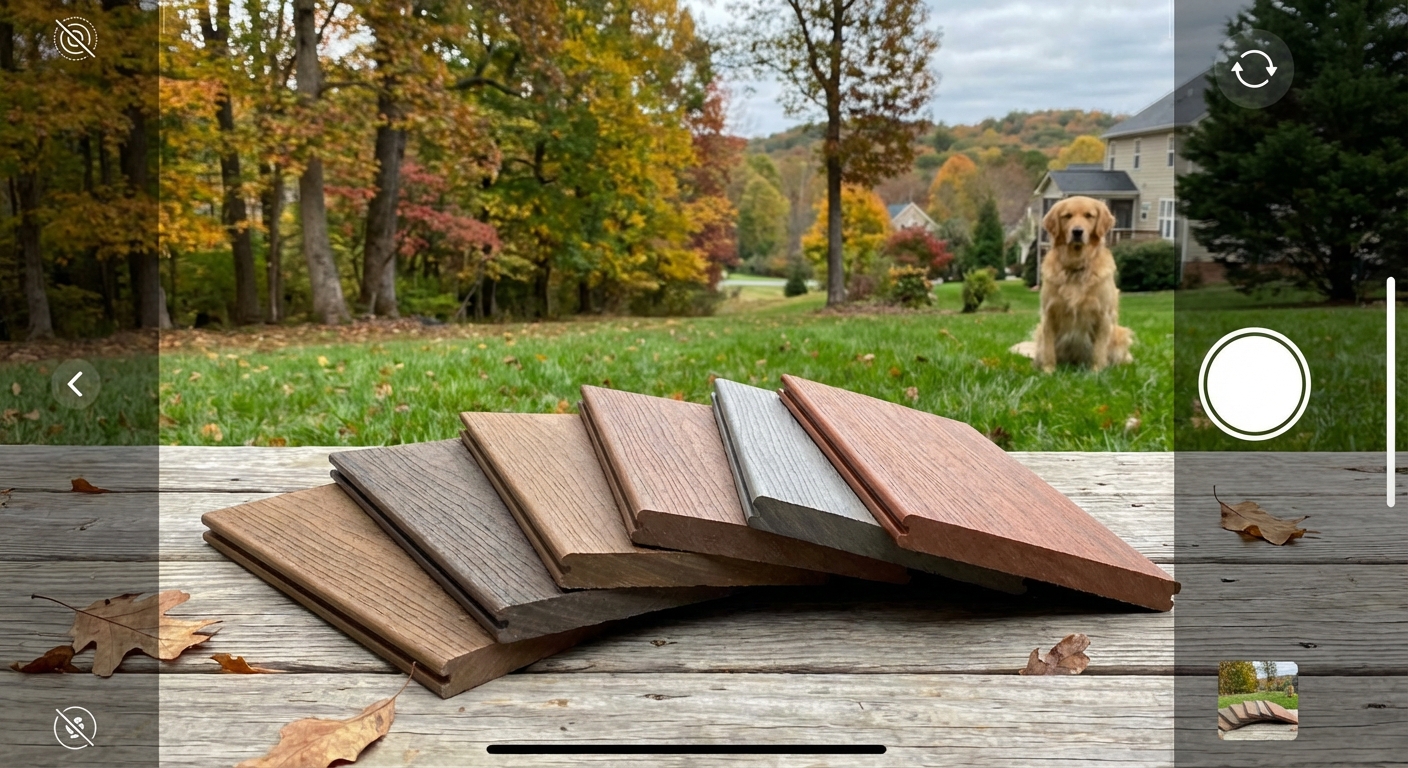
Are you planning a new deck or replacing an old one in North Carolina and considering composite decking? With North Carolina's moderate climate, hot humid summers (averaging 85-95°F) and mild winters, you can enjoy your deck for about 8-10 months of the year. Choosing the right composite material is crucial for longevity and enjoyment, especially given the state's humidity and termite pressure. This guide compares top composite decking brands, considering North Carolina's unique conditions and costs.
🌳 Tool Alert: Material Comparison
PT vs Composite vs Cedar. Compare 25-year total cost of ownership including maintenance.
Compare Materials →Why Choose Composite Decking in North Carolina?
Looking for more regional information? Check out our North Carolina State Decking Hub.
🏗️ Planning a deck project?
Get a free manual project review, or visualize your dream deck with AI before requesting quotes.
Composite decking offers significant advantages over traditional wood, especially in North Carolina's climate:
- Durability: Resists rot, decay, and insect infestation – essential with NC's significant termite presence.
- Low Maintenance: No need for staining, sealing, or painting.
- Moisture Resistance: Holds up well against North Carolina's average rainfall of 45-50 inches per year.
- Variety of Styles: Available in many colors and textures to match your home.
- Long Lifespan: Many composite decks come with 25-year or longer warranties.
Keep in mind that while composite decking is more expensive upfront, the reduced maintenance and longer lifespan often make it a more cost-effective choice in the long run. Average installed deck costs in NC range from $40-70 per square foot for composite, compared to $22-40 per square foot for pressure-treated wood.
<!-- slot:after-intro -->
Choosing between composite and wood? Our composite vs wood decking breaks down the real costs over 10 years. For full installed pricing by material type, see our deck cost guide.
Top Composite Decking Brands for North Carolina Homes
Here's a comparison of some of the most popular composite decking brands suitable for North Carolina, considering factors like price, durability, aesthetics, and warranty:
Trex
Trex is one of the most well-known and widely available composite decking brands. They offer several lines, each with different price points and features:
- Trex Transcend: Their premium line, offering superior stain and fade resistance, and a wide range of colors.
- Trex Select: A mid-range option that balances affordability and performance.
- Trex Enhance: An entry-level option that provides a durable, low-maintenance deck at a lower price.
Pros:
- Excellent durability and weather resistance.
- Extensive color and style options.
- Available nationwide.
- Strong brand reputation.
Cons:
- Can be more expensive than other brands.
- Entry-level options may not have as realistic a wood look.
NC Considerations: Trex is a solid choice for any region of North Carolina. Its moisture resistance is beneficial for coastal areas prone to hurricanes and high humidity, while its durability is advantageous in the mountains where temperature fluctuations can be extreme. Expect to pay around $45-75 per square foot installed for a Trex deck in North Carolina.
TimberTech/AZEK
TimberTech (owned by AZEK) offers a range of composite and PVC decking options. PVC decking is 100% synthetic, offering even greater moisture resistance than traditional composite.
- TimberTech AZEK: Their premium PVC decking line, offering the highest level of durability and moisture resistance.
- TimberTech PRO: A high-performance composite line with enhanced stain and scratch resistance.
- TimberTech EDGE: An entry-level composite line that provides a good balance of price and performance.
Pros:
- Excellent moisture resistance, especially with AZEK PVC decking.
- Realistic wood-grain textures.
- Wide range of colors and styles.
- Durable and long-lasting.
Cons:
- PVC decking can be more expensive than composite.
- Some lines may be prone to expansion and contraction in extreme temperatures.
NC Considerations: TimberTech AZEK is particularly well-suited for coastal North Carolina due to its superior moisture resistance, which is crucial for dealing with hurricane season and salty air. The PRO line is a great option for all regions.
Fiberon
Fiberon offers a variety of composite decking lines with a focus on sustainability and aesthetics.
- Fiberon Sanctuary: A premium line with multi-tonal colors and realistic wood grain patterns.
- Fiberon Good Life: An affordable and durable option with a simple, classic look.
- Fiberon Symmetry: A mid-range option with a sophisticated aesthetic and enhanced durability.
Pros:
- Focus on sustainable manufacturing practices.
- Realistic wood-grain textures.
- Good range of colors and styles.
- Competitive pricing.
Cons:
- May not be as widely available as Trex or TimberTech.
- Some lines may be more susceptible to staining than others.
NC Considerations: Fiberon's focus on aesthetics makes it a good choice for homeowners in cities like Charlotte, Raleigh, and Durham who want a deck that complements their home's architectural style. It performs well across North Carolina's various regions.
Deck Cost Comparison Table
| Brand | Line | Material | Estimated Installed Cost (per sq ft) | Key Features | Best Suited For |
|--------------|---------------|--------------|---------------------------------------|-----------------------------------------------------------------------------|-------------------------------------------------------------------------------------|
| Trex | Transcend | Composite | $60-75 | Superior stain and fade resistance, wide color range | Homeowners seeking premium durability and aesthetics |
| Trex | Select | Composite | $50-65 | Good balance of price and performance | Homeowners seeking a mid-range option with good value |
| Trex | Enhance | Composite | $45-55 | Durable, low-maintenance, budget-friendly | Homeowners seeking an affordable composite option |
| TimberTech | AZEK | PVC | $65-80 | Highest moisture resistance, realistic wood grain | Coastal areas and homeowners prioritizing maximum durability |
| TimberTech | PRO | Composite | $55-70 | Enhanced stain and scratch resistance | Homeowners seeking a high-performance composite deck |
| TimberTech | EDGE | Composite | $45-55 | Good balance of price and performance | Homeowners seeking an entry-level composite deck |
| Fiberon | Sanctuary | Composite | $55-70 | Multi-tonal colors, realistic wood grain | Homeowners prioritizing aesthetics and a natural wood look |
| Fiberon | Good Life | Composite | $40-50 | Affordable, durable, simple classic look | Homeowners seeking a budget-friendly and low-maintenance option |
| Fiberon | Symmetry | Composite | $50-65 | Sophisticated aesthetic, enhanced durability | Homeowners seeking a balance of aesthetics and performance |
*Note: These are estimated costs and can vary based on contractor, location, and project complexity.*
North Carolina-Specific Decking Considerations
When choosing composite decking in North Carolina, keep these factors in mind:
- Termite Resistance: Regardless of the brand you choose, ensure proper termite treatment around your deck's foundation.
- Moisture Management: Proper drainage is critical. Ensure your deck has adequate spacing between boards and a well-designed substructure to prevent water from pooling. This is especially important given NC's high rainfall.
- Building Codes and Permits: North Carolina follows the NC State Building Code (based on the IRC), but cities and counties may have additional requirements.
* Charlotte: Permits are obtained through Mecklenburg County Code Enforcement, with fees typically ranging from $150-400.
* Raleigh: Permits are issued by the City of Raleigh Inspections, costing around $100-350 with a turnaround time of 2-4 weeks.
* Durham: Permits are handled by Durham City-County Inspections, known for reasonable fees and processing times.
* Be sure to check with your local building department before starting construction. Read more about Do You Need a Deck Permit in North Carolina? Rules by City.
- Wind Load: If you live in eastern North Carolina, consider hurricane and wind load requirements when designing your deck. Your contractor should be familiar with these regulations.
- Frost Line: The frost line in North Carolina ranges from 12-18 inches in most areas, but can be deeper (up to 24 inches) in the mountain regions. Footings for your deck posts must extend below the frost line.
- Regional Differences: The best decking choice can vary depending on your region of North Carolina. Coastal areas need highly moisture-resistant materials, while mountain regions need materials that can withstand temperature fluctuations. The Piedmont region offers the most flexibility in material choices.
- Deck Features: Many North Carolina homeowners opt for screened porches, multi-level decks, and outdoor living rooms. Consider how your decking choice will integrate with these features.
- Best Build Months: The best months for deck construction in North Carolina are March-May and September-November, avoiding the peak summer humidity.
<!-- slot:mid-content -->
Installation and Maintenance Tips for Composite Decks in NC
- Proper Spacing: Follow the manufacturer's recommendations for spacing between deck boards to allow for expansion and contraction.
- Hidden Fasteners: Consider using hidden fastener systems for a clean, professional look.
- Substructure: Ensure your deck's substructure is properly built and treated to prevent rot and decay.
- Cleaning: Regularly clean your composite deck with soap and water to remove dirt and debris. Avoid using harsh chemicals or abrasive cleaners.
- Professional Installation: Consider hiring a qualified deck builder to ensure proper installation and adherence to building codes. Find reputable Best Deck Builders in Charlotte, NC: How to Find the Right Contractor or Best Deck Builders in Durham, NC: Local Guide for 2026.
Use PaperPlan (paperplan.app) to visualize your deck with PaperPlan design with different materials and layouts before committing to a contractor. This can help you choose the best decking material and design for your specific needs and budget.
Cost Considerations
While composite decking generally costs more upfront than pressure-treated wood, its long-term value often outweighs the initial investment. Here's a cost breakdown for different decking materials in North Carolina:
| Material | Estimated Installed Cost (per sq ft) |
|-----------------------|---------------------------------------|
| Pressure-Treated Wood | $22-40 |
| Composite Decking | $40-70 |
| Cedar Decking | $30-50 |
| Trex Decking | $45-75 |
| Ipe Decking | $55-95 |
Remember to factor in the cost of permits, labor, and any additional features you want to include in your deck design. Check out How Much Does a Deck Cost in North Carolina? 2026 Guide for a more in-depth look at pricing. You can also research costs in specific cities, such as Deck Cost in Charlotte, NC: Local Pricing Guide for 2026 or Deck Cost in Raleigh, NC: What Homeowners Are Paying in 2026.
<!-- slot:before-faq -->
Choosing the best composite decking for your North Carolina home involves carefully considering your budget, aesthetic preferences, and the specific environmental conditions in your region. By researching different brands, understanding local building codes, and working with a qualified contractor, you can build a beautiful and durable deck that you'll enjoy for years to come.
<!-- slot:end -->
🎨 Not sure which material to pick?
Upload a photo of your backyard and see exactly how Trex, TimberTech, or cedar would look — free and instant.
Frequently Asked Questions
What type of decking is most resistant to moisture in coastal North Carolina?
PVC decking, such as TimberTech AZEK, is the most moisture-resistant option. It's 100% synthetic and won't absorb water, making it ideal for coastal environments with high humidity and salty air.
How do I find a qualified deck builder in North Carolina?
Start by asking for recommendations from friends, family, or neighbors. You can also search online directories and read reviews. Be sure to check the contractor's license and insurance, and ask for references.
What are the most popular deck features in North Carolina?
Popular deck features in North Carolina include screened porches, multi-level decks, outdoor kitchens, and fire pits. These features allow homeowners to maximize their enjoyment of their outdoor space throughout the year.
Do I need a permit to build a deck in North Carolina?
Yes, in most cases, you will need a permit to build a deck in North Carolina. Check with your local building department to determine the specific requirements in your area. Here's more info about Raleigh Deck Permit Guide: What You Need Before Building.
Is pressure-treated lumber still a good option for decks in NC?
Pressure-treated lumber can be a cost-effective option, but it requires more maintenance than composite decking. It also may not last as long in North Carolina's humid climate. Learn more about Pressure-Treated Deck Cost in North Carolina: Budget Guide.
📋 Planning a deck project?
Get a free manual project review from our team — no obligation, no spam.
Get Free Project Review →Upload a backyard photo and preview real decking materials with AI — free, instant, no sign-up.
Permits, costs, material comparisons, and questions to ask before requesting quotes — delivered to your inbox.