
Best Deck Builders in Charlotte, NC (2026)
Looking for the best deck builders in Charlotte? This guide covers finding, vetting, and hiring a deck contractor for your Charlotte, NC home.
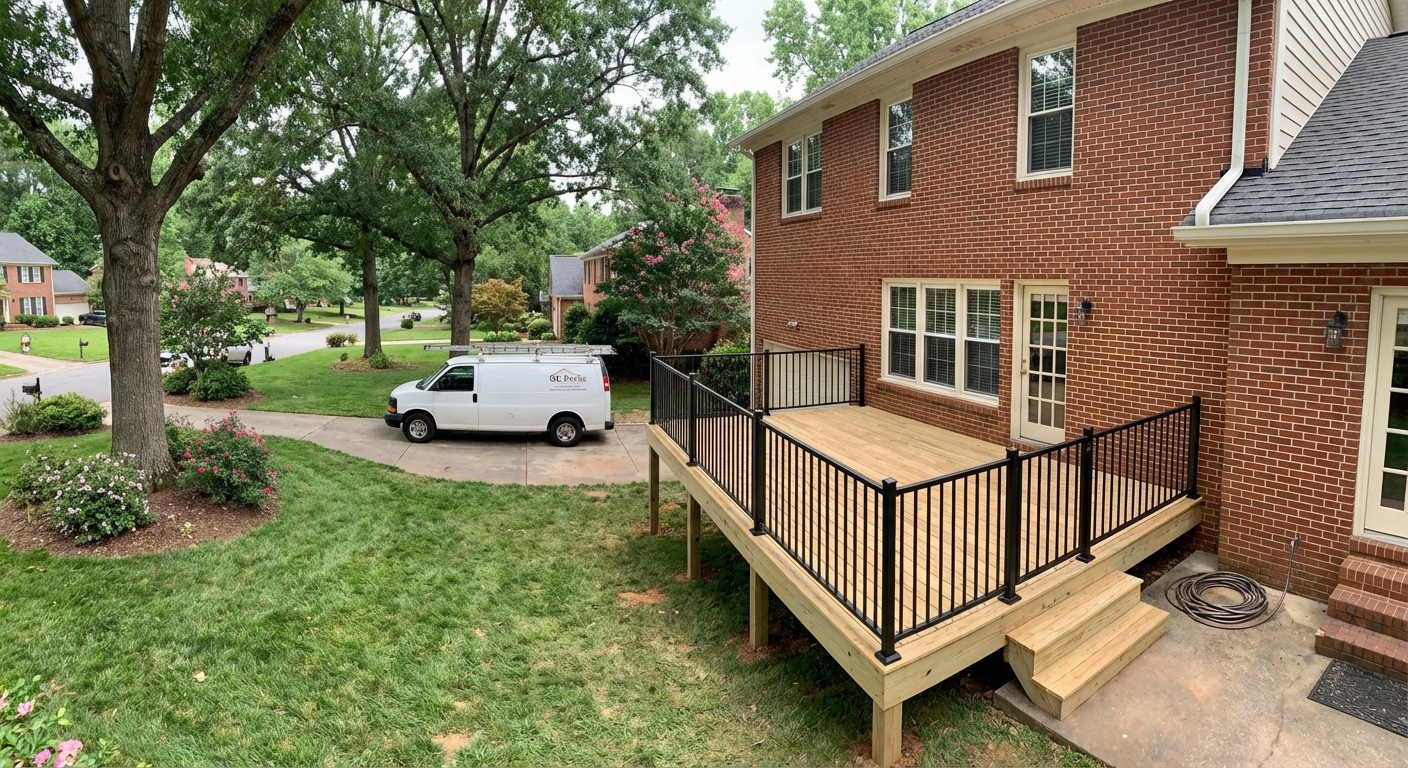
Building a new deck in Charlotte, NC, is a fantastic way to expand your outdoor living space and enjoy the beautiful North Carolina weather. But finding the right deck builder can feel overwhelming. You need someone reliable, experienced, and capable of delivering a high-quality deck that meets your needs and budget. This guide provides the information you need to find the best deck builders in Charlotte, ensuring your deck project is a success.
Finding Reputable Deck Builders in Charlotte
Looking for more regional information? Check out our North Carolina State Decking Hub.
🏗️ Planning a deck project?
Get a free manual project review, or visualize your dream deck with AI before requesting quotes.
Locating qualified deck contractors in the Charlotte area requires a strategic approach. Here are several avenues to explore:
- Online Directories: Platforms like deckbuilderfind.com (a service of local.click), Houzz, Angi, and the Better Business Bureau (BBB) list deck builders with customer reviews and ratings.
- Local Referrals: Ask neighbors, friends, and family for recommendations. Personal referrals are often the most reliable. Check neighborhood social media groups too.
- Home Improvement Stores: Major retailers like Lowe's and Home Depot often partner with local contractors for deck installation projects. While convenient, make sure you still vet the assigned contractor independently.
- Lumberyards: Local lumberyards often have relationships with reputable deck builders in the area. They can provide recommendations based on contractor experience and material preferences.
<!-- slot:after-intro -->
For a broader look at deck pricing across different materials and regions, see our deck cost guide. Timing your build right can also save thousands — check our guide on the best time to build a deck.
Vetting Potential Deck Contractors: Due Diligence is Key
Once you have a list of potential contractors, thorough vetting is crucial. Don't skip these essential steps:
1. Verify Licensing and Insurance
- North Carolina General Contractor License: For projects exceeding \$30,000, a general contractor license is required in NC. Verify your contractor's license through the North Carolina Licensing Board for General Contractors website.
- Liability Insurance: Ensure the contractor has adequate liability insurance to cover potential damages or accidents on your property. Request a certificate of insurance.
- Workers' Compensation Insurance: If the contractor employs workers, they must have workers' compensation insurance to cover injuries sustained on the job.
2. Check References and Reviews
- Contact Past Clients: Ask for a list of previous clients and contact them to inquire about their experience with the contractor. Ask about the quality of workmanship, communication, and adherence to the project timeline and budget.
- Read Online Reviews: Review online ratings and reviews on platforms like Google, Yelp, and the BBB. Pay attention to both positive and negative feedback.
3. Review Their Portfolio
- Request Photos of Previous Projects: Ask the contractor to provide photos of decks they have built in the Charlotte area. This will give you an idea of their design aesthetic and quality of work.
- Visit Completed Projects (If Possible): If possible, ask to visit a recently completed deck project to assess the workmanship firsthand.
4. Evaluate Communication and Professionalism
- Promptness and Responsiveness: A reliable contractor should be prompt in responding to your inquiries and scheduling appointments.
- Clear Communication: The contractor should be able to clearly explain the project scope, materials, and construction process.
- Professional Demeanor: Observe the contractor's professionalism during your interactions. Are they respectful, attentive, and knowledgeable?
Understanding Deck Costs in Charlotte, NC
Deck costs in Charlotte vary depending on several factors, including:
- Deck Size: Larger decks require more materials and labor, increasing the overall cost.
- Materials: The type of decking material significantly impacts the price. Options range from pressure-treated lumber to composite decking, cedar, and exotic hardwoods.
- Design Complexity: Intricate designs, multiple levels, and custom features will add to the cost.
- Permits and Fees: Obtaining the necessary permits from Mecklenburg County Code Enforcement will incur additional expenses, typically between \$150-\$400.
- Labor Costs: Labor rates vary among contractors. Obtain multiple quotes to compare pricing.
- Site Conditions: Difficult site access or challenging terrain can increase labor costs.
Here's a breakdown of average deck costs in Charlotte, NC:
| Material | Average Cost per Square Foot (Installed) |
|----------------------|------------------------------------------|
| Pressure-Treated | \$22-\$40 |
| Composite | \$40-\$70 |
| Cedar | \$30-\$50 |
| Trex | \$45-\$75 |
| Ipe (Exotic Hardwood)| \$55-\$95 |
Keep in mind these are *average* costs. Get multiple quotes tailored to *your* specific project. See also: Deck Cost in Charlotte, NC: Local Pricing Guide for 2026
Factors Influencing Cost in Different Charlotte Neighborhoods
Deck building costs can fluctuate slightly depending on the specific neighborhood in Charlotte. For example:
- Myers Park & Dilworth: Upscale neighborhoods may see higher labor costs due to increased demand and a preference for experienced, high-end contractors. Material choices also tend to lean towards premium options like Ipe or high-end composite.
- Ballantyne & SouthPark: Similar to Myers Park, these areas often feature larger properties and more complex deck designs, impacting the overall project cost.
- NoDa & Plaza Midwood: These trendy areas might see a demand for unique, custom deck designs, potentially increasing material and labor costs.
- University City & East Charlotte: These areas might offer more competitive pricing due to a wider range of contractors and potentially smaller deck sizes.
The Impact of Charlotte's Climate on Decking Choices
Charlotte's climate, with its hot, humid summers and mild winters, necessitates careful consideration of decking materials. North Carolina experiences about 45-50 inches of rain per year, making moisture management crucial.
- Pressure-Treated Lumber: A cost-effective option, but requires regular maintenance to prevent rot and insect infestation. Ensure it's properly treated for ground contact if needed.
- Composite Decking: A low-maintenance alternative that resists rot, insects, and fading. Many brands offer excellent warranties. Consider brands specifically formulated for moisture resistance, such as those discussed in Best Composite Decking for North Carolina: Top Brands Compared
- Cedar: A naturally durable and attractive option, but requires periodic sealing to maintain its appearance and prevent weathering.
- Ipe: A dense, exotic hardwood that is naturally resistant to rot, insects, and wear. It's a premium option with a higher price tag.
Best build months in Charlotte are March-May and September-November to avoid the peak summer humidity.
Moisture Management and Drainage
Given North Carolina's rainfall, proper moisture management is essential for deck longevity. Ensure your contractor incorporates these features:
- Proper Spacing: Adequate spacing between deck boards allows for water drainage and prevents moisture buildup.
- Flashing: Flashing should be installed where the deck attaches to the house to prevent water from penetrating the building envelope.
- Substructure Protection: Consider using joist tape or flashing to protect the substructure from moisture damage.
- Adequate Drainage: Ensure the deck is sloped slightly to allow for water runoff.
Navigating the Permitting Process in Charlotte (Mecklenburg County)
Before starting your deck project in Charlotte, you'll likely need to obtain a permit from Mecklenburg County Code Enforcement. Here's what you need to know:
- When is a Permit Required? Generally, a permit is required for decks that are more than 30 inches above grade, attached to a dwelling, or cover more than 200 square feet. See Charlotte Deck Permit: Requirements, Costs & How to Apply for details.
- Application Process: You or your contractor will need to submit a permit application, along with detailed construction drawings, to Mecklenburg County Code Enforcement.
- Fees: Permit fees typically range from \$150-\$400, depending on the size and complexity of the project.
- Inspections: The county inspector will conduct inspections at various stages of the construction process to ensure compliance with building codes.
- NC State Building Code: Charlotte adheres to the NC State Building Code, which is based on the International Residential Code (IRC).
It's highly recommended to work with a contractor who is familiar with the local permitting process and can handle the application and inspection requirements.
<!-- slot:mid-content -->
The Importance of a Detailed Contract
A comprehensive contract is essential to protect your interests and ensure a smooth deck building project. The contract should include:
- Project Scope: A detailed description of the work to be performed, including the deck size, materials, design, and any special features.
- Payment Schedule: A clear payment schedule outlining when payments are due. Avoid paying a large upfront deposit.
- Timeline: An estimated start and completion date for the project.
- Permitting: Specify who is responsible for obtaining the necessary permits.
- Insurance: Proof of the contractor's liability and workers' compensation insurance.
- Warranty: A warranty on the workmanship and materials.
- Change Order Process: A procedure for handling changes to the original project scope.
- Dispute Resolution: A mechanism for resolving any disputes that may arise.
Local Considerations for Charlotte Decks
- Typical Lot Sizes: Charlotte lot sizes vary. Many older neighborhoods like Dilworth have smaller, urban lots, while newer developments in areas like Ballantyne often feature larger properties. This impacts the deck size and design possibilities.
- HOA Restrictions: If you live in a neighborhood with a homeowners association (HOA), be sure to review their guidelines and obtain approval before starting your deck project.
- Common Deck Features: Popular deck features in Charlotte include screened porches, multi-level decks, outdoor kitchens, and fire pits. North Carolina's moderate climate allows decks to be usable 8-10 months of the year.
- Termite Pressure: Termite pressure is significant in North Carolina. Ensure your contractor uses treated lumber and takes precautions to prevent termite infestations.
Visualize Your Dream Deck
Before you even start contacting contractors, it's incredibly helpful to visualize your deck with PaperPlan design. Use PaperPlan (paperplan.app) to experiment with different materials, layouts, and features. See how different composite decking colors will look with your home's exterior. Play around with multi-level configurations and outdoor kitchen placements. By creating a visual representation of your ideal deck, you'll be able to communicate your vision more effectively to potential contractors, leading to more accurate quotes and a better overall outcome.
<!-- slot:before-faq -->
Making the Final Decision
Choosing the right deck builder is a significant decision. Take your time, do your research, and trust your gut. Consider these factors when making your final choice:
- Experience and Expertise: Select a contractor with a proven track record of building high-quality decks in the Charlotte area.
- Reputation: Choose a contractor with positive reviews and satisfied clients.
- Price: While price is important, don't sacrifice quality for a lower bid.
- Communication and Professionalism: Select a contractor who is responsive, communicative, and professional.
- Comfort Level: Choose a contractor you feel comfortable working with and trust to deliver your dream deck.
<!-- slot:end -->
🎨 Not sure which material to pick?
Upload a photo of your backyard and see exactly how Trex, TimberTech, or cedar would look — free and instant.
Frequently Asked Questions
What type of decking material is best for Charlotte's climate?
Consider composite decking for low maintenance and resistance to moisture, rot, and insects, which are common concerns in North Carolina. Pressure-treated lumber is a more affordable option, but requires regular maintenance. Cedar offers natural beauty and durability, but also needs periodic sealing.
How long does it take to build a deck in Charlotte?
The construction timeline depends on the size and complexity of the project. A simple deck may take 1-2 weeks, while a more elaborate deck with custom features could take 4-6 weeks or longer. Permitting turnaround also needs to be factored in.
How much should I budget for a deck project in Charlotte?
Budget at least \$22-\$40 per square foot for a pressure-treated deck, \$40-\$70 per square foot for composite, and \$30-\$50 per square foot for cedar. These are just averages, so get multiple quotes.
Do I need a permit to build a deck in Charlotte?
Generally, yes. A permit is typically required for decks over 30 inches above grade or larger than 200 square feet. Check with Mecklenburg County Code Enforcement for specific requirements. See also: Do You Need a Deck Permit in North Carolina? Rules by City
What are some popular deck features in Charlotte?
Popular features include screened porches, multi-level designs, outdoor kitchens, fire pits, and built-in seating. Homeowners in Charlotte often focus on creating comfortable and functional outdoor living spaces.
📋 Planning a deck project?
Get a free manual project review from our team — no obligation, no spam.
Get Free Project Review →Upload a backyard photo and preview real decking materials with AI — free, instant, no sign-up.
Permits, costs, material comparisons, and questions to ask before requesting quotes — delivered to your inbox.