
How to Build a Deck in North Carolina (2026)
A comprehensive guide to building your own deck in North Carolina. Learn about permits, costs, materials, and step-by-step construction.
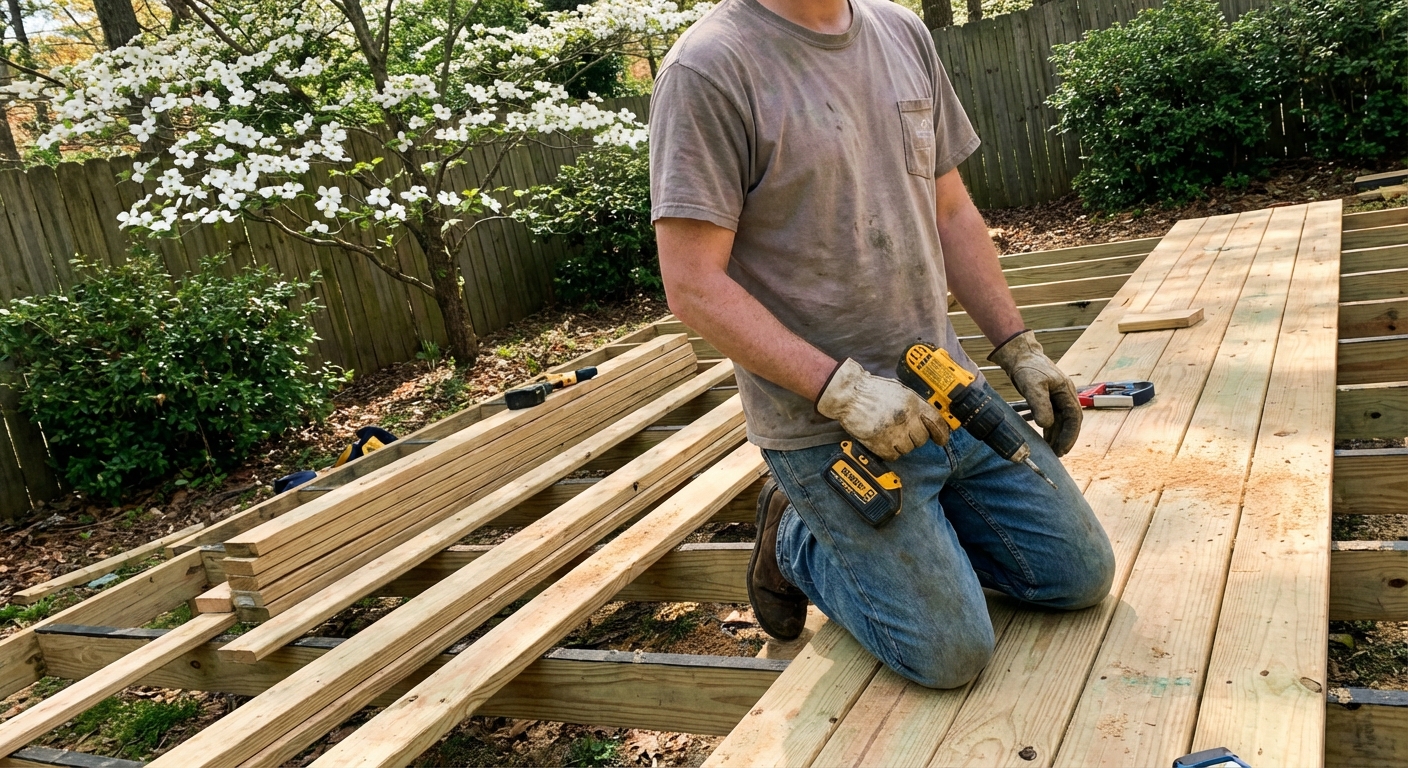
Want to build a deck in North Carolina but don't know where to start? This guide breaks down the entire DIY deck-building process, from permits to the final finishing touches. We'll cover North Carolina-specific considerations like climate, building codes, and regional variations.
📐 Tool Alert: Deck Stair Calculator
Calculate rise, run, and stringer cuts while ensuring IRC/OBC code compliance.
Calculate Stairs →<!-- slot:after-intro -->
Looking for more regional information? Check out our North Carolina State Decking Hub.
1. Planning and Preparation
1.1. Design and Size
Start by determining the size and layout of your deck. Consider how you'll use the space – dining, lounging, grilling? Factor in your yard's dimensions and any existing structures. Use PaperPlan (paperplan.app) to visualize your deck with PaperPlan design and see how it fits your property before you start building.
🏗️ Planning a deck project?
Get a free manual project review, or visualize your dream deck with AI before requesting quotes.
Think about popular features like a screened porch, especially if you're in an area with a long bug season. Screened Porch vs Open Deck in North Carolina: Which Is Better? explores the pros and cons. If you live in Asheville or another mountainous area, consider how a multi-level deck can maximize your view on a sloped lot. Get inspiration from North Carolina Deck Design Ideas: Inspiration for Every Budget.
1.2. Budgeting
Deck costs vary significantly based on materials and size. Here's a general cost breakdown for installed decks in North Carolina:
| Material | Cost per Square Foot (Installed) |
|------------------|-----------------------------------|
| Pressure-Treated | $22 - $40 |
| Composite | $40 - $70 |
| Cedar | $30 - $50 |
For a deeper dive, see How Much Does a Deck Cost in North Carolina? Complete 2026 Guide. These costs can vary. For example, labor costs in Asheville tend to be higher.
1.3. Permits
In North Carolina, you'll generally need a permit for decks larger than 200 square feet or more than 30 inches above grade. Contact your local building inspections department (city or county) to confirm specific requirements. Building codes in NC generally follow the International Residential Code (IRC) with local amendments.
Skipping this step can lead to fines and forced demolition. Find detailed information in Do You Need a Deck Permit in North Carolina? State & City Rules. If you're in a major city, check out Charlotte Deck Permit: Requirements, Costs & How to Apply or Raleigh Deck Permit Guide: What You Need Before Building.
1.4. Material Selection
- Pressure-Treated Lumber: The most common and affordable option. Essential for any lumber in direct contact with the ground due to termite risks in North Carolina. Consider Pressure-Treated Deck Cost in NC: Budget-Friendly Guide.
- Composite Decking: Low-maintenance and durable, resists fading, staining, and rotting. More expensive upfront but saves time and money on maintenance. Learn about options in Best Composite Decking for North Carolina: Top Brands Compared.
- Cedar: A naturally beautiful and durable wood. More expensive than pressure-treated but offers a premium look. Requires regular sealing to prevent weathering, especially in humid climates.
1.5. Tools and Equipment
You'll need:
- Measuring tape
- Level
- Circular saw
- Drill/driver
- Post hole digger or power auger
- Concrete mixer (optional)
- Safety glasses
- Gloves
- Shovels
- Hammer
- String and stakes
2. Deck Construction: Step-by-Step
2.1. Layout and Footings
1. Mark the Deck Perimeter: Use stakes and string to outline the deck's dimensions.
2. Locate Post Footings: Determine the placement of your support posts according to your design and local building codes. Consider the frost line in your area (generally 12 inches, but deeper in mountain areas like Asheville, around 18 inches).
3. Dig Footing Holes: Dig holes for the concrete footings. The diameter should be wide enough to accommodate your concrete form (e.g., a cardboard tube).
4. Pour Concrete Footings: Fill the holes with concrete, ensuring they are level. Embed metal post anchors into the wet concrete. Let the concrete cure completely (usually 48-72 hours).
2.2. Post Installation
1. Cut Posts to Height: Determine the appropriate height for your posts based on your desired deck height.
2. Attach Posts to Footings: Secure the posts to the metal anchors embedded in the concrete footings. Use appropriate hardware rated for exterior use. Ensure posts are plumb (perfectly vertical).
2.3. Beam Installation
1. Attach Beams to Posts: Beams are horizontal supports that span between the posts. Attach them to the posts using appropriate fasteners. Ensure the beams are level.
2. Beam Size: Beam size depends on the span between posts and the load they need to carry. Consult local building codes for specific requirements.
<!-- slot:mid-content -->
2.4. Joist Installation
1. Install Joist Hangers: Attach joist hangers to the beams at the spacing specified in your design (typically 12 or 16 inches on center).
2. Cut Joists to Length: Cut the joists (the framing members that support the decking) to the correct length.
3. Install Joists: Place the joists into the joist hangers and secure them with nails or screws. Ensure joists are level and properly spaced.
2.5. Decking Installation
1. Install Decking Boards: Starting at one edge, install the decking boards. Use screws or hidden fasteners (depending on the type of decking). Maintain consistent spacing between boards for drainage and expansion.
2. Cut Boards to Length: Overhang the edges of the frame and cut them flush after the decking is installed.
2.6. Railing Installation
1. Install Railing Posts: Attach railing posts to the deck framing. Ensure they are securely fastened and plumb.
2. Install Railing Components: Install the top rail, bottom rail, and infill (balusters or other decorative elements) according to your design. Ensure the railing meets local building code requirements for height and spacing.
2.7. Stairs (If Applicable)
1. Calculate Rise and Run: Determine the rise (vertical height) and run (horizontal depth) of each step.
2. Cut Stringers: Cut the stair stringers (the angled supports) according to your calculations.
3. Attach Stringers: Attach the stringers to the deck framing and the ground.
4. Install Treads and Risers: Install the treads (the horizontal part of the step) and risers (the vertical part of the step).
3. Finishing Touches
3.1. Sealing and Staining (for Wood Decks)
Protect your wood deck from the elements with a quality sealer or stain. Deck Staining Tips for North Carolina: Best Time & Products offers advice on choosing the right product. High humidity in areas like Greensboro and Winston-Salem means mold and mildew are a real concern. Choose products with mildewcides. The best times to stain are March-May and September-November, when temperatures are moderate.
3.2. Cleaning and Maintenance
Regular cleaning is essential to keep your deck looking its best. Deck Maintenance in North Carolina: Seasonal Care Guide outlines best practices.
3.3. Landscaping and Decor
Add plants, furniture, and other decorative elements to personalize your deck and make it an inviting outdoor space. Consider adding lighting for evening enjoyment.
Building a deck yourself can save money, but it requires time, effort, and attention to detail. If you're not comfortable with any of these steps, consider hiring a professional. Find reputable contractors in your area: Best Deck Builders in Charlotte: How to Find the Right Contractor or Best Deck Builders in Durham, NC: Local Guide.
<!-- slot:before-faq -->
Estimated Project Timeline
A DIY deck project can take anywhere from a few days to several weeks, depending on the size and complexity of the deck, and your skill level.
- Planning & Permits: 1-4 weeks
- Material Procurement: 1-2 weeks
- Construction: 1-3 weeks
<!-- slot:end -->
🎨 Not sure which material to pick?
Upload a photo of your backyard and see exactly how Trex, TimberTech, or cedar would look — free and instant.
Frequently Asked Questions
How much does it cost to build a deck in North Carolina?
The cost varies based on materials and size. Expect to pay around $22-$40 per square foot for pressure-treated, $40-$70 per square foot for composite, and $30-$50 per square foot for cedar, installed. DIY projects are usually significantly cheaper, but require your labor.
Do I need a permit to build a deck in North Carolina?
Generally, yes, if the deck is over 200 square feet or 30 inches above grade. Check with your local building inspections department for specific requirements.
What is the frost line in North Carolina?
The frost line is generally 12 inches throughout most of North Carolina, but can be deeper (around 18 inches) in mountain areas like Asheville.
What are the best materials for a deck in North Carolina's climate?
Pressure-treated lumber is a good budget-friendly choice. Composite decking is low-maintenance and durable. Cedar offers a premium look but requires more upkeep. Consider your budget, maintenance preferences, and aesthetic goals when selecting materials.
How can I prevent mold and mildew on my wood deck in North Carolina?
Regular cleaning and sealing with a mildew-resistant product are crucial. Choose a stain or sealant specifically formulated for humid climates. Ensure good ventilation around the deck to reduce moisture buildup.
📋 Planning a deck project?
Get a free manual project review from our team — no obligation, no spam.
Get Free Project Review →Upload a backyard photo and preview real decking materials with AI — free, instant, no sign-up.
Permits, costs, material comparisons, and questions to ask before requesting quotes — delivered to your inbox.