
Deck Staining Tips for North Carolina (2026)
Staining your deck in NC? Learn the best time to stain, top stain choices for our climate, and how to prep your deck for a long-lasting finish.
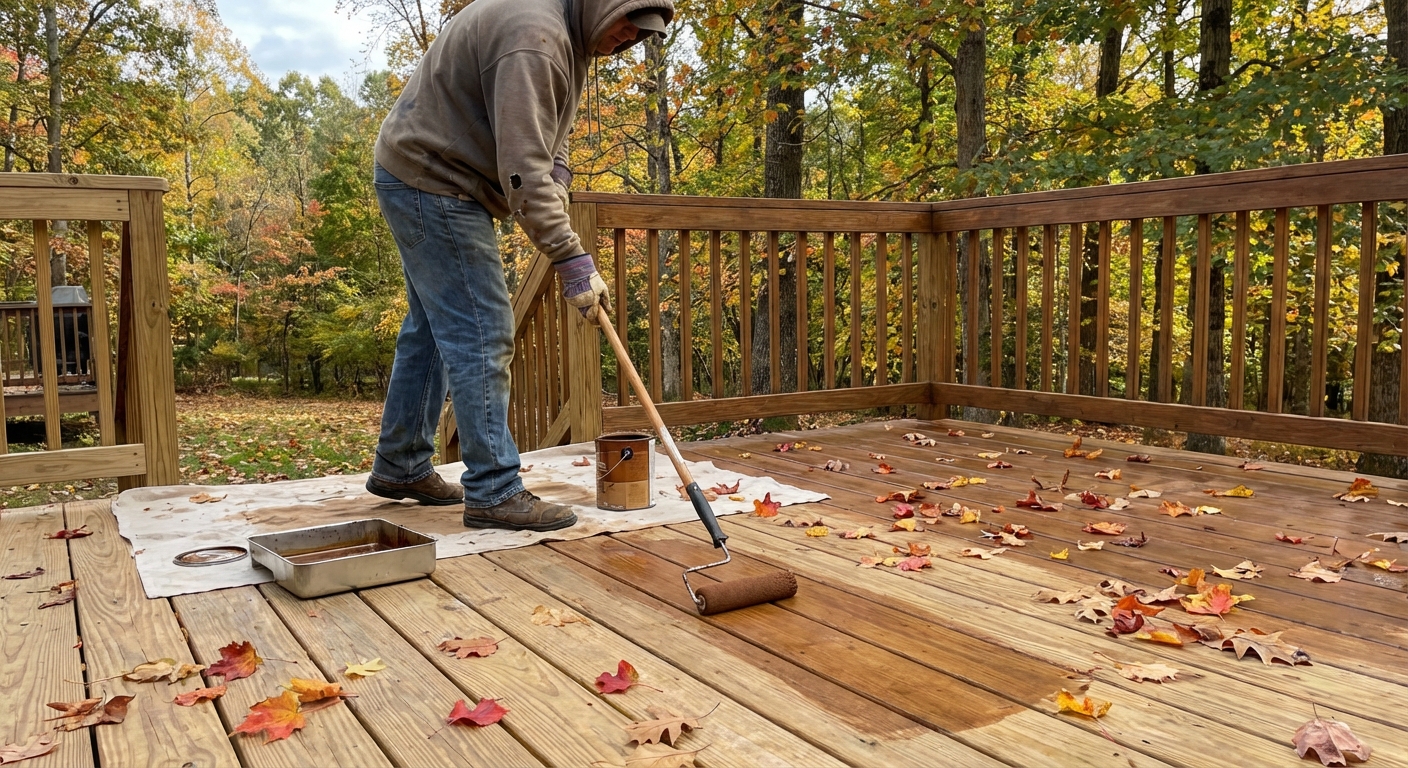
Are you looking to protect and beautify your deck in North Carolina? Staining is key, but timing and product selection are crucial for success in our diverse climate. This guide will walk you through the best time to stain your deck in NC, what products work best against our humidity and temperature swings, and how to properly prepare your deck for staining.
📐 Tool Alert: Deck Stair Calculator
Calculate rise, run, and stringer cuts while ensuring IRC/OBC code compliance.
Calculate Stairs →<!-- slot:after-intro -->
Looking for more regional information? Check out our North Carolina State Decking Hub.
Best Time to Stain Your Deck in North Carolina
North Carolina's weather is a major factor in determining the ideal time for deck staining. We have hot, humid summers and mild winters, but the shoulder seasons offer the best conditions.
🏗️ Planning a deck project?
Get a free manual project review, or visualize your dream deck with AI before requesting quotes.
- Spring (March-May): This is generally a prime time for staining. Temperatures are moderate, humidity is lower than summer, and you're ahead of the intense summer sun.
- Fall (September-November): Similar to spring, fall offers favorable conditions. The summer heat has subsided, and you have a window before the winter chill sets in.
Key Considerations:
- Temperature: Aim for temperatures between 50°F and 80°F for optimal stain application and drying.
- Moisture: Ensure the wood is dry before staining. Excess moisture can prevent the stain from properly penetrating and can lead to peeling or blistering. Use a moisture meter; the wood should ideally be below 15% moisture content.
- Weather Forecast: Check the forecast for several days of dry weather before and after staining. Rain can ruin a fresh stain job.
Regional Differences:
- Mountains (Asheville): Higher elevations mean cooler temperatures and potentially more rainfall. Pay close attention to the forecast and choose a slightly warmer day for staining.
- Piedmont (Charlotte, Raleigh, Greensboro, Winston-Salem): This region experiences more typical NC weather. Spring and fall are generally reliable.
- Coastal: Higher humidity levels mean you need to be extra vigilant about wood moisture content. Allow extra drying time.
Preparing Your Deck for Staining: A Step-by-Step Guide
Proper preparation is just as important as the stain itself. A poorly prepared deck will result in a poor stain job, regardless of the product you use.
1. Cleaning:
* Remove Debris: Sweep away all leaves, dirt, and debris.
* Wash the Deck: Use a deck cleaner specifically designed for your wood type. Pressure washing can be effective, but be careful not to damage the wood. Use a wide fan tip and low pressure (below 1500 PSI). If you're in the Asheville area, consider the delicate nature of the often-used rustic-modern deck styles and proceed with even more caution.
* Mold and Mildew Removal: If you see signs of mold or mildew (common in humid NC), use a cleaner with a mildewcide.
2. Repairing:
* Replace Damaged Boards: Replace any rotten, warped, or cracked boards. Matching the existing wood type is ideal.
* Tighten Loose Screws or Nails: Ensure all fasteners are secure.
* Sand Rough Spots: Sand down any rough areas or splinters to create a smooth surface.
3. Sanding (if necessary):
* Assess the Existing Finish: If your deck has an existing stain or sealer, you may need to sand it down to bare wood for the new stain to properly penetrate.
* Choose the Right Grit: Start with a coarser grit (e.g., 60-80) to remove the old finish, then move to a finer grit (e.g., 100-120) for a smooth finish.
* Dust Removal: Thoroughly remove all sanding dust before staining.
Choosing the Right Deck Stain for North Carolina
With North Carolina’s humidity, you need a stain that can withstand moisture and resist mold/mildew growth.
- Oil-Based Stains: These penetrate the wood deeply, offering good protection and water repellency. They tend to be more durable than water-based stains, but they can be more prone to mildew growth.
- Water-Based Stains: These are easier to clean up, have lower VOCs (volatile organic compounds), and are more resistant to fading. Many modern water-based stains offer excellent performance.
- Transparent/Clear Sealers: These offer minimal color change but provide water repellency and UV protection. They need to be reapplied more frequently.
- Semi-Transparent Stains: These allow some of the wood grain to show through while adding color and protection. A good balance of aesthetics and durability.
- Solid Stains: These completely cover the wood grain, offering the most protection. They look more like paint and can be more prone to peeling if not applied correctly.
Product Recommendations (Check local availability and recent reviews):
- For Pressure-Treated Pine (Most Common):
* Oil-Based: Thompson's WaterSeal Timber Oil (for budget-friendly option), Ready Seal Exterior Stain and Sealer
* Water-Based: Olympic Maximum Waterproofing Sealant, Rust-Oleum RockSolid Deck Coating
- For Cedar:
* Oil-Based: Cabot Australian Timber Oil, Penofin Verde Oil Finish
* Water-Based: Arborcoat Exterior Stain (Benjamin Moore), Sherwin-Williams SuperDeck Exterior Waterborne Semi-Transparent Stain
- For Ipe or Other Hardwoods:
* Oil-Based: Ipe Oil, Messmer's UV Plus for Hardwood Decks
<!-- slot:mid-content -->
Color Considerations:
- Light Colors: Reflect sunlight and keep the deck cooler. Can show dirt more easily.
- Dark Colors: Absorb sunlight and can make the deck hotter. Can hide dirt better.
- Consider your home's exterior: Choose a stain color that complements your home's siding and trim. If you're in a planned community in Charlotte or Raleigh, be sure to check HOA guidelines.
Staining Your Deck: Application Techniques
1. Choose the Right Tools: Use a high-quality brush, roller, or sprayer designed for exterior stains.
2. Apply Thin, Even Coats: Avoid applying too much stain at once, which can lead to drips and uneven drying.
3. Work in Sections: Stain a few boards at a time, following the wood grain.
4. Back-Brushing: If using a sprayer, back-brush the stain to ensure it penetrates the wood.
5. Allow Proper Drying Time: Follow the manufacturer's instructions for drying time. Typically, 24-48 hours is recommended.
6. Apply a Second Coat (if needed): Some stains require a second coat for optimal protection.
Deck Maintenance to Extend Stain Life in NC
- Regular Cleaning: Sweep your deck regularly to remove debris. Wash it at least once a year with a deck cleaner.
- Address Issues Promptly: Repair any damage or signs of wear and tear as soon as possible.
- Re-Stain as Needed: Depending on the type of stain and the level of exposure, you may need to re-stain your deck every 1-3 years. Transparent stains need more frequent reapplication.
Deck Building Considerations in North Carolina
Planning a new deck? Keep these North Carolina-specific considerations in mind:
- Permits: Most jurisdictions in NC require permits for decks over 200 sq ft or 30 inches above grade. Check with your local building department (Charlotte Deck Permit: Requirements, Costs & How to Apply, Raleigh Deck Permit Guide: What You Need Before Building).
- Frost Line: The frost line in most of NC is 12 inches, but it can be deeper in the mountains (around 18 inches). Footings must extend below the frost line to prevent heaving.
- Termites: Termites are a concern statewide. Use pressure-treated lumber for all ground-contact components. See Pressure-Treated Deck Cost in NC: Budget-Friendly Guide for more information on lumber options.
- Humidity: High humidity promotes mold and mildew growth. Choose stain and decking materials that are resistant to moisture damage. Consider composite decking as an alternative to wood. See Best Composite Decking for North Carolina: Top Brands Compared.
- Common Features: Many NC homeowners opt for screened porches to combat insects (Screened Porch vs Open Deck in North Carolina: Which Is Better?). Multi-level decks are popular on sloped lots, especially in areas like Asheville.
- Deck Costs: Expect to pay around $22-40/sqft for a pressure-treated deck, $40-70/sqft for a composite deck, and $30-50/sqft for a cedar deck, installed. How Much Does a Deck Cost in North Carolina? Complete 2026 Guide provides more detailed cost breakdowns.
- Design Ideas: Explore various design options to fit your style and budget. North Carolina Deck Design Ideas: Inspiration for Every Budget offers inspiration for every style and budget.
Use PaperPlan (paperplan.app) to visualize your deck with PaperPlan design and explore different stain colors before you even pick up a brush. This can save you time and money by helping you make the right choices upfront.
<!-- slot:before-faq -->
By following these tips, you can ensure your deck looks great and lasts for years to come, even in North Carolina's challenging climate. Don't forget to factor in seasonal maintenance; Deck Maintenance in North Carolina: Seasonal Care Guide will help keep your deck in top shape.
<!-- slot:end -->
🎨 Not sure which material to pick?
Upload a photo of your backyard and see exactly how Trex, TimberTech, or cedar would look — free and instant.
Frequently Asked Questions
What happens if I stain my deck when it's too humid?
Staining in high humidity can trap moisture in the wood, preventing the stain from properly adhering. This can lead to blistering, peeling, and mold growth. It's best to wait for a drier period.
How do I know if my deck is dry enough to stain?
Use a moisture meter to check the wood's moisture content. Ideally, it should be below 15%. You can rent or purchase a moisture meter at most hardware stores.
Can I stain my deck in direct sunlight?
Avoid staining in direct sunlight, as the stain can dry too quickly and unevenly. This can result in lap marks and a poor finish. Choose a cloudy day or stain in the shade.
How often should I clean my deck?
Clean your deck at least once a year, or more often if it's heavily used or exposed to a lot of dirt and debris. Regular cleaning helps prevent mold and mildew growth and extends the life of your stain.
What type of stain is best for a covered deck?
Even though a covered deck is protected from direct rain, humidity can still be a factor. A water-based stain with mildew resistance is a good choice for a covered deck in North Carolina.
📋 Planning a deck project?
Get a free manual project review from our team — no obligation, no spam.
Get Free Project Review →Upload a backyard photo and preview real decking materials with AI — free, instant, no sign-up.
Permits, costs, material comparisons, and questions to ask before requesting quotes — delivered to your inbox.