
Deck Cost in Indianapolis (2026)
Planning a deck in Indianapolis for 2026? Get the inside scoop on local deck costs, materials, permits, and trusted builders.
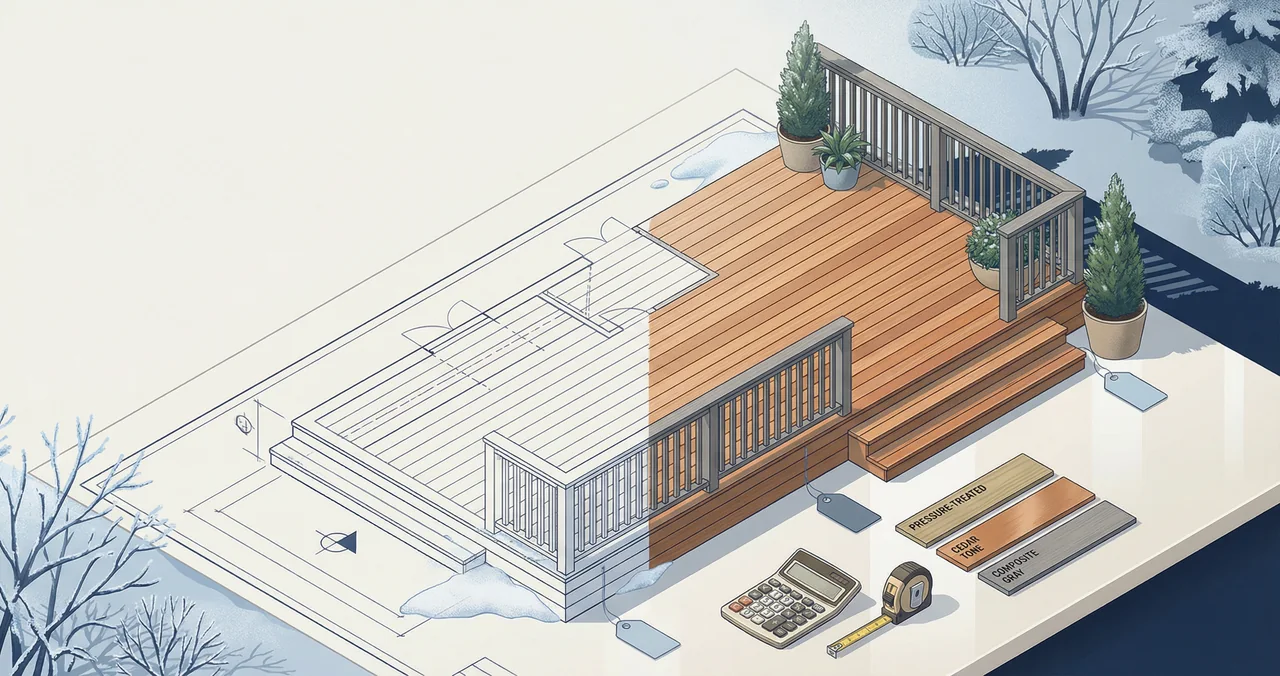
Deck Cost in Indianapolis: Local Pricing for 2026
Building a new deck or replacing an existing one is a fantastic way to enhance your Indianapolis home and outdoor living space. However, understanding the costs involved is crucial for proper budgeting and planning. This guide provides a comprehensive overview of deck costs in Indianapolis for 2026, taking into account local factors like material availability, labor rates, building codes, and neighborhood trends. We'll break down the different components of a deck project, helping you make informed decisions and get the best value for your investment.
🏗️ Planning a deck project?
Get a free manual project review, or visualize your dream deck with AI before requesting quotes.
🧮 Tool Alert: Deck Cost Calculator
Estimate your project costs in seconds based on local pricing bands for your area.
Calculate My Cost →Looking for more regional information? Check out our Indiana State Decking Hub.
Understanding the Factors Influencing Deck Cost in Indianapolis
Several key factors influence the overall cost of a deck in Indianapolis. Ignoring these can lead to inaccurate budgeting and unexpected expenses. Here's a breakdown:
- Deck Size and Complexity: The larger and more complex the deck design, the higher the cost. Simple rectangular decks are generally the most economical, while multi-level decks, decks with curves, or decks with built-in features like benches or planters will increase the price. Expect to pay more per square foot for smaller decks as fixed costs are spread over a smaller area.
- Decking Material: This is often the single biggest cost driver. Options range from pressure-treated lumber (the most affordable) to composite decking (mid-range to high-end) and exotic hardwoods (the most expensive). Each material has different lifespans, maintenance requirements, and aesthetic qualities, all of which impact the overall cost. For example, the Best Decking Material for Indiana Weather: Humidity, Snow & Heat is often composite because of its durability.
- Framing Material: While decking gets the most attention, the framing underneath is just as critical. Pressure-treated lumber is the standard choice for framing, but steel framing is becoming increasingly popular for its strength, longevity, and resistance to rot and insects. Steel framing is more expensive upfront but can offer long-term cost savings.
- Railing Options: Railing styles and materials significantly affect the overall look and cost of your deck. Options include wood railings, composite railings, metal railings (aluminum, steel, cable), and glass railings. Wood railings are the most affordable, while glass and some metal options are the most expensive.
- Permits and Inspections: Building permits are required for most deck projects in Indianapolis. The cost of a permit varies depending on the size and scope of the project but typically ranges from $100 to $500. Failing to obtain a permit can result in fines and delays. Make sure to understand Do You Need a Deck Permit in Indiana? State Rules Explained.
- Labor Costs: Labor costs in Indianapolis vary depending on the contractor's experience, reputation, and the complexity of the project. It's always a good idea to get multiple quotes from different contractors to compare pricing and services. Best Deck Builders in Indianapolis: Find Trusted Contractors can help you find local professionals.
- Site Preparation: The condition of your yard can impact the cost of the deck. If the site is uneven, requires extensive grading, or has existing structures that need to be removed, this will add to the overall cost.
- Geographic Location within Indianapolis: Prices can fluctuate slightly based on neighborhood due to factors like contractor availability and local demand. For instance, expect potentially higher prices in affluent areas like Meridian-Kessler or Zionsville compared to more suburban areas.
- Inflation and Material Costs: The cost of building materials, especially lumber and composite decking, can fluctuate significantly due to market conditions and supply chain issues. Inflation can also impact labor costs. The prices cited in this guide are estimates for 2026, but it's essential to get updated quotes from contractors closer to your project start date.
Estimated Deck Costs in Indianapolis for 2026: By Material
Here's a breakdown of estimated deck costs per square foot in Indianapolis for 2026, based on different decking materials. These figures include materials and labor:
- Pressure-Treated Lumber: \$20 - \$30 per square foot. This is the most budget-friendly option, but requires regular maintenance (staining or sealing) to prevent rot and decay. Expect a lifespan of 10-15 years with proper care.
- Cedar: \$30 - \$45 per square foot. Cedar is a naturally rot-resistant wood with a beautiful appearance. It requires less maintenance than pressure-treated lumber but is more expensive. Expect a lifespan of 15-20 years.
- Composite Decking: \$35 - \$60 per square foot. Composite decking is made from a blend of wood fibers and plastic. It's low-maintenance, durable, and resists rot, insects, and fading. Expect a lifespan of 25-30+ years. Consider looking into Composite Deck Cost in Indiana: Complete Breakdown for 2026 for more information.
- PVC Decking: \$40 - \$70 per square foot. PVC decking is made entirely of plastic. It's even more durable and low-maintenance than composite decking, but it can be more expensive. Expect a lifespan of 30+ years.
- Exotic Hardwoods (Ipe, Mahogany): \$50 - \$80+ per square foot. Exotic hardwoods are naturally beautiful and incredibly durable. They require minimal maintenance but are the most expensive option. Expect a lifespan of 50+ years.
Example Project Costs:
- Small Pressure-Treated Deck (10' x 12' = 120 sq ft): \$2,400 - \$3,600
- Mid-Sized Composite Deck (12' x 16' = 192 sq ft): \$6,720 - \$11,520
- Large Exotic Hardwood Deck (16' x 20' = 320 sq ft): \$16,000 - \$25,600+
Important Notes:
- These are just estimates. Actual costs may vary.
- These figures *include* both materials and labor.
- Decks with complex designs, multiple levels, or custom features will cost more.
- Demolition and removal of an existing deck can add to the overall cost. Expect demolition to add \$500 - \$2000 on average depending on deck size and complexity.
Additional Deck Features and Their Costs
Beyond the basic deck structure, consider these add-ons and their associated costs:
- Railing: \$20 - \$150+ per linear foot, depending on material (wood, composite, metal, glass).
- Stairs: \$500 - \$2,000+ per set of stairs, depending on material and complexity.
- Lighting: \$300 - \$1,500+ for deck lighting installation, depending on the number of fixtures and type of lighting (LED, solar).
- Built-in Benches: \$500 - \$2,000+ per bench, depending on size and material.
- Pergola: \$2,000 - \$10,000+, depending on size, material, and design.
- Fire Pit: \$500 - \$5,000+, depending on type (wood-burning, gas) and materials.
- Under-Deck Drainage System: \$5 - \$10 per square foot of deck surface. This system diverts water away from the area beneath the deck, creating a dry and usable space.
- Deck Skirting: \$10 - \$30 per linear foot. Skirting encloses the area under the deck, providing a finished look and preventing animals from nesting underneath.
Indianapolis Building Codes and Permit Requirements
Before starting your deck project, it's crucial to understand the building codes and permit requirements in Indianapolis. The City of Indianapolis Department of Business and Neighborhood Services oversees building permits and inspections.
Key Requirements:
- A building permit is typically required for decks that are more than 30 inches above grade, attached to a dwelling, or cover more than 200 square feet.
- Decks must meet specific requirements for footings, posts, beams, joists, and railings.
- Railings are typically required for decks that are 30 inches or more above grade.
- Stairways must meet specific requirements for rise, run, and handrails.
- Decks must be located at least 6 feet from property lines.
Important Steps:
1. Contact the Department of Business and Neighborhood Services: Verify the specific permit requirements for your project.
2. Prepare Plans: You'll need to submit detailed plans showing the deck's dimensions, materials, and construction methods.
3. Submit Application: Submit your permit application and plans to the Department of Business and Neighborhood Services.
4. Schedule Inspections: Once your permit is approved, you'll need to schedule inspections at various stages of the construction process.
Failing to comply with building codes can result in fines, delays, and even the need to tear down and rebuild your deck.
Tips for Saving Money on Your Indianapolis Deck Project
- Choose the Right Material: Pressure-treated lumber is the most affordable option, but composite decking offers a better long-term value due to its durability and low maintenance.
- Keep the Design Simple: A simple rectangular deck will be less expensive than a complex design with multiple levels or curves.
- DIY Some of the Work: If you're handy, you can save money by doing some of the work yourself, such as demolition, site preparation, or painting. However, it's essential to hire a professional for structural work.
- Get Multiple Quotes: Get quotes from at least three different contractors to compare pricing and services.
- Consider Off-Season Construction: You may be able to get a better price by building your deck during the off-season (fall or winter) when contractors are less busy.
- Check for Sales and Discounts: Keep an eye out for sales and discounts on building materials at local home improvement stores.
- Plan Ahead: Proper planning can help you avoid costly mistakes and delays.
Preparing for Indianapolis Weather
Indianapolis experiences a wide range of weather conditions, from hot and humid summers to cold and snowy winters. These conditions can take a toll on your deck. Therefore, it’s crucial to choose materials that are durable and weather-resistant. Consider:
- Moisture Resistance: Indiana's humidity can cause wood to rot and decay. Choose pressure-treated lumber or composite decking that is resistant to moisture.
- UV Resistance: The sun's UV rays can cause wood to fade and crack. Choose materials that are UV-resistant or apply a UV-protective coating.
- Freeze-Thaw Resistance: The freeze-thaw cycle can damage decks, especially those made of concrete or stone. Choose materials that are resistant to freeze-thaw damage.
🎨 Not sure which material to pick?
Upload a photo of your backyard and see exactly how Trex, TimberTech, or cedar would look — free and instant.
Frequently Asked Questions
Do I need a permit to build a deck in Indianapolis?
Yes, in most cases. Generally, a permit is required if the deck is more than 30 inches above grade, attached to a dwelling, or covers more than 200 square feet. Contact the City of Indianapolis Department of Business and Neighborhood Services to confirm the specific requirements for your project.
What is the best decking material for Indianapolis weather?
Composite decking is generally considered the best option for Indianapolis weather due to its durability, low maintenance, and resistance to rot, insects, and fading. Pressure-treated lumber is a more affordable option but requires regular maintenance.
How much does it cost to build a deck in Indianapolis?
The cost varies depending on the size, design, and materials used. Expect to pay \$20-\$30 per square foot for pressure-treated lumber, \$35-\$60 per square foot for composite decking, and \$50-\$80+ per square foot for exotic hardwoods.
How long does it take to build a deck?
The timeline depends on the size and complexity of the project. A small, simple deck can typically be built in a few days, while a larger, more complex deck can take several weeks. The permitting process can also add to the overall timeline.
How do I find a reputable deck builder in Indianapolis?
Start by asking friends, family, and neighbors for recommendations. You can also search online directories like Angie's List, HomeAdvisor, and the Better Business Bureau. Check online reviews and ask for references before hiring a contractor.
Should I stain or seal my pressure-treated wood deck?
Yes, it's highly recommended. Staining or sealing helps protect the wood from moisture, UV damage, and rot. Apply a stain or sealant every one to two years to maintain the deck's appearance and prolong its lifespan.
📋 Planning a deck project?
Get a free manual project review from our team — no obligation, no spam.
Get Free Project Review →Upload a backyard photo and preview real decking materials with AI — free, instant, no sign-up.
Permits, costs, material comparisons, and questions to ask before requesting quotes — delivered to your inbox.